Table of Contents
- The Gathering Storm: Albania on the Brink of Ottoman Conquest
- Gjergj Kastrioti Skanderbeg: The Making of a National Hero
- The Ottoman Shadow and the Balkan Political Landscape
- The League of Lezhë: Birth of an Unlikely Alliance
- The Assembly at Lezhë: Moment of Destiny, May 1444
- Forging Unity: Nobles Bound by Blood and Steel
- Skanderbeg’s Strategic Genius: Turning the Tide Against the Ottomans
- The First Clashes: Testing the League’s Resolve
- The Siege of Krujë: A Symbol of Albanian Defiance
- Diplomacy and the Wider European Context
- The Role of Venetian and Neapolitan Interests
- The League’s Internal Struggles and Rivalries
- The Religious Dimension: Christianity Under Siege
- The Persistence of Albanian Resistance: 1444–1468
- Legacy of the League: Birth of a National Identity
- Skanderbeg’s Legend in Albanian Collective Memory
- The Ottoman Response: Shifting Strategies and Prolonged Conflict
- The League’s Influence on Later Balkan Resistance Movements
- The Cultural Imprint: Literature, Art, and Myth
- Conclusion: The Enduring Flame of Defiance
- FAQs: Understanding Skanderbeg's League and Its Impact
- External Resource
- Internal Link
The Gathering Storm: Albania on the Brink of Ottoman Conquest
In the spring of 1444, beneath the shadow of towering fortified cities and the jagged peaks of the Albanian highlands, a story was unfolding that would resonate through centuries. The air was thick with anticipation and unease. For decades, the once-fractured Albanian principalities had felt the tightening grip of the Ottoman Empire, a vast and relentless force sweeping across the Balkans. Yet in the modest town of Lezhë, a remarkable convocation of disparate nobles was set to challenge the might of this empire—a moment pregnant with hope, defiance, and the raw necessity of survival.
Skanderbeg’s League of Lezhë was not merely a military alliance; it was a beacon of unity amid fragmentation, a bold assertion of sovereignty against the encroaching Ottoman tide. The gathering was as much a tableau of medieval political intrigue as it was a poignant symbol of subjugated peoples yearning to reclaim their agency. In this crucible, Gjergj Kastrioti, better known as Skanderbeg, emerged from a complex past to become a figure not only of war but of a nascent national consciousness.
Gjergj Kastrioti Skanderbeg: The Making of a National Hero
Born in 1405 into the noble Kastrioti family, Gjergj’s early years were entwined with the geopolitical chessboard of the Balkans. As a boy, he was taken as a hostage to the Ottoman court in Bursa, a political practice meant to secure loyalty. Raised amidst Ottoman military discipline and Islamic culture, Gjergj was educated in warfare and statesmanship, eventually rising to the rank of sanjakbey (district governor) in the empire.
Yet beneath the veneer of Ottoman service burned a fierce loyalty to his homeland. In a masterstroke of defiance in 1443, Gjergj renounced his Ottoman titles, seized the castle of Krujë, and declared himself Lord of Albania. This act marked the genesis of one of the most remarkable rebellions in Balkan history, a dual life between Janissary upbringing and Albanian patriotism that encapsulated the complexity of the era’s identity struggles.
The Ottoman Shadow and the Balkan Political Landscape
During the early 15th century, the Ottoman Empire was a juggernaut, having already subdued much of the Balkans. The fall of Constantinople was still years away, but Anatolia to Eastern Europe was under Ottoman pressure, toppling kingdoms, assimilating diverse peoples under their administration. Albania lay at the crossroads—not merely a battlefield but a cultural fault line between East and West, Islam and Christianity, empire and local rule.
Albanian principalities were marred by rivalries and feudal disunity, affording the Ottomans opportunities to exploit. Neighboring powers like Venice and the Kingdom of Naples were cautious, their own interests tempered by distrust and competing agendas. As Ottoman raids and settlement increased, the need for a unified front became undeniable.
The League of Lezhë: Birth of an Unlikely Alliance
Against this grim backdrop, the League of Lezhë was conceived. On the 2nd of March 1444, Albanian chieftains gathered in the Venetian-held city of Lezhë (modern-day northern Albania) to craft a coalition unprecedented in its scope. This assembly was not only a military pact but a political gamble: to subsume individual territorial ambitions under a common cause.
The essential paradox of the League was that fierce feudal lords, historically known for internecine conflict, set aside their differences to face a larger menace. It was a fragile accord, sustained by shared desperation and the magnetic leadership of Skanderbeg.
The Assembly at Lezhë: Moment of Destiny, May 1444
The historic meeting at Lezhë convened around twenty Albanian noble families, including the Dukagjini, Thopia, and Arianiti clans. Each leader carried his own legacy and grievances, yet all recognized the existential threat posed by the Ottomans.
The assembly resulted in a compact of mutual defense, coordinated military action, and recognition of Skanderbeg as the commander-in-chief. This was an extraordinary relinquishing of autonomy but a tacit acknowledgment of the dire need for centralized resistance.
Forging Unity: Nobles Bound by Blood and Steel
The League’s cohesion was not guaranteed. It rested on the personal charisma and military acumen of Skanderbeg, who invested in diplomacy as much as in arms. He navigated overlapping loyalties, feudal pride, and external influence, molding a coalition fighting not merely for territory but survival.
This unity manifested in coordinated raids and defensive actions that confounded Ottoman commanders, disrupting their supply lines and frustrating their expansionist objectives across rugged terrain.
Skanderbeg’s Strategic Genius: Turning the Tide Against the Ottomans
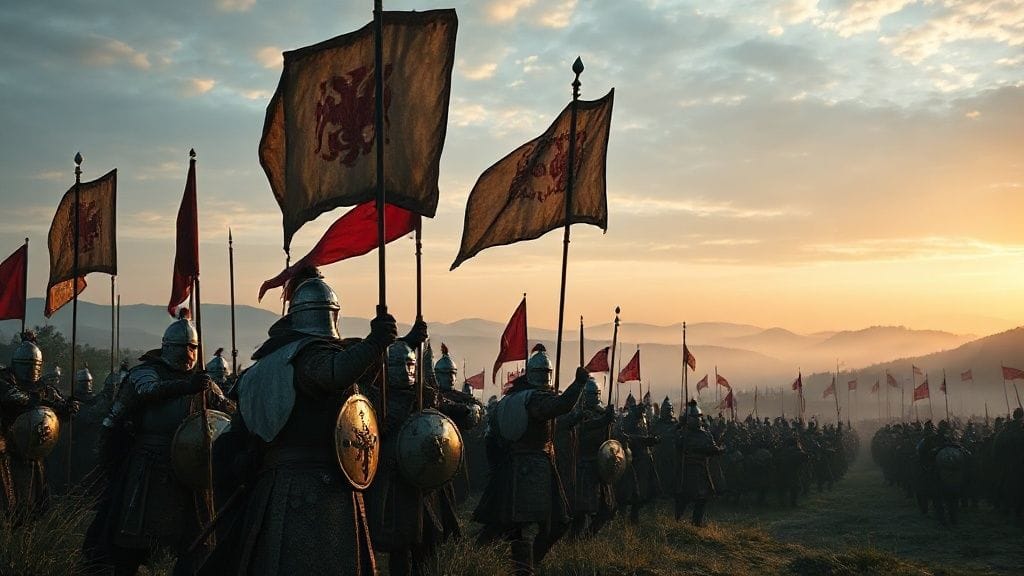
Skanderbeg’s military campaigns were marked by cunning use of guerrilla tactics, intimate knowledge of the local geography, and an almost mythic capacity to inspire his troops. His red and black flag, emblazoned with the double-headed eagle, became a symbol of resistance and national pride.
He harassed much larger Ottoman forces, turning ambushes and mountainous passes into lethal traps. His victories at battles such as Torvioll and Mokra stunned contemporaries and delayed Ottoman conquest for over two decades.
The First Clashes: Testing the League’s Resolve
Initial skirmishes tested the League’s fragile alliance. Ottoman generals expected a swift suppression of rebellious Albanian nobles, but instead encountered fierce, coordinated resistance. Reports from the period describe Albanian horsemen appearing like phantoms, striking swiftly before melting away into the hills.
These encounters were more than military successes; they sent a resounding message that Albanian unity under Skanderbeg was no ephemeral rebellion but a formidable force.
The Siege of Krujë: A Symbol of Albanian Defiance
Perhaps the most emblematic episode of the League’s resistance was the defense of Krujë, Skanderbeg’s stronghold. In 1450, an immense Ottoman army, estimated at over 100,000 men by some chroniclers, laid siege to the fortress.
Despite overwhelming odds, the defenders, bolstered by Skanderbeg’s leadership and intrepid tactics, repelled multiple assaults, withstanding hunger and disease. The siege lasted months, becoming a rallying cry for European Christendom symbolizing unyielding resistance against the Ottoman tide.
Diplomacy and the Wider European Context
Skanderbeg’s resistance resonated far beyond Albania’s rugged landscapes. European courts saw in him a bulwark against Ottoman expansion, a rare Christian ruler who could challenge the empire in the field.
Venice, Naples, and the Papacy offered cautious support—financial aid, troops, and supplies—seeking to rally Balkan Christians under a united front. However, European political calculations often hesitated, encumbered by rivalries and competing ambitions.
The Role of Venetian and Neapolitan Interests
Venice had commercial stakes in the Adriatic and was wary of empowering a potential rival. Naples oscillated between support and neglect depending on dynastic shifts. Thus, the League’s external backing was inconsistent, forcing Albanian leaders to depend principally on their own resolve and resources.
The League’s Internal Struggles and Rivalries
Despite its achievements, the League was never free from internal discord. Clan rivalries, disputes over spoils, and governance challenged the alliance’s unity. Skanderbeg had to constantly mediate between nobles wary of surrendering autonomy, blending diplomacy with firm leadership.
These tensions underline the fragile nature of early national coalitions facing imperial scourges.
The Religious Dimension: Christianity Under Siege
Religion was not merely a cultural marker but a battleground of identity. The Ottoman advance threatened the Christian Orthodox and Catholic populations with Islamization and political subjugation.
Skanderbeg’s cause was inextricably linked to preserving Christian traditions and institutions, a dimension that helped mobilize European support and inspired chroniclers to cast him as a Christian hero defending Christendom.
The Persistence of Albanian Resistance: 1444–1468
Over more than two decades, the League held the line with remarkable resilience. Skanderbeg’s death in 1468 marked a turning point, but even then, the spirit of resistance lived on, delaying Ottoman domination for years.
The League’s ability to maintain a sustained frontier challenged the era’s empires and inspired hope among subjugated peoples across the region.
Legacy of the League: Birth of a National Identity
Beyond military success, the League of Lezhë sowed seeds of national consciousness. It transformed a patchwork of fiefdoms into a politically unified entity with common symbols, language, and purpose.
This legacy resonates to this day as a foundational myth of Albanian identity and sovereignty, celebrated in literature, folklore, and national commemorations.
Skanderbeg’s Legend in Albanian Collective Memory
Skanderbeg evolved from a military commander into a near-mythic figure. His name became synonymous with courage, resistance, and the quest for freedom. Albanian writers, poets, and historians have preserved and embellished his story for centuries, forging a symbol transcending time.
The Ottoman Response: Shifting Strategies and Prolonged Conflict
The Ottomans, frustrated by the League’s stubborn resistance, adapted their approach. They combined military pressure with political intrigue, attempting to fracture Albanian unity through bribes and treaties.
Nonetheless, the League’s persistence forced the empire to devote resources and attention that might otherwise have been spent elsewhere, illustrating the strategic value of sustained local resistance.
The League’s Influence on Later Balkan Resistance Movements
The example set by Skanderbeg and the League inspired subsequent uprisings against Ottoman rule in the Balkans. From Serbian migrations to Bulgarian uprisings, the template of unifying disparate leaders under a common cause influenced generations.
The Cultural Imprint: Literature, Art, and Myth
The story of Lezhë and Skanderbeg has inspired a wealth of cultural production—from the epic poem “Lahuta e Malcís,” to paintings evoking Albanian valor. These works have kept alive the memory of resistance, entwining history with national pride.
Conclusion: The Enduring Flame of Defiance
The League of Lezhë was more than a fleeting alliance against the Ottoman juggernaut; it was the heartbeat of a people refusing to be erased. In those years of struggle, the Albanian nobles and their fearless leader forged bonds transcending clan and creed, laying the groundwork for a national identity that would endure centuries of foreign domination.
Skanderbeg’s League serves as a testament to the power of unity, courage, and resilience—an echo across time reminding us that even amidst overwhelming odds, the flicker of defiance can light a path to freedom.
FAQs
Q1: What prompted the formation of the League of Lezhë in 1444?
A1: The overwhelming threat of Ottoman conquest and the fragmentation among Albanian nobles prompted the formation. The League was a strategic alliance aimed at pooling resources and coordinating military defense.
Q2: Who was Gjergj Kastrioti Skanderbeg, and why is he central to this history?
A2: Skanderbeg was an Albanian noble kidnapped and raised by the Ottomans, who later defected to lead Albanian resistance. His leadership, military skill, and symbolic stature were key to the League’s survival and success.
Q3: How did the League of Lezhë impact Ottoman expansion in the Balkans?
A3: The League significantly delayed Ottoman conquest of Albania, forced the empire to divert resources, and inspired resistance movements across the region.
Q4: What role did external powers like Venice and Naples play?
A4: Venice and Naples provided intermittent support motivated by their own interests but were cautious in fully committing to the Albanian cause.
Q5: How did religion factor into the conflict?
A5: As the League embodied Christian resistance, religion was both a unifying identity and a rallying point to garner European support.
Q6: What internal challenges did the League face?
A6: Rivalries, feudal pride, and political disputes among Albanian nobles constantly threatened the alliance’s cohesion.
Q7: Why is the Siege of Krujë significant?
A7: The siege epitomized Albanian tenacity against overwhelming Ottoman force and became a powerful symbol of defiance.
Q8: How is Skanderbeg remembered today?
A8: He is revered as a national hero in Albania and an enduring symbol of resistance against oppression, celebrated in culture and history.

