Table of Contents
- The Silent Terror Before Dawn: Iceland Awakes to Earthquake
- The Geology of the Skjaldbreið Region: A Volcanic Landscape on Edge
- Iceland in the 18th Century: Society and Environment
- The Day of the Quake: August 14, 1784, Unfolds with Fury
- Seismic Aftershocks: The Ground's Unrelenting Fury
- Faces of Fear: Eyewitness Accounts and Local Narratives
- Nature's Duality: Earthquake and Volcanic Threats in Iceland
- Impact on Agriculture and Housing: The Rural Devastation
- Response and Resilience: Communities Rallying Amidst Rubble
- The Role of the Danish Crown in Disaster Relief
- Scientific Curiosity Sparks: Early Icelandic Seismology Emerges
- The Earthquake in Icelandic Culture and Memory
- Lessons Learned: How Skjaldbreið Shaped Future Preparedness
- The Long Shadow: Environmental Changes Post-1784
- Comparisons with Later Icelandic Earthquakes
- The Skjaldbreið Quake and Global Seismic Studies
- Modern Perspectives: What Today’s Science Reveals About 1784
- Myths, Legends, and the Earthquake: Cultural Interpretations
- A Land of Fire and Ice: Reconciling Nature’s Wrath with Icelandic Identity
- Conclusion: The Enduring Legacy of the Skjaldbreið Earthquake
- FAQs: Answering Key Questions on the 1784 Iceland Earthquake
- External Resource
- Internal Link
The Silent Terror Before Dawn: Iceland Awakes to Earthquake
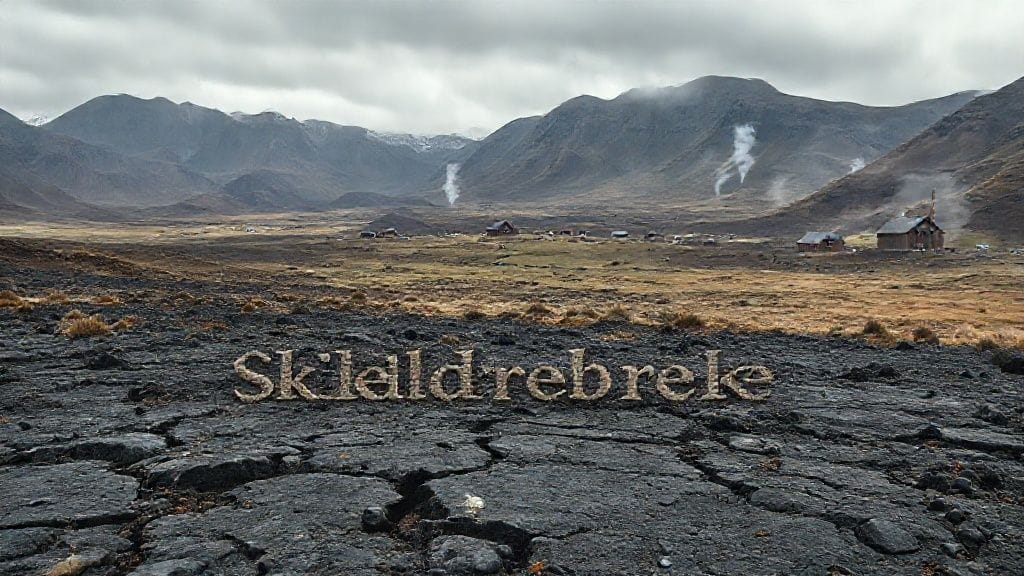
In the pre-dawn stillness of August 14, 1784, the tranquil skies over Iceland’s Skjaldbreið region were shattered by an earth-rending roar that seemed to come from the very bowels of the planet. Icelanders, accustomed to the precarious balance of their island’s fiery nature, were jarred awake as the ground beneath them convulsed violently. Houses trembled, walls cracked, and the very landscape shifted in what would become one of the most memorable natural disasters in 18th-century Icelandic history.
The shock was swift and unforgiving. Fear rippled through the thinly populated farms and scattered settlements nestled amid the volcanic ridges and glaciers. It was a moment where the earth revealed its primal power — raw, anarchic, unstoppable. This earthquake was more than a tremor; it was a dramatic confrontation between humankind and the restless heart of the earth itself.
This story does not unfold in isolation. It is a chapter in the epic saga of Iceland’s volcanic fury and seismic unrest, woven into the lives and livelihoods of a society perched between hope and hardship, survival and surrender.
The Geology of the Skjaldbreið Region: A Volcanic Landscape on Edge
The Skjaldbreið region, named after one of Iceland’s broad shield volcanoes, occupies a unique position along the Mid-Atlantic Ridge where the North American and Eurasian tectonic plates slowly diverge. This rift zone is a hotspot of geological activity, its landscape forged by fire and tectonic forces over millennia.
Beneath Skjaldbreið lies a complex geological mosaic of cracks, magma chambers, and volcanic fissures susceptible to sudden movement. This tectonic unrest manifests as earthquakes—nature’s way of releasing accumulated stress. Yet, in 1784, the sheer magnitude and intensity of the quake caught even experienced locals and local authorities off guard.
Iceland’s geology is a relentless reminder of Earth’s dynamic processes—lava flows, glacial melts, and ground ruptures weave a story of constant change, and Skjaldbreið is at the heart of this restless territory.
Iceland in the 18th Century: Society and Environment
The 18th century in Iceland was a time of profound hardship and resilience. A harsh climate, volcanic eruptions, and economic challenges shaped daily life. Iceland was still governed under Danish rule, and communities relied heavily on farming, fishing, and animal husbandry. The population was sparse, scattered across isolated farms connected by difficult terrain.
Social structures were tightly knit, and oral traditions played a vital role in preserving stories, laws, and cultural identity. Life in the countryside was a daily negotiation with nature—sometimes generous, sometimes merciless.
Yet, the people of this frozen island exhibited an extraordinary capacity to endure. The Skjaldbreið earthquake struck amid a landscape and society already seasoned by environmental toughness but also vulnerable due to its limited infrastructure and political marginality.
The Day of the Quake: August 14, 1784, Unfolds with Fury
On the morning of August 14, the first tremors began as subtle vibrations underfoot, quickly escalating into a violent shaking that jolted people from sleep. The earth seemed to roar and pulse, as entire hillsides shifted and fissures cracked open across the volcanic slopes.
Contemporary reports describe the terror as both immediate and overwhelming—fields heaved, trees snapped, and water wells were disturbed. Local farmhouses, constructed primarily from turf and stone, fared poorly against the earthquake’s force. Many homes collapsed, trapping people beneath rubble.
The quake’s epicenter was near the Skjaldbreið volcano, a fact that compounded fears of an eruptive event. While the ground continued to tremble in aftershocks, the inhabitants struggled to comprehend the devastation unfolding around them.
Seismic Aftershocks: The Ground's Unrelenting Fury
For hours, intermittent aftershocks rippled through the region, preventing rest or repair. The earth remained volatile, exacerbating damage and fear. These aftershocks served as grim reminders that the initial jolt had not been the end but the beginning of a period of uncertainty.
The shaking reopened fissures and sometimes expanded existing faults, altering the topography in subtle but permanent ways. Pastures were rendered unusable, water sources contaminated or redirected, and new hazards introduced into an already fragile environment.
Faces of Fear: Eyewitness Accounts and Local Narratives
Though written records from rural 18th-century Iceland remain sparse, oral traditions and reports collected later provide vivid glimpses into the human side of the disaster. Farmers, shepherds, and their families recounted nights of despair, the shaking ground beneath their feet evoking primal fears.
One tale tells of a woman clutching her child as the bedroom walls crumbled, her prayers blending with the earth’s groans. Another recalls neighbors rescuing trapped relatives, forging bonds through shared trauma.
These stories are not mere footnotes but vital threads that weave the emotional texture of the event, reminding us that beyond geological phenomena lie human lives irreversibly changed.
Nature's Duality: Earthquake and Volcanic Threats in Iceland
Iceland’s poetic nickname as the “Land of Fire and Ice” encapsulates its intrinsic paradox: a frozen landscape pierced by volcanic flames. The 1784 earthquake occurred within this ambiguous context, where seismic movements often presage volcanic activity.
Fortunately, no volcanic eruption followed immediately after the Skjaldbreið tremor, but the potential threat loomed large. The volcano’s calm after the quake belied the long-term unrest of the region.
This dual threat was—and remains—a defining characteristic of Icelandic life and landscape, demanding a constant vigilance from those who call the island home.
Impact on Agriculture and Housing: The Rural Devastation
The consequences of the earthquake extended swiftly from structural damage to economic survival. Turf houses, the predominant form of shelter, had their walls cracked or flattened. Barns, stables, hay barns—critical for winter animal sustenance—were destroyed, threatening livestock survival through harsh months.
Agricultural fields were fractured, drainage disrupted, and grazing lands rendered unstable. Since farming was the backbone of Iceland’s economy, these damages rippled through communities, undermining food security.
The crisis exposed the vulnerability of Iceland’s rural arrangement—a reliance on fragile infrastructure subject to the whims of an unpredictable land.
Response and Resilience: Communities Rallying Amidst Rubble
In the quake’s aftermath, local communities exhibited resilience and solidarity. Villagers gathered amid ruins, sharing resources, sheltering the homeless, and tending to the injured.
Traditional Icelandic community structures, often organized around family and local assemblies called “þing,” became focal points for mutual aid and recovery planning.
Yet, help was limited by geography and technology—the remoteness of many farms made large-scale relief difficult. Patience and endurance were as vital as repair tools.
The Role of the Danish Crown in Disaster Relief
As Iceland was a Danish dependency, Copenhagen's response to disasters was crucial yet often slow and muted. The Danish crown did provide some assistance in the form of emergency funds and material, but the scale of the quake and the island’s remoteness complicated coordination.
The disaster highlighted Iceland’s peripheral political status and triggered debates on governance and responsibility. It also exposed the limitations of 18th-century communication—news of the quake took weeks to fully reach the Danish authorities.
Still, these episodes planted early seeds for more formalized disaster management in Iceland over the coming centuries.
Scientific Curiosity Sparks: Early Icelandic Seismology Emerges
Though scientific instruments were primitive and no seismographs existed in 1784, the event sparked interest among Iceland’s scholars and European geologists alike.
Natural philosophers began collecting data based on eyewitness reports and geological observations. The quake contributed to an evolving understanding of plate tectonics long before the term was coined, positioning Iceland as a natural laboratory for earth sciences.
This curiosity would shape Iceland’s identity not only as a land of folklore but also of rigorous scientific inquiry.
The Earthquake in Icelandic Culture and Memory
In the decades and centuries after 1784, the Skjaldbreið earthquake was embedded in Icelandic folklore, literature, and collective memory.
It inspired tales that blended awe and warning, reinforcing respect for nature’s forces. Poets and storytellers used the event as a metaphor for human vulnerability and endurance.
Even today, the quake is sometimes evoked as a symbol of Iceland’s tumultuous relationship with its elemental environment.
Lessons Learned: How Skjaldbreið Shaped Future Preparedness
Though the 18th-century recovery was largely ad hoc, the quake demonstrated the necessity of preparedness in a land of faults and fire.
Subsequent building practices incorporated more flexible designs; communities improved communication and mutual aid systems. The event’s memory reinforced public awareness of seismic risks, a legacy that informs Iceland’s remarkably advanced modern earthquake preparedness programs.
This historic rupture remains a quiet teacher, echoing in modern civil defense structures.
The Long Shadow: Environmental Changes Post-1784
Beyond immediate damage, the earthquake altered the Skjaldbreið landscape in lasting ways.
Shifts in soil layers, opening of new fissures, and minor changes in water flow patterns affected local ecosystems. Scientists today analyze sediment layers and geomorphological evidence to reconstruct these environmental impacts.
The ground’s alteration also influenced settlement patterns, as some farms relocated away from the most damaged areas.
Comparisons with Later Icelandic Earthquakes
Iceland’s seismic history features several significant quakes, including those in 1896 and 2000. Comparing these events reveals continuities and advancements: from the scale of destruction to the evolving societal responses.
The 1784 quake was comparatively moderate by modern standards but catastrophic for the era’s technological and social context.
Each earthquake within Iceland’s modern narrative has deepened understanding of risks and resilience.
The Skjaldbreið Quake and Global Seismic Studies
While largely a regional catastrophe, the 1784 event caught the interest of European scientific circles, dovetailing with burgeoning Enlightenment-era inquiries into Earth’s forces.
It contributed data points for seismic catalogs and helped challenge older notions that earthquakes were divine punishments, pushing toward scientific explanations grounded in natural causes.
As a result, Skjaldbreið’s shaking reverberated beyond Iceland’s shores, influencing the global birth of modern geology and seismology.
Modern Perspectives: What Today’s Science Reveals About 1784
With advances in geology, satellite imaging, and seismic modeling, researchers have revisited the 1784 earthquake.
Modern analyses estimate the earthquake’s magnitude likely ranged between 6.5 and 7.0, a powerful shake in a sparsely populated area. The interplay between rifting processes and magmatic intrusion is better understood today.
Furthermore, current monitoring in Iceland anticipates such events, highlighting the ongoing threat and emphasizing the need for vigilance in a dynamically shifting land.
Myths, Legends, and the Earthquake: Cultural Interpretations
Iceland’s rich tradition of myth and legend offers fascinating perspectives on seismic events.
Some narratives cast the quake as the movements of subterranean “landvættir” (land spirits), or as a warning from gods displeased by human actions.
Such stories reveal the deep spiritual and emotional processing of natural disasters, illustrating how Icelanders historically made sense of the incomprehensible.
A Land of Fire and Ice: Reconciling Nature’s Wrath with Icelandic Identity
The 1784 earthquake, like many natural upheavals in Iceland, embodies the elemental tension between destruction and creation.
Icelanders’ identity is deeply intertwined with resilience to natural forces—a cultural ethos shaped by centuries of volcanic eruptions, glacial floods, and seismic shocks.
Skjaldbreið stands as a landmark moment in this narrative, reminding us how human communities endure, adapt, and find meaning amidst the rumbling earth.
Conclusion
The Skjaldbreið earthquake of August 14, 1784, was more than a sudden geological rupture; it was a profound trial, a historical crucible where nature’s immense power met human endurance. In the terse crunch of stones and the trembling earth beneath the Icelandic highlands, generations witnessed their vulnerability but also the strength to survive and rebuild.
This event, though set centuries ago, resonates still—echoing in Iceland’s cultural memory, scientific progress, and societal resilience. It underscores not only the fragility of human life but the tenacity of those who live in harmony with a land forever moving, reshaping, and reminding us of its unpredictable might.
To understand the Skjaldbreið earthquake is to glimpse a timeless story of challenge and hope, chaos and order, the ever-turning tides of Earth and human spirit.
FAQs
Q1: What caused the Skjaldbreið earthquake of 1784?
A1: The earthquake was triggered by tectonic movements along the Mid-Atlantic Ridge, where the North American and Eurasian plates diverge beneath Iceland, releasing seismic energy near the Skjaldbreið volcanic region.
Q2: How strong was the 1784 earthquake?
A2: Modern estimates suggest a magnitude between 6.5 and 7.0, significant enough to cause widespread damage in the rural areas of Iceland.
Q3: Did the earthquake trigger a volcanic eruption?
A3: No immediate eruption followed the quake, though the seismic activity heightened fears given Skjaldbreið's nature as a shield volcano.
Q4: How did local communities respond to the disaster?
A4: Islanders relied on communal aid, sharing resources, reconstructing homes, and supporting one another despite the limited infrastructure and government assistance at the time.
Q5: What was the role of the Danish authorities following the earthquake?
A5: As Iceland was under Danish rule, Copenhagen offered some financial and material assistance, although the response was constrained by communication delays and Iceland’s remoteness.
Q6: How did this earthquake influence scientific understanding?
A6: It contributed valuable observational data to early natural philosophy and geology, aiding the gradual shift away from superstition toward scientific explanations of seismic events.
Q7: Are there myths associated with the 1784 earthquake in Iceland?
A7: Yes, Icelandic folklore often interprets earthquakes as actions of land spirits or divine warnings, reflecting cultural coping mechanisms for natural disasters.
Q8: What lasting impacts did the earthquake have on the environment and settlements?
A8: The quake altered the local landscape physically, damaged agricultural lands, and caused some relocations of farms, influencing regional settlement patterns.