Table of Contents
- A City Shattered: The Dawn of July 26, 1963
- Skopje before Disaster: A Portrait of a Thriving Capital
- The Balkans in the Early 1960s: Political and Social Backdrop
- The Earthquake Unfolds: The Trembling Heart of Skopje
- Immediate Aftermath: Chaos, Despair, and Rising Hope
- Rescue Efforts and Human Solidarity in the Rubble
- The Yugoslav Government’s Response: Crisis Management and Reconstruction Plans
- International Aid: When the World Turned to Skopje
- Architects of Revival: Rebuilding a City from Ashes
- The Plan for a Modern Skopje: Urban Innovation and Visionary Design
- The Influence of Japanese Architect Kenzo Tange: A New Urban Identity
- Social and Cultural Repercussions: Trauma, Memory, and Renewal
- Skopje’s Earthquake in Cold War Context: East Meets West in Reconstruction
- Lessons Learned: Disaster Preparedness and Urban Planning Post-1963
- Skopje Today: Remembering the Past, Building the Future
- The Enduring Legacy of the 1963 Earthquake on Macedonian Society
- Conclusion: From Devastation to Determination
- FAQs
- External Resource
- Internal Link
1. A City Shattered: The Dawn of July 26, 1963
It was a seemingly ordinary summer morning in Skopje, the capital of then-Socialist Republic of Macedonia, part of the Yugoslav federation. The sun rose over the Vardar River, casting warm light on the old Ottoman quarters, the bustling marketplaces, and the narrow streets bustling with life. At exactly 5:17 a.m., the earth began to groan and convulse beneath the city’s foundations—an invisible force gathering strength, ready to transform daily routine into unimaginable tragedy.
What followed was a cataclysm that struck with almost cinematic suddenness yet left a lingering legacy etched in the city’s soul: the Skopje Earthquake of July 26, 1963. Lasting barely 20 seconds, this seismic event would raze 80% of the city’s core, kill over 1,000 people, injure thousands more, and reduce homes and landmarks to ruins. The city’s physical landscape was obliterated, but its spirit—tested and tempered—would not break.
2. Skopje before Disaster: A Portrait of a Thriving Capital
Before the quake, Skopje was a city on the cusp of transformation. Its centuries-old cobbled streets linked ancient mosques, churches, squares, and palaces – testimony to a diverse history layered by Byzantine, Ottoman, and modern influences. With approximately 105,000 inhabitants, it was a modest but vibrant capital, buzzing with commerce, industry, and culture in the heart of the Balkans.
Despite being often overlooked in the grand narratives of Yugoslavia dominated by Belgrade, Skopje retained its own unique pulse: a mix of Macedonian traditions, a Slavic community spirit, and a strategic role as a transport and administrative hub. The city's architecture and social fabric were emblematic of both its Ottoman past and the modernist aspirations post-WWII Yugoslavia hoped to foster.
Yet beneath this apparent normality, the physical geography hid a perilous secret: Skopje sat in a seismically active zone. The earth there was restless, whispering warnings ignored by many, until nature’s wrath could no longer be contained.
3. The Balkans in the Early 1960s: Political and Social Backdrop
To understand the earthquake's reverberations beyond geology and bricks, one must view Skopje through the prism of the Balkans during the 1960s. The Cold War divided Europe, yet Yugoslavia under Tito maintained a unique non-aligned stance, balancing Soviet pressure with Western openness.
Internally, Yugoslavia was a federation of republics with varying languages, ethnicities, and economic levels. Macedonia, the youngest republic, was struggling for recognition and development. Rapid urbanization, migration, and industrial growth were underway, but many infrastructures were underprepared for disaster.
Politically, Skopje’s destruction would soon pose a challenge to the Yugoslav state’s image of strength and progress. The earthquake exposed vulnerabilities in urban planning, emergency response, and social cohesion—all under the scrutiny of an anxious international community.
4. The Earthquake Unfolds: The Trembling Heart of Skopje
At 5:17 a.m. local time, the earth’s sudden convulsions shattered the fragile calm. Measuring a magnitude of 6.1 on the Richter scale, the quake lasted a mercifully brief 20 seconds but wrought devastation that crippled the city’s infrastructure instantly.
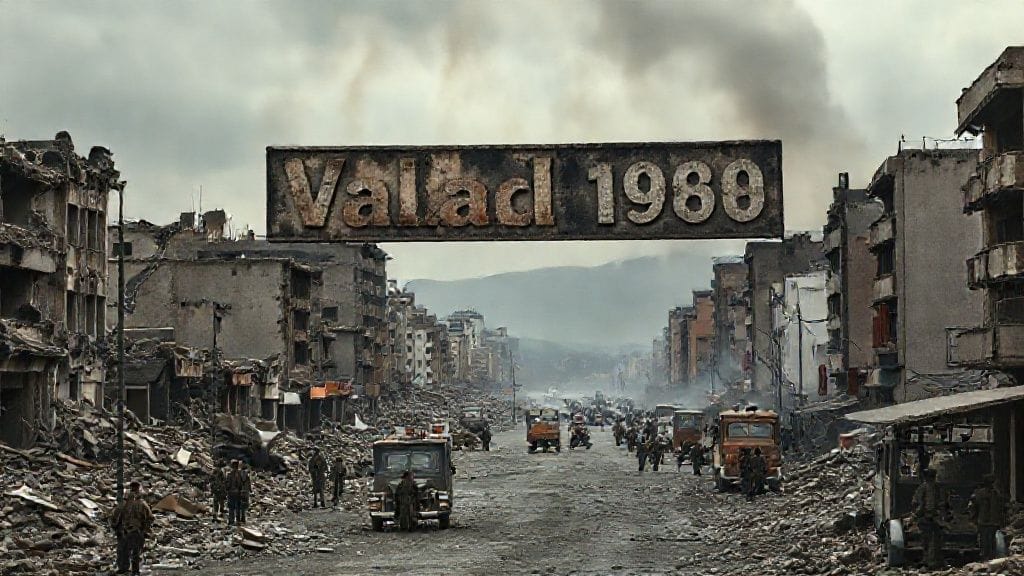
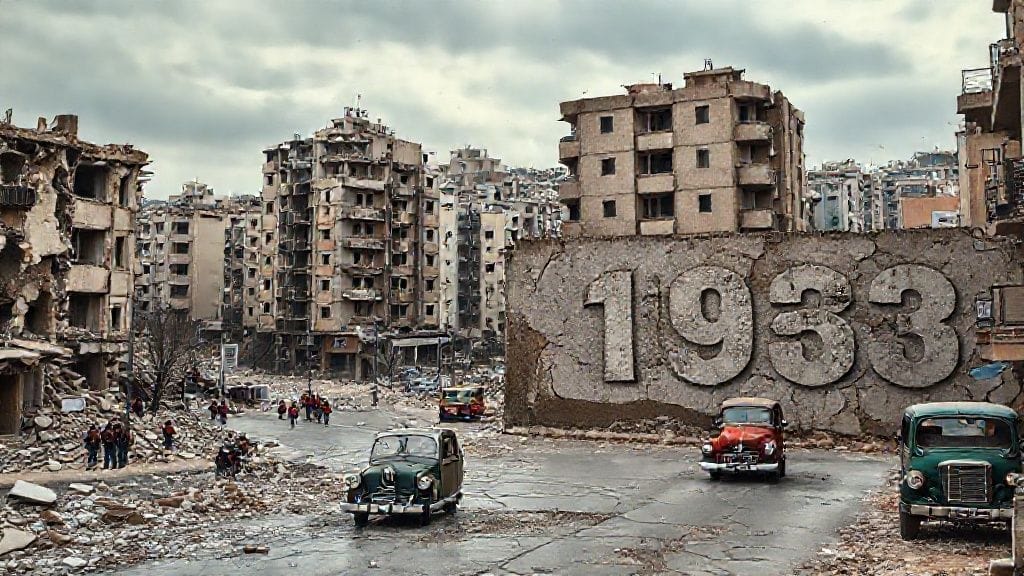
Buildings, old and new, crumbled into rubble. The clock tower in the historic bazaar froze permanently at the moment of impact—a haunting symbol of interrupted lives. Residential blocks tumbled, hospitals and schools collapsed. Roads cracked open like parchment. Those who awoke to the shaking found themselves in a waking nightmare, caught between falling debris and the uncertainty of survival.
Witness accounts paint the raw emotional landscape: screams mingling with dust clouds, the terrifying creak of collapsing structures, desperate calls for loved ones. Yet heroism surfaced even in catastrophe: neighbors pulled strangers from ruins, medics braved unstable buildings, and children were carried to safety by hands trembling with fear and determination.
5. Immediate Aftermath: Chaos, Despair, and Rising Hope
In the hours following, fear mixed with disbelief. The destruction was total but not absolute. Survivors emerged from the remains, some clutching the lucky few belongings saved from their shattered homes. The city lay half-dead but breathing, its people dazed but resilient.
Hospitals overwhelmed by the influx of casualties struggled to cope. Water and electricity supplies were cut off; roads were blocked by debris. Makeshift shelters sprung up as the displaced sought refuge under the open sky or in the streets.
The Yugoslav government declared a state of emergency. The hours and days that followed shaped Skopje’s fate not just in loss but in the dawning resolve to rebuild.
6. Rescue Efforts and Human Solidarity in the Rubble
The response to the disaster transcended political and national borders. The initial rescue efforts were spearheaded by local firefighters, military units, and police, working tirelessly in precarious conditions. Beyond state-organized actions, ordinary citizens volunteered in droves, forming human chains and digging through ground-shaking rubble.
As news spread, so did empathy. Yugoslav citizens from other republics sent clothes, supplies, and donations, while multinational rescue teams soon arrived, bringing machinery and expertise. The earthquake became a moment of camaraderie within the fractured Cold War world—a rare occasion when ideological rivalries paused.
Amid this, stories of profound human spirit emerged: the famous “last rescue,” saving a child trapped under collapsed beams for 24 hours; the serendipitous survival of elderly couples in rubble; the volunteers who stayed awake for days, eyes swollen but hands steady.
7. The Yugoslav Government’s Response: Crisis Management and Reconstruction Plans
The government of Josip Broz Tito faced a monumental challenge. Skopje represented more than a lost city—it was a test of Yugoslav unity, resilience, and capacity for modernization. In the span of weeks, the authorities moved to stabilize order, organize aid, and design a forward path.
Key measures included the construction of temporary shelters, rapid medical deployment, and the organization of debris removal. Politically, Tito visited Skopje personally, signaling the importance of the disaster to the federation.
But what came next was even more ambitious: a comprehensive reconstruction plan not merely to restore the old, but to create a symbol of a new Yugoslav future—a modern, orderly urban center embodying socialist ideals yet open to global architectural innovation.
8. International Aid: When the World Turned to Skopje
One of the most extraordinary outcomes of the Skopje earthquake was the unprecedented flood of international aid. Countries from across the ideological divide poured assistance into the city—food, medicine, money, technical experts.
The United Nations quickly coordinated support, while neighboring countries like Greece and Bulgaria offered help despite political tensions. The United States supplied tents and equipment. Even distant Japan pledged aid and architectural expertise.
This influx was not only humanitarian but diplomatic. Skopje became a beacon of peace and cooperation in an otherwise polarized world, illustrating how catastrophe can bridge divides and foster unexpected alliances.
9. Architects of Revival: Rebuilding a City from Ashes
Recovering Skopje was not a matter of simply replacing fallen bricks. The Yugoslav government invited leading architects to design a new city plan, aiming to create a safer, more livable, and visually striking capital.
One of the most influential figures was the Japanese architect Kenzo Tange, whose vision married modernist principles with a deep respect for the city’s natural and cultural fabric. His proposals emphasized open spaces, earthquake-resistant structures, and multi-use hubs, crafting a city both functional and symbolic.
Local architects and engineers collaborated internationally, blending state-of-the-art technology with a sensitive understanding of Macedonian identity. The reconstruction became a symbol of hope, resilience, and a new future emerging from destruction.
10. The Plan for a Modern Skopje: Urban Innovation and Visionary Design
Kenzo Tange’s master plan for Skopje revolutionized urban design in socialist countries. The city was envisaged as a “City of the Future” centered on a new civic center with vast pedestrian plazas, interconnected public buildings, and cultural venues.
His plan integrated natural elements—reflecting the Vardar River and nearby mountains—while prioritizing seismic safety. Prefabricated construction techniques were introduced for speed and durability. Public transport systems were expanded, and new residential districts incorporated green spaces to improve quality of life.
This ambitious project not only reconstructed a city but also inspired urban planners globally, placing Skopje at the forefront of post-war architectural innovation.
11. The Influence of Japanese Architect Kenzo Tange: A New Urban Identity
Kenzo Tange’s involvement was groundbreaking. His fusion of brutalist concrete with traditional Japanese spatial concepts created a new architectural identity for Skopje. His design employed large geometric forms, monumental structures, and fluid urban flows.
The new city center—known as the “Skopje Master Plan”—balanced functionality with artistry, embodying Yugoslavia’s optimism and modernist ideals. Tange’s work symbolized cross-cultural dialogue, proving that tragedy could ignite creative collaboration beyond borders.
Though some elements were later modified or remain incomplete, his vision left an indelible mark on Skopje’s landscape and collective memory.
12. Social and Cultural Repercussions: Trauma, Memory, and Renewal
The earthquake imprinted itself not only on stones but deep within the hearts and minds of Skopje’s inhabitants. The trauma of sudden loss, displacement, and shattered normalcy haunted generations.
Yet, amid mourning, a powerful narrative of renewal emerged. Annual commemorations, survivor testimonies, and public memorials fostered a collective remembering that honored victims and celebrated courage.
Culturally, the catastrophe intensified Macedonian identity, nurturing pride in endurance and forward-looking attitudes. Artists, writers, and musicians grappled with the disaster’s meaning, producing works that continue to resonate within and beyond Macedonia.
13. Skopje’s Earthquake in Cold War Context: East Meets West in Reconstruction
The reconstruction unfolded against the intricate backdrop of Cold War geopolitics. Yugoslavia’s non-alignment allowed it to solicit aid from both blocs, positioning Skopje’s rebuilding as a unique experiment in cross-ideological cooperation.
This collaboration challenged binary visions of the Iron Curtain, as Western architects worked alongside Eastern planners, and aid flowed from both NATO and Warsaw Pact countries, as well as non-aligned nations.
The city became an emblem of Yugoslavia’s unique place in the world—another layer of its complex identity forged in adversity.
14. Lessons Learned: Disaster Preparedness and Urban Planning Post-1963
Skopje’s devastating experience catalyzed renewed attention to earthquake preparedness and urban safety throughout the Balkans and socialist countries. Building codes were revised, with seismic resistance a paramount concern.
Emergency response systems improved, and education campaigns increased public awareness. The tragedy underscored the intersection of natural risk and human vulnerability, shaping disaster management doctrines that would inform future policies.
Skopje stands today as a case study in the dialogue between nature’s unpredictability and human will to adapt.
15. Skopje Today: Remembering the Past, Building the Future
Nearly six decades later, Skopje has evolved into a vibrant capital of independent North Macedonia. The cityscape is a palimpsest where old and new coexist, a living testament to survival and transformation.
Monuments commemorate the earthquake and its victims. Museums recount history; public spaces encourage community and dialogue. Skopje embraces its scars openly, acknowledging that trauma and rebirth are inseparable chapters of its story.
Economic development, EU integration aspirations, and cultural vibrancy mark its horizon, all tracing roots back to a moment when earth shook and a city refused to yield.
16. The Enduring Legacy of the 1963 Earthquake on Macedonian Society
The earthquake remains one of the defining moments in Macedonian collective memory. Its legacy extends beyond physical reconstruction to social cohesion, political identity, and cultural affirmation.
The disaster prompted reflection on vulnerability, resilience, and solidarity—values woven into national narratives. It also left a lasting imprint on how Macedonians relate to their environment and history.
For many, the quake is a profound reminder of fragility and strength, loss and hope.
Conclusion
The Skopje Earthquake of July 26, 1963, was more than a geological event. It was a crucible of human experience forged in fear and destruction, but also in compassion, innovation, and unyielding determination. The city’s story is one of shattered stones rebuilt by collaborative hands, of a people who turned devastation into a new chapter of identity and hope.
From the dust of ruin rose a beacon of modern urban vision—a symbol that even in the darkest hours, humanity’s capacity to rebuild, imagine, and unite can shine through. Skopje’s tale resonates still, a timeless testament to resilience, the power of solidarity, and the eternal dance between nature’s might and human will.
FAQs
Q1: What caused the Skopje Earthquake of 1963?
The earthquake was caused by tectonic movements along faults in a seismically active zone in the Balkans, where the Eurasian Plate meets the African Plate. These geological forces built stress over time, releasing energy suddenly on July 26, 1963.
Q2: How severe was the damage caused by the earthquake?
Approximately 80% of Skopje’s city center was destroyed. Over 1,070 people died, thousands were injured, and tens of thousands were left homeless. Infrastructure such as roads, hospitals, and schools suffered massive damage.
Q3: What was the immediate response to the disaster?
Local emergency services responded quickly amidst chaos, with an outpouring of volunteer aid. The Yugoslav government declared a state of emergency, and international assistance was mobilized rapidly, involving countries from both East and West.
Q4: How did the earthquake influence Skopje’s reconstruction?
The devastation provided a unique opportunity to rebuild the city using modern architecture and urban planning. The essential vision, led by architects like Kenzo Tange, integrated seismic resilience, modernist aesthetics, and urban functionality.
Q5: What role did international cooperation play in the recovery?
International aid was critical in rescue, relief, and reconstruction. The crisis brought together countries across Cold War divides, highlighting humanitarian solidarity beyond political differences.
Q6: How is the earthquake remembered in North Macedonia today?
It is commemorated annually with memorial ceremonies, public monuments, and educational programs. The event remains a powerful narrative of tragedy and rebirth in Macedonian cultural memory.
Q7: Did the Skopje Earthquake affect disaster preparedness policies elsewhere?
Yes, lessons learned from Skopje improved seismic safety standards and emergency response planning in Yugoslavia and inspired other regions prone to earthquakes to strengthen their disaster management systems.
Q8: What is the significance of Kenzo Tange’s involvement in rebuilding Skopje?
Tange’s involvement symbolized a fusion of world architectural innovation with local needs. His master plan for Skopje became iconic in post-war urban design, symbolizing hope and modernity emerging from destruction.