Table of Contents
- A Tremor in the Heart of Orkney: The Unexpected Awakening
- South Africa’s Geological Context: A Land of Stability and Sudden Shock
- August 5, 2014: The Day the Earth Shook in Orkney
- The First Rumbles: Early Warnings and Local Reactions
- The Earthquake’s Mechanics: Magnitude, Epicenter, and Seismic Profile
- Tales from the Ground: Eyewitness Accounts and Community Responses
- The Unexpected Nature of Seismicity in the Witwatersrand Basin
- Scientific Investigations: Unraveling the Cause beneath Orkney
- Mining and Man-Made Stress: The Role of Deep Gold Mines
- Government and Geological Agencies Respond
- Impact and Damage Assessment: Physical, Economic, Social
- The Psychological Aftershock: Fear, Anxiety and Community Cohesion
- Lessons Learned: Enhancing Earthquake Preparedness in South Africa
- Earthquakes in African History: A Rare but Persistent Threat
- The Broader Implications: Mining, Environment, and Future Risks
- Orkney’s Earthquake in Global Context: Comparisons and Contrasts
- Media Coverage and Public Discourse: Narratives Shaping Perception
- Continuing Research: What the Orkney quake taught scientists
- Community Resilience and Memorials: Healing and Hope
- Conclusion: A Tremor Beyond the Rock, A Story of Strength
- FAQs: Understanding the Orkney Earthquake
- External Resource
- Internal Link
1. A Tremor in the Heart of Orkney: The Unexpected Awakening
It was just past mid-morning on the dry winter’s day of August 5th, 2014, when the ground beneath Orkney — a modest mining town nestled in South Africa’s vast Northern Cape province — moved. Not with the usual rattle of mining drills or the familiar hum of activity in the gold deposits below, but with an unmistakable, deep roar that rolled through the earth. Many residents felt it; furniture shook, buildings trembled, and a profound sense of unease settled over the community. For a region unaccustomed to seismic turmoil, this was an unexpected jolt, a sudden reminder of the powerful forces lying dormant beneath their feet.
The Orkney earthquake would soon be measured at a magnitude of 5.5—a seismic event strong enough to rattle nerves, topple fragile structures, and thrust this small town into an intense spotlight. But beyond the immediate shockwaves, this quake revealed complex interactions between natural geology and human endeavor, exposing the fragility and resilience of a community balancing on a hidden fault line.
2. South Africa’s Geological Context: A Land of Stability and Sudden Shock
South Africa’s geological reputation has long been one of relative stability. Nestled on the African tectonic plate, far from the violent collisions and subductions that shake other parts of the world, it lies in a region classified as ‘intraplate’, where earthquakes are rare compared to the volatile margins like the Pacific Ring of Fire. Yet, the very ground that seems so steady conceals ancient fault lines, relics of long-gone mountain-building episodes and geological upheavals.
The gold-rich Witwatersrand Basin, which stretches beneath vast swathes of Northern Cape and Gauteng provinces, has long been a center of both geological wonder and economic activity. Mining deep into the crust exposes stressed rock layers and can exacerbate seismic activity, triggering tremors that can mimic or amplify natural quakes. It is against this nuanced geological background that the 2014 Orkney earthquake must be understood.
3. August 5, 2014: The Day the Earth Shook in Orkney
On the morning of August 5th, the senses of men and women in Orkney were abruptly challenged. A sudden ground shaking, a low rumble growing into a noticeable shaking, lasting some seconds, shook the township—and indeed, was felt across a wide region extending beyond the immediate vicinity. Time seemed to slow for communities already accustomed to the quiet certainty of steady ground. Phones buzzed with messages, windows rattled, and the question hung in the air: was it an earthquake?
Seismographs confirmed what many suspected: a magnitude 5.5 earthquake struck near Orkney. The epicenter was located at shallow depth, directly beneath the town, showcasing the unusually shallow and powerful nature of this quake for South Africa.
4. The First Rumbles: Early Warnings and Local Reactions
Prior to the main event, residents recall minor tremors—foreshocks—that went mostly unnoticed or were attributed to mining blasts. It was the main shock that galvanized a collective awareness of a natural force previously thought foreign to the region’s quiet geological profile.
The vivid accounts of people caught off guard began to surface. A schoolteacher described children’s desks shaking violently; shopkeepers watched shelves tremble; and families felt the ground roll beneath their feet with a sensation both familiar and unnerving. The communal experience was one of disorientation but also a cautious respect for the unknown.
5. The Earthquake’s Mechanics: Magnitude, Epicenter, and Seismic Profile
Scientifically, the Orkney earthquake stood out because of its magnitude and shallow depth—estimated at approximately 5 to 10 kilometers below the surface. The seismic waves radiated powerfully enough to cause structural damage and panic across Orkney and neighboring communities. The epicenter was pinpointed just beneath the mining hub, linking the seismic event intrinsically to the geological stresses beneath the town.
The event registered on a suite of seismographs operated by the South African National Seismograph Network (SANSN), providing data critical to understanding the intricate nature of seismicity in the region.
6. Tales from the Ground: Eyewitness Accounts and Community Responses
In the immediate aftermath, the human dimension of the earthquake became clear. A local shop owner, Mrs. Mokoena, described how jars of preserves tumbled off shelves, shattering across the floor. “For a moment, I thought it was a bomb,” she said later, her voice trembling but steady.
Elsewhere, children were evacuated from schools as precaution. Emergency response teams coordinated rapid inspections of buildings, ensuring safety amid the uncertainty. There were stories of neighbors reaching out to comfort one another, a renewed sense of community forged in the face of natural disruption.
7. The Unexpected Nature of Seismicity in the Witwatersrand Basin
South Africa's low historical incidence of significant earthquakes makes the Orkney event all the more striking. The Witwatersrand Basin has long been mined for gold, with tunnels stretching kilometers beneath the surface. These deep excavations alter stress distributions in the Earth's crust, creating conditions where seismic slips — micro or macro — may be triggered.
This quake was not just a geological surprise but a tangible warning: mining activities can transform the crust's mechanical behavior, potentially increasing seismic risk in otherwise stable regions.
8. Scientific Investigations: Unraveling the Cause beneath Orkney
Following the earthquake, teams of geologists and seismologists descended upon Orkney, intent on decoding the event’s origins. Utilizing dense seismic networks and geomechanical modeling, they linked the quake to fault systems stressed not only by natural tectonic forces but by anthropogenic factors — chiefly mining.
The research revealed how underground excavations, changes in pore pressure, and rock fracturing had likely combined to provoke this rare but now better understood seismic phenomenon.
9. Mining and Man-Made Stress: The Role of Deep Gold Mines
Deep mining alters subterranean rock mass equilibrium. In the Witwatersrand, shafts can extend more than 3 kilometers down, disturbing the ancient crust. The Orkney earthquake became a focal point in debates over mining safety, risk assessment, and corporate responsibility.
Engineers and mining companies began reevaluating protocols, recognizing that induced seismicity wasn’t just a theoretical risk but a lived reality. The event underscored the need for stringent monitoring and community engagement where mining meets fragile communities.
10. Government and Geological Agencies Respond
The South African government, alongside agencies such as the Council for Geoscience and the South African National Seismograph Network, swiftly mobilized. Public statements reassured the population that the earthquake posed limited risk of major aftershocks but emphasized vigilance.
Support was extended to affected families, and the crisis became a driver for increased seismic monitoring capacity. National disaster frameworks were also reviewed in light of emerging risk profiles within mining regions.
11. Impact and Damage Assessment: Physical, Economic, Social
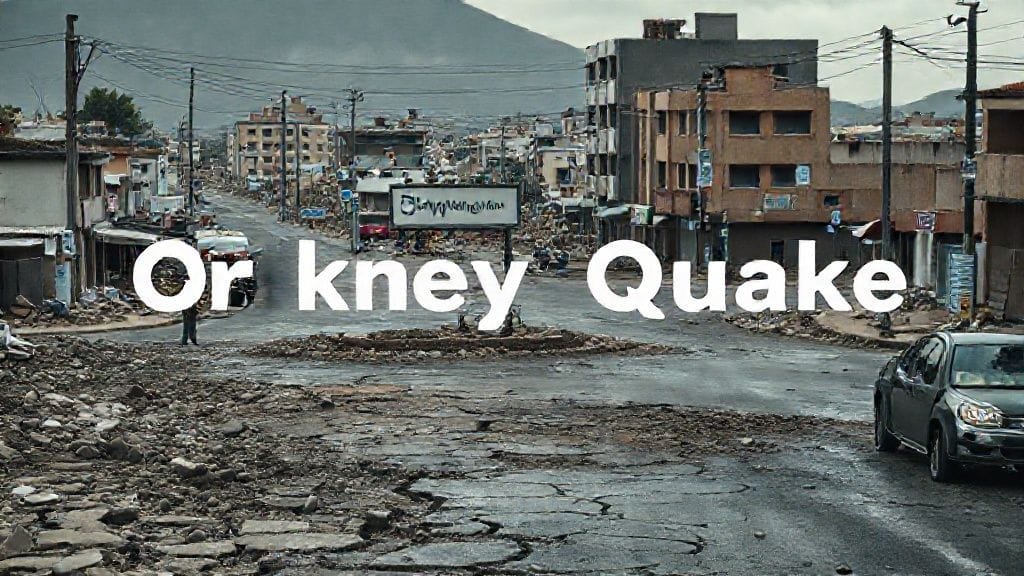
Physically, the quake caused damage to older buildings—cracks in walls, fallen tiles, broken windows—and disruption to mining operations temporarily halted. Economically, repair costs and production downtime were non-negligible, highlighting vulnerability tied to natural and induced seismicity.
Socially, the earthquake sowed anxiety but also renewed community cohesion, with residents and authorities collaborating on damage mitigation and future preparedness strategies.
12. The Psychological Aftershock: Fear, Anxiety and Community Cohesion
For a population unaccustomed to seismic events, the psychological toll was significant. Oral histories document fears of collapse, worries about future shocks, and an altered relationship with the earth beneath their town.
Yet, amid unease, the earthquake fostered solidarity. Community meetings, outreach efforts, and shared experiences formed bonds that transcended apprehension, illustrating the human capacity for empathy and resilience in adversity.
13. Lessons Learned: Enhancing Earthquake Preparedness in South Africa
The Orkney earthquake became a wake-up call for disaster preparedness. Authorities recognized gaps in public knowledge and emergency readiness. It spurred initiatives to educate citizens about earthquake safety procedures, structural retrofitting, and early warning systems—even in a land not traditionally associated with quakes.
The event also influenced policy towards mining operations, introducing stricter seismic monitoring and risk mitigation frameworks as an integral part of responsible resource extraction.
14. Earthquakes in African History: A Rare but Persistent Threat
While Africa is not renowned for frequent destructive earthquakes, the continent has its own documented seismic history—from the devastating 1969 Tulbagh earthquake in South Africa to more recent tremors along the East African Rift.
Orkney’s quake reminds us that even geologically “calm” continents carry underlying tectonic tensions. This earthquake adds a chapter to the continent's seismic narrative, broadening both scientific understanding and public awareness.
15. The Broader Implications: Mining, Environment, and Future Risks
The complex relationship between mining and seismicity in South Africa raises thorny questions about environmental stewardship, economic development, and community welfare. The Orkney earthquake served as a catalyst for dialogues about sustainable mining practices and the need to balance profit with safety and ecology.
It also highlighted the latent risks inherent in deep underground operations, urging the global mining sector to take lessons from Orkney’s experience seriously.
16. Orkney’s Earthquake in Global Context: Comparisons and Contrasts
Compared to major global earthquakes, Orkney’s quake was moderate, yet its significance lies in rarity and context. Unlike the plate boundary temblors of Japan or California, Orkney’s event was an intraplate quake, illustrating how even cratonic regions are not immune from seismic activity.
In this way, Orkney joins a select but growing list of unexpected intraplate earthquakes worldwide, from Oklahoma’s recent fracking-related tremors to Australia’s induced seismicity challenges—each highlighting human interaction with geology.
17. Media Coverage and Public Discourse: Narratives Shaping Perception
News outlets covered the event with a mix of fascination and concern. Headlines proclaimed “South Africa Rattled” and interviewed experts who emphasized both natural causes and mining links.
Social media amplified local voices, sharing photos and personal stories that humanized the scientific discussion. The event opened a window into citizen science, as everyday observers contributed to seismic reportage.
18. Continuing Research: What the Orkney quake taught scientists
The quake catalyzed ongoing studies in seismic hazard assessment and rock mechanics. Universities and government bodies have since enhanced sensor networks and developed new models for detecting precursors to mining-induced seismicity.
Orkney stands as a case study in the subtle but significant interplay between deep human excavation and Earth's restless crust—a reminder that science often learns most from rare and unexpected events.
19. Community Resilience and Memorials: Healing and Hope
In the years following, Orkney's spirit proved unbroken. Community centers hosted talks on earthquake preparedness; memorial notices honored the earthquake as a defining moment; and cooperative planning sessions aimed to make sure that the next tremor, if it came, would find the town prepared.
This story of resilience echoes universal themes: how communities endure beyond disaster, how knowledge and compassion empower recovery, how hope roots itself deep even after the earth quakes.
Conclusion
The 2014 Orkney earthquake was more than a sudden shake; it was a profound narrative of nature’s hidden power and humanity’s delicate footing atop it. In a land known for steadfast stability, the quake reminded South Africans that even the quietest earth may stir unexpectedly beneath the surface. It was a moment that rippled through the scientific community, mining industry, and daily lives, awakening a new consciousness of risk, resilience, and responsibility.
Ultimately, Orkney’s tremor is a story of connection: between people and place, industry and environment, science and society. It is a call to respect the earth's subtle languages and to cherish the bonds that hold communities together, even when the ground may not.
FAQs
Q1: What caused the 2014 Orkney earthquake in South Africa?
A1: The quake was caused by seismic faulting at shallow depth, likely triggered or influenced by changes in stress due to extensive deep gold mining operations in the region, layered on South Africa’s natural intraplate geological stresses.
Q2: How strong was the earthquake, and how was it measured?
A2: It registered a magnitude of approximately 5.5 on the Richter scale, measured by the South African National Seismograph Network (SANSN), marking it a moderate earthquake capable of shaking structures and alarming communities.
Q3: Why are earthquakes rare but still possible in South Africa?
A3: South Africa sits on the stable African tectonic plate, away from plate boundaries where most earthquakes occur. However, ancient faults and mining-induced stress can create rare but significant seismic events within the plate interior.
Q4: What impact did the earthquake have on mining activities?
A4: Mining operations were temporarily halted to assess safety. The event catalyzed reviews of mine safety protocols and highlighted the need for integrated seismic monitoring to manage induced seismic risks.
Q5: How did the local community respond to the earthquake?
A5: Residents experienced fear and uncertainty but rallied around each other. Emergency responses facilitated safety assessments, and community meetings increased earthquake preparedness knowledge.
Q6: What lessons were learned for future earthquake preparedness in South Africa?
A6: Authorities improved seismic monitoring, enhanced public education, incorporated earthquake response into disaster management plans, and worked with the mining industry to mitigate risk.
Q7: Are there ongoing dangers of earthquakes in Orkney or similar mining towns?
A7: While the exact likelihood remains uncertain, ongoing monitoring and research indicate that the potential for mining-induced seismic events persists, necessitating vigilance and improved engineering standards.
Q8: How did this event change scientific understanding of intraplate earthquakes?
A8: It underscored that intraplate regions can experience significant seismicity, especially when human activity alters subsurface stresses, thus broadening the understanding of earthquake triggers beyond tectonic plate boundaries.