Table of Contents
- The Dawn of Disaster: June 21, 2000
- Iceland’s Volcanic Heartbeat: The Geology of the South Iceland Seismic Zone
- The Calm Before the Quake: Societal and Environmental Context
- Early Warning Signs: Foreshocks and Rising Tensions Beneath the Earth
- The Mainshock Unleashed: A Detailed Account of the June 21 Earthquake
- The Human Element: Stories from Eyewitnesses and Survivors
- Infrastructure Shaken: How Buildings and Roads Bore the Brunt
- The Response: Emergency Services Mobilize Amidst the Uncertainty
- Scientific Vigilance: Monitoring a Restless Land
- Aftershocks and Psychological Ripples: A Community Tested
- The Economic Impact: Weighing the Damage and Recovery Costs
- Lessons from the Depths: How the Earthquake Reshaped Icelandic Policies
- The Role of Technology: Innovations in Seismic Monitoring Post-2000
- Cultural Memory: The Earthquake’s Place in Icelandic Identity and Art
- Global Significance: What the South Iceland Seismic Zone Teaches About Volcanic Regions
- Comparing Catastrophes: 2000’s Earthquake Amidst Iceland’s Seismic History
- The Lingering Tremors: Ongoing Geological Activity and Its Watchers
- Human Resilience: Community and Government Collaboration in Recovery
- The South Iceland Seismic Zone Today: Preparedness and Scientific Progress
- Conclusion: An Enduring Legacy in Stone and Spirit
- FAQs: Understanding the South Iceland Earthquake of 2000
- External Resource
- Internal Link
1. The Dawn of Disaster: June 21, 2000
Morning broke gently over Iceland’s rugged southern landscapes on June 21, 2000. The sun, skimming the horizon in near-midnight light typical of a Nordic summer, bathed fields and rivers in a serene glow. Farmers in the small settlements dotted around the South Iceland Seismic Zone went about their routines, sheep grazing quietly on rolling hills, unaware that beneath their feet, the very earth would soon rebel. At 03:51 a.m., the earth convulsed with a sudden brutality. A powerful earthquake tore through the region, its shaking so violent that it seemed as if centuries of geological tension were released in a heartbeat. This was no mere tremor; it was a visceral reminder of Iceland’s position atop the restless Mid-Atlantic Ridge. The 6.5 magnitude quake not only rattled the ground but also the psyches of its inhabitants, shaking a nation built in intimate dialogue with fire and ice.
2. Iceland’s Volcanic Heartbeat: The Geology of the South Iceland Seismic Zone
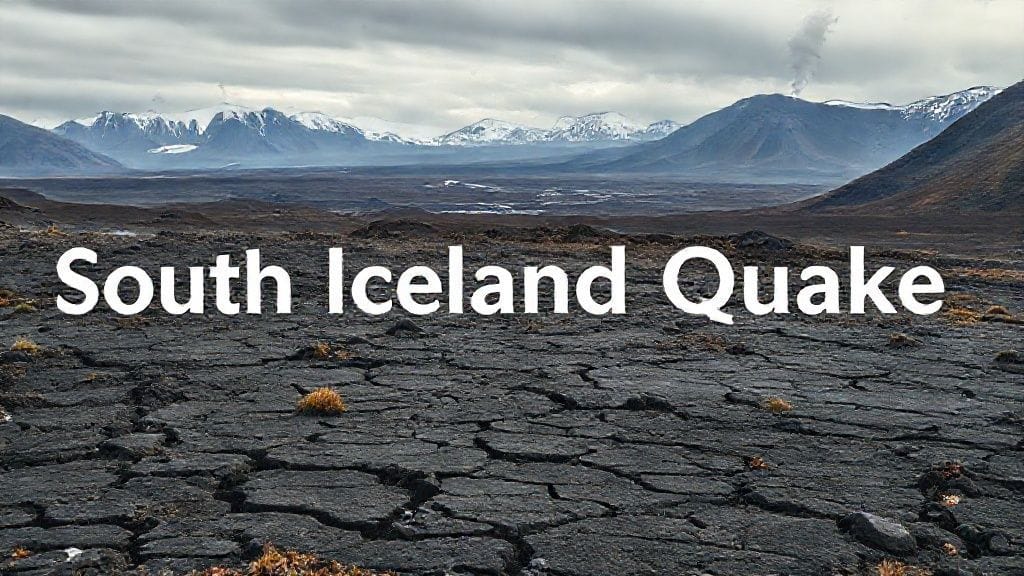
Iceland’s unique geography is a testament to tectonic dynamism. Sitting astride the Mid-Atlantic Ridge, it is the only place on earth where the ridge rises above sea level, splitting the island with a seam of continuous volcanic and seismic activity. The South Iceland Seismic Zone (SISZ), a complex fault system spanning roughly 70 kilometers, is the island’s most active seismic area. Here, the North American and Eurasian plates slide past and strain against one another, generating persistent earthquakes, fractures, and volcanic tremors.
The SISZ is composed of multiple strike-slip faults—where the land on either side moves horizontally, not vertically—making it a hotspot for sudden ruptures. The June 21 quake was one among a series of seismic events that characterizes this restless zone, yet its force and timing etched a permanent mark in Iceland’s collective memory.
3. The Calm Before the Quake: Societal and Environmental Context
Despite the inherent restlessness beneath, the years leading up to 2000 were relatively quiet in this part of Iceland. Farmers, fishermen, and townsfolk maintained a delicate equilibrium with their environment, local traditions deeply intertwined with respect for the unpredictable volcanic forces. Economic reforms and growth had recently shifted Iceland’s landscape, with increasing urbanization and infrastructure development in the south.
This growth meant more buildings, roads, and utilities exposed to seismic risks than ever before—a situation that added hidden anxiety when reports from geologists suggested the seismic zone was “charging.” Yet for the average citizen, the earth’s tremors remained background noise, a well-known, albeit unnerving, part of everyday life.
4. Early Warning Signs: Foreshocks and Rising Tensions Beneath the Earth
In the weeks preceding the main earthquake, Icelandic seismologists recorded a series of small tremors—foreshocks—that flickered like alarm signals beneath the surface. These minor quakes, often dismissed by the public as typical seismic whisperings, actually heralded the build-up to the major rupture.
Scientists observed increasing seismic swarms and slight ground deformations, data translated by specialists at the Icelandic Met Office into predictions of imminent significant activity. Nevertheless, the inherently unpredictable nature of seismic events left officials walking a tightrope between caution and complacency.
5. The Mainshock Unleashed: A Detailed Account of the June 21 Earthquake
At 03:51 a.m., residents awoke to the unmistakable and terrifying jolt of the earth shaking violently. The magnitude 6.5 quake, centered near the town of Hveragerði, unleashed its wrath over an area stretching more than 1,500 square kilometers. The strike-slip faulting ruptured the ground with sudden lateral displacement, snapping roads and fracturing foundations.
The quake’s duration felt eternal to those who experienced it—buildings swayed as if caught in a storm, household items crashed to floors, and the air itself seemed filled with a growl from deep within the planet. The night sky, illuminated by streetlights swinging furiously, bore witness to a natural force both primal and indifferent.
6. The Human Element: Stories from Eyewitnesses and Survivors
Among the chaos, personal narratives reflected resilience and vulnerability. A farmer near Selfoss recounted, “I was jolted awake; the house moved like a boat in a storm. It was terrifying, but my family was safe.” In Hveragerði, hospital staff worked frantically to care for those injured by shattered glass and falling debris.
These stories revealed a community bound by shared experience—neighbors checking on each other, emergency shelters quickly established, and a surge of collective solidarity that often defines Icelandic society’s response to natural disasters.
7. Infrastructure Shaken: How Buildings and Roads Bore the Brunt
The earthquake cracked roads open, ruptured bridges, and damaged homes, many constructed before modern seismic standards were implemented. Though Iceland is generally well-prepared for such events, localized damage was significant: hundreds of buildings sustained structural damage, electrical services were interrupted, and water mains cracked.
Notably, the Hveragerði geothermal power plant, essential for the region’s energy supply, escaped major damage, a testament to engineering that anticipates nature’s unpredictable fury. Yet repairing infrastructure would take months, and reconstruction introduced debates about future-proofing the nation.
8. The Response: Emergency Services Mobilize Amidst the Uncertainty
Emergency personnel—firefighters, police, medical teams—mobilized rapidly despite the early hour. Roads obstructed by landslides and cracks posed challenges, but coordinated efforts minimized casualties. The Icelandic government declared a state of alert, activating crisis management teams and communicating regularly with the public.
International aid was not required; Iceland’s robust internal systems and experienced seismic knowledge enabled a largely self-reliant recovery process. Still, the event exposed areas needing further improvement in emergency preparedness and public communication.
9. Scientific Vigilance: Monitoring a Restless Land
In the quake’s aftermath, seismologists intensified monitoring of the SISZ. Instruments recorded hundreds of aftershocks, some large enough to cause additional alarm. The event provided invaluable data that refined understanding of fault mechanics and earthquake prediction models.
Scientists, including those at the Nordic Volcanological Center, shared findings internationally, enhancing global seismological networks. The June 21 disaster thus contributed not just locally but to the broader scientific community’s knowledge of strike-slip fault behavior.
10. Aftershocks and Psychological Ripples: A Community Tested
Physical aftershocks were paralleled by psychological tremors: anxiety, stress, and post-traumatic effects emerged in affected populations. Schools incorporated earthquake preparedness into curricula; mental health services expanded outreach to support those still shaken weeks and months later.
This dimension of disaster impact often escapes immediate attention, yet it is crucial. Iceland’s approach combined scientific inquiry with human care, recognizing that the ground’s shaking resonates both in soil and in soul.
11. The Economic Impact: Weighing the Damage and Recovery Costs
Estimations placed total damage costs in the tens of millions of USD, significant for Iceland’s relatively small economy. Agricultural losses, damage to homes, interrupted commerce, and infrastructure repairs combined to challenge regional and national budgets.
Insurance companies adjusted policies, and government relief funds were allocated. Beyond immediate costs, the earthquake sparked long-term economic discussions about risk management, urban planning, and sustainability in a country where the earth’s whimsy can swiftly change fortunes.
12. Lessons from the Depths: How the Earthquake Reshaped Icelandic Policies
The 2000 quake precipitated revisions in building codes, emergency responses, and public education regarding natural disasters. Authorities emphasized strengthening constructions to withstand seismic forces and creating redundant systems for utilities and communications.
At the same time, environmental planning integrated geological data more closely, fostering a culture of preparedness that acknowledged inevitable future tremors. The quake thus forged not only damage but also resilience.
13. The Role of Technology: Innovations in Seismic Monitoring Post-2000
Post-earthquake investments accelerated Iceland’s seismic infrastructure, including state-of-the-art seismometers, GPS stations monitoring crustal movements, and real-time data dissemination to the public.
These technologies fostered transparency and trust, allowing citizens to follow the land’s subtle murmurs and scientists to act swiftly. The integration of such technology rendered Iceland a leading example of volcanic and seismic risk management worldwide.
14. Cultural Memory: The Earthquake’s Place in Icelandic Identity and Art
Natural disasters in Iceland profoundly shape collective identity. The 2000 earthquake entered folklore, poetry, and visual arts, symbolizing both the fragility and strength of life in this elemental landscape. Sculptures, exhibitions, and commemorative events remind Icelanders of the delicate dance between human endeavors and geological forces.
This cultural memory serves as both a warning and an inspiration, blending science, emotion, and artistry in a uniquely Icelandic narrative.
15. Global Significance: What the South Iceland Seismic Zone Teaches About Volcanic Regions
Beyond Iceland, the 2000 SISZ earthquake exemplifies how strike-slip faults function in volcanic and tectonic regions worldwide. It underscores the necessity of comprehensive seismic networks, public preparedness, and scientific vigilance in areas where plate boundaries are exposed.
The event’s data informs hazard assessment from California’s San Andreas Fault to the Anatolian Fault in Turkey—places where human life presses against geologic inevitability.
16. Comparing Catastrophes: 2000’s Earthquake Amidst Iceland’s Seismic History
Iceland’s 20th-century seismic record includes notable events—the 1912 Mýrdalshraun earthquake, the 1976 near-selfoss tremors, and others. The 2000 quake stands out for its timing, impact, and lasting effects.
It did not reach the devastating heights of the 1706 Silfra earthquake but nevertheless demonstrated how even moderate-magnitude quakes can cause disproportionate disruption, especially in populated regions.
17. The Lingering Tremors: Ongoing Geological Activity and Its Watchers
More than two decades later, the South Iceland Seismic Zone remains a hive of tectonic energy. Periodic tremors and minor earthquakes remind Icelanders that their land breathes with a restless spirit. Continuous scientific observation remains vigilant, as the 2000 event is a chapter, not the finale, in a long tectonic saga.
This vigilance reassures populations and guides responsible stewardship of the land.
18. Human Resilience: Community and Government Collaboration in Recovery
The recovery narrative was shaped by collaboration—between government agencies, scientists, and community members. Local initiatives repaired infrastructure, renewed homes, and redefined emergency preparedness.
This cohesion became a beacon of hope and model for disaster management in other volcanic zones, where physical destruction is met by social solidarity.
19. The South Iceland Seismic Zone Today: Preparedness and Scientific Progress
Today, the SISZ is better understood, better monitored, and better integrated into Iceland’s hazard planning. Public drills, educational programs, and infrastructure investments affirm a commitment to safety that balances respect for nature’s grandeur with pragmatic solutions.
The 2000 earthquake galvanized this progress, turning trauma into knowledge, uncertainty into preparedness.
20. Conclusion: An Enduring Legacy in Stone and Spirit
The South Iceland Seismic Zone earthquake of June 21, 2000, was a pivotal moment, one that shook the earth and awakened a nation. It revealed vulnerabilities, tested resilience, and compelled transformation.
Beyond the cracks in roads and fissures in walls, it fractured complacency and built a more informed, prepared society. Iceland stands as a testament to humanity’s capacity to listen to the deep rumblings beneath, to adapt, and to endure—not by taming nature, but by understanding and respecting it. This is the enduring legacy of that midnight quake, a pulse of the earth that still resonates in hearts and stones alike.
FAQs
Q1: What caused the June 21, 2000 earthquake in the South Iceland Seismic Zone?
A1: The earthquake resulted from the strain release along strike-slip faults in the South Iceland Seismic Zone, where the North American and Eurasian tectonic plates slide laterally past each other.
Q2: How strong was the earthquake and what scale measures it?
A2: The earthquake had a magnitude of 6.5 on the Richter scale, which measures the energy released by seismic events.
Q3: Were there any casualties during the earthquake?
A3: Fortunately, there were no reported fatalities. However, several individuals sustained injuries, primarily from falling debris and accidents caused by the shaking.
Q4: How did the Icelandic government respond immediately after the earthquake?
A4: Emergency services mobilized quickly, declaring a state of alert, responding to injuries, and organizing relief efforts while assessing infrastructure damage.
Q5: What long-term effects did this earthquake have on Iceland’s building codes?
A5: The quake prompted revisions to building design and construction standards to better withstand seismic forces, improving safety in future events.
Q6: How did the earthquake affect scientific monitoring technology in Iceland?
A6: It accelerated the installation of advanced seismometers and GPS stations, enabling real-time earthquake tracking and improved early warning capabilities.
Q7: What cultural impacts did the earthquake have on Icelandic society?
A7: The earthquake entered cultural expressions, inspiring art, literature, and community remembrance efforts that emphasize resilience and respect for nature.
Q8: Why is the South Iceland Seismic Zone important to global geological studies?
A8: It provides insight into the mechanics of strike-slip faults in volcanic regions, contributing data and lessons applicable to similar tectonic settings worldwide.