Table of Contents
- The Dawn of a Nation Divided: Morning of July 17, 1936
- Melilla’s Strategic Importance: The Gateway to Spanish Morocco
- The Political Landscape of Spain on the Eve of War
- Tensions in the Air: The Rise of Militarism and Ideological Fractures
- The Role of Spanish Morocco: Colonial Troops and Local Dynamics
- July 17, 1936: The Coup Begins in Melilla
- Key Figures Behind the Rising: Franco, Mola, and Their Allies
- The Rebellion Spreads Across Spanish Morocco
- The Reaction of the Local Population and Indigenous Forces
- Communications and Propaganda: Controlling the Narrative
- The Immediate Military Operations: Barracks, Barricades, and Bloodshed
- The Role of the Foreign Legion and Moroccan Regulares
- The Aftershock in Mainland Spain: News Travels Fast
- The Rift Deepens: Loyalists Versus Rebels
- The Outbreak of the Spanish Civil War: A Nation Torn Apart
- International Observers and the Global Context in 1936
- The Consequences of the Melilla Uprising: Short and Long Term
- Memory and Myth: How the Melilla Coup Is Remembered
- The Spanish Civil War’s Legacy in Morocco and Spain
- Conclusion: The Beginning of a Fractured Century
- FAQs: Key Questions About the Melilla Coup and Spanish Civil War
- External Resource
- Internal Link
1. The Dawn of a Nation Divided: Morning of July 17, 1936
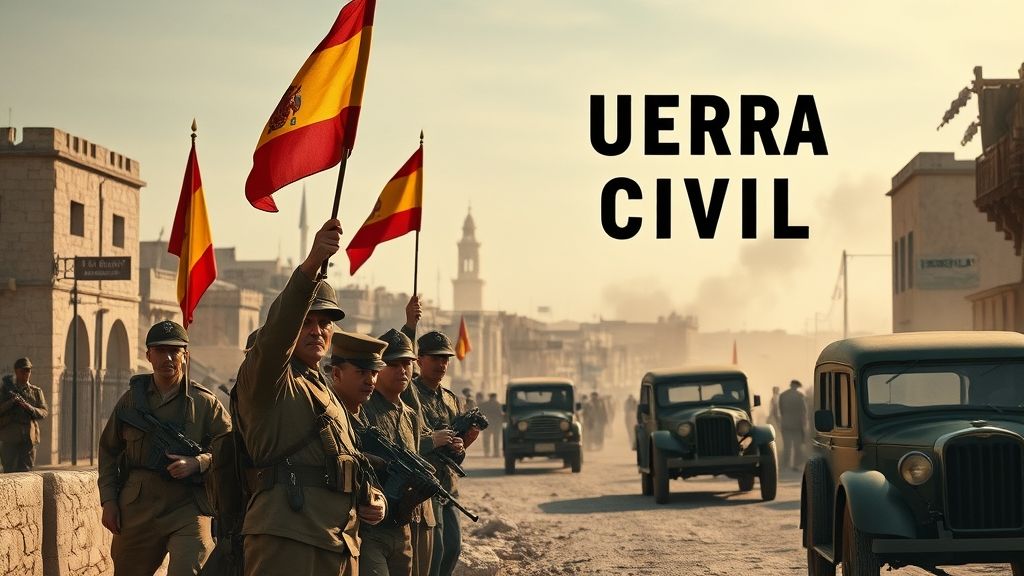
The sun rose over the restless city of Melilla on July 17, 1936, casting long shadows over a land already simmering with unrest. In the narrow streets nestled between the Rif mountains and the Mediterranean Sea, whispers of revolt had turned into shouts behind closed doors. Soldiers, civil guards, and officers, many of whom had long harbored resentment against the Republican government in Madrid, now moved swiftly and decisively. What began as a localized mutiny within this Spanish-held enclave was soon to ignite the greatest internal conflict Spain had endured in decades — a brutal civil war that would claim hundreds of thousands of lives and leave scars still visible today.
As the rebels took control of key points in Melilla, from military barracks to the radio station, the rest of a deeply polarized nation held its breath. The uneasy peace that had masked profound divisions for years was shattered, and the world witnessed the birth of a conflict that would become a prelude to global upheavals.
2. Melilla’s Strategic Importance: The Gateway to Spanish Morocco
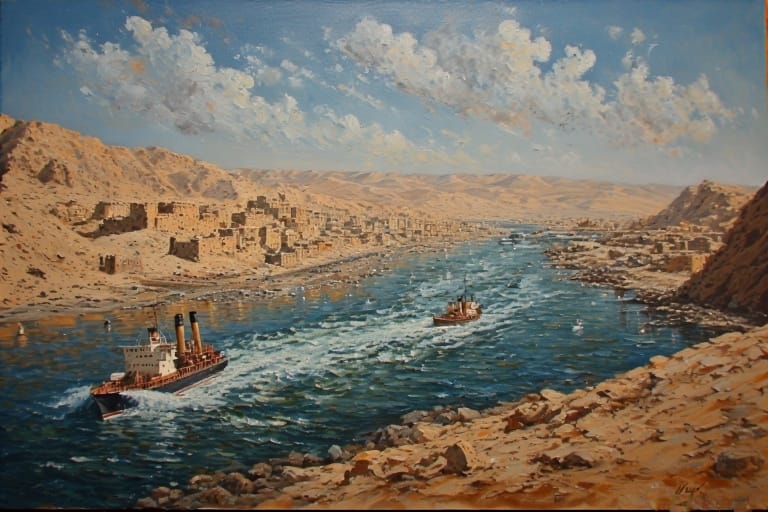
Located on the northern coast of Africa, Melilla was more than a colonial outpost; it was the lynchpin of Spanish sovereignty in Morocco. For decades, Spain had maintained control over Melilla and adjacent territories, known collectively as Spanish Morocco, emphasizing their strategic and symbolic value. This outpost controlled vital maritime routes, served as a base for military expeditions into the Rif, and offered a staging ground for political and military maneuvers.
In 1936, Melilla’s role transcended mere colonial administration. It became the stage where the rebellion against the Madrid Republic first took shape, leveraging the loyalty of colonial troops—especially the feared and battle-hardened Moroccan Regulares and the Spanish Foreign Legion. This military muscle was pivotal in transforming a localized coup into a national conflict.
3. The Political Landscape of Spain on the Eve of War
To grasp the eruption of violence on July 17, it is vital to understand Spain’s volatile political environment in the years leading up to 1936. The Second Republic, proclaimed in 1931 after King Alfonso XIII fled the country, had unleashed sweeping social reforms: land redistribution, secularization, and extending suffrage. Yet these changes incensed conservative factions—monarchists, the Church, and the military—who viewed the Republic as an assault on traditional Spain.
Political polarization reached fever pitch by 1936, with power oscillating between left-wing coalitions—Socialists, Communists, and Anarchists—and right-wing groups including the Falange. Violence, strikes, and political assassinations became disturbingly common. The fragile parliamentary democracy increasingly appeared incapable of containing the political passions boiling over in every corner of Spain.
4. Tensions in the Air: The Rise of Militarism and Ideological Fractures
Military dissatisfaction played a critical role in the build-up to the conflict. Many officers viewed the Republic’s reforms—such as the restructuring of the army and purges of conservative officers—as betrayals. The military’s unwelcome political neutrality turned into simmering hostility.
Ideological divisions were not confined to the political elite. Workers’ unions clashed with employer-backed militias, peasants invaded estates, and cities became battlegrounds of conflicting ideas. The military in Melilla and Spanish Morocco stood as a bastion of conservative order—an essential fact that conspirators exploited to launch their uprising.
5. The Role of Spanish Morocco: Colonial Troops and Local Dynamics
Spanish Morocco was far from a passive player. The colonial army included thousands of indigenous Moroccan soldiers—the Regulares—renowned for their fierce discipline and combat skills. Coupled with the Spanish Foreign Legion, these forces were crucial for the military rebellion.
Yet the relationship between Spanish officers and indigenous troops was complex. While Moroccan soldiers fought loyally alongside Spanish rebels, underlying tensions regarding colonial subjugation persisted. The colonial authorities manipulated tribal rivalries and leveraged material incentives, yet the eruption of war also meant uncertainty for local populations caught in the crossfire.
6. July 17, 1936: The Coup Begins in Melilla
The coup was meticulously planned and precisely timed. On July 17, high-ranking officers in Melilla—aligned with General Emilio Mola’s conspiracy to overthrow the Republic—seized control of military installations. Radio stations were seized swiftly to broadcast the rebellion, cutting off loyalist communications.
In a tense atmosphere of fear and sudden violence, arrests, shootings, and purges followed. Soldiers loyal to the Republic were disarmed or eliminated. The swift seizure of Melilla was crucial because it provided the Nationalists with their first territorial foothold and a secure rear base from which to project power back into mainland Spain.
7. Key Figures Behind the Rising: Franco, Mola, and Their Allies
While the coup opened in Melilla, leadership across Spanish Morocco and mainland Spain coordinated under the watchful eyes of men like Emilio Mola and Francisco Franco. Mola, chief architect of the conspiracy, was the mastermind behind the initial military insurrection. Franco, commanding Spain’s Army of Africa, soon emerged as its leading figure—the man whose political acumen and military command would become synonymous with the Nationalist cause.
Other notable figures included José Sanjurjo, whose mysterious death in a plane crash days after the coup propelled Franco to the pinnacle of rebel leadership, and generals like Gonzalo Queipo de Llano, whose fiery radio broadcasts stoked Nationalist fervor.
8. The Rebellion Spreads Across Spanish Morocco
Once Melilla was under control, the rebellion rippled quickly through the Spanish Protectorate. Other cities such as Ceuta and Tetuán fell with less resistance than anticipated. The consolidated control of Spanish Morocco gave the rebels access to vital resources, reinforcements, and air transport.
This domino effect was partly due to effective planning but also to widespread disaffection with the Republic among colonial authorities. The rebel commanders mobilized troops swiftly, preparing to transport forces via air and sea to the Spanish mainland, where loyalist strength was still formidable.
9. The Reaction of the Local Population and Indigenous Forces
The insurgency posed a dilemma for local Moroccan populations. While some indigenous troops fought alongside the rebels, many locals regarded the Spanish conflict with wary detachment or opportunistic interest. Tribal elders and influential groups often tried to maintain neutrality or exploit the chaos.
Nonetheless, the uprising aggravated existing tensions: recruitment pressures, crackdowns on dissidents, and the brutal suppression of suspected loyalists exacerbated resentment. For Moroccans, the Spanish Civil War was both a colonial conflict and a complex internal Spanish crisis—a duality often overlooked in broader narratives.
10. Communications and Propaganda: Controlling the Narrative
On the morning of July 17, one of the first battles was for information. Rebel forces seized radio transmitters to broadcast declarations of revolt and assured the public of “restoration of order.” Meanwhile, loyalist factions scrambled to counter the narrative and rally support.
Propaganda was weaponized by both sides to justify actions, demonize opponents, and rally international sympathies. The Nationalists portrayed themselves as defenders of tradition and Christianity against anarchy and communism, while Republicans emphasized resistance against fascism. The battle for hearts and minds was as fierce as that fought with rifles and bullets.
11. The Immediate Military Operations: Barracks, Barricades, and Bloodshed
The first hours of the coup saw intense fighting in the narrow streets and military installations of Melilla. Barracks were stormed by rebel units; loyalist officers and soldiers were detained or killed. Small-scale but symbolic battles determined who controlled key locations within hours.
The brutality of these clashes was a grim harbinger. Casualties mounted as nature of the conflict revealed itself — neither side willing to compromise, each convinced that total victory was the only acceptable outcome. Many residents found themselves caught in the crossfire, with reports of extrajudicial executions and brutal repression surfacing almost immediately.
12. The Role of the Foreign Legion and Moroccan Regulares
The Spanish Foreign Legion, an elite military formation with experience from colonial wars, was a pillar of the rebellion’s success in Melilla. Its soldiers, imbued with a fierce esprit de corps and brutal combat efficiency, quickly secured the city.
Alongside them, Moroccan Regulares—indigenous infantry under Spanish command—played a decisive role. Their participation underscored the colonial dimension of the conflict, as Spain relied on its empire’s military structures to fuel a civil war at home. The Legion and Regulares would go on to become the backbone of the Nationalist war machine.
13. The Aftershock in Mainland Spain: News Travels Fast
The news of the uprising in Melilla and Spanish Morocco thundered across the Strait of Gibraltar to mainland Spain. Panic and fury spread in political and military circles in Madrid. The government scrambled to respond while fears of a full-scale civil war materialized.
In cities like Madrid, Barcelona, and Seville, workers’ militias, police forces, and military units loyal to the Republic mobilized to contain the rebellion. The uncertain balance of power meant that Spain’s fate hinged on battles yet to come — but July 17 marked the irreversible fracturing of the nation.
14. The Rift Deepens: Loyalists Versus Rebels
What had begun as a military coup now divided Spain fundamentally. The ‘Loyalists,’ defenders of the Republic, faced off against ‘Nationalists,’ the rebels seeking to restore conservative order. Alliances formed quickly: peasants and workers sided overwhelmingly with the Republican cause, while landowners, the Church, and much of the officer corps supported the uprising.
This polarizing fault line extended beyond politics to cultural, social, and even religious identities, escalating the war into a total confrontation reshaping Spanish society.
15. The Outbreak of the Spanish Civil War: A Nation Torn Apart
By the end of July 1936, the single event triggered in Melilla had blossomed into a full civil war. The conflict would rage for three years, reshaping not only Spain but inspiring and alarming the entire world.
Civilian deaths, political executions, international brigades, and the shadow of fascism cast a tragic and profound historical legacy. The war was a brutal symphony of ideology, violence, and tragedy — all beginning under the glaring Mediterranean sun in Melilla.
16. International Observers and the Global Context in 1936
The Spanish Civil War was not an isolated conflict. As the fascist regimes in Germany and Italy openly supported the rebels, the Soviet Union lent aid to the Republicans. Volunteers from across Europe and the Americas joined the International Brigades.
The uprising that started in Melilla thus foreshadowed broader ideological battles on the eve of World War II, turning Spain into a crucible where democracy, fascism, communism, and anarchism clashed.
17. The Consequences of the Melilla Uprising: Short and Long Term
In the short term, control of Spanish Morocco provided the Nationalists with essential military assets—men, weapons, logistical lines—that tilted early military campaigns in their favor. It also marked the beginning of a military dictatorship that would last decades after Franco’s victory in 1939.
Long-term, the rebellion deepened regional animosities, entrenched ideological polarization, and left durable scars on Spain’s collective memory. Morocco’s role in the conflict highlighted the complexities of colonial entanglements in European civil wars.
18. Memory and Myth: How the Melilla Coup Is Remembered
Decades later, Melilla’s uprising remains a subject of contested memory. For some, it is a heroic moment of military discipline and order; for others, the launch of a brutal fascist dictatorship.
Monuments, memoirs, and historical debates continue to wrestle with the event’s meaning. The coup’s legacy lives on in Spain’s delicate process of historical reckoning.
19. The Spanish Civil War’s Legacy in Morocco and Spain
In Morocco, the war deepened the colonial wounds and complicated decolonization movements. For Spain, the civil war shaped the trajectory of national politics, society, and culture throughout the 20th century, creating divisions that echo today.
Evidently, the seeds sown in Melilla in July 1936 blossomed into a tragic chapter of history, whose repercussions transcended borders.
20. Conclusion: The Beginning of a Fractured Century
The insurrection in Melilla on July 17, 1936, was no mere local mutiny. It was the spark that ignited a devastating civil war, a conflict so powerful it reshaped ideologies, nations, and the world stage. A city perched on the edge of Africa became the fulcrum for a larger drama of freedom and oppression, unity and division.
Remembering Melilla’s uprising is not just about recounting military maneuvers—it is about understanding the human capacity for both destruction and courage. It teaches us how fragile democracy can be, how history is shaped in moments of crisis, and how the echoes of these moments resound through generations.
Conclusion
The story of the Spanish Civil War’s outbreak in Melilla is a poignant reminder of history’s intertwined complexity—where colonial ambitions, ideological divisions, and personal ambitions converge to alter the fate of nations. The first shots fired in Melilla were not just the antics of restless soldiers; they were the manifestation of deep social fissures within Spain, catalyzed by the strains of modernization, competing visions for the nation, and global geopolitical currents.
As the world watched Spain tear itself apart, Melilla stood as the unintended cradle of conflict, its streets soaked in the blood of a fractured people. From the narrow alleyways to the colonial outposts, every stone whispered tales of hope, betrayal, and resilience.
Today, as history scholars and readers, we owe ourselves the duty to remember Melilla not just as a city caught in the crosshairs of war, but as the starting point of a tragic saga—one that teaches the catastrophic power of division and the enduring aspiration for peace and justice.
FAQs
Q1: Why was Melilla chosen as the starting point for the coup?
A: Melilla was key due to its strong military presence, loyal colonial troops like the Foreign Legion and Moroccan Regulares, and conservative officer corps sympathetic to the rebellion. Its strategic position also allowed the rebels to secure critical military resources.
Q2: Who were the main leaders of the military coup in Melilla?
A: General Emilio Mola was the primary architect of the coup, with support from Francisco Franco and other senior officers. Franco’s control of the Army of Africa cemented his leadership role shortly after the uprising began.
Q3: How did local Moroccan populations react to the coup?
A: Reactions varied—while many Moroccan troops supported the rebels, indigenous populations often maintained neutrality or were caught between colonial authorities and local interests. The war exacerbated existing tensions in the protectorate.
Q4: What role did the Spanish Foreign Legion and Moroccan Regulares play?
A: These elite colonial troops formed the backbone of the Nationalist military effort. Their discipline and combat experience were crucial for the swift takeover of Melilla and subsequent military campaigns.
Q5: How did the uprising in Melilla influence the wider Spanish Civil War?
A: The successful seizure of Melilla provided the Nationalists with key military assets and a base of operations. It triggered a broader national uprising, splitting Spain into warring factions and starting a three-year civil war.
Q6: What international powers were involved or affected by the outbreak of war?
A: Germany and Italy supported the Nationalists, while the Soviet Union and International Brigades backed the Republicans. The war was seen as a proxy for ideological battles preceding World War II.
Q7: How is the coup in Melilla remembered in Spain today?
A: It remains controversial—some remember it as a necessary defense against chaos, others as the starting point of fascist repression. Historical memory politics continue to challenge a unified narrative.
Q8: What long-term effects did the Spanish Civil War have on Morocco?
A: The war intensified colonial tensions, influenced nationalist movements, and complicated Morocco’s path to independence, highlighting the inextricable link between Spanish and North African histories.