Table of Contents
- The Final Dawn: Spartacus on the Plains Near the Silarus
- From Gladiator to Rebel: The Rise of Spartacus
- Cracks in the Roman Republic: Political Turmoil and Social Strains
- The Spark of Rebellion: The Gladiators’ Escape from Capua
- Gathering Storm: Spartacus’ Growing Army of the Dispossessed
- Clashes Across Italy: Early Victories and Growing Confidence
- Shadows of Rome: The Senate’s Uneasy Response
- Titan of Defiance: Spartacus’ Leadership and Strategic Brilliance
- The Turning Tide: Moments Before the Final Confrontation
- The Battle Near the Silarus: Clash of Titans in 71 BCE
- The Death of Spartacus: Myth, Reality, and Historical Debate
- Aftermath on the Battlefield: The Fall of the Slave Army
- Rome’s Ruthless Retribution: Crucifixions and Fear as Weapons
- Legacy of the Rebellion: A Symbol Beyond Defeat
- The Rebellion’s Impact on Roman Society and Policy
- Spartacus in Cultural Memory: From Antiquity to Modern Myth
- Theories and Speculations: Was Spartacus’ Death Foretold?
- Lessons from Silarus: Freedom, Rebellion, and Power
- The Slave Wars’ Shadow in Roman History
- A Human Story of Courage and Desperation
- Conclusion: How Spartacus’ Final Stand Changed the World
- FAQs: Unraveling Mysteries about Spartacus and the Third Servile War
- External Resource: Dive Deeper into Spartacus’ Story
- Internal Link: Visit History Sphere for More Historical Narratives
1. The Final Dawn: Spartacus on the Plains Near the Silarus
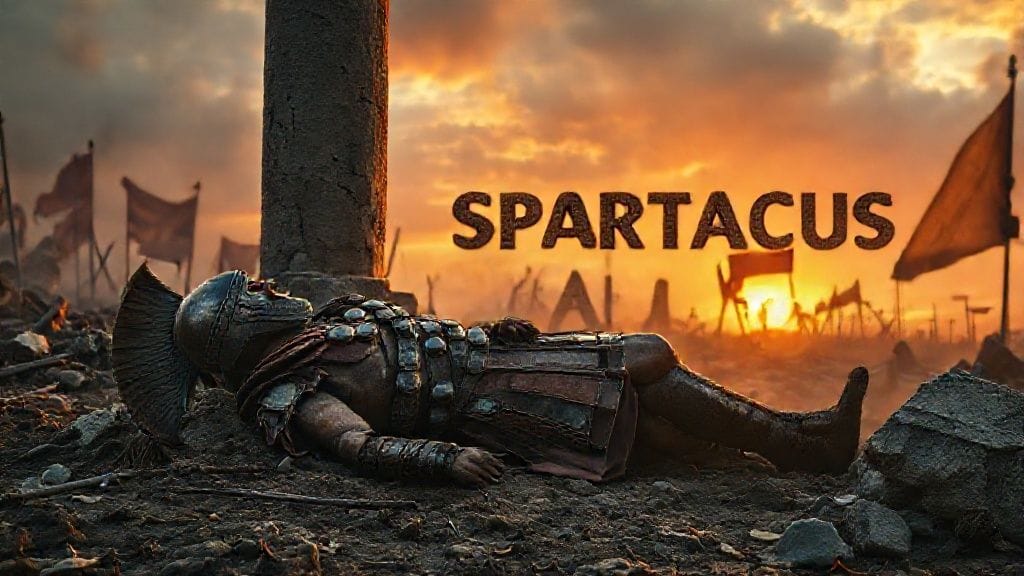
Under the scorching Italian sun, near the swift-flowing Silarus River, an extraordinary battle unfolded in the waning days of 71 BCE—a clash that would etch Spartacus’ name forever into the annals of history. On this very plain, a man once shackled by the chains of slavery, transformed into the torchbearer of rebellion, drew his final breath. The air was heavy with dust, sweat, and the iron scent of blood as the legions of Rome clashed furiously with an army of escaped slaves yearning for freedom. It was a storm of desperation and fury, where hope mingled with inevitable defeat.
The silence of the battlefield, punctuated only by anguished cries and the clang of swords, was the somber conclusion of a revolt that had shaken Rome to its core. Spartacus, a figure of mythic stature and tragic grandeur, stood at the heart of this maelstrom. Killed in battle, his death marked the collapse of the Third Servile War—a rebellion unlike any other in Roman history.
2. From Gladiator to Rebel: The Rise of Spartacus
Spartacus’ story begins far from the bloodied fields of Italy, in the obscure provinces of Thrace. A warrior once enslaved, turned gladiator, his strength and resolve quickly surpassed those of many born free. Little is definitively known of his early life, shrouded in fragmented accounts and legend, but what shines clear is his transformation from someone deemed property into a symbol of insurgency.
Initially sold to a gladiatorial school in Capua, Spartacus did what was unthinkable—he orchestrated a daring escape. Along with a small band of fellow gladiators, he fled captivity, igniting sparks that would soon blaze into full-scale rebellion. The fight for freedom was not just physical—it was a fierce assertion of dignity, a challenge to the very fabric of Roman society.
3. Cracks in the Roman Republic: Political Turmoil and Social Strains
At the time, the Roman Republic was no monolith of strength but a polity riddled by political infighting, social inequality, and military overstretch. Rome’s enormous wealth and power were underpinned by an often brutal reliance on slave labor, making the social structure fragile.
The Republic was governed by an aristocracy deeply invested in maintaining control, but beneath this façade white-hot grievances simmered—among the poor citizens, disenfranchised veterans, and the countless slaves. Spartacus’ rebellion exposed these fissures spectacularly, threatening to unravel the fragile order and forcing Rome’s leadership into a defensive frenzy.
4. The Spark of Rebellion: The Gladiators’ Escape from Capua
The rebellion’s igniting moment recalls an audacious night in 73 BCE when Spartacus and around 70 gladiators seized kitchen knives and makeshift weapons, fighting their way out of the ludus in Capua. What began as a desperate bid for survival quickly became a campaign for liberation.
Fleeing through the countryside, the escaped gladiators grew in number each day, as slaves yearning for emancipation joined the cause. The early victories were near legendary—ambushes on Roman forces, strategic retreats, and destructive raids that embarrassed the Senate and stunned Roman commanders used to swift suppression of disorder.
5. Gathering Storm: Spartacus’ Growing Army of the Dispossessed
What made Spartacus’ revolt unique wasn’t merely the act of rebellion—it was the transformation of fractured, desperate individuals into a coherent fighting force tallying in the tens of thousands. Unskilled and ill-equipped at first, these escaped slaves learned quickly, inspired and led by Spartacus’ military acumen.
From all corners of Italy—from farms to mining settlements—the discontented flocked to this new standard of revolt. It was a fusion of diverse backgrounds and broken dreams, yet united by shared pain and a common hunger for freedom. The army became a symbol, one that scared Rome as much as it inspired the oppressed.
6. Clashes Across Italy: Early Victories and Growing Confidence
In a series of unexpected battles, the rebel force scored multiple victories against Roman detachments eager to crush the uprising before it grew too large. Roman commanders underestimated the rebels’ resolve and Spartacus’ tactical skill.
These clashes, from the southern regions up through the Italian peninsula, carried a political message louder than sword clashes: the Republic’s authority was not absolute and could be challenged by those it deemed lesser beings. The Senate grew alarmed but divided on how best to respond.
7. Shadows of Rome: The Senate’s Uneasy Response
The rebellion forced Rome’s political elite into frenzy. Some senators called for draconian measures, while others counseled negotiation or gradual containment. The Republic, embroiled also in external conflicts, could not afford a drawn-out civil disturbance.
Efforts to quell the revolt initially faltered, plagued by poor leadership, hesitation, and lack of experience fighting such a unique enemy. Multiple Roman consuls and praetors took command, only to meet defeat or stalemate at the hands of Spartacus’ forces.
8. Titan of Defiance: Spartacus’ Leadership and Strategic Brilliance
Despite being a slave with no formal military training, Spartacus exhibited remarkable tactical innovation on the field. His guerrilla warfare tactics, knowledge of terrain, and ability to inspire a ragtag army into disciplined units unsettle both the Roman legions and historians alike.
Conflicting sources hint at deep strategic debates within Spartacus’ camp, oscillating between a march to freedom across the Alps or a full-frontal assault on Rome itself. Yet, throughout, his leadership rested on a charismatic melding of hope and ruthless pragmatism.
9. The Turning Tide: Moments Before the Final Confrontation
By 71 BCE, the rebellion had reached its zenith, but internal divisions and Roman counterattacks sapped its strength. Spartacus faced mounting pressure—rebel ranks thinning, losses escalating, and political support dwindling.
Reports suggest Spartacus prepared for one last desperate gamble—a final battle near the Silarus River, hoping to break the siege and forge an escape route. It was a climax steeped in tension, uncertainty, and the raw human desperation to outrun fate.
10. The Battle Near the Silarus: Clash of Titans in 71 BCE
Amidst the rolling plains and olive groves, the battle erupted like a tempest. Roman legions, likely under Marcus Licinius Crassus, confronted the rebel army in a fight marked by ferocity and sheer willpower.
Though outnumbered and outgunned, Spartacus’ men fought with extraordinary courage. Yet, the Romans’ better training and equipment as well as tactical entrapments began to turn the tide. The vivid accounts—though fragmented—paint a picture of bloodied valor and tragic heroism.
11. The Death of Spartacus: Myth, Reality, and Historical Debate
Spartacus’ end remains shrouded in ambiguity. Ancient sources conflict on whether he fell in the melee or was killed attempting to retreat. No definitive eyewitness record exists, leading to centuries of mythologizing.
What is nearly certain is that Spartacus' death signaled the disintegration of the slave army. His body was never recovered, fueling legend and speculation. For many, his death transcended physical loss—becoming instead martyrdom, an eternal symbol of resistance.
12. Aftermath on the Battlefield: The Fall of the Slave Army
With their leader fallen, the rebel forces fractured and struggled to reorganize. Roman legions methodically hunted down survivors in brutal skirmishes. Thousands were slaughtered, and many others captured, facing grim fates.
The defeat was thorough and crushing, yet the haunting memory of Spartacus’ final stand haunted Rome and future generations alike.
13. Rome’s Ruthless Retribution: Crucifixions and Fear as Weapons
The Senate, aiming to deter future slave revolts, exacted savage punishment. Mass crucifixions lined the Appian Way—decades-long testimony of Rome’s capacity for cruelty and control.
These public spectacles served as grim warnings, underscoring the political reality that such rebellions would be met not with mercy, but with horrific retribution. The toll on the human spirit and society was profound.
14. Legacy of the Rebellion: A Symbol Beyond Defeat
Though militarily crushed, Spartacus’ uprising echoed far beyond its temporal defeat. His fight became a powerful symbol for freedom against oppression—a narrative seized upon by various movements across centuries.
From early Christians to 19th-century revolutionaries and modern popular culture, Spartacus evolved into an icon of rebellion, hope, and the universal human yearning for liberty.
15. The Rebellion’s Impact on Roman Society and Policy
In the immediate aftermath, Rome tightened military discipline and surveillance over enslaved populations. Though the institution of slavery persisted, the uprising exposed its inherent dangers.
Some scholars argue the revolt subtly influenced Rome’s evolving social policies, pushing elites to reconsider the precarious balance between exploitation and control.
16. Spartacus in Cultural Memory: From Antiquity to Modern Myth
From ancient chroniclers like Plutarch and Appian to Hollywood’s silver screen, Spartacus’ story has been continuously retold and reshaped. The 20th-century film starring Kirk Douglas immortalized him as a heroic figure standing against injustice.
This cultural resonance speaks to the enduring power of his story—one that continues to inspire moral reflection and artistic expression.
17. Theories and Speculations: Was Spartacus’ Death Foretold?
Some ancient writers hinted that Spartacus’ fate was sealed by fate or supernatural forces—common in Roman historiography seeking moral lessons.
Modern historians largely reject mystical explanations but remain fascinated by the gaps and ambiguities, which fuel ongoing research and debate into the historical truth.
18. Lessons from Silarus: Freedom, Rebellion, and Power
Spartacus’ final battle teaches that courage and hope can unsettle empires, but also the harsh realities of power.
His story is a poignant reminder of humanity’s unending quest for justice, tempered by the brutal costs often involved. It questions the price of freedom and the nature of subjugation.
19. The Slave Wars’ Shadow in Roman History
The Third Servile War, culminating at Silarus, was the last and most threatening in a series of slave uprisings. Its shadow loomed over Roman politics and society for generations, illustrating the persistent instability caused by systemic oppression.
A historical fault line, this rebellion foreshadowed the Republic’s eventual transformation into Empire, where control tightened but underlying tensions persisted.
20. A Human Story of Courage and Desperation
Beyond military maneuvers and political analysis, this is fundamentally a human story—of a man rising from chains, of countless others risking everything in pursuit of an elusive dream.
These men and women were more than rebels; they were fathers, mothers, laborers, warriors—all bound by a shared desire to reclaim their humanity.
21. Conclusion: How Spartacus’ Final Stand Changed the World
Spartacus’ death near the Silarus was not merely an end, but a beginning. It solidified a legend that challenges power to this day. Despite the defeat, it ignited a timeless dialogue on freedom and resistance.
History remembers Spartacus not for his failure, but for his indomitable spirit—the fiery reminder that even in chains, humanity’s longing to be free burns brightest of all.
Conclusion
In the dust and blood of the fields near the Silarus River, Spartacus’ final battle closed the chapter on one of the most extraordinary revolts in antiquity. Yet, rather than marking an end, it signaled an enduring legacy that transcended time and geography. The tale of Spartacus is a profound meditation on courage in the face of insurmountable odds, the human cost of systemic injustice, and the unyielding flame of liberty that refuses to be extinguished.
It forces us to consider the intricate interplay between power and resistance and asks—how does one measure true victory? For Spartacus and his followers, their battle near the Silarus was more than a fight; it was an assertion that even the oppressed could rise, resist, and inspire for generations to come.
FAQs
Q1: Who was Spartacus and why did he lead a rebellion?
A1: Spartacus was a Thracian gladiator who escaped slavery and led a large-scale slave revolt against the Roman Republic. He sought to challenge the oppressive institution of slavery and fight for freedom.
Q2: What triggered the Third Servile War?
A2: The rebellion began with the escape of Spartacus and a small group of gladiators from a training school in Capua, which escalated as tens of thousands of slaves joined the cause seeking liberation.
Q3: How did Spartacus manage to challenge the Roman legions successfully?
A3: Spartacus displayed notable military aptitude, using guerrilla tactics and inspiring leadership to create a disciplined rebel army capable of defeating several Roman forces in battle.
Q4: What happened at the final battle near the Silarus?
A4: Spartacus’ forces were decisively defeated by Roman legions commanded by Crassus. Spartacus was killed in battle, and the surviving rebels were hunted down or captured.
Q5: How did Rome respond after the rebellion was crushed?
A5: Rome executed harsh reprisals, including the crucifixion of thousands of captured rebels along the Appian Way, to deter further slave revolts and restore order.
Q6: Why is Spartacus still remembered today?
A6: Spartacus is celebrated as a symbol of resistance against oppression, embodying the quest for freedom and human dignity, inspiring countless cultural works and political movements.
Q7: Did the Spartacus rebellion lead to any lasting changes in Roman society?
A7: While slavery continued, the rebellion exposed vulnerabilities in Rome’s social order, prompting stricter control measures and contributing to ongoing debates about the institution of slavery.
Q8: How accurate are the historical accounts of Spartacus and his revolt?
A8: Ancient sources contain contradictions and gaps, blending fact with legend. Modern historians rely on archaeological evidence and critical analysis to reconstruct the most plausible narrative.

