Table of Contents
- The Fateful Morning: Sri Lanka Awakens to Disaster
- The Unseen Giant: Origins of the Indian Ocean Tsunami
- Geological Forces at Play: Understanding the Earthquake Beneath
- Coastal Communities in Peril: Sri Lanka’s Vulnerable Shores
- The First Wave: Moments Before the Impact
- The Tsunami’s Arrival: A Wall of Water Unleashed
- Human Stories amid the Deluge: Survival and Loss
- The Immediate Aftermath: Chaos and Despair
- Sri Lanka’s Emergency Response: Courage under Pressure
- International Aid and Solidarity: A Global Outpouring
- Environmental Devastation: The Changing Landscape
- Economic Ripples: The Cost to Fisheries and Tourism
- Psychological Scars: Trauma and Recovery in Survivors
- The Role of Early Warning Systems: Lessons Learned
- Coastal Reconstruction: Between Hope and Challenge
- Regional Impact: The Broader Indian Ocean Catastrophe
- Scientific Advances Triggered by the Disaster
- Voices from the Shore: Eyewitness Accounts
- Political Consequences and Governmental Actions
- Memory and Commemoration: Remembering the Tsunami
- Resilience and Renewal: Sri Lanka’s Path Forward
The Fateful Morning: Sri Lanka Awakens to Disaster
On the morning of December 26, 2004, the usual rhythm of daily life along Sri Lanka’s coast was shattered in a matter of moments. Fishermen readied their boats, children played on sun-dappled beaches, women prepared meals in small villages—unaware that beneath the surface of the distant Indian Ocean, a catastrophe of staggering magnitude was brewing. It started as a low, eerie rumble, barely noticeable at first—but soon, the earth shook violently, heralding a seismic event that would unleash one of the deadliest tsunamis in recorded history. Before the sun had fully risen, the peaceful coast transformed into a terrifying landscape of destruction, displacement, and profound human sorrow.
This was not just a natural disaster; it was a pivotal moment for Sri Lanka and its neighbors, forever changing the fabric of communities, the landscape of the island, and the consciousness of a region unprepared for such an elemental fury.
The Unseen Giant: Origins of the Indian Ocean Tsunami
The tsunami that devastated Sri Lanka’s coast originated more than 1,600 kilometers away beneath the waters off the west coast of northern Sumatra, Indonesia. On that Sunday morning, a colossal undersea earthquake measuring between 9.1 and 9.3 on the Richter scale ruptured along the boundary of the Indian and Burma tectonic plates. This sudden displacement of the seabed displaced billions of tons of water, setting off an ocean-wide pulse of killer waves racing toward coastal lands of South and Southeast Asia, and beyond.
The event’s colossal energy release was estimated to be equivalent to about 1.1 gigatons of TNT, a force that dwarfed most human conflicts and natural events. Yet it was invisible to the eye until the waves made their merciless landfall.
Geological Forces at Play: Understanding the Earthquake Beneath
The earthquake’s epicenter lay near the Sunda Trench, a deep-subduction zone where the Australian plate is slowly diving beneath the Eurasian plate. This tectonic interaction is a restless one, accumulating strain over centuries until it finally snaps. In this case, the rupture extended about 1,000 kilometers, releasing pent-up geological energy in a violent, sudden surge. Such megathrust earthquakes are rare but devastating: they generate seabed displacement that propagates outward in a series of powerful waves traveling at speeds of up to 800 kilometers per hour in deep ocean waters.
Sri Lanka, located south of India, was distant enough from the epicenter to avoid a major seismic shock but close enough to endure the incoming tsunami with catastrophic effect.
Coastal Communities in Peril: Sri Lanka’s Vulnerable Shores
Sri Lanka’s coastline stretches over 1,300 kilometers, encircling the island with a mix of sandy beaches, rocky cliffs, and mangrove forests. The southern and eastern coasts, with their numerous fishing villages and tourist resorts, were especially exposed. Many of these communities had limited awareness of tsunamis; early warning systems were barely existent. Houses built close to the waterline, often constructed with lightweight materials, were no match for the oncoming waves.
Despite the island’s rich maritime heritage, the rarity of such events led to a lack of preparedness—an unspoken reassurance that the ocean was a giver, not a taker of life. This illusion was violently shattered.
The First Wave: Moments Before the Impact
In the hour preceding the tsunami’s arrival in Sri Lanka, subtle and terrifying signs appeared. Some beachgoers and fishermen noticed the ocean suddenly receding—a phenomenon called "drawback"—where the seabed is exposed as water is sucked back into the deep, sometimes revealing coral reefs and fish stranded in tidal pools. For the uninformed, this was a curiosity; for those who recognized the danger, it was a chilling omen.
Unfortunately, few had the knowledge or time to act. The first massive wave slammed into the coastline around 9:30 am local time, just over two hours after the earthquake.
The Tsunami’s Arrival: A Wall of Water Unleashed
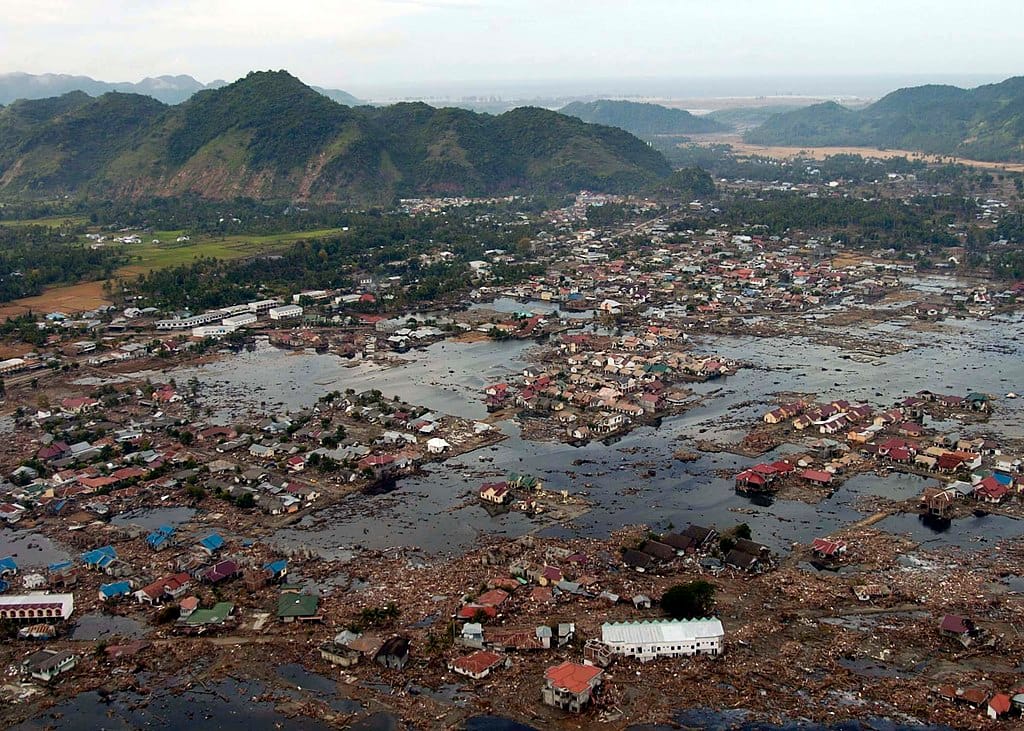
The tsunami hit the eastern coastline with an initial wave reaching heights of 10 to 15 meters in some areas. Successive waves flooded inland areas, racing up to 2 kilometers inland, sweeping away homes, cars, boats, and entire communities as if they were mere toys. The force of the water was not simply a flood but a relentless, grinding wave of destruction.
It engulfed entire villages like Batticaloa and Trincomalee, places that previously had known only the rhythm of tides and storms—not this sudden annihilation. For many, the tsunami came as a wall of deafening noise, a monstrous roar louder than any thunderclap or cyclone they had ever experienced.
Human Stories amid the Deluge: Survival and Loss
Among the chaos, stories of human courage, tragedy, and resilience emerged. Families trapped on rooftops clung to the roofs as waters rose around them; fishermen who had been at sea survived by clinging to floating debris. Yet, countless others were lost—an estimated 35,000 Sri Lankans perished, with thousands more injured and missing. The psychological toll was searing, as survivors confronted the sudden, incomprehensible loss of loved ones and homes.
One poignant anecdote is of a mother who, clutching her infant, waded through knee-deep water to reach a hospital, her determination carving a path through the devastation. Such moments captured the indomitable human spirit amid catastrophic odds.
The Immediate Aftermath: Chaos and Despair
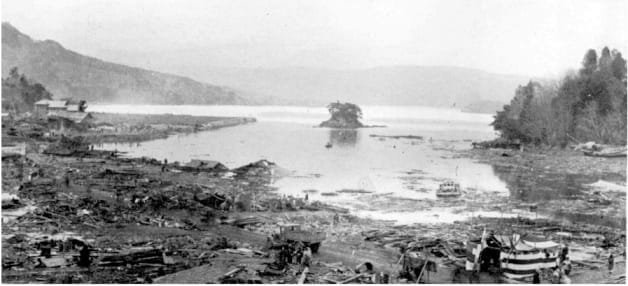
In the hours following the tsunami, Sri Lanka descended into chaos. Communications were severed, roads impassable, and entire coastal districts cut off. Relief centers were quickly established in safer inland areas, but the scale of destruction overwhelmed local capacities. Bodies floated in the water, and the landscape resembled a post-apocalyptic scene.
Hospitals struggled with the influx of injured; survivors without shelter faced exposure. The government declared a state of national emergency, mobilizing military and civilian resources to conduct search and rescue and deliver aid. Yet, confusion and misinformation sometimes compounded the plight.
Sri Lanka’s Emergency Response: Courage under Pressure
Despite immense challenges, Sri Lankan armed forces, police, and volunteer groups sprang into action with remarkable determination. They conducted raids into flooded areas to rescue stranded survivors, cleared roads, and distributed emergency food and water. Hospitals operated round the clock.
International emergency aid began to pour in within days, but in those initial hours, it was the local response that mattered most. The collective grit of Sri Lankans, amidst staggering grief, revealed deep reservoirs of strength.
International Aid and Solidarity: A Global Outpouring
The scale of the disaster reverberated worldwide. Governments, NGOs, and everyday people sent supplies, funds, and personnel. Notably, India, the United States, and numerous European countries redeployed naval and air units to assist relief operations. The United Nations coordinated a multi-billion-dollar humanitarian effort to rebuild infrastructure and assist displaced persons.
Celebrities, aid organizations, and citizens across continents raised awareness and money, making the 2004 Indian Ocean tsunami one of the most extensively covered natural disasters in modern media history.
Environmental Devastation: The Changing Landscape
Beyond human losses, the tsunami altered Sri Lanka’s coastal ecology. Mangroves and coral reefs—the natural buffers against ocean storms—were destroyed or severely damaged. Saltwater inundation contaminated freshwater sources and agricultural lands, impacting future food security.
The scale of destruction to marine biodiversity was immense. Entire habitats were erased, forcing a decades-long recovery of fragile ecosystems.
Economic Ripples: The Cost to Fisheries and Tourism
Sri Lanka’s economy relies heavily on fisheries and tourism—both hit hard by the tsunami. Fishing boats, gear, and infrastructure were decimated, rendering many fishermen jobless. Tourist resorts along the east and south coasts, vital for foreign exchange, lay in ruins or closed for months.
Rebuilding these industries required substantial investment and time, prolonging economic hardship for thousands and slowing national recovery.
Psychological Scars: Trauma and Recovery in Survivors
Beyond physical damage, the tsunami inflicted lasting psychological wounds. Survivors coped with grief, displacement, and uncertainty. Mental health services, initially scarce, struggled to provide trauma counseling or therapy. Post-traumatic stress disorder (PTSD) and depression rates climbed.
Yet, community support, religious faith, and new social networks helped many survivors rebuild their emotional lives—a testament to cultural resilience amid deep sorrow.
The Role of Early Warning Systems: Lessons Learned
Tragically, one of the greatest failures was the absence of an effective tsunami early warning system in the Indian Ocean region. Unlike the Pacific, where decades of investment had created robust alerts, this area had minimal monitoring and communication infrastructure.
The 2004 disaster catalyzed international efforts to install such systems, combining seismic data, ocean buoys, and satellite communication to provide timely warnings and potentially save thousands of lives in the future.
Coastal Reconstruction: Between Hope and Challenge
In the ensuing years, Sri Lanka faced the daunting task of rebuilding coastal infrastructure—housing, schools, roads, and sanitation facilities—often in the face of contested land rights and security challenges related to the ongoing civil conflict at the time.
Reconstruction efforts balanced immediate needs with long-term sustainability, involving local communities to restore livelihoods and create disaster-resilient settlements, although progress was uneven and fraught with difficulties.
Regional Impact: The Broader Indian Ocean Catastrophe
Sri Lanka’s tragedy was part of a wider regional catastrophe. Neighboring India, Thailand, Indonesia, and even East African countries felt the tsunami’s wrath, collectively resulting in over 230,000 deaths and immense destruction.
The disaster revealed the interconnected vulnerability of Indian Ocean nations, bringing new impetus for regional cooperation on disaster risk reduction and humanitarian response.
Scientific Advances Triggered by the Disaster
In the wake of the tsunami, scientists worldwide redoubled efforts to understand tsunami genesis, wave behavior, and risk assessment. New models and monitoring tools helped refine risk maps and communication protocols.
Sri Lanka collaborated in international research projects, improving earthquake and tsunami preparedness planning as part of a broader global learning curve inspired by this catastrophic event.
Voices from the Shore: Eyewitness Accounts
Firsthand testimonies from survivors illuminate the human dimension of the disaster. A fisherman from Hambantota described seeing his boat destroyed but managing to swim to shore, while a schoolteacher recounted sheltering dozens of children on a hilltop as waves engulfed their village.
These personal narratives preserve collective memory and underscore the urgent need for awareness and preparedness.
Political Consequences and Governmental Actions
The tsunami exposed both strengths and weaknesses in governance. The government’s initial coordination efforts were praised, but criticisms emerged around early warning deficits and uneven aid distribution. Additionally, the ongoing civil war complicated relief efforts, particularly in Northern and Eastern provinces.
The calamity influenced political discourse, stressing the importance of national unity and improved disaster management policies.
Memory and Commemoration: Remembering the Tsunami
Each year, Sri Lanka holds memorials and moments of silence to honor those lost. Monuments and museums have been established, serving as sacred spaces for reflection and education.
These acts of remembrance intertwine sorrow with hope, ensuring that the lessons of 2004 are carried forward, not forgotten.
Resilience and Renewal: Sri Lanka’s Path Forward
Nearly two decades later, the story of the 2004 tsunami is not merely one of destruction but also of endurance. Communities rebuilt, ecosystems slowly recovered, and institutions transformed. Disaster preparedness is now a core part of national policy.
Sri Lanka stands as a powerful example of human resilience—the capacity to find light after the darkest of storms.
Conclusion
The Indian Ocean tsunami of 2004 remains etched in the collective memory of Sri Lanka as a moment of terrible loss but also profound bravery and communal solidarity. It revealed nature’s merciless power, but equally the extraordinary resilience of human spirit when faced with ruin. The islands’ coastal communities were forever changed—not only physically but in their relationship with the ocean, with risk, and with each other.
This catastrophe compelled a global awakening: on warning systems, on disaster preparedness, and on the necessity for international cooperation. Today, as the waves lap quietly against shores once scarred by the tsunami’s fury, Sri Lanka’s journey from devastation to recovery offers a message of hope—one that honors memory through action and embraces the future with renewed strength.
FAQs
Q1: What caused the 2004 Indian Ocean tsunami that affected Sri Lanka?
A1: The tsunami was caused by a massive undersea earthquake (megathrust) off northern Sumatra, Indonesia, measuring up to 9.3 in magnitude, which displaced large volumes of water and generated powerful waves traveling across the Indian Ocean.
Q2: How badly was Sri Lanka affected by the tsunami?
A2: Sri Lanka suffered devastating losses, with approximately 35,000 deaths and widespread destruction of coastal communities, infrastructure, fisheries, and tourism sectors. Entire villages were washed away, and the environmental impact was severe.
Q3: Were there any tsunami early warning systems in place before 2004?
A3: No, the Indian Ocean lacked effective tsunami early warning systems prior to 2004, which contributed to the high death toll. The disaster spurred the creation of a regional warning system to better prepare for future events.
Q4: How did Sri Lanka respond in the immediate aftermath of the tsunami?
A4: Despite immense challenges, local authorities, military, and volunteers launched search and rescue missions, set up relief camps, and coordinated with international aid organizations to support survivors and begin rebuilding.
Q5: What long-term impacts did the tsunami have on Sri Lanka's environment and economy?
A5: The tsunami damaged coastal ecosystems like mangroves and coral reefs, contaminated agricultural land, and devastated fisheries and tourism industries, causing economic hardship that lasted for years.
Q6: How has Sri Lanka commemorated the tsunami victims?
A6: Sri Lanka holds annual memorial ceremonies, has erected monuments and museums, and promotes education to preserve the memory of those lost and foster disaster preparedness awareness.
Q7: Did the tsunami affect Sri Lanka’s political landscape?
A7: The disaster highlighted weaknesses in government disaster preparedness and influenced political discourse towards improving national coordination, especially given the concurrent civil conflict which complicated relief efforts.
Q8: What lessons were learned from the 2004 tsunami disaster?
A8: Key lessons include the critical need for early warning systems, public education on natural disaster risks, regional cooperation in emergency response, and the importance of resilient infrastructure planning along vulnerable coastlines.