Table of Contents
- The Fiery Awakening: Stromboli’s 2019 Eruption
- A Volcano That Breathes Fire: Understanding Stromboli
- The Aeolian Islands: A Cradle of Volcanic Life
- The Calm Before the Storm: Events Leading up to July 2019
- A Night of Fire and Fury: The Eruption Unfolds
- The Human Face of Disaster: Stories from the Islanders and Tourists
- Scientific Eyes on Stromboli: Monitoring an Ever-Active Giant
- The Power and Peril of Stromboli: A History of Eruptions
- From Molten Rock to Molten Hearts: Emotional Aftermath
- Emergency Response and Rescue Operations
- Nature’s Dual Role: Destruction and Creation
- Volcanic Ash and Global Impact: Atmospheric and Environmental Effects
- Risk and Resilience: How Communities Live with #Stromboli
- The Eruption in the Lens: Photographers and Filmmakers Capture the Moment
- Lessons Learned: Eruption Management and Future Preparedness
- Stromboli in Popular Culture and Mythology
- Comparative Views: Stromboli and Other Mediterranean Volcanoes
- The Volcano’s Voice: Scientific Insights into Its Rhythms
- Walking the Edge: Tourism and Volcanic Danger on Stromboli
- Healing After Fire: Ecological Regeneration of the Aeolian Islands
- The Lasting Legacy of the 2019 Event
- Conclusion: The Eternal Dance of Fire and Life
- FAQs: Understanding Stromboli’s 2019 Eruption
- External Resource
- Internal Link
The Fiery Awakening: Stromboli’s 2019 Eruption
On the humid evening of July 3, 2019, the peaceful rhythm of the Aeolian Islands was shattered by a spectacular and terrifying display of nature’s might. Stromboli, known affectionately as the “Lighthouse of the Mediterranean,” erupted with sudden violence. The volcano’s incandescent fountains of lava and columns of ash illuminated the night sky like a fiery signal, echoing ancient tales of gods and their wrath. Villagers and tourists alike were stunned as the earth trembled beneath their feet and glowing torrents of molten rock sliced through the dark landscape. It was a reminder that beneath the beauty and calm of this idyllic island lies a restless giant, ready at any moment to unleash its primal power.
A Volcano That Breathes Fire: Understanding Stromboli
Stromboli is not just any volcano; it is a geological marvel that has earned its place in history and science for its near-constant activity over more than two millennia. Its eruptions, gentle yet relentless, have created a mesmerizing spectacle of glowing lava fountains that seem more like fireworks than the prelude to disaster. This “Strombolian” type of eruption is characterized by frequent bursts of gas and magma, producing rhythmic explosions every few minutes to hours. But beneath this seemingly predictable show lies complexity and potential danger. The 2019 event demonstrated that even a volcano so well-studied and seemingly “calm” could turn violent and catch many off guard.
The Aeolian Islands: A Cradle of Volcanic Life
The Aeolian archipelago, a necklace of seven islands off the northern coast of Sicily, is a unique landscape shaped by fire and water. Stromboli, one of the northernmost islands, has long been the crown jewel for volcanologists and adventurers alike. For centuries, the islands have been inhabited continuously, with communities learning to coexist with the volcanic threat. The local economy thrives on fishing, agriculture, and increasingly, volcano tourism – each intimately tied to the island’s fiery soul.
The Calm Before the Storm: Events Leading up to July 2019
Leading up to the eruption, scientists had observed a notable increase in seismic activity and gas emissions on Stromboli. The volcano was whispering warnings, sending tremors and sulfurous breaths into the air. Authorities monitored these signs closely, but the violent surge that erupted on that July night surpassed most expectations. Residents were accustomed to regular mild activity, but reports from days earlier indicated a rise in explosive intensity, though the island’s community held onto hope that this too was part of Stromboli’s usual mood swings.
A Night of Fire and Fury: The Eruption Unfolds
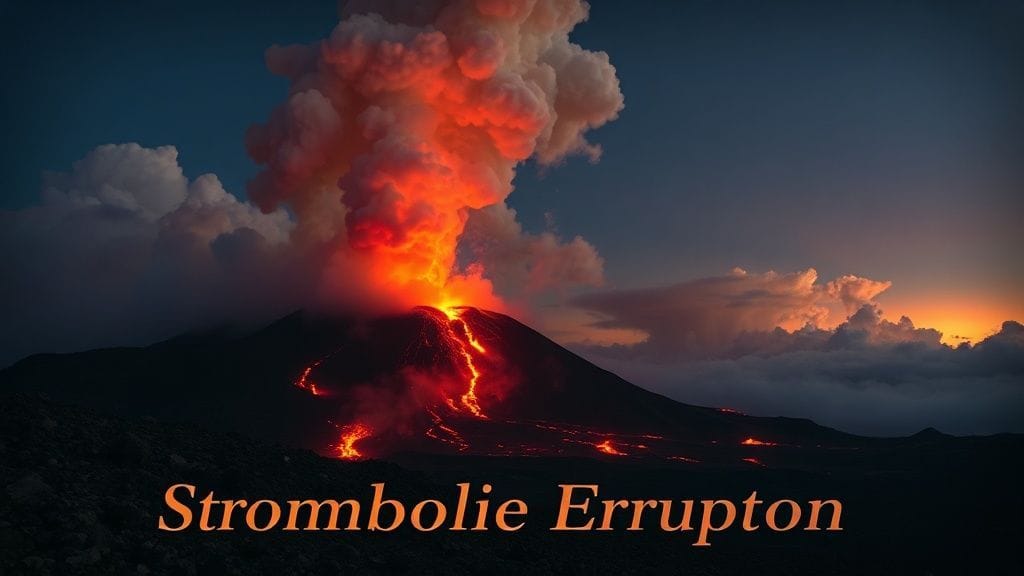
At approximately 16:46 local time on July 3, a massive explosion tore through the crater terrace, launching a deadly pyroclastic flow down the Sciara del Fuoco – the famous “Stream of Fire” lava chute. The eruption was sudden, violent, and spectacular in equal measure. Lava fountains soared dozens of meters high, and a thick cloud of ash darkened the sky, carried by winds toward inhabited areas. The flow of incandescent rocks and superheated gases cascaded with terrifying speed toward the shore, forcing urgent evacuations. For many witnesses, the contrast between the glowing, mesmerizing lava and the palpable danger created a surreal, unforgettable experience.
The Human Face of Disaster: Stories from the Islanders and Tourists
Embedded in the eruption’s chaos were countless personal stories – those of islanders who knew the mountain’s moods and tourists captivated by the volcanic miracle who found themselves unexpectedly thrust into survival mode. Maria, a 68-year-old native, recalled, “I have seen Stromboli erupt many times, but never such fury. The ground shook like it wanted to swallow us whole.” Tourists, initially drawn by the volcano’s charm, described the eruption with a mix of awe and fear. Rescue teams raced against time, navigating the rugged terrain to bring those endangered to safety, underscoring humanity’s resilience and community spirit amid nature’s uncontrollable forces.
Scientific Eyes on Stromboli: Monitoring an Ever-Active Giant
Monitoring Stromboli is a constant challenge, but also a vital scientific endeavor. Italian volcanologists from the INGV (National Institute of Geophysics and Volcanology) use a network of seismic sensors, thermal cameras, and gas-analyzing instruments. The 2019 eruption became a significant data point in understanding Stromboli’s behavior, providing insights into the transitions from mild explosive activity to powerful explosive phases. “Stromboli’s unpredictability is its hallmark,” noted one volcanologist. “But every eruption teaches us more about the geology deep below, the magma chambers, and the volcano’s internal plumbing.”
The Power and Peril of Stromboli: A History of Eruptions
Volcanic activity on Stromboli dates back thousands of years, with records describing dozens of eruptions across centuries. Its continuous activity earned it an almost mythical status among Mediterranean sailors, who relied on its glow as a natural lighthouse by night. However, Stromboli has also caused deadly events—most notably the 1930 eruption, where explosions claimed lives and altered the island’s topography. The 2019 event was one of the strongest eruptions in recent decades, reminding the world that Stromboli is a living volcano, as dangerous as it is beautiful.
From Molten Rock to Molten Hearts: Emotional Aftermath
In the hours and days after the eruption, the emotional toll on Stromboli’s inhabitants was palpable. Families faced uncertainty, homes bore scars of ash and rocks, and the sense of security was deeply shaken. Yet, amid the trauma, there was also solidarity—neighbors helping neighbors, sharing food and shelter, and volunteering in cleanup and repairs. The eruption was not just geological; it cut deeply into the human spirit, shaping stories of loss, heroism, and communal resilience.
Emergency Response and Rescue Operations
Italian civil protection services sprang into action, coordinating evacuations and medical assistance. Helicopters ferried injured and vulnerable individuals to safety, while emergency shelters were established on neighboring islands and the mainland. The response was a testament to Italy’s preparedness for volcanic disasters but also highlighted areas for improvement in early warning systems and communication. The quick coordination undoubtedly saved lives, though the eruption’s suddenness posed acute challenges.
Nature’s Dual Role: Destruction and Creation
Volcanoes are paradoxes—destroyers of the old and creators of the new. Stromboli’s eruption razed parts of the island’s vegetation and reshaped its rocky coastline. Yet, the volcanic ash and lava will, over time, enrich the soil, rejuvenate ecosystems, and expand the island itself. This cycle of destruction and renewal is at the heart of Stromboli’s geological and symbolic identity.
Volcanic Ash and Global Impact: Atmospheric and Environmental Effects
Though Stromboli’s eruption was a localized event, the ash cloud carried fine particles into the atmosphere with potential minor effects on air quality and weather patterns within the Mediterranean region. Volcanic ash can disrupt aviation and impact respiratory health, albeit temporarily. The 2019 eruption provided scientists an opportunity to study such short-term atmospheric changes and their implications.
Risk and Resilience: How Communities Live with Stromboli
Living alongside an active volcano demands acceptance of risk and adaptation strategies. Stromboli’s inhabitants have developed customs, architectural methods, and emergency plans that integrate volcanic danger into everyday life. This resilience manifests not only in practical terms but in cultural identity—a proud embrace of life shadowed by fire.
The Eruption in the Lens: Photographers and Filmmakers Capture the Moment
The 2019 eruption attracted a global audience thanks to vivid photographs and footage circulating in media. Dramatic images of glowing lava fountains against the night sky, juxtaposed with the brave faces of islanders, captured imaginations and raised awareness about volcanic hazards. Art and journalism merged around Stromboli’s spectacle, making the event both a scientific and cultural landmark.
Lessons Learned: Eruption Management and Future Preparedness
Post-eruption analyses stressed the importance of enhancing monitoring systems, public education, and evacuation protocols. The hope is to mitigate future risks and ensure that the awe-inspiring Stromboli remains a source of wonder rather than tragedy. The 2019 eruption served as a wake-up call to both scientists and local communities.
Stromboli in Popular Culture and Mythology
For millennia, Stromboli has inspired myths and stories—from the ancient Greeks who associated it with the forge of Hephaestus, to modern literature and film. Its fiery personality feeds imagination and folklore, embedding the volcano deeply in Mediterranean cultural heritage.
Comparative Views: Stromboli and Other Mediterranean Volcanoes
Stromboli’s behavior is often compared with Mount Etna and Vulcano, other active volcanoes in the region. Each has distinct characteristics, but all pose ongoing challenges for nearby populations. The 2019 eruption adds to a broader understanding of Mediterranean volcanism and its impact on human societies.
The Volcano’s Voice: Scientific Insights into Its Rhythms
The ongoing study of Stromboli reveals complex patterns of gas release, magma movement, and eruption cycles that reflect the volcano’s internal “heartbeat.” This scientific dialogue helps demystify the volcanic process and informs risk reduction strategies.
Walking the Edge: Tourism and Volcanic Danger on Stromboli
Adventure seekers flock to Stromboli to witness its glowing plumes firsthand. The 2019 eruption highlighted both the allure and perils of volcano tourism. Balancing safety and experience remains a pressing concern for authorities and tour operators.
Healing After Fire: Ecological Regeneration of the Aeolian Islands
Nature’s resilience is remarkable; vegetation slowly returns, wildlife adapts, and fertile land emerges from volcanic rock. The Aeolians live in a perpetual cycle of recovery and adaptation, symbolizing hope in the face of natural upheaval.
The Lasting Legacy of the 2019 Event
The July 2019 eruption is etched into the memory of those who witnessed it and into the scientific archives. Its lessons will shape future responses to Stromboli’s inevitable storms, forging a legacy of respect for nature’s power and the strength of those who live in its shadow.
Conclusion
Stromboli’s 2019 eruption was far more than a geological incident—it was a profound testament to the eternal tension between human vulnerability and nature’s raw force. Watching molten rivers carve paths through dark landscapes is both humbling and inspiring. It reminds us that life, much like a volcano, is an unpredictable dance between creation and destruction. Yet, amid fire and ash, communities demonstrate resilience, solidarity, and an indomitable spirit. Stromboli’s light continues to guide and warn, a symbol of life’s fragile beauty standing firm against nature’s eternal roar.
FAQs
Q1: What caused the violent eruption of Stromboli in July 2019?
A1: The eruption was triggered by a sudden increase in underground gas pressure and magma movement, resulting in an explosive release through the crater terrace and pyroclastic flows. It followed a period of heightened seismic and volcanic activity.
Q2: How does Stromboli’s 2019 eruption compare to its usual activity?
A2: Stromboli often erupts mildly with frequent small explosions. The 2019 event was significantly more violent, marking one of the stronger eruptions in recent decades, with dangerous pyroclastic flows.
Q3: Were there any casualties during the 2019 eruption?
A3: Yes, the eruption led to injuries and at least one fatality. Evacuations and emergency responses helped mitigate the human toll, but the suddenness of the event posed risks to residents and tourists.
Q4: How do scientists monitor Stromboli to predict eruptions?
A4: Scientists use seismic sensors, thermal imaging, GPS for ground deformation, and gas analyzers to monitor Stromboli. These tools help track changes in volcanic activity and provide early warning signs.
Q5: What impact did the eruption have on the local environment?
A5: The eruption altered the landscape, destroyed vegetation, and deposited volcanic ash. Over time, these changes can improve soil fertility, but initially, ecosystems suffer disruption.
Q6: How has the 2019 eruption affected tourism on Stromboli?
A6: Tourism faced a temporary decline due to safety concerns, but interest remains high. Authorities have since implemented stricter safety measures for volcano tourism.
Q7: What cultural significance does Stromboli hold in Mediterranean history?
A7: Stromboli has inspired myths, legends, and art for millennia. It has been seen as a forge of the gods and a guiding light for sailors, deeply woven into the region’s cultural fabric.
Q8: What lessons were learned from the 2019 eruption?
A8: The event emphasized the need for continued monitoring, improved early warnings, community preparedness, and balanced management of tourism and safety on volcanic islands.

