Table of Contents
- The Deadly Roar of Nature: The Stromboli Tsunami Awakens
- The Aeolian Islands: A Volcanic Playground and Its Perils
- Stromboli: The “Lighthouse of the Mediterranean” with a Volcanic Heart
- The Geological Prelude: Understanding Stromboli’s Restless Slopes
- December 30, 2002: The Day the Mountain Crumbled
- Witnesses to Chaos: Human Accounts from the Aeolian Shores
- The Mechanics of Disaster: How a Landslide Transforms into a Tsunami
- The Immediate Aftermath: Devastation and Rescue Efforts
- Scientific Responses: Seismologists and Volcanologists on the Frontline
- Environmental Impact: The Altered Landscape and Marine Ecosystems
- Socio-Economic Repercussions: Fishing, Tourism, and Community Life Shattered
- The Silent Toll: Unmarked Losses and Lingering Fears
- National and International Crisis Management: Italy’s Coordination
- Comparative Catastrophes: How Stromboli’s Tsunami Fits in Global History
- Lessons Learned: Early Warning Systems and Volcanic Monitoring Advances
- The Cultural Memory of the Disaster: Stories, Art, and Identity
- Resilience and Recovery: The Aeolian People Rebuild and Remember
- Scientific Legacy: New Research Inspired by the 2002 Event
- Tourism Today: Balancing Risk and Wonder at Stromboli
- Stromboli in Literature and Media: Myth, Disaster, and Fascination
- Future Risks: What the Volcanic Island Might Hide Next
- Conclusion: Nature’s Fierce Reminder and Human Endurance
- Frequently Asked Questions about the Stromboli Landslide Tsunami
- External Resource
- Internal Link
The Deadly Roar of Nature: The Stromboli Tsunami Awakens
On the final days of 2002, a serene winter dusk settled over the Aeolian Islands, an archipelago famed for its beauty and the restless fire breathing within Stromboli’s summit. But nature had another story to tell that December 30th—a story marked by a violent rumble, a massive landslide, and a tsunami that tore through the azure waters with devastating speed.
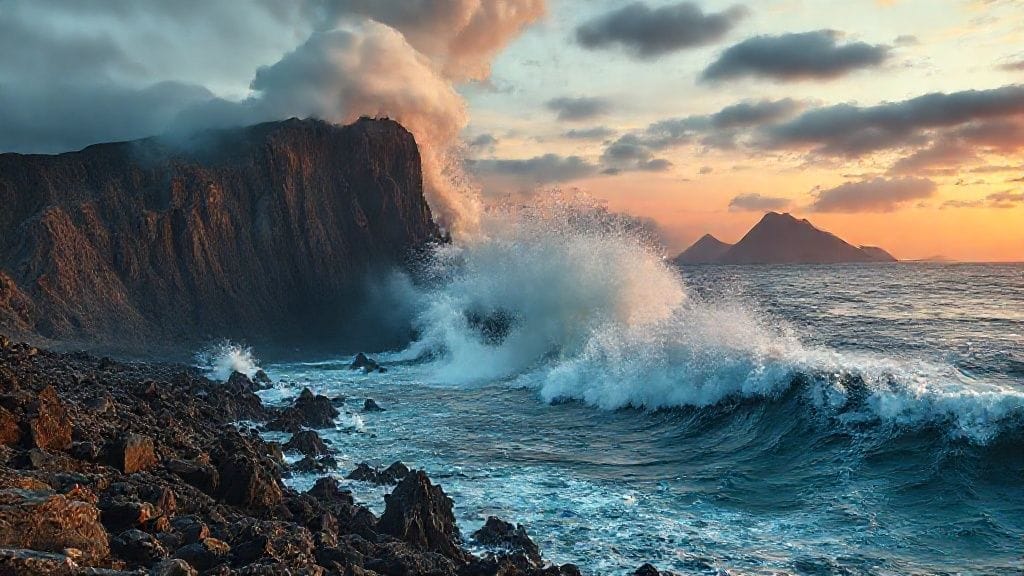
As the glowing lava fountains danced against the twilight, unseen beneath the island’s surface, a colossal slab of volcanic rock loosened and collapsed into the sea. The violent displacement sent a monstrous wave sweeping through the northern coast, catching small fishing communities and tourists off guard. The suddenness of the event left a scar, not only on the Aeolian landscape but deeply within the lives entwined with the island’s rhythms.
This was no ordinary volcanic episode; it was a reminder that beneath nature’s dazzling beauty lies a power both sacred and ruthless—one capable of reshaping geography and history in moments.
The Aeolian Islands: A Volcanic Playground and Its Perils
Nestled in the Tyrrhenian Sea north of Sicily, the Aeolian Islands have enchanted travelers, scientists, and poets for centuries. These seven islands, primarily volcanic in origin, are living monuments to Earth’s fiery forces.
But with great beauty come great risks. The archipelago is a hotspot of tectonic and volcanic activity, part of the broader complex of the Mediterranean’s geodynamics. Home to active volcanoes like Stromboli, Vulcano, and Lipari, the islands are in constant motion—both in the landscape and the lives of those who inhabit them.
Historically, eruptions and related seismic events have shaped the islanders’ culture and survival strategies. The 20th century saw violent eruptions and eruptions knocking down slopes and creating deadly mudflows. The 2002 landslide tsunami is one of the most dramatic manifestations of these hazards, blending geological violence with human vulnerability in a striking tableau.
Stromboli: The “Lighthouse of the Mediterranean” with a Volcanic Heart
Stromboli, towering some 900 meters above sea level, is an iconic volcano known as the “Lighthouse of the Mediterranean.” Its near-continuous volcanic activity—characterized by rhythmic explosions termed “Strombolian eruptions”—has fascinated scientists and captivated tourists for centuries.
Unlike other volcanoes with long dormant intervals, Stromboli’s persistent eruptions create a mesmerizing spectacle, with incandescent lava thrown into the sky every few minutes. This steady activity also hints at the volcano’s restless nature and the underlying instability of its structure.
The island itself is small – about 12.6 square kilometers – yet steep, rugged, and precariously perched. Its slopes are made of layers of hardened lava, volcanic ash, and pyroclastic debris, all stacked over millennia. It is this geological complexity that makes Stromboli susceptible to landslides, especially on its steep northwestern flanks.
The Geological Prelude: Understanding Stromboli’s Restless Slopes
In the months leading to December 2002, geologists noted a subtle change in Stromboli’s behavior. Accelerated deformation of the volcano’s northwestern flank and increasing low-energy seismic activity piqued the attention of Italy’s monitoring teams.
The steep northern slopes had, for years, shown signs of gravitational instability. Underneath, magma movement, thermal alteration, and hydrothermal fluids gradually loosened the volcanic rock masses, turning them into potential landslide zones.
Research into these precursory signs suggests that the eventual collapse was neither sudden nor entirely unexpected. Rather, it was the climax of a slow, inexorable process—a geological ticking time bomb hidden behind Stromboli’s eternal glow.
December 30, 2002: The Day the Mountain Crumbled
At approximately 11:00 AM local time, the northwestern sector of Stromboli’s crater rim suddenly gave way. An estimated 10 million cubic meters of volcanic rock, hot and fractured, thundered down the slope into the sea.
The impact displaced large volumes of water, triggering waves that radiated outward at speeds reaching 70 kilometers per hour. Within moments, waves over 10 meters high slammed into the northern coastlines of Stromboli and the neighboring islands of Panarea and Salina.
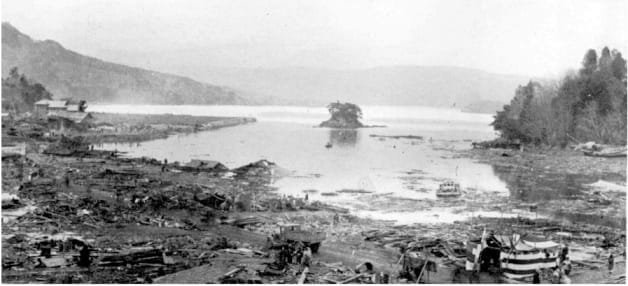
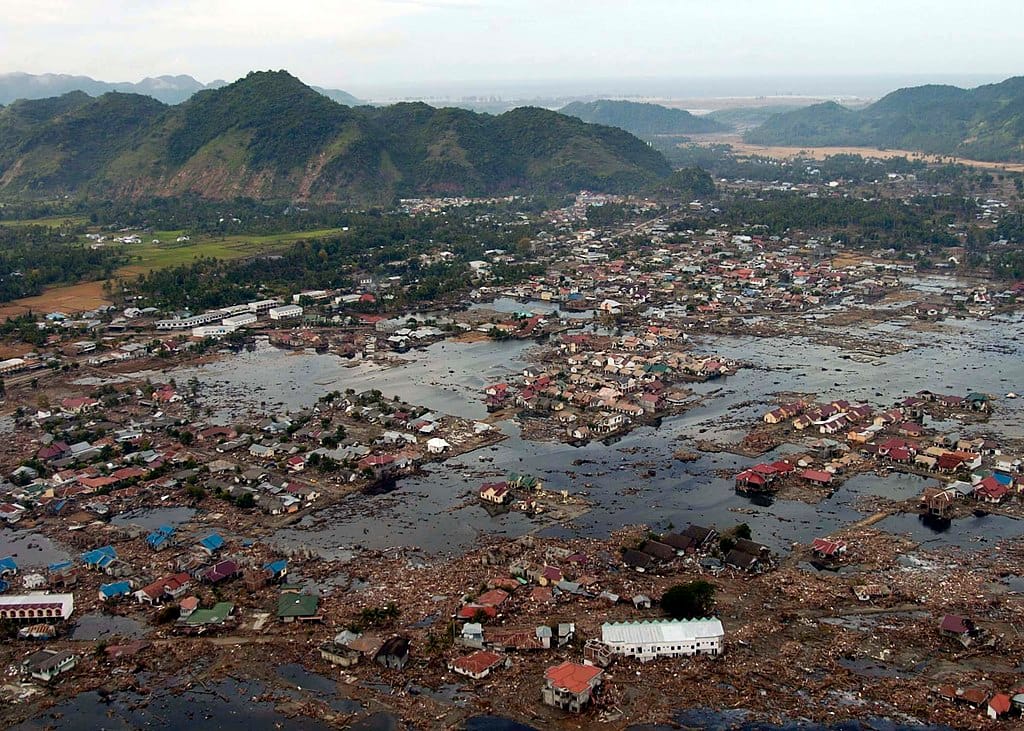
Residents and tourists watched in horror as boats were thrown ashore like toys, and the sea transformed into a churning beast. The tsunami inundated shorelines, destroying homes, infrastructure, and precious boats. The immediate toll included several injuries, loss of property, and psychological trauma.
Witnesses to Chaos: Human Accounts from the Aeolian Shores
“I heard a deep, thunderous rumble that wasn’t eruption noise,” recalls Giuseppe, a local fisherman. “At first, we thought it was an earthquake. Then the wave hit—like a wall of water rushing fast, higher than any storm we ever knew.”
Maria, a tourist trapped in her guesthouse, describes the surreal scene: “The sea withdrew suddenly before returning with a roar. We had seconds to run to higher ground. The night was filled with trembling earth and flashes of fiery lava above.”
These eyewitness testimonies add a raw human dimension to the disaster, highlighting the shock, confusion, and desperation of those caught unprepared. The close-knit Aeolian communities were reminded how fragile their existence remained against nature’s whims.
The Mechanics of Disaster: How a Landslide Transforms into a Tsunami
A volcanic landslide differs from typical earthquakes in its mechanics and aftermath. When the massive flank of Stromboli slid under gravity, the sudden displacement into the sea column caused a rapid displacement of water.
This displacement generated waves—tsunamis—that propagate in all directions. The energy transferred into these waves depends on the mass and velocity of the sliding material. In Stromboli’s case, the volume and steepness ensured a powerful tsunami, one capable of traveling tens of kilometers across the sea.
Unlike tsunamis caused by undersea earthquakes, these landslide-generated waves can arrive with little warning due to their proximity to human settlements. This factor dramatically increases their danger.
The Immediate Aftermath: Devastation and Rescue Efforts
As the last waves receded, a scene of havoc lay in the wake. Fishing boats were battered against rocks; coastal homes near the depressions faced flooding and structural damage. Emergency services mobilized quickly, but the remoteness of the Aeolian Islands complicated rescue.
Italian civil protection units, along with local volunteers, launched searches for injured and missing persons. Despite the physical destruction, sheer human resilience prevailed—rescue efforts saved lives, community solidarity shone, and reconstruction plans took root.
Italy’s government pledged aid, recognizing the unique vulnerability of these volcanic islands amid rising climate challenges and tourism development pressures.
Scientific Responses: Seismologists and Volcanologists on the Frontline
The Stromboli disaster became a pivotal case study for earth scientists. Agencies like INGV (Istituto Nazionale di Geofisica e Vulcanologia) intensified monitoring: deploying new seismographs, GPS stations, and underwater sensors.
Lessons emerged about real-time hazard assessment and the necessity of integrating landslide risk into volcanic surveillance. The event pushed the frontiers of multi-hazard science—understanding how volcanic activity, slope instability, and tsunami potential intertwine.
International collaborations grew, combining geology, oceanography, and remote sensing to better predict and mitigate future catastrophes.
Environmental Impact: The Altered Landscape and Marine Ecosystems
Beyond human losses, the landslide and tsunami transformed both land and sea. The cliff face of Stromboli’s north slope was forever altered—scarred by the huge rockfall that created new terrain features.
In the sea, the deposited volcanic debris and turbidity affected marine life. Fish populations and benthic ecosystems faced sudden habitat destruction, while sediment redistribution reconfigured the underwater landscape.
Over the years, scientists have tracked gradual ecological recoveries and noted how volcanic activity simultaneously rebuilds land even as it destroys.
Socio-Economic Repercussions: Fishing, Tourism, and Community Life Shattered
The Aeolian economy, reliant primarily on fishing and tourism, suffered a sharp blow. Fishermen lost vessels and gear, the tsunami eroding livelihoods built over generations.
Tourists, drawn to Stromboli’s unique volcanic charm, dwindled temporarily, wary of the disaster and its aftermath. Hotels, port facilities, and boat tour operators faced closure or decline.
Yet, the disaster reinforced local identity and adaptation—communities diversified economies, established safety guidelines, and promoted sustainable tourism balancing allure with caution.
The Silent Toll: Unmarked Losses and Lingering Fears
Not all damage is visible. The trauma unleashed psychological scars—post-traumatic stress, anxiety of repeat disasters, and the haunting memory of a day when land and sea rebelled.
Elderly islanders recounted ancestral stories of past eruptions, while younger generations grew up amid sirens and drills reminding them of fragility.
Silent grief accompanied the rebuilding of places—an invisible narrative embedded in the Aeolian Islands’ collective conscience.
National and International Crisis Management: Italy’s Coordination
The Italian government, recognizing the multi-faceted threat, coordinated rapid response efforts alongside local authorities. Civil Protection Department deployed resources efficiently, setting a model for island disaster responses.
International agencies offered support in scientific expertise and humanitarian assistance. This event prompted revisions in Mediterranean regional hazard protocols, promoting greater integration between volcanic and tsunami early warning systems.
Comparative Catastrophes: How Stromboli’s Tsunami Fits in Global History
Volcanic landslide-generated tsunamis are rare but catastrophic, paralleled by events like the 1888 Ritter Island collapse or the 2018 Anak Krakatoa tsunami.
Stromboli’s 2002 event challenged assumptions that volcanic eruptions alone were the primary danger, showing how flank instability can trigger disasters.
These global episodes underline the need for comprehensive hazard models in volcanic island arcs worldwide.
Lessons Learned: Early Warning Systems and Volcanic Monitoring Advances
Post-2002, Italy invested in advanced geophysical monitoring aimed at predicting flank collapses. Real-time GPS deformation data, improved seismicity analyses, and drone mapping help anticipate signs of slope failure.
Community engagement programs educate locals and visitors on evacuation routes and emergency procedures. Digital communication and social media emerged as tools for rapid alerts—vital in an age where every second counts.
The Cultural Memory of the Disaster: Stories, Art, and Identity
The disaster has permeated local culture—memorials honor victims, while artists capture the dramatic interplay of fire, earth, and sea.
Stories passed down from survivors serve as warnings and testimonies. Some festivals incorporate volcanic themes, blending catastrophe remembrance with affirmations of life.
Historical memory forms a vital thread in understanding how humans relate emotionally and spiritually to volcanic islands.
Resilience and Recovery: The Aeolian People Rebuild and Remember
In the years after the catastrophe, recovery efforts have showcased remarkable resilience. Infrastructure was repaired, ecological projects launched, and risk mitigation embedded in development policies.
Community-led initiatives rebuilt livelihoods with a vision respecting the volcanic landscape’s realities. The Aeolians’ bond with their home remains unbroken, a testament to human endurance.
Scientific Legacy: New Research Inspired by the 2002 Event
The Stromboli landslide tsunami became a benchmark in geosciences. It inspired numerous studies on submarine landslides, tsunami genesis, volcanic flank dynamics, and hazard modeling.
New instruments designed post-2002 are now globally employed. The event reshaped volcanology’s approach—integrating multiple hazards and emphasizing prevention over reaction.
Tourism Today: Balancing Risk and Wonder at Stromboli
Stromboli remains a coveted destination, its eruptive displays an irresistible allure. Guides offer night hikes to witness lava fountains, blending thrill with education on risks.
Safety protocols are now strict, and authorities monitor volcanic activity closely. Visitors learn to respect the mountain’s moods, understanding the blend of danger and grandeur Stromboli embodies.
Stromboli in Literature and Media: Myth, Disaster, and Fascination
From mythology of fire gods to modern documentaries, Stromboli has long been woven into narratives of mystery and awe. The 2002 tsunami added a chapter of tragedy and human drama.
Writers and filmmakers explore themes of nature’s fury versus human vulnerability, reinforcing Stromboli’s status as both muse and menace.
Future Risks: What the Volcanic Island Might Hide Next
Despite decades of study, Stromboli’s fiery heart holds secrets. The possibility of new flank instabilities, eruptive surges, or even larger tsunamis remains.
Active monitoring and preparedness are humanity’s best defenses. The mountain’s volatile character is a reminder: beauty and danger dance often at the edge of existence.
Conclusion: Nature’s Fierce Reminder and Human Endurance
The Stromboli landslide tsunami of December 2002 was a vivid chapter in the history of volcanic disasters. It revealed the precarious balance between earth’s dynamic forces and human settlement.
Yet, beyond destruction, it showcased resilience—scientific breakthroughs, community solidarity, and a deepened respect for our planet’s power.
As the Aeolian Islands breathe once more under calm skies, the lessons linger: nature’s fury waits below beauty’s surface, and the human spirit is its enduring counterpoint.
Frequently Asked Questions about the Stromboli Landslide Tsunami
1. What caused the 2002 Stromboli tsunami?
The tsunami was triggered by a massive landslide from Stromboli’s northwestern flank, where volcanic rock collapsed into the sea, displacing water and generating large waves.
2. How many people were affected by the tsunami?
Several dozen people were injured, and many homes and boats were damaged. Thankfully, there were no reported fatalities, but the psychological effect on residents was profound.
3. Was there any warning before the landslide-tsunami?
While monitoring had detected increased slope instability, the collapse and consequent tsunami happened suddenly, with little immediate warning for those on the northern coast.
4. How did the disaster impact scientific monitoring?
It triggered increased investment in real-time deformation and seismic networks, leading to improved early warning systems for volcanic landslides and tsunamis in Italy and worldwide.
5. What is the significance of Stromboli as a volcano?
Stromboli is one of the world’s most active volcanoes, known for continuous mild explosions. It serves as a natural laboratory for studying volcanic activity and associated hazards.
6. How has the local community recovered since 2002?
The Aeolian communities rebuilt infrastructure, diversified their economies, and incorporated disaster preparedness into their culture, demonstrating notable resilience.
7. Are there ongoing risks of similar events at Stromboli?
Yes. The volcanic flank remains unstable, and the potential for future landslides or eruptions persists, necessitating vigilance and monitoring.
8. How does the 2002 tsunami compare to other volcanic landslide tsunamis globally?
While smaller than catastrophic events like Ritter Island 1888, Stromboli’s tsunami was significant for its proximity to inhabited areas and the scientific insights it provided.