Table of Contents
- The Day the Earth Trembled: December 26, 2004
- A Cataclysm Beneath the Waves: The Sumatra–Andaman Earthquake Unfolds
- Tectonic Titans: The Geology Behind the Disaster
- A World on Edge: The Global Context of 2004
- The Moment the Earth Shifted: 07:58 AM UTC
- The Unseen Fury: Understanding the Megathrust Mechanism
- The Birth of a Megatsunami: Waves That Rode All Shores
- Shorelines Shattered: How Indonesia Was Devastated
- Tragedy Beyond Borders: The Tsunami’s Reach Across Countries
- Human Stories from the Waves: Survival, Loss, and Miracles
- The International Response: Compassion in the Face of Catastrophe
- Scientific Revelations: How 2004 Changed Earthquake Research
- Rebuilding Lives and Communities: Recovery and Resilience in the Aftermath
- Political and Economic Ripples: The New Realities in Southeast Asia
- The Cultural Memory: Remembering the Tsunami Through Art and Education
- Lessons Carved in Stone and Sand: Disaster Preparedness Since 2004
- The Lasting Global Impact: Climate Change, Seismic Awareness, and Aid Policies
- Names and Faces: Key Figures in the Rescue and Relief Operations
- Local Traditions vs Science: Indigenous Responses to the Tsunami Threat
- Voices from the Frontline: Eyewitness Accounts and Survivor Testimonies
- Environmental Consequences: Nature's Scars and Seeds of Renewal
- Controversies and Critiques: Aid Distribution and Political Challenges
- 15 Years Later: How the World Still Remembers December 26
- The Sumatra–Andaman Earthquake in the Geopolitical Landscape
- Reflections on Human Vulnerability and Strength
1. The Day the Earth Trembled: December 26, 2004
It was a clear Sunday morning just after dawn—a time when families in coastal villages across the Indian Ocean were settling into their routines, unaware that beneath them, the planet was quietly preparing to unleash one of the most catastrophic natural disasters in recorded history. At precisely 7:58 a.m. Coordinated Universal Time, the ground beneath the seabed off the west coast of northern Sumatra shifted violently in a split second. This was no ordinary tremor, but a deep, powerful rupture that sent ripples across not just the ocean floor, but across the globe’s collective consciousness.
Millions would be affected in a heartbeat, their lives forever altered by nature’s raw and relentless power. This was the Sumatra–Andaman Earthquake—an event that would unleash a tsunami of unprecedented scope, sweeping entire communities away and reshaping both geography and humanity in its wake.
This story begins far beneath the waves, where the restless plates of the Earth’s crust struggled in an ancient primal dance.
2. A Cataclysm Beneath the Waves: The Sumatra–Andaman Earthquake Unfolds
What made the Sumatra–Andaman Earthquake unforgettable wasn’t just its sheer size—it was the the scale of its tragedy and the transformative effect it had on disaster response and geological science worldwide. With a staggering magnitude of 9.1 to 9.3, it remains one of the strongest earthquakes ever recorded. But the rupture, stretching approximately 1,300 kilometers along the fault line under the Indian Ocean, would also serve as the catalyst for one of the deadliest tsunamis.
Bringing together decades of tectonic tension, the earthquake forced the undersea fault to slip in a violent release of energy, lifting the ocean floor by several meters and displacing billions of tons of water. This seismic ballet, invisible and inaudible in the immediate moment, unleashed waves that would travel at jetliner speeds—some reaching up to 800 kilometers per hour—in all directions across the Indian Ocean.
But how did these invisible shifts transform into a global tragedy?
3. Tectonic Titans: The Geology Behind the Disaster
The earthquake was born along the Sunda Megathrust, a colossal subterranean convergence zone where the Indo-Australian Plate dives beneath the Eurasian Plate. It is here—where oceanic crust descends into Earth’s mantle—that tectonic pressure builds with silent and relentless force.
For centuries, strain accumulated as these two geological giants pressed and locked together. When the stress finally breached the frictional bond, the sudden slip caused a vertical displacement of the seafloor—an act that raised some sections of the ocean bed by as much as 20 meters and caused others to drop the same distance. This rapid shift created a massive disturbance in the water column above.
Seismographs around the planet recorded the shockwave, registering it as one of the most powerful disturbances ever documented. The earthquake lasted an extraordinary 8 to 10 minutes, releasing energy equivalent to approximately 23,000 Hiroshima bombs.
Yet beneath the raw data lies the more intimate truth—a story of how Earth's restless heart can shape life in the most unexpected and devastating ways.
4. A World on Edge: The Global Context of 2004
While geological forces silently frothed beneath the Indian Ocean, the world in 2004 was itself teetering on the brink of multiple changes. The early years of the new millennium witnessed geopolitical tension, rapid globalization, and unprecedented communication advances. News traveled faster than ever, but disaster preparedness still lagged in many vulnerable regions.
In Southeast Asia, coastal communities were growing rapidly, driven by fishing, tourism, and trade along the Indian Ocean rim. However, many of these communities lacked early warning systems or awareness about tsunamis—a danger little known or understood compared to hurricanes or earthquakes.
The lack of tsunami education was a tragic gap. It would soon become brutally clear how that absence influenced survival rates, as the massive waves rolled in with no celestial warning, no sirens, no evacuation drills.
5. The Moment the Earth Shifted: 07:58 AM UTC
When the rupture began along the Sumatra fault, the Earth groaned and strained in a subterranean gasp. The earthquake began offshore, near the west coast of northern Sumatra, but its effects rippled south towards the Andaman and Nicobar Islands and east into the Bay of Bengal and beyond.
Within seconds, the ocean floor had seen a sudden vertical displacement, injecting kinetic force into the surrounding water. This silent upheaval, so far below the surface, was felt as a mild shaking in some coastal areas at first—far weaker than what would follow.
Yet this faint tremor was only a prelude to the monstrous waves building kilometers away, racing silently toward the shores of nations unsuspecting of the dynamic threat barreling toward them.
6. The Unseen Fury: Understanding the Megathrust Mechanism
A megathrust earthquake is unlike any ordinary quake. It involves an immense fault, thousands of kilometers long, where one tectonic plate is thrust beneath another. The immense pressure caused the plates to lock like a gigantic spring, storing an unimaginable amount of elastic energy.
Then, in an explosive motion, that spring released, abruptly sliding over one another to create the earthquake. The entire fault zone—estimated around 1,300 kilometers long—ruptured in a violent cascade that lasted far beyond normal tremors.
This mechanism produced vertical seafloor displacement—the key to tsunami generation. As the seabed rose, the water above it surged upward massively, forming waves that began to spread like ripples on a pond, but dozens of meters high and with a terrifying speed.
7. The Birth of a Megatsunami: Waves That Rode All Shores
From the violent ocean floor uplift arose waves that would break all records and all misconceptions. Some waves reached heights of 30 meters near shore, devastating everything in their path.
Unlike tsunamis generated by smaller quakes, these waves fanned out across the entire Indian Ocean, reaching the shores of Indonesia, Thailand, India, Sri Lanka, the Maldives, Somalia, and even distant coastlines like those of East Africa.
What made it so deadly was the confluence of several factors: the earthquake’s size, its underwater rupture length, the absence of warnings, and the geography of the coastlines that funneled and amplified the waves.
8. Shorelines Shattered: How Indonesia Was Devastated
Indonesia, and particularly the province of Aceh in northern Sumatra, bore the brunt of the tsunami's wrath. Entire villages were wiped off the map within moments, homes, schools, and markets washed away like sandcastles.
The fabric of daily life was torn irrevocably: more than 130,000 people lost their lives in Indonesia alone. The shockwaves of human loss rippled through small communities whose memories and livelihoods were extinguished.
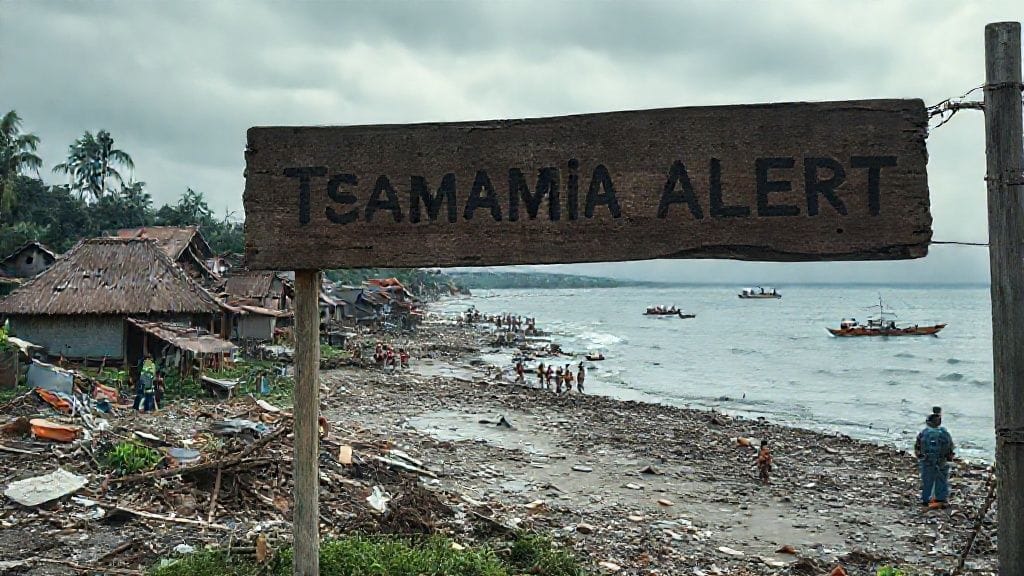
The scenes were unimaginable—coastal areas reduced to mud and debris, survivors wandering in disbelief, rescue teams struggling to grasp the scale of the emerging humanitarian catastrophe.
9. Tragedy Beyond Borders: The Tsunami’s Reach Across Countries
The tsunami did not stop at Indonesia’s shores. It crashed into coastal Thailand, killing more than 8,000; Sri Lanka lost over 30,000; India’s southeastern coasts suffered close to 18,000 deaths; over 100,000 people died in total across 14 countries.
Africa's eastern coast, especially Somalia and Kenya, experienced unusual wave activity and lesser but still significant casualties—a shocking reminder of the disaster’s wide reach.
Wherever the waves lapped, they carried not only destruction, but an urgent call to humanity: nature’s wrath respects no borders.
10. Human Stories from the Waves: Survival, Loss, and Miracles
Amid devastation, stories of survival and resilience emerged. Some fishermen noticed the sea recede far beyond normal tides and ran to higher ground—a rare instinct that saved thousands. Others were less fortunate, trapped in waves that destroyed everything.
One survivor recalled, “The sea simply disappeared, then returned with a monstrous roar, dragging everything away.” Miraculous rescues from debris, children pulled from rubble hours after, and communities banding together amidst ruin testified to a stubborn human will to live.
These accounts provided a human face to statistics and underscored the deep emotional wounds etched by the disaster.
11. The International Response: Compassion in the Face of Catastrophe
The scale of the disaster triggered an unprecedented global humanitarian outpouring. Governments, NGOs, and private citizens mobilized billions of dollars in aid, relief supplies, medical teams, and reconstruction efforts.
International coordination was challenging but vital. Countries as diverse as the United States, Japan, Australia, the UK, and India sent assets, from naval ships to specialized rescue units.
Yet, the outpouring also exposed weaknesses—logistical bottlenecks, difficulties reaching remote areas, and sometimes political hurdles that slowed aid distribution.
12. Scientific Revelations: How 2004 Changed Earthquake Research
Scientists around the world were forced to rethink assumptions. The earthquake’s massive scale and prolonged rupture challenged pre-existing seismic models.
It led to a surge in research into megathrust earthquakes and tsunami genesis. More sensitive seismic networks and ocean bottom pressure sensors were deployed to create early warning systems designed to save lives in future events.
Notably, the event underscored how little was understood about underwater earthquakes’ complexity, prompting a new era of Earth sciences.
13. Rebuilding Lives and Communities: Recovery and Resilience in the Aftermath
Reconstruction took years and involved millions of hard-working hands. In Aceh, international funds helped rebuild schools, hospitals, and infrastructure, but scars remained—physical and psychological.
Communities faced challenges from displacement to trauma and social upheaval. Yet, resilience bloomed in the form of stronger building codes, community education programs, and sustainable development initiatives designed to better withstand future shocks.
14. Political and Economic Ripples: The New Realities in Southeast Asia
The disaster reshaped regional politics, particularly in Indonesia’s Aceh province, which was then embroiled in a separatist conflict. The tragedy prompted ceasefires and cooperation between the separatists and the government to focus on relief and rebuilding.
Economically, tourism plummeted but slowly recovered with coordinated efforts emphasizing safety and sustainable practices.
The earthquake underscored the link between natural disasters and geopolitical stability.
15. The Cultural Memory: Remembering the Tsunami Through Art and Education
Across affected countries, memorials, museums, and public memorial events established a cultural repository of memories.
Artworks, literature, and films turned the voices of survivors into enduring narratives. Education campaigns about tsunami risks became a fixture in school curricula, turning tragedy into a lesson for future generations.
16. Lessons Carved in Stone and Sand: Disaster Preparedness Since 2004
One of the clearest outcomes was the establishment of the Indian Ocean Tsunami Warning System in 2006. Satellite technology, real-time data analysis, and regional cooperation now aim to prevent such loss of life.
Training in vulnerable communities became crucial—evacuation routes, alarms, and education now play vital roles in coastal safety.
17. The Lasting Global Impact: Climate Change, Seismic Awareness, and Aid Policies
In a world increasingly vulnerable to the forces of nature, the 2004 earthquake and tsunami sharpened focus on climate change's intersecting risks and the fragility of coastal ecosystems.
It also redefined international aid models toward locally driven responses and highlighted the need for transparency and accountability in humanitarian efforts.
18. Names and Faces: Key Figures in the Rescue and Relief Operations
From former Indonesian President Susilo Bambang Yudhoyono’s leadership to figures like UNICEF’s emergency coordinators and countless volunteers, individuals emerged as symbols of hope amid ruin.
Local leaders who organized grassroots responses were often overshadowed yet crucial, highlighting how heroism often unfolds quietly.
19. Local Traditions vs Science: Indigenous Responses to the Tsunami Threat
In several regions, indigenous knowledge about the sea retreating before a tsunami proved lifesaving. Traditional stories and cultural practices passed through generations taught some how to interpret nature’s warning signs instinctively.
The catastrophe sparked a renewed respect for these ancestral practices alongside modern scientific systems.
20. Voices from the Frontline: Eyewitness Accounts and Survivor Testimonies
From fishermen who witnessed the sea’s retreat, to children saved by quick-thinking teachers, the tsunami is remembered through vivid memories.
One woman recounted, “I grabbed my children and ran uphill when the water vanished. Only then did I realize what was coming.”
These personal histories remind us how human intuition and bravery sometimes make the difference between life and death.
21. Environmental Consequences: Nature's Scars and Seeds of Renewal
The tsunami reshaped shorelines, eroded forests, deposited salt and debris inland, and destroyed coral reefs.
Yet, in the devastated landscapes, nature began a slow recovery. Mangrove restoration projects and coral regeneration became part of long-term environmental healing.
22. Controversies and Critiques: Aid Distribution and Political Challenges
Despite the vast aid, criticisms emerged over delays, mismanagement, and inequities in distribution.
Corruption and political mistrust complicated efforts in some areas, with some survivors feeling abandoned.
These critiques informed more robust governance structures for future disaster responses.
23. 15 Years Later: How the World Still Remembers December 26
Anniversaries bring both grief and resolve. Hundreds of ceremonies and memorials, many led by survivors’ groups, ensure that the lessons of 2004 are not forgotten but transformed into action.
Documentaries, survivor interviews, and academic works continue to keep the memory alive.
24. The Sumatra–Andaman Earthquake in the Geopolitical Landscape
Beyond nature’s force, the event reshaped international cooperation in Asia. It brought new dialogues on disaster diplomacy and strengthened bonds between countries historically divided by conflict.
25. Reflections on Human Vulnerability and Strength
In the final reckoning, the Sumatra–Andaman Earthquake and its epic tsunami remind humanity of our fragility in the face of natural forces.
Yet, they also highlight the strength of community, compassion, and science in confronting and learning from disaster, shaping a future where we hope to better predict, prepare, and persevere.
Conclusion
The Sumatra–Andaman Earthquake of December 26, 2004, remains a poignant testament to the Earth’s unpredictable power and the depth of human endurance. From the immediate terror of shaking ground and monstrous waves emerged stories of unimaginable loss but also unyielding courage.
Its legacy transformed scientific understanding of megathrust earthquakes and megatsunamis, precipitated the establishment of vital warning systems, and inspired global solidarity unmatched in recent history.
But beyond the data and rescue missions lie the hearts of millions—those who lost everything and those who survived to rebuild. The earthquake and tsunami taught the world a brutal, humbling lesson: that in the face of nature’s overwhelming might, our best defense lies in knowledge, preparation, respect for cultural wisdom, and an unwavering commitment to one another.
Even today, as waves lap quietly along the Indian Ocean, that December morning echoes—a reminder and a beacon urging vigilance, empathy, and hope.
FAQs
Q1: What caused the Sumatra–Andaman Earthquake to be so powerful?
The earthquake resulted from a massive rupture along the Sunda Megathrust, where the Indo-Australian Plate is subducted beneath the Eurasian Plate. The sudden release of accumulated tectonic stress over a fault approximately 1,300 kilometers long generated the immense magnitude of 9.1–9.3.
Q2: How did the tsunami waves affect countries beyond Indonesia?
The tsunami waves traveled across the entire Indian Ocean, impacting Thailand, Sri Lanka, India, the Maldives, Somalia, and others. The waves reached speeds up to 800 km/h and heights up to 30 meters near shore, causing widespread destruction and loss of life in at least 14 countries.
Q3: Were there any early warning systems for tsunamis in 2004?
No formal tsunami early warning system existed for the Indian Ocean at the time, which contributed to the high death toll. The disaster motivated the eventual establishment of the Indian Ocean Tsunami Warning System in 2006.
Q4: How did local knowledge influence survival rates?
In some communities, indigenous knowledge—such as recognizing the sea retreat before waves arrived—helped people evacuate to higher ground and survive, illustrating the importance of combining traditional wisdom with scientific warnings.
Q5: What were some challenges faced during humanitarian aid efforts?
Aid distribution was complicated by damaged infrastructure, logistical difficulties, political conflicts (especially in Aceh), and reports of corruption and mismanagement, which sometimes delayed or misdirected assistance.
Q6: How has the disaster influenced scientific research?
The disaster led to expanded seismic and tsunami monitoring networks, improved modeling of megathrust earthquakes, and a better understanding of tsunami propagation, influencing disaster preparedness worldwide.
Q7: How is the tsunami remembered culturally today?
Through memorials, museums, films, literature, and annual commemorations, affected countries preserve the memory of the event, educating new generations and honoring the victims and survivors.
Q8: What impact did the earthquake have on regional politics?
In Indonesia’s Aceh, the disaster prompted a ceasefire and peace talks between the government and separatists, showing how natural disasters can reshape political landscapes and open dialogue.