Table of Contents
- The Deadly Dawn: Morning of the Sumatra Northwest Tsunami, February 16, 1861
- Setting the Stage: The Geology and Geography of Northwest Sumatra
- The Warning Signs: Precursors and Earthquake Activity before the Tsunami
- The Earth’s Roar: The Main Earthquake That Triggered the Disaster
- Waves of Destruction: Unfolding the Tsunami's Impact on Coastal Communities
- Voices from the Past: Eyewitness Accounts and Survivor Testimonies
- The Human Toll: Casualties, Displacements, and the Aftermath
- Scientific Understanding in the 19th Century: How Was the Tsunami Explained?
- Cultural Echoes: How Local Traditions and Oral Histories Recorded the Event
- Colonial Response: Dutch East Indies Authorities’ Reaction and Relief Efforts
- Comparative Analysis: The 1861 Tsunami in Context with Later Sumatra Disasters
- Geological Legacy: Shaping Sumatra’s Future and the Indian Ocean’s Seismic Profile
- The Economic Waves: Impact on Trade, Fishing, and Coastal Livelihoods
- The Unseen Ripple: Environmental Consequences and Ecosystem Disruptions
- Memory and Myth: The Tsunami in Indonesian Collective Consciousness
- Lessons from 1861: Early Warning and Preparedness in a Pre-Modern Era
- Modern Science Meets History: Revisiting the 1861 Tsunami with Today’s Tools
- Global Relevance: Understanding Indian Ocean Tsunamis through Historical Events
- The Forgotten Disaster: Why the 1861 Sumatra Tsunami is Less Known Today
- Future Risks: Sumatra’s Continuing Dance with the Sea and Earth
- Conclusion: Reflections on Human Resilience and Nature’s Fury
- FAQs: Key Questions about the 1861 Sumatra Tsunami
- External Resource
- Internal Link
The Deadly Dawn: Morning of the Sumatra Northwest Tsunami, February 16, 1861
The early morning mist clung to the rugged shores of northwest Sumatra on February 16, 1861. The villages nestled along the coast awoke to a quiet that belied the fury soon to descend from the depths of the earth and sea. Without warning, the ground trembled violently beneath the feet of fishermen and farmers, a deep rumble swallowed by the cries of alarm. Then came the monstrous waves—tall walls of water, roaring and unrelenting—pounding the shorelines, swallowing homes and lives with indiscriminate rage. It was a catastrophe of such suddenness and scale that it etched itself into the collective memory of the region, though time would slowly dim the sharpness of those tragic hours.
As dawn light crept over the horizon, revealing ruined settlements and shattered landscapes, survivors grappled with a haunting reality: their world had been irreversibly changed. The 1861 Sumatra Northwest tsunami was not merely a natural disaster but a profound crisis that wove together geology, human vulnerability, colonial dynamics, and cultural legacies into a tragic tapestry.
Setting the Stage: The Geology and Geography of Northwest Sumatra
To understand the devastation of this tsunami, one must first delve into the restless geology of Sumatra. The island sits astride the volatile Sunda megathrust, where the Indo-Australian plate grinds beneath the Eurasian plate, a tectonic boundary that has birthed some of the world’s most powerful earthquakes. This vast and complex plate interface runs parallel to Sumatra’s western coast and is responsible for a strikingly high frequency of seismic activity—earthquakes that sometimes rock the island and the surrounding seas with destructive waves.
Northwest Sumatra’s coastline, characterized by narrow coastal plains flanked by mountainous terrain, was vulnerable to the immense energy released during a megathrust rupture. Countless small fishing villages and plantations lined these shores, where traditional wooden houses stood precariously close to the water’s edge. The region’s relative isolation and the lack of advanced communication infrastructure in the mid-19th century meant that any warning of natural disasters was effectively nonexistent.
The Warning Signs: Precursors and Earthquake Activity before the Tsunami
Local stories and some fragmented reports from colonial administrators suggest that the days preceding February 16 were marked by subtle shifts in the earth’s behavior. Minor tremors—felt but not yet alarming—had unsettled the communities, causing curiosity rather than panic. Fishermen reported unusual sea behavior: fish scattered, and the sea appeared to withdraw unexpectedly—an ominous sign that, in many parts of the world, foretells the coming of a tsunami.
Yet, in 1861, there was no scientific framework widely communicated to the local populations to interpret such signs. For many, these early warnings were enigmatic, even ignored, hidden within the broader rhythms of everyday life, until the greater earthquake would irrevocably alter everything.
The Earth’s Roar: The Main Earthquake That Triggered the Disaster
On the morning of February 16, 1861, at approximately 8:30 AM local time, the subduction zone offshore of northwest Sumatra ruptured massively. Estimates put the earthquake’s magnitude around 8.5 to 8.7—enough to shake buildings far inland and cause widespread panic among the coastal inhabitants. Accounts describe a rumbling that felt as though the earth itself was tearing apart, followed by intense shaking lasting several minutes. Trees swayed, homes shifted from their foundations, and the ground cracked in a terrifying display of nature’s power.
This seismic rupture displaced enormous volumes of water, generating a tsunami that would rush ashore within minutes.
Waves of Destruction: Unfolding the Tsunami's Impact on Coastal Communities
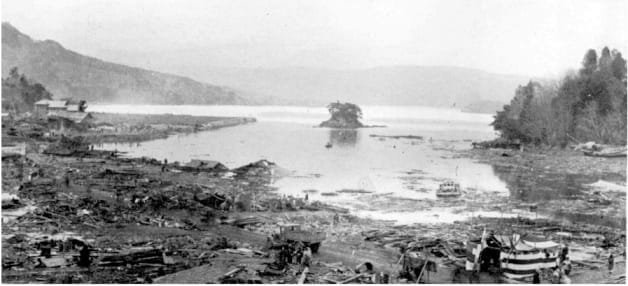
As the earthquake subsided, a deadly silence took hold—then the sea began to retreat, exposing the seabed and coral reefs, a macabre foreshadowing of what was to come. Soon, gigantic waves, some estimated to reach heights of 15 meters (around 50 feet), surged forward.
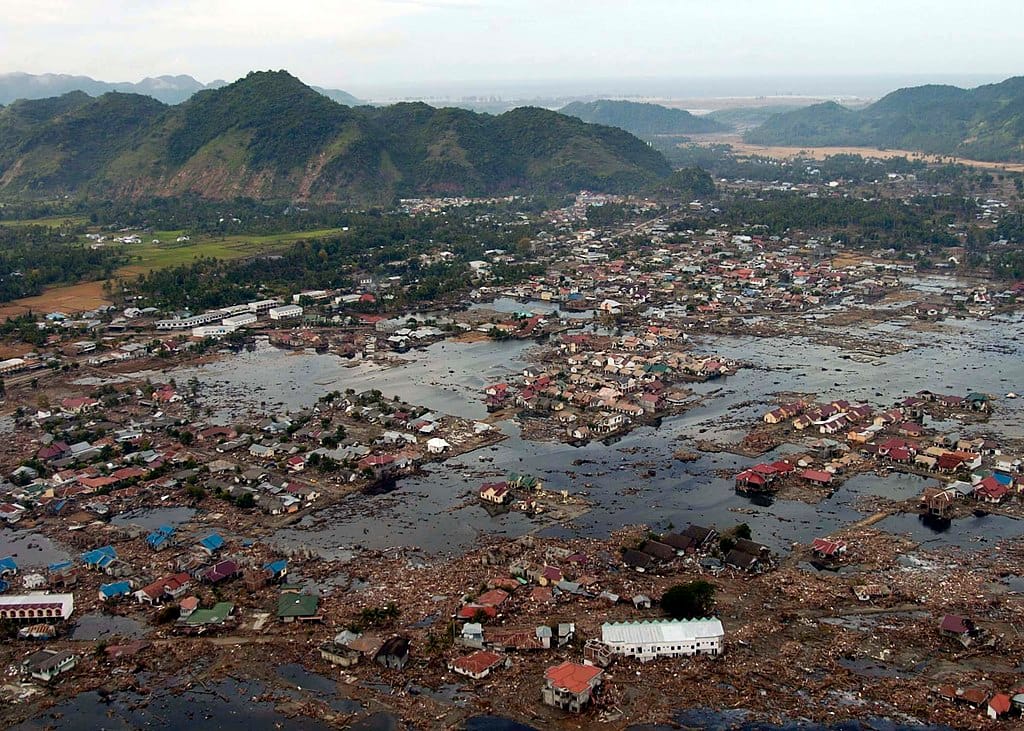
The tsunami slammed into the coast with little resistance. Small villages such as Sibolga, Tapanuli, and various fishing hamlets were overwhelmed. Entire communities were swept away—houses obliterated, boats tossed inland like toys, and lives caught between the crushing force of water and debris.
The geography of the coast funneled the waves into bays and estuaries, exacerbating the flooding. Descriptions from survivors and subsequent reports portray scenes of utter devastation—families ripped apart, survivors clinging to tree branches, livestock lost to the floodwaters, and food supplies destroyed.
Voices from the Past: Eyewitness Accounts and Survivor Testimonies
Though sparse, some firsthand accounts emerged from survivors and colonial officials. One fisherman's chilling recollection survives in local oral histories: “The sea ran away like it was thirsty, and then it came back with the roar of a thousand tigers.” Another survivor spoke of “trees uprooted as though they were mere grass” and the overwhelming fear that gripped the people as waves washed away everything they held dear.
Such narratives provide not only vivid illustrations of the event’s physical impact but also expose the emotional trauma and the immense courage displayed in the desperate efforts to survive.
The Human Toll: Casualties, Displacements, and the Aftermath
While precise numbers remain elusive, contemporary reports and later scholarly estimates suggest that the tsunami claimed several thousand lives along the northwest coastline—figures that underscore the enormity of the tragedy. Beyond deaths, countless others faced injury, loss of shelter, and the annihilation of their means of subsistence.
Entire families were displaced, forced to seek refuge inland or in higher ground. The destruction of rice fields and fish stocks precipitated a longer-term crisis, threatening food security amidst already strained colonial governance.
Scientific Understanding in the 19th Century: How Was the Tsunami Explained?
In 1861, the scientific understanding of tsunamis was rudimentary, particularly within the Dutch East Indies administration and among local populations. The event was often interpreted through spiritual or religious lenses—as manifestations of divine wrath or ancestral displeasure.
European scholars stationed in the colonies began to piece together early geological theories tying earthquakes and sea waves together, but a comprehensive understanding of subduction zones and seismic tsunamis would only emerge decades later.
Cultural Echoes: How Local Traditions and Oral Histories Recorded the Event
Among the indigenous communities, the tsunami was woven into the fabric of traditional lore, cautionary tales, and spiritual teachings. It became a symbol of nature’s unpredictable might and was embedded within ritual practices aimed at appeasing the forces believed responsible for such calamities.
These oral traditions preserved the memory of the disaster long after official records faded—a testament to the enduring cultural impact of the 1861 tsunami.
Colonial Response: Dutch East Indies Authorities’ Reaction and Relief Efforts
The Dutch colonial administration, faced with the sudden crisis, mobilized limited resources for disaster relief—though these efforts were hampered by logistical challenges, communication delays, and the vast extent of the damage. Aid consisted mostly of food supplies and medical attention where possible, but much of the recovery was borne by the communities themselves.
This event highlighted the colonial government's lack of preparedness for natural disasters in the archipelago—a lesson with consequences for future catastrophes.
Comparative Analysis: The 1861 Tsunami in Context with Later Sumatra Disasters
The 1861 tsunami is often overshadowed in popular memory by more recent disasters, notably the 2004 Indian Ocean tsunami. However, examining the 1861 event unveils patterns of tectonic activity, community vulnerabilities, and response deficiencies that have persisted across centuries.
By contrasting these events, historians and scientists gain invaluable insights into seismic risk and long-term resilience strategies in the Indian Ocean region.
Geological Legacy: Shaping Sumatra’s Future and the Indian Ocean’s Seismic Profile
The seismic rupture in 1861 contributed to stress redistribution along the Sunda megathrust, influencing the temporal patterns of earthquakes and tsunamis in subsequent decades. Its geological imprint serves as a crucial reference point for understanding subduction zone mechanics and earthquake recurrence intervals in Sumatra.
This legacy underscores the interconnectedness of past and future seismic hazards.
The Economic Waves: Impact on Trade, Fishing, and Coastal Livelihoods
Beyond human and structural devastation, the tsunami severely disrupted local economies. Fishing—vital to the coastal populations—was crippled as boats and infrastructure were destroyed. Agricultural fields, saltwater-flooded, saw crop failure for multiple seasons, while trade routes suffered interruption.
The economic consequences fed into broader patterns of poverty and dependency in the region, complicating the recovery for years to come.
The Unseen Ripple: Environmental Consequences and Ecosystem Disruptions
The tsunami’s impact extended well beyond human society. Coastal forests and mangroves suffered damage, coral reefs were battered, and sediment displacement altered marine habitats. These environmental changes had cascading effects on biodiversity and local resource availability.
Such ecological disruptions, though less visible, were as critical to the long-term health of the island as structural or economic damage.
Memory and Myth: The Tsunami in Indonesian Collective Consciousness
While the 1861 tsunami faded from official histories, it remained alive in folk memory. Stories passed across generations served both as warnings and as a form of communal identity, reminding people of the fragile boundary between land and sea.
In modern Indonesia, renewed interest in historical natural disasters has led to rediscovery and acknowledgment of this event’s place in regional history.
Lessons from 1861: Early Warning and Preparedness in a Pre-Modern Era
The tragedy of the 1861 tsunami exposed the absence of early warning systems and disaster preparedness in pre-modern Sumatra. The lack of accessible knowledge and institutional readiness resulted in high casualties and prolonged suffering.
This historical gap sets a poignant backdrop against which modern early warning initiatives and community education can be measured—and appreciated.
Modern Science Meets History: Revisiting the 1861 Tsunami with Today’s Tools
Current geological and oceanographic research has begun to reconstruct the 1861 earthquake and tsunami using seismic data, sediment analysis, and numerical modeling. These efforts have refined magnitude estimates and wave behaviors, improving our understanding of past hazards and helping to predict future risks.
They also honor the memory of those lost by transforming tragedy into knowledge.
Global Relevance: Understanding Indian Ocean Tsunamis through Historical Events
The Sumatra Northwest tsunami of 1861 holds critical lessons for the global community—illustrating how interconnected the forces of tectonics and oceanography are, and underscoring the vulnerability of coastal populations worldwide to sudden natural disasters.
It reinforces the imperative of international cooperation in hazard mitigation and disaster risk reduction.
The Forgotten Disaster: Why the 1861 Sumatra Tsunami is Less Known Today
Despite its tragic significance, the 1861 tsunami remains relatively obscure in the global narrative of natural disasters. Reasons include limited contemporary documentation, overshadowing by more recent events, and the remote nature of affected communities.
Reviving its history enriches understanding of the Indian Ocean’s seismic past and shapes a more inclusive disaster historiography.
Future Risks: Sumatra’s Continuing Dance with the Sea and Earth
Sumatra continues to endure the tense confrontation between earth’s plates and ocean waters. The lessons of 1861 resonate in a world where climate change and increasing coastal populations compound seismic risks.
Preparing for the future demands respect for history as well as innovation.
Conclusion
The Sumatra Northwest tsunami of February 16, 1861 remains a haunting chapter in the story of human endurance against the overwhelming forces of nature. Though distant in time, its waves of destruction cascaded beyond geography into the realms of culture, science, and collective memory.
In retracing those tragic hours—the trembling earth, the towering waves, the shattered lives—we confront the fragility and resilience that define the human experience. The disaster challenges us to remember, to learn, and to prepare, ensuring that the sacrifices of the past inform the safety and wisdom of the future.
As we stand on the shores of history, listening to the echoes of that fateful day, we are reminded that understanding—the blend of knowledge, empathy, and remembrance—is the strongest bulwark against the fury of the earth and sea.
FAQs
Q1: What caused the 1861 Sumatra Northwest tsunami?
A1: The tsunami was triggered by a massive megathrust earthquake along the Sunda subduction zone, where the Indo-Australian tectonic plate slips beneath the Eurasian plate, causing significant seafloor displacement and resulting in powerful tsunami waves.
Q2: How many people died in the 1861 tsunami?
A2: Precise numbers are unknown, but estimates suggest several thousand casualties occurred along northwest Sumatra's coast due to the combination of earthquake damage and tsunami flooding.
Q3: Were there any warning signs before the tsunami hit?
A3: Some local reports and oral histories mention minor tremors and unusual sea behavior, like water receding, which are known tsunami precursors, but no formal warning systems existed at the time.
Q4: How did the Dutch colonial authorities respond to the disaster?
A4: The colonial administration attempted relief efforts such as distributing food and medical assistance, but they were limited by the infrastructure and communication challenges of the time, leaving much of the recovery to local communities.
Q5: How is the 1861 tsunami remembered in Indonesia today?
A5: While largely overshadowed by more recent disasters, the tsunami lives on in local folklore, oral traditions, and increasingly in historical research, contributing to regional identity and cautionary tales.
Q6: What lessons does the 1861 tsunami provide for modern disaster preparedness?
A6: It highlights the critical importance of early warning systems, public education on natural signs, and robust disaster response infrastructure to minimize casualties and enhance resilience.
Q7: How does the 1861 tsunami compare with the 2004 Indian Ocean tsunami?
A7: Both were caused by megathrust earthquakes off Sumatra but differ in magnitude, affected areas, and historical context. The 2004 event was better documented and had a much larger global impact, spurring significant advances in tsunami science and preparedness.
Q8: Can modern science use data from the 1861 event?
A8: Yes, researchers use geological sediments, historical records, and seismic modeling to better understand the frequency and behavior of large tsunamis in the Indian Ocean, improving risk assessments and early warning models.