Table of Contents
- The Fateful Dawn of November 25, 1833
- The Land Before the Wave: Sumatra’s Geographical and Cultural Landscape
- Rumblings Beneath the Earth: Tectonic Setting of Southwest Sumatra
- The Great Earthquake: Unleashing the Fury of the Indian Ocean
- The Tsunami’s Arrival: A Wall of Death and Destruction
- Witnesses from the Past: Eyewitness Accounts and Oral Traditions
- Human Toll and Environmental Devastation: Counting the Cost
- Response and Rescue: Community and Colonial Authorities in Crisis
- The 1833 Disaster in the Context of Historic Indonesian Seismicity
- Scientific Understandings in the 19th Century: Between Mystery and Myth
- The Earthquake and Tsunami in Local Memory and Folklore
- Colonial Reactions: Dutch East Indies Administration and the Aftermath
- The Shift in Maritime Patterns and Trade Routes
- Global Implications: How the 1833 Tsunami Changed the Understanding of Nature’s Power
- Lessons Learned: Early Recognitions of Tsunami Hazards in Indonesia
- Geologists’ Retrospective: Reconstructing the 1833 Event in Modern Science
- Contemporary Parallels: The 2004 Indian Ocean Tsunami and Historical Echoes
- Cultural Resilience and Rebuilding: Sumatra’s Spirit After the Catastrophe
- The Tsunami in Art and Literature: Traces in the Human Imagination
- Toward a Safer Future: Tsunami Warning Systems and Regional Cooperation
- Conclusion: The Enduring Legacy of the 1833 Sumatra Tsunami
- FAQs: Exploring the 1833 Sumatra Tsunami
- External Resource
- Internal Link
On the morning of November 25, 1833, the peaceful coastlines along Southwest Sumatra held no hint of the cataclysm about to unfold. In the vast tropical archipelago of Indonesia, life thrummed calmly among bustling harbors, lush forests, and vibrant villages. Fishermen cast nets into the Indian Ocean while farmers tended their rice paddies, unaware that beneath their feet, a colossal rupture was about to tear the Earth asunder. A monstrous earthquake surged along the Sunda megathrust fault, soon to conjure a devastating tsunami that would sweep entire communities off the map, reshaping the landscape and haunting memory for generations. This was not merely a natural disaster; it was an earthquake that resonated far beyond geological tremors — a tragedy interlaced with human stories of survival, loss, and resilience.
The Land Before the Wave: Sumatra’s Geographical and Cultural Landscape
Long before the 1833 disaster, Southwest Sumatra was a region defined by its unique blend of rich biodiversity and strategic maritime significance. Here, coral reefs fringed the coastline, tropical rainforests climbed rugged hills, and fertile volcanic soils nurtured agrarian societies. Sumatra, a crucial island in the Indonesian archipelago, sat astride key trade routes linking Asia, the Middle East, and Europe. The inhabitants were an amalgam of ethnic groups including the Minangkabau, Mentawai, and other indigenous peoples, whose lives were intimately tied to the rhythms of the land and sea.
Their societies intricately melded spiritual beliefs and practical respect for nature. Oral traditions, rituals, and folklore described the ocean as a powerful entity capable of generosity and wrath. But none could have fully anticipated the impending horror born from the depths of the earth.
Rumblings Beneath the Earth: Tectonic Setting of Southwest Sumatra
Southwest Sumatra lies atop one of the most tectonically active zones in the world — the Sunda megathrust, a massive subduction zone where the Indo-Australian Plate slides beneath the Eurasian Plate. This geological boundary is notorious for producing some of the largest recorded earthquakes and tsunamis on the planet.
For centuries, this immense fault gathered enormous strain. Then, on that fateful November day in 1833, the accumulated energy ruptured catastrophically. The seismic waves radiated outward almost instantly, shaking the ground violently and displacing massive volumes of seawater that would shortly spell disaster.
The Great Earthquake: Unleashing the Fury of the Indian Ocean
At approximately 21:00 UTC on November 25, 1833 — local late afternoon — the earth cracked open beneath the ocean floor near the Southwest coast of Sumatra. The quake’s estimated magnitude reached a staggering 8.7, though contemporary observers could only describe the terror of the shaking.
Villages collapsed, trees toppled, and animals fled in panic as the ground heaved in violent convulsions lasting minutes. Fishermen in boats reported being tossed like toys on turbulent waves, and the very horizon seemed to warp under nature’s wrath. Seismic tremors were felt across distant lands, a grim reminder of the quake’s colossal power.
The Tsunami’s Arrival: A Wall of Death and Destruction
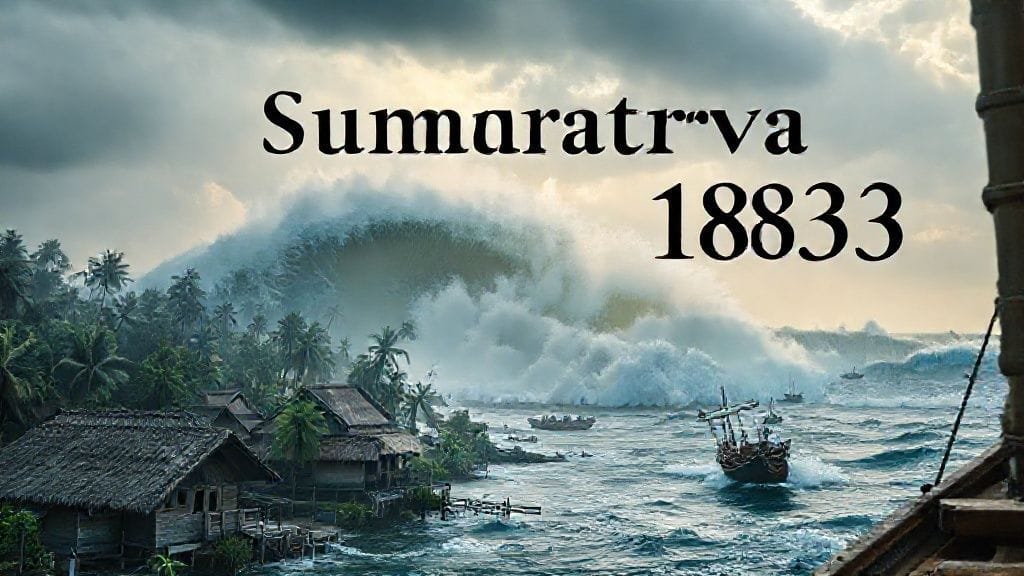
But the earthquake was only the ominous prelude. Moments later, a towering tsunami born from the sudden seabed uplift raced across the Indian Ocean toward the Sumatran coastlines. First came the sudden withdrawal of water, a chilling silence as the ocean exposed its hidden floor; then the monstrous waves crashed ashore with inexorable force.
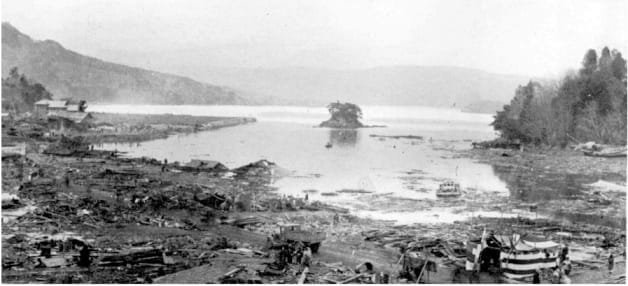
Villages and forests disappeared beneath choking saltwater. Boats were destroyed, homes washed away, and the cries of the drowning echoed in the humid air. Eyewitness accounts speak of waves fifteen meters (or more) high, sweeping across the shorelines with terrifying speed. Entire families vanished in an instant, leaving behind only debris and grief.
Witnesses from the Past: Eyewitness Accounts and Oral Traditions
Though written records were scarce in 1833, oral histories preserved in Minangkabau and coastal communities recounted with haunting clarity the waves’ fury and communal loss. Dutch colonial reports, missionary accounts, and trading company logs provide fragmented descriptions that piece together the chaotic aftermath.
One account from a ship’s captain described the "horrible sea surge," noting villages built “right at the ocean’s edge swallowed by the sea.” Another local tradition tells of elders warning future generations of the ocean’s revenge — a narrative echoing the dual forces of respect and fear held toward the sea.
Human Toll and Environmental Devastation: Counting the Cost
Estimating the human casualties remains difficult, but researchers suggest thousands perished in the tsunami and subsequent chaos. Entire fishing communities were decimated, farmland rendered infertile by saltwater intrusion, and fertile mangrove forests lost.
Beyond lives, the disaster uprooted social structures and economic stability in a region already under colonial strain. Diseases sometimes spread in the wake of waterborne contamination, compounding the tragedy.
Response and Rescue: Community and Colonial Authorities in Crisis
The Dutch colonial administration, overseeing the East Indies, struggled to mount effective relief. Communication impediments, logistical challenges, and the vastness of the affected area limited responses. Nonetheless, reports show local leaders and colonial officials organizing aid where possible, attempting repairs of infrastructure and supply of food.
Communities demonstrated remarkable resilience, rebuilding homes and reclaiming lost land, even while the trauma persisted. This disaster would remain a somber lesson in disaster preparedness — a concept still nascent at the time.
The 1833 Disaster in the Context of Historic Indonesian Seismicity
The 1833 Sumatra tsunami fits into a grim pattern of seismic events along the Sunda megathrust, which includes the 1797 and 1861 great earthquakes, and more recently, the devastating 2004 Indian Ocean tsunami. Together, these earthquakes reveal a multi-century seismic cycle ongoing beneath the Indonesian archipelago.
Understanding such events is essential, as this subduction zone remains one of the most dangerous in the world, demanding constant vigilance.
Scientific Understandings in the 19th Century: Between Mystery and Myth
In the early 1800s, natural sciences were still developing frameworks to understand earthquakes and tsunamis. The 1833 disaster predated modern seismology and geological studies, leaving the event shrouded in mystery and interpreted often through mythological lenses.
European scientists were only beginning to link sea waves with earthquakes. Indigenous interpretations mixed spiritual causes with observable phenomena, creating a rich but complex narrative mosaic.
The Earthquake and Tsunami in Local Memory and Folklore
For generations, the 1833 event became embedded in local folklore. Stories of the “sea’s great anger” and “earth shaking like a giant’s rage” were recounted alongside rituals aimed at appeasing the forces of nature.
These narratives served as cultural mechanisms to transmit wisdom and cautionary tales about the ocean’s power, influencing settlement patterns and fishing practices.
Colonial Reactions: Dutch East Indies Administration and the Aftermath
The Dutch prioritized rebuilding ports and trade infrastructure but often neglected rural victims’ needs. This disaster exposed the limitations and priorities of colonial governance, whereby economic concerns overshadowed humanitarian responses.
Yet it also accelerated mapping efforts and early geological surveys aiming to better understand and manage the region.
The Shift in Maritime Patterns and Trade Routes
Post-disaster, hazardous coastal areas saw temporary abandonment while traders sought safer harbors. This shift impacted regional economies, forcing adaptations that would echo into the latter half of the 19th century.
Maritime insurance and navigation practices gradually incorporated awareness of seismic risks, albeit slowly.
Global Implications: How the 1833 Tsunami Changed the Understanding of Nature’s Power
Though largely confined to regional awareness at the time, the 1833 Sumatra tsunami contributed over decades to the growing realization worldwide that the sea could turn monstrous without warning. It was one of the significant 19th-century natural disasters that challenged human assumptions of mastery over nature.
Lessons Learned: Early Recognitions of Tsunami Hazards in Indonesia
While modern scientific tsunami warning systems were centuries away, local knowledge post-1833 recognized signs of impending danger — unusual tide withdrawals, tremors — that influenced fishing and settlement.
Such indigenous knowledge formed the bedrock of later disaster preparedness strategies in Indonesia.
Geologists’ Retrospective: Reconstructing the 1833 Event in Modern Science
Contemporary geologists analyze sediment layers, coral uplift, and historical records to build models of the 1833 rupture. These reconstructions help determine the earthquake’s magnitude, affected area, and frequency of recurrence.
They also affirm that the 1833 event ruptured roughly 350–400 kilometers of the megathrust, releasing energy comparable to megaquakes today.
Contemporary Parallels: The 2004 Indian Ocean Tsunami and Historical Echoes
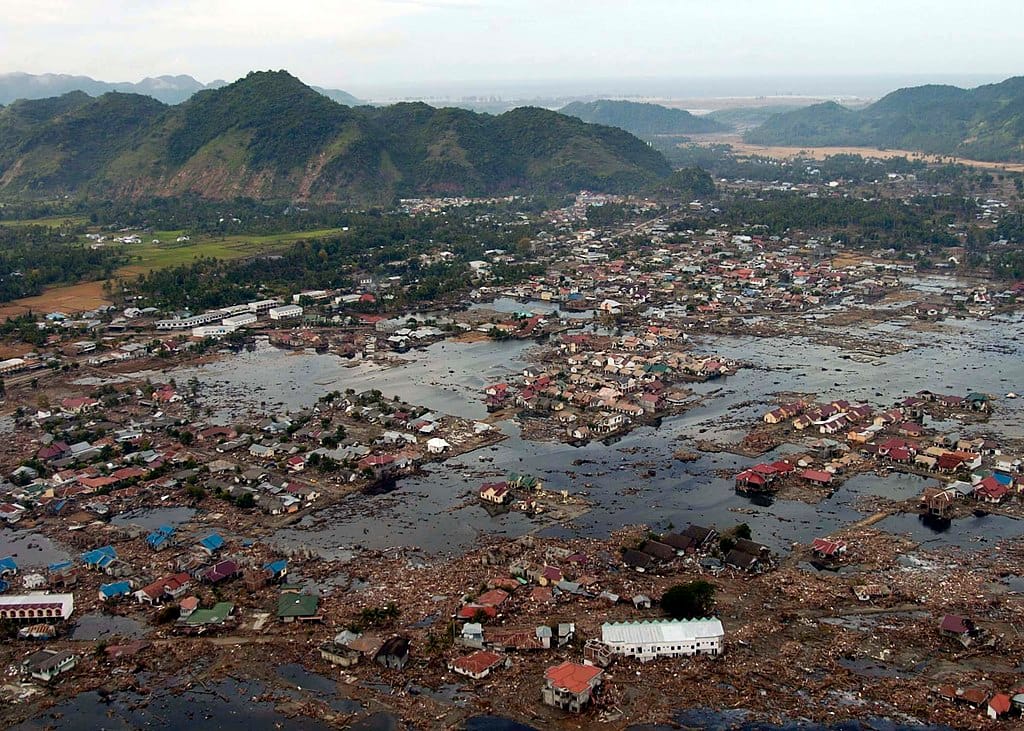
The tragic 2004 tsunami, one of the deadliest in history, echoed the 1833 disaster in scale and impact. Documentary evidence from 1833 now informs disaster preparedness and risk assessments.
Unlike the 19th century, 21st-century technologies have improved warning capabilities, yet vulnerability remains high for coastal populations, underscoring the vital importance of historical memory.
Cultural Resilience and Rebuilding: Sumatra’s Spirit After the Catastrophe
Despite repeated blows by nature, Sumatran communities have persistently rebuilt their homes, cultures, and livelihoods. Folk songs, poetry, and festivals keep memories alive, reinforcing a profound human connection to the sea — one shaped by reverence and respect born from tragedy.
The Tsunami in Art and Literature: Traces in the Human Imagination
Though the 1833 tsunami left few direct artistic traces, coastal cultures embed cyclical themes of destruction and renewal in their arts. Storytelling and oral literature bear witness to nature’s wrath and humanity’s courage.
This legacy adds a unique layer to Indonesia’s rich cultural heritage.
Toward a Safer Future: Tsunami Warning Systems and Regional Cooperation
Modern Indonesia, bearing the scars of events like 1833 and 2004, leads regional efforts in tsunami warning systems, early detection, and community education. International collaboration and technology advances aim to reduce future losses.
Yet history reminds that preparedness must be continuous and culturally sensitive.
Conclusion
The Sumatra (Southwest) Tsunami of November 25, 1833, is more than an entry in a geological ledger or an ancient calamity. It is a human story of rupture — of earth and ocean, but also of societies. It exposed the fragility of life in the face of nature’s awesome forces, yet at the same time illuminated the resilience and adaptability of mankind. From terror emerged lessons that traveled beyond continents and centuries.
Today, as waves lap gently against Sumatran shores, echoes from that fateful day remind us of the delicate balance we share with the planet. Remembering 1833 encourages humility and respect, urging humanity to honor both memory and science, for in this fusion lies hope for safer tomorrows.
FAQs
1. What caused the 1833 Sumatra tsunami?
The tsunami was triggered by a massive earthquake of estimated magnitude 8.7 caused by the rupture of the Sunda megathrust subduction zone near Southwest Sumatra.
2. How many people died in the 1833 tsunami?
Exact figures are unknown, but researchers estimate thousands perished, with entire coastal communities devastated.
3. Were there any early warning signs noticed by locals?
Oral traditions mention unusual sea behavior like sudden retreat of water, which served as natural warnings. However, systematic warnings were nonexistent.
4. How did the Dutch colonial government respond?
They attempted relief and reconstruction, especially focusing on infrastructure and trade, but their response was limited and often insufficient for rural populations.
5. How does the 1833 earthquake relate to the 2004 Indian Ocean tsunami?
Both were megathrust earthquakes on the same fault line causing large tsunamis. The 1833 event helps understand seismic cycles affecting the region.
6. Has the 1833 tsunami influenced modern disaster preparedness?
Yes, historical events like this inform scientific research and early warning systems in Indonesia and beyond.
7. Are there any cultural memories of the event?
Yes, local folklore, oral histories, and rituals incorporate memories of the tsunami as lessons and warnings.
8. What lessons do scientists draw from studying the 1833 event today?
It helps in modeling seismic behavior of the Sunda megathrust, assessing tsunami risks, and improving regional resilience.