Table of Contents
- The Day the Earth Roared: The Sunset Crater Eruption Ignites
- The Ancient Land before Fire: Northern Arizona’s Pre-Eruption Landscape
- The Peoples of the Southwest: Communities Shaped by the Land
- Geological Whispers: Understanding the Volcano’s Silent Build-Up
- April 1085: When Fire Met Sky – The First Explosions
- Rivers of Lava and Clouds of Ash: The Eruption Unfolds
- The Immediate Aftermath: Landscapes Transformed Overnight
- The Impact on Indigenous Societies: Survival Amidst Catastrophe
- Myths and Memories: How the Eruption Imprinted on Oral Traditions
- The Ecological Rebirth: Life Racing Back to Barren Lands
- Cultural Adaptations: Agriculture and Settlement after the Eruption
- Scientific Discoveries: Modern Understanding of Sunset Crater
- Archaeology in Ashes: Excavating the Past Buried Beneath Lava
- The Volcano in the Modern Age: Protection and Preservation
- Sunset Crater’s Global Significance: Lessons from an Ancient Fury
- Reflection on Human Vulnerability and Resilience through Fire
- Conclusion: The Lasting Legacy of Sunset Crater’s Fiery Birth
- FAQs about the Sunset Crater Eruption
- External Resource
- Internal Link
1. The Day the Earth Roared: The Sunset Crater Eruption Ignites
Imagine standing on the red earth of what is now northern Arizona, under a bright spring sky, when the ground suddenly begins to tremble beneath your feet. A sharp crack echoes through the silence, followed by a deafening roar – the voice of fire rising from the Earth’s core. Black clouds erupt, fiery specks shoot skyward, and the air fills with the choking smell of sulfur. This was April of 1085, the day the Sunset Crater volcano woke from its slumber and unleashed a spectacle of natural fury that would forever reshape the land and its people.
The eruption was not just a geological event; it was a cataclysmic turning point for the indigenous peoples who inhabited the region, a moment when their world was transformed by raw elemental forces. For centuries afterward, the landscape bore the grave wounds of molten rock and ash, but from this devastation also came renewal and adaptation, stories passed down through generations, and scientific revelations millennia later.
2. The Ancient Land before Fire: Northern Arizona’s Pre-Eruption Landscape
Before the fiery baptism, the region around what would become known as Sunset Crater was a mosaic of woodlands, shrublands, and fertile valleys. This part of the Colorado Plateau was dotted with ponderosa pines, junipers, and mixed grasses—a habitat rich in game and ripe for cultivation by the Ancestral Puebloans and other Native American groups.
The land was more than just a resource; it was a living, breathing environment shaping and shaped by the people who called it home. Small villages clustered around water sources, practicing dry farming techniques and hunting local wildlife. Trade paths wove through the terrain, linking distant communities. It was a stable world, balanced delicately between nature’s bounty and human needs.
3. The Peoples of the Southwest: Communities Shaped by the Land
The people living here around 1085 were part of a complex tapestry of indigenous cultures whose legacies endure today. The Ancestral Puebloans, among others, carved out lifeways adapted to the arid environment. Their houses—pit-houses and early pueblo-style structures—were testament to human ingenuity.
Farming maize, beans, and squash, supplemented by hunting, gathering, and trading, these communities were thriving yet vulnerable. They understood the rhythms of the land, the seasons, and the occasional hardships nature imposed. But the sudden awakening of the volcano was something beyond any lived experience or oral memory—a rupture that tested their resilience profoundly.
4. Geological Whispers: Understanding the Volcano’s Silent Build-Up
Sunset Crater volcano is part of the San Francisco volcanic field, a vast area characterized by over 600 volcanic vents scattered across northern Arizona. Although many volcanoes there are long extinct, this region remained geologically active beneath the surface.
Deep within the Earth’s crust, molten rock, or magma, was slowly ascending, pressurizing and gathering gases over centuries. The quiet accumulation went unnoticed on the surface—there were no earthquakes large enough to foreshadow what was to come, and to the human ear, nature continued as usual.
But beneath, the tension was growing, steps approaching an inevitable climax.
5. April 1085: When Fire Met Sky – The First Explosions
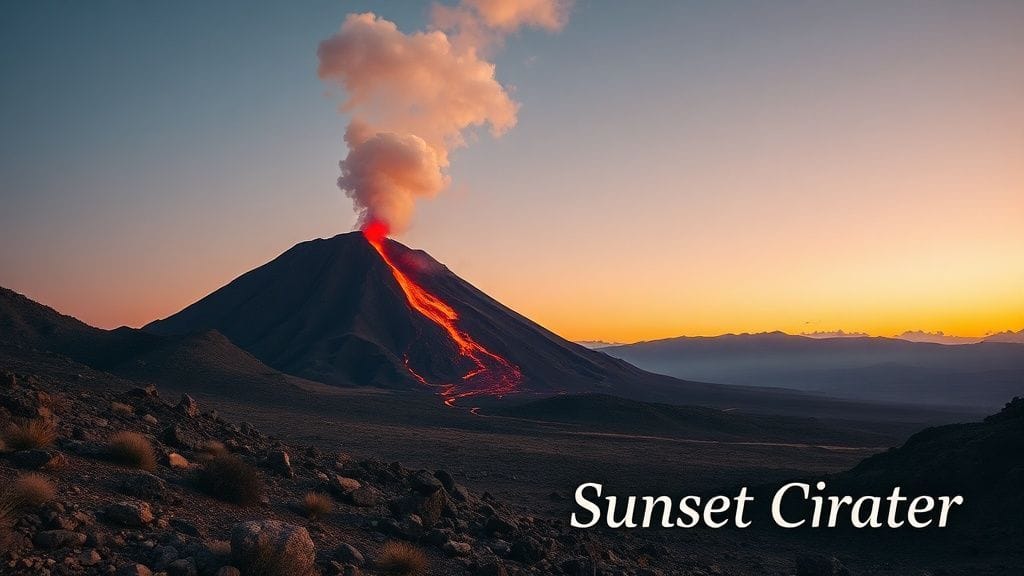
Suddenly, the surface ruptured. The first explosions sent plumes of ash high into the atmosphere, darkening the sky and turning daylight into an eerie twilight. Bombs of molten rock hurled outward, igniting brush and trees. Lava fountains lit up the horizon as rivers of molten rock clawed their way down slopes.
Contemporary witnesses—if any had survived to recount it—would have seen a landscape torn apart by the chaos of fire and rock, a terrifying spectacle that shattered the familiar. Ashfall blanketed the valleys, choking plants, animals, and possibly threatening the very survival of people.
6. Rivers of Lava and Clouds of Ash: The Eruption Unfolds
Over months or perhaps years, the eruption unfolded in phases. Fountains of lava reached impressive heights while thick ash clouds spread across the region, carried by the winds. Lava flows solidified into jagged black rocks, covering forests and farmland alike.
The volcanic materials, variably thick and dangerous, fundamentally re-sculpted topography. This was a landscape being both destroyed and rewritten, as the Earth built anew from its molten veins.
7. The Immediate Aftermath: Landscapes Transformed Overnight
When the eruption finally mercifully ceased, the scars remained. Hundreds of square kilometers were swathed in fresh volcanic rock and ash, the vegetative cover stripped away. New hills and craters dotted the land where forests had grown.
This was a harsh new environment: for years, perhaps decades, soil was thin and fragile, temperatures fluctuated more intensely due to lack of vegetation, and water drainage patterns shifted dramatically.
8. The Impact on Indigenous Societies: Survival Amidst Catastrophe
For the local indigenous groups, the impact was immediate and profound. Food resources were disrupted, wild game displaced or scarce, and farmland rendered useless. Entire villages may have been abandoned. Ash inhalation and contaminated water likely caused health crises.
Yet amid destruction, resilience grew. Many groups adapted by relocating, diversifying food sources, and learning to inhabit this new volcanic terrain. Over time, abandoned lands began to be reoccupied, and human innovation met nature’s challenge head-on.
9. Myths and Memories: How the Eruption Imprinted on Oral Traditions
Sunset Crater’s eruption found its place in the oral histories and mythologies of descendants. Some stories speak of fire and earth spirits, divine wrath, or the sacredness of the volcanic land. These narratives preserved cultural memory, encoding geological knowledge through generations.
Anthropologists and linguists studying these oral traditions have found echoes of the fiery cataclysm woven into rituals and legends, a profound reminder of how natural disasters shape human consciousness.
10. The Ecological Rebirth: Life Racing Back to Barren Lands
After devastation comes renewal. Though initially barren, the volcanic soils at Sunset Crater would become rich grounds for new life. Lichens, mosses, and hardy pioneer plants began to colonize the ash fields, followed by shrubs and trees.
Ecologists today marvel at the velvety carpets of wildflowers that bloom in spring, a testimony to life’s tenacity even in the harshest conditions. The volcanic land became a living laboratory of ecological succession, helping scientists understand nature’s cycles of destruction and rebirth.
11. Cultural Adaptations: Agriculture and Settlement after the Eruption
Intriguingly, the eruption indirectly strengthened some long-term agricultural prospects. New volcanic soils, once weathered, are remarkably fertile and retain moisture better than some regional soils. Archaeologists have found evidence that indigenous groups returned to farm the shadow of the volcano with renewed vigor.
Settlements shifted, strategies evolved, and the people’s intimate knowledge of their changing environment deepened. This was a story not only of loss but of enduring adaptation and cultural dynamism.
12. Scientific Discoveries: Modern Understanding of Sunset Crater
It was only in the 20th century that scientists began to piece together Sunset Crater’s violent past through geological surveys, radiocarbon dating, and soil analysis. The eruption’s approximate date was established, and the scale of the event quantified.
Today, volcanologists study Sunset Crater as a relatively recent example of monogenetic volcanism (a volcano erupting once and then becoming dormant). This knowledge informs regional hazard assessment and provides insight into volcanic processes worldwide.
13. Archaeology in Ashes: Excavating the Past Buried Beneath Lava
Layers of ash and lava also preserved artifacts and dwellings beneath their weight, turning the eruption into an unintentional archaeological time capsule. Recent digs have uncovered remnants of ancient structures, tools, and pottery, helping reconstruct the lives of those who witnessed the eruption.
Through these discoveries, the story of human endurance amid environmental upheaval gains vivid detail and depth.
14. The Volcano in the Modern Age: Protection and Preservation
Recognizing both its natural and cultural significance, Sunset Crater became a protected area. The national monument status ensures restrictions on land use and visitor access aimed at preserving its fragile landscapes.
It stands today as a symbol of natural power and human history intertwined, drawing tourists, scientists, and indigenous descendants alike in reverent observation.
15. Sunset Crater’s Global Significance: Lessons from an Ancient Fury
On a broader scale, the Sunset Crater eruption offers lessons on the interconnection between natural disasters and human societies. It epitomizes how sudden environmental cataclysms echo through culture, ecology, and memory, shaping civilizations in their aftermath.
This event enriches global volcanic history and reminds us of our planet’s dynamic nature.
16. Reflection on Human Vulnerability and Resilience through Fire
Contemplating Sunset Crater prompts profound reflections on the human condition. In the face of overwhelming natural force, communities faced loss, upheaval, and existential challenge yet found ways to endure and rebuild.
Such stories resonate universally—reminding us that while we are vulnerable to Earth’s whims, human spirit and adaptability shine brightest when the ground beneath us trembles.
17. Conclusion: The Lasting Legacy of Sunset Crater’s Fiery Birth
More than nine centuries after the Sunset Crater eruption, its legacy remains palpable—in the burned hills and resilient plants, in the oral traditions passed down, and in scientific inquiry uncovering the Earth’s fiery narrative.
This tale of destruction and rebirth is a testament to the planet’s restless power and humanity’s unyielding capacity to adapt, remember, and move forward. Sunset Crater is not just a monument of volcanic stone but a symbol of life’s enduring dance with fire.
Conclusion
The eruption of Sunset Crater in 1085 was a moment when the Earth radically reshaped itself and the lives of those who lived upon it. Its dramatic fire and ashstorms obliterated landscapes, wrought hardship, and tested human endurance. Yet from this disaster emerged renewal—not only ecological rebirth but cultural resilience and innovative adaptation.
Today, Sunset Crater stands as a silent witness, its blackened slopes etched with stories of survival and transformation. It is a reminder of the delicate balance between nature’s power and human determination, an enduring chapter of history written in flame and stone.
FAQs about the Sunset Crater Eruption
Q1: What caused the Sunset Crater eruption in 1085?
The eruption was caused by the upward movement of magma from deep within the Earth’s crust beneath the Colorado Plateau, triggered by geologic pressures overcoming resistance in the volcanic vent.
Q2: How long did the eruption last?
The exact duration is uncertain, but evidence suggests the eruption lasted several years, beginning abruptly in 1085 and continuing in phases with volcanic activity including lava flows and ash eruptions.
Q3: How did the eruption affect local indigenous communities?
The communities faced severe disruption: farmland was covered in ash and lava, food sources became scarce, and some settlements were likely abandoned. Despite hardship, many adapted by relocating and altering agricultural practices.
Q4: What archaeological evidence exists of the eruption?
Excavations have uncovered structures, tools, and pottery beneath ash layers, providing insight into pre-eruption life and the immediate impact on human habitation.
Q5: Why is Sunset Crater significant for volcanology?
It’s an exemplary case of a monogenetic volcano—a volcano that erupts once and then becomes dormant—providing valuable data on eruption dynamics and volcanic hazards.
Q6: How has the landscape recovered since the eruption?
Over centuries, pioneer plants, shrubs, and forests recolonized the volcanic terrain, turning once barren lava fields into rich ecological habitats.
Q7: Does Sunset Crater still pose volcanic risks?
Currently, it is considered dormant with no recent eruptions, but as part of an active volcanic field, future activity cannot be entirely ruled out.
Q8: How is Sunset Crater remembered by indigenous peoples today?
It features in oral histories and cultural stories, symbolizing natural power and transformation, with traditions honoring the event's spiritual and historical significance.

