Table of Contents
- The Tense Morning at Worms: Prelude to a Historic Break
- Europe on Edge: The Power Struggle Between Church and Empire
- Gregory VII: The Reformer Pope and His Vision
- Henry IV: The Young Emperor Wrestling Authority
- The Road to Worms: Escalating Confrontations and Papal Dictates
- January 1076: The Gathering at Worms Cathedral
- The Imperial Decree: Deposition of Pope Gregory VII
- Reactions in Rome: Shockwaves Through the Papacy
- Across Europe: Nobles, Clergy, and Commoners Respond
- The Aftermath: The Road to Excommunication
- The Humiliation at Canossa: Penitence and Politics
- The Investiture Conflict: A Clash That Shaped Medieval Europe
- Power, Faith, and Legitimacy: The Stakes of Deposing a Pope
- The Role of German Princes and Imperial Diets in the Crisis
- Gregory VII’s Legacy: Reform, Resistance, and the Church’s Future
- Henry IV’s Struggles: Imperial Authority and Political Survival
- The Broader Cultural and Political Impact of the Synod of Worms
- The Symbolism of Worms: A City at the Crossroads of Power
- Lessons From Worms: Authority in the Middle Ages
- The Echo Through Centuries: How the Worms Decree Reverberates Today
The Tense Morning at Worms: Prelude to a Historic Break
The chill of January 1076 hung in the air over the city of Worms, an ancient settlement on the banks of the Rhine. The crowds gathering around the great cathedral had no inkling that they were about to witness a chapter of history that would shake the foundations of Christendom. The air was thick with anticipation, whispered rumors, and a palpable sense of impending confrontation. Inside the cathedral, voices mingled with uneasy glances. The stage was set not for a spiritual renewal nor a peaceful debate, but for an unprecedented challenge—an imperial declaration that would cast Pope Gregory VII from the seat of power.
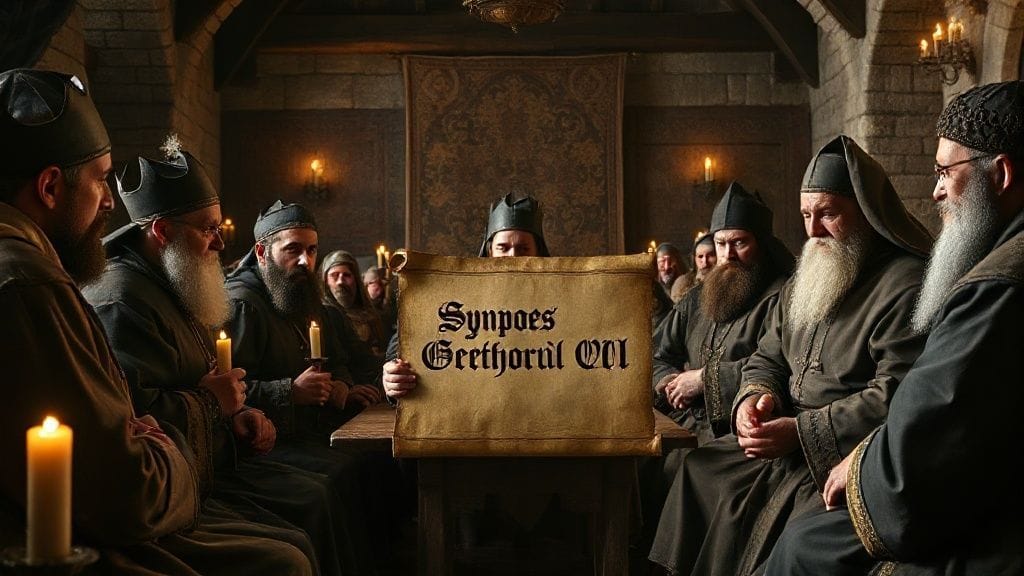
This was no ordinary day. As the emperor’s loyalists filed into the grand space, the very future of the papacy and the Holy Roman Empire was being wagered in a theatrical confrontation far more dramatic than any battlefield clash. The Synod of Worms convened as a political battleground, a forum where two great powers—emperor and pope—would vie for supremacy, throwing medieval Europe into turmoil for decades.
Europe on Edge: The Power Struggle Between Church and Empire
The Synod of Worms cannot be understood outside the broader tensions pervading 11th-century Europe. The Holy Roman Empire, a sprawling and complex realm, was caught in the throes of defining its authority vis-à-vis the spiritual power held by the papacy. Since Charlemagne’s coronation in 800 CE, the intertwining of spiritual and temporal power had been a defining feature of European politics, but the balance was precarious.
By the mid-11th century, reformist currents within the Church sought to assert ecclesiastical independence from secular rulers, particularly regarding the controversial practice of lay investiture—where kings and emperors appointed bishops and abbots, effectively controlling the Church hierarchy. These reforms threatened the traditional prerogatives of imperial authority, setting the stage for a showdown.
Gregory VII: The Reformer Pope and His Vision
At the heart of this storm stood Pope Gregory VII, born Hildebrand of Sovana. His vision was bold, radical even: to purify and strengthen the Church by freeing it from secular interference. A fierce advocate of the Gregorian Reform, he condemned simony, clerical marriage, and especially lay investiture. Gregory’s conviction was rooted in the belief that spiritual authority, entrusted by God, must remain autonomous and untainted by earthly politics.
His papacy from 1073 marked a period of intense challenges and upheavals. Gregory was both admired and feared for his zeal and intellectual rigor. Yet, his declaration of papal supremacy over emperors was a direct affront to Henry IV, young Holy Roman Emperor, who inherited a realm fraught with insubordination and instability.
Henry IV: The Young Emperor Wrestling Authority
Henry IV ascended to the imperial throne as a teenager, burdened by internal dissent and a fractious nobility. His imperial authority was already contested when Gregory VII began imposing reforms that threatened the delicate balance sustaining Henry’s rule.
Henry’s strategy was pragmatic: maintain traditional rights and crown imperial power with religious sanction. The pope’s reforms not only threatened his political survival but also undermined the legitimacy that his coronation sought to establish. The struggle between Henry and Gregory was not merely personal; it was a battle over the soul and structure of Christendom.
The Road to Worms: Escalating Confrontations and Papal Dictates
Long before the Synod of Worms convened, tensions had escalated dramatically. Gregory’s papal bulls challenged Henry’s authority explicitly. The pope excommunicated key supporters of the emperor, warning against lay investiture in his eye-opening dictatus papae—a collection of papal prerogatives that included the unprecedented claim to depose emperors.
In retaliation, Henry assembled an imperial council in Worms, determined to answer the pope’s claims and reassert his prerogatives. The stage was being set for an open declaration of resistance—a gamble with profound consequences.
January 1076: The Gathering at Worms Cathedral
On a cold January day, nobles, bishops, and imperial officials gathered in Worms Cathedral, a towering symbol of both religious devotion and imperial grandeur. The atmosphere was electric with anticipation and anxiety. The emperor’s envoys took to the pulpit, issuing a formal imperial decree that anathematized Pope Gregory VII and demanded his deposition.
The synod declared the pope deposed, accusing him of breaking the Church’s unity and fomenting rebellion against imperial authority. This was an extraordinary moment: a secular ruler and his allies publicly challenging the most sacred office in Western Christendom. The cathedral’s vast walls echoed with the weight of an audacious political move that blurred the boundaries between sacred and profane power.
The Imperial Decree: Deposition of Pope Gregory VII
The imperial decree was as much a legal document as a dramatic political statement. It laid charges against Gregory’s legitimacy and moral authority. Accused of inciting insubordination among princes and defying the traditional pact between emperor and pope, Gregory was condemned as illegitimate and excommunicated by imperial authority.
This act symbolized the depth of the conflict: an emperor deposing a pope—a theological and political paradox reflecting a civilization grappling with authority, faith, and governance. Yet, it was also a spark that would ignite wider conflict.
Reactions in Rome: Shockwaves Through the Papacy
The papal court in Rome was shaken to its core. Gregory VII refused to yield, responding with a series of letters denouncing Henry as a usurper and sinner. The deposition attempt only hardened his resolve and escalated the confrontation. Supporters of Gregory rallied around the idea that the emperor had overstepped sacred bounds, necessitating severe spiritual sanctions.
Rome became a center of resistance and fervent papal loyalty, underscoring the spiritual dimension of the conflict—not simply a political argument but a cosmic battle for the soul of Christendom.
Across Europe: Nobles, Clergy, and Commoners Respond
The reverberations of the Synod’s decree rippled through Europe. Princes and nobles faced a dilemma—support the emperor and be branded rebels by the Church, or side with Gregory and risk political alienation. Clergy across the continent found themselves caught between vows to obedience to both the emperor and the pope.
Common folk, though distant from the politics, were tugged into a wider narrative of divine justice and earthly power. The ideological battle played out in sermons, chronicles, and courts. The unity of medieval Christendom was fracturing under the strain of ambition and reform.
The Aftermath: The Road to Excommunication
The immediate aftermath was a dramatic escalation: in February 1076, Pope Gregory VII excommunicated Henry IV and declared his removal from the imperial throne. This was more than a religious censure—it was a political weapon that threatened to topple Henry’s reign by encouraging rebellion among his subjects.
The excommunication marked the beginning of open civil war within the empire and years of instability. Henry’s position grew perilous, forcing him eventually to seek personal reconciliation in a legendary act that reverberates through history.
The Humiliation at Canossa: Penitence and Politics
In what has become one of the most famous entrepôts in medieval history, Henry IV undertook a dramatic penitential journey in the winter of 1077, traveling barefoot through snow to the fortress of Canossa, where Gregory held refuge. For three days, the emperor waited outside in the cold, seeking absolution.
This gesture was both deeply symbolic and intensely political—a public submission that temporarily restored Henry’s legitimacy but concealed ongoing struggles over power. The scene at Canossa encapsulated the tense interplay between spiritual humbling and political maneuvering.
The Investiture Conflict: A Clash That Shaped Medieval Europe
The Synod of Worms and subsequent events unleashed the broader Investiture Controversy, a multi-decade conflict over the rights of appointment to church offices. This struggle defined the relationship between Church and state for centuries, influencing canon law, imperial governance, and the very nature of kingship.
It set precedents about the separation of spiritual and temporal powers—issues still debated in modern ideas of church-state relations. The Investiture Conflict was more than a medieval quarrel; it was a foundational crisis of Western political culture.
Power, Faith, and Legitimacy: The Stakes of Deposing a Pope
Deposing Gregory VII was no mere act of political defiance; it was an existential challenge to the medieval worldview. The pope was not just a political leader but the Vicar of Christ, whose authority was seen as divine. To declare him illegitimate was to question the divine order itself.
This raised profound questions: who wielded God’s authority on Earth? Could earthly rulers override spiritual offices? The answers would reshape medieval consciousness and politics, plunging Europe into decades of conflict and reform.
The Role of German Princes and Imperial Diets in the Crisis
Within the empire, princes and imperial diets played crucial roles. Many nobles saw the conflict as an opportunity to assert greater independence from their overlord—Henry IV’s weakness after excommunication emboldened regional powers. The internal fragmentation of the empire was as much a factor as the papal dispute.
Diets held to deliberate on the emperor’s fate, sometimes siding with the pope, other times reaffirming imperial sovereignty. The conflict fractured loyalties, further destabilizing governance.
Gregory VII’s Legacy: Reform, Resistance, and the Church’s Future
Though deposed by the Synod of Worms, Gregory VII’s vision endured. His reforms energized the papacy and laid the groundwork for the medieval Church’s future ascendancy. The assertion of papal primacy would culminate in the powerful pontificate of Innocent III and institutional reforms that shaped Western Christianity.
Gregory’s writings and policies influenced canon law and inspired centuries of ecclesiastical reform movements. His papacy remains a symbol of principle in the face of worldly power.
Henry IV’s Struggles: Imperial Authority and Political Survival
Henry IV spent decades navigating the treacherous aftermath of Worms and Canossa, balancing rebellion, alliances, and papal politics. Though humbled, he never relinquished imperial ambitions wholly, fighting to maintain control in a fractured realm.
His reign illustrates the fragility of medieval authority, dependent on both political skill and spiritual legitimacy. Despite setbacks, Henry’s resilience ensured the empire would endure, though transformed.
The Broader Cultural and Political Impact of the Synod of Worms
The Synod’s significance extends beyond the battlefield of politics—it affected medieval culture, law, and identity. It reinforced the idea that spiritual authority was a legitimate sphere of power in its own right. The conflict influenced art, literature, and philosophy, embedding the question of power and conscience deep in European thought.
Its echoes are found in later debates on sovereignty, the rise of nation-states, and the secularization of political authority.
The Symbolism of Worms: A City at the Crossroads of Power
Worms itself became emblematic—a city where imperial might met ecclesiastical authority in a defining confrontation. With a history stretching back to Roman times, Worms was no random choice but a symbolic stage, reminding contemporaries and historians alike of the deep roots and complex legacy of power in Europe.
Its cathedral hosted not just rituals but revolutions of authority, making Worms a historic landmark in medieval memory.
Lessons From Worms: Authority in the Middle Ages
The Synod of Worms teaches us about the precarious balance between different spheres of power and the costs of challenging established orders. It reveals how medieval rulers negotiated legitimacy, using religion and politics as intertwined tools.
The events caution against simplistic notions of power—authority required consensus, symbolism, and sometimes humility. Medieval Europe was a realm of contested ideals, not monolithic rule.
The Echo Through Centuries: How the Worms Decree Reverberates Today
Even today, the Synod of Worms resonates in discussions on church-state relations, legal authority, and moral leadership. It reminds us how history shapes contemporary ideas about governance, the limits of power, and the role of conscience in politics.
The deposition of a pope by an emperor remains a stark reminder of the enduring tensions between temporal and spiritual powers—a foundational episode in the ongoing dialogue about authority in human societies.
Conclusion
The Synod of Worms in January 1076 was more than a political maneuver; it was a seismic event that shaped the medieval world and cast long shadows over European history. It encapsulated the intense struggle for power between faith and empire, the fierce ambitions of Henry IV, and the unwavering principles of Gregory VII. This confrontation, frozen in time within the great cathedral of Worms, reminds us of the fragility of power and the strength of conviction.
What we witness in this drama is human ambition and spiritual idealism clashing on the world’s stage—an enduring story of authority, reform, and resilience. The seeds sown in Worms grew into fundamental transformations of medieval Christendom, lessons that continue to inspire reflection on leadership, legitimacy, and the profound ties between faith and politics.
FAQs
Q1: What caused the Synod of Worms to depose Pope Gregory VII?
A1: The Synod was triggered by escalating conflicts over lay investiture and papal reforms. Emperor Henry IV and his supporters opposed Gregory’s attempts to assert ecclesiastical independence and papal supremacy, culminating in his formal deposition at Worms.
Q2: Who was Pope Gregory VII, and why was he so significant?
A2: Gregory VII was a reformist pope aiming to free the Church from secular control. His assertive claims about papal authority, particularly in the Dictatus Papae, led to his confrontation with Henry IV and redefined Church-state relations.
Q3: How did the deposition attempt affect Henry IV’s reign?
A3: It undermined Henry’s legitimacy, leading to his excommunication, internal rebellions, and his famous penitential act at Canossa. Though a severe blow, Henry eventually regained power, but the crisis weakened imperial authority permanently.
Q4: What was the Investiture Controversy and how is it linked?
A4: The Investiture Controversy was the decades-long struggle over who held the right to appoint bishops—the emperor or the pope. The Synod of Worms marked a pivotal moment in this conflict, with the deposition attempt escalating tensions.
Q5: How did European nobles and clergy respond to the Synod of Worms?
A5: Responses were divided; some nobles used the conflict to assert their own power, while many clergy remained loyal to the pope, deepening divisions within the empire and the Church.
Q6: Why is the Synod of Worms historically important?
A6: It symbolizes the intense, often violent clashes between spiritual and temporal powers in medieval Europe, shaping institutional boundaries and influencing future church-state relations.
Q7: What role did the city of Worms play in medieval history?
A7: Worms was a symbolic imperial city, a site of key political and religious events, including the Synod. Its cathedral was a center of authority and a stage for one of medieval Europe’s most dramatic confrontations.
Q8: How is the Synod of Worms remembered today?
A8: As a landmark moment illustrating the complex interplay of power, faith, and politics. It serves as a case study in leadership, legitimacy, and the historical roots of church-state separation.

