Table of Contents
- The Dawn of Disaster: April 7, 1934
- Norway’s Silent Fiords: A Ticking Geological Timebomb
- The Village of Tafjord: Life at the Edge of Nature
- Early Signs and Warnings: Foreboding Tremors
- Anatomy of a Catastrophe: The Tafjord Landslide
- The Raw Power of Water: Tsunami in the Fjord
- Death and Destruction: The Immediate Aftermath
- Rescue Efforts Amidst Ruins and Rage
- Witnesses to the Fury: Stories from Survivors
- Geological Insights: Understanding the Landslide Mechanism
- Norway’s Response: From Mourning to Policy Changes
- The Psychological Scars of Disaster
- Scientific Legacy: Tafjord as a Case Study in Natural Disaster
- Global Impact: Lessons Delivered from the Norwegian Fjords
- Memorializing Tragedy: Remembering Tafjord Today
The Dawn of Disaster: April 7, 1934
The morning of April 7, 1934, unfurled in tranquil quiet along the steep, rugged cliffs overseeing the small Norwegian fishing village of Tafjord. Mist lingered low over the fjord’s narrow waters, and the usual symphony of chirping birds and distant church bells intertwined with the gentle lapping of water upon weathered stones. To an outside observer, the fjord appeared simply serene, timeless—yet beneath its placid surface, tension mounted.
Suddenly, without warning, the earth gave way. A colossal mass of rock, estimated at 2.8 million cubic meters, broke free from the mountainside and plunged into the deep fjord below. The deafening thunderclap shattered the morning calm; the earth shook as if the gods themselves were enraged. The massive rockfall plunged into the narrow body of water, setting off a monstrous wave that surged towards Tafjord with furious speed—the fjord had transformed into a lethal water channel, hurling death and destruction with terrifying force.
For the villagers who lived in the shadow of these cliffs, alarm turned quickly to despair. Within moments, the tsunami surged through the village, razing homes, killing dozens, and scarred the collective memory of Norway forever.
Norway’s Silent Fiords: A Ticking Geological Timebomb
Norway’s western coastline is a dramatic tableau of fjords, towering cliffs, and deep valleys carved by ancient glacial activity. These fjords, often praised for their breathtaking beauty, are products of millennia of ice and rock interactions. But their grandeur also masks a latent geological vulnerability.
The steep slopes that rise almost vertically from the fjord waters harbor layers of fractured rock and unstable soil, remnants of the Ice Age’s glacial weight that had only partially relaxed. In certain pockets, such as those near Tafjord, conditions were ripe for massive landslides—where heavy precipitation, frost shattering, and geological fault lines conspired silently over decades.
Scientists studying the area in the early 20th century had already identified this as a zone of concern. But the notion of a catastrophe on the scale that would strike Tafjord was scarcely conceivable for locals and authorities alike. To them, the mountains seemed immutable.
The Village of Tafjord: Life at the Edge of Nature
Nestled at the head of the Tafjorden inlet, the village was home to roughly 170 inhabitants, mostly fishermen and their families. The community was tightly knit—not just by geography but by tradition, folklore, and an enduring respect for the challenging landscape that sustained them.
Daily life revolved around the rhythm of the fjord: small boats setting out to fish during calm weather, children playing along the shoreline, and elders recalling tales of past storms and survival. The imposing cliffs loomed over the village, both protector and silent sentinel—but never foe. No one could have imagined that the very mountain they regarded with quiet awe would soon unleash death.
Early Signs and Warnings: Foreboding Tremors
In the weeks leading up to April 7, residents of Tafjord began to notice subtle but worrying signs. Early in March 1934, there were reports of small rockfalls and slight tremors shaking windows and rattling dishes. Some locals whispered about shifting earth, while elders recalled old folk warnings of “the mountain’s murmur.”
Authorities did dispatch a few geologists to inspect, who noted some crack formations higher on the hillside but reassured the population that no immediate danger was apparent. Still, unsettled unease clung to the air.
Meteorological records suggest that that spring saw unusual rainfall, further saturating the soil and weakening rock joints—a factor that would prove fatal. Nature had begun a slow yet unstoppable countdown.
Anatomy of a Catastrophe: The Tafjord Landslide
Precisely at 8:30 am, the mountain’s detritus finally succumbed. A massive slab of rock, approximately 700 meters high and weighing over 6 million tons, detached from the steep flank of Langhamaren mountain.
It surged downward at jaw-dropping speed, estimated at 80 kilometers per hour, crashing into the fjord’s narrow waters with the explosive force of several hundred tons of TNT. The sheer velocity and volume displaced millions of cubic meters of water, triggering an immense wave—the tsunami.
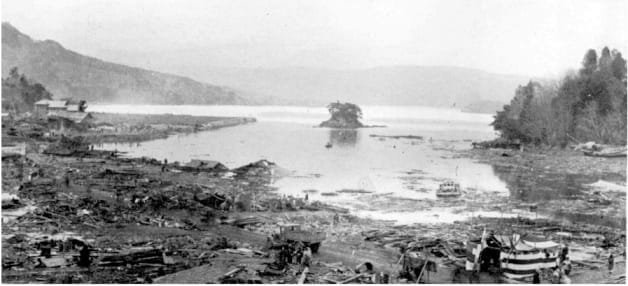
The 62-meter-high wave obliterated anything in its path, smashing through the village’s waterfront docks, boats, and homes with little mercy.
The Raw Power of Water: Tsunami in the Fjord
The tsunami generated by the landslide was not a distant ocean phenomenon but a localized, concentrated wave confined within the fjord’s steep walls. This confinement funneled the wave’s energy, allowing it to reach extraordinary heights and speeds.
The initial wave, surging upwards of 62 meters (over 200 feet) in places, barreled inland, followed by several successive waves that increased destruction. Trees were uprooted, boats thrown ashore like toys, and entire houses swallowed by water and debris.
Notably, the tsunami reached the neighboring village of Sylte across the fjord, where it also inflicted damage and casualties, demonstrating the disaster’s wider reach.
Death and Destruction: The Immediate Aftermath
Tragically, the Tafjord landslide tsunami claimed 40 lives—a devastating toll for such a small community, representing nearly a quarter of the population. Families were torn apart, homes razed, and livelihoods destroyed overnight.
The village infrastructure was decimated: fish stocks lost, boats destroyed, and essential supply lines severed. The sense of shock and grief rippled beyond the fjord’s narrow walls, as Norway mourned the sudden loss.
Contemporary newspapers described the scene as one of “apocalyptic ruination,” with rescuers pulling frozen and injured people from the wreckage amid lingering fear of unstable cliffs still threatening more slides.
Rescue Efforts Amidst Ruins and Rage
The rescue effort was hindered by the fjord’s remoteness and the destruction of the village’s landing points. Nevertheless, local fishermen, aided by neighbors from nearby communities, mobilized quickly.
Boats were launched into dangerous waters to search for survivors, while makeshift shelters were erected for the displaced. Medical teams and volunteers worked tirelessly, though resources were limited.
Norwegian authorities sent specialists who began not only humanitarian aid but also geological assessments to prevent subsequent disasters. The stoicism and resilience of the survivors during these dark days became emblematic of Norwegian fortitude in the face of nature’s wrath.
Witnesses to the Fury: Stories from Survivors
Among the voices of history preserved, a woman named Ingrid Larsson recounted the ordeal vividly:
“I heard a terrible crash—like thunder breaking loose. Then the mountain screamed as it fell. The water rose like a monster’s hand, taller than any house I had seen. I grabbed my children and ran, but the waves took my husband. I still see his face in the water.”
These personal memories breathe life into the cold statistics, conveying loss, fear, and the raw human cost of natural catastrophe. Over time, survivors gathered annually to honor those lost and to share stories, strengthening communal bonds and remembrance.
Geological Insights: Understanding the Landslide Mechanism
The Tafjord disaster became a seminal case study for geologists worldwide. Analysis identified several critical factors:
- The complex geology of layered metamorphic rock, heavily fractured and subject to freeze-thaw cycles.
- Saturation of soils due to heavy rainfall weakening the rock mass.
- The steep gradient which accelerated the rockfall.
- The narrow fjord’s shape which amplified the tsunami wave.
Post-disaster studies also advanced landslide prediction science, leading to better monitoring of similar high-risk areas and innovations in early warning systems.
Norway’s Response: From Mourning to Policy Changes
In the tragedy’s wake, Norway set new priorities focused on disaster preparedness. Government bodies invested in geological monitoring of landslide-prone regions and promoted public education about natural hazards.
Engineering projects aimed to stabilize vulnerable cliffs and safeguard human settlements. Emergency protocols were reviewed and enhanced, inspired by lessons painfully learned in Tafjord.
It marked a turning point—where acceptance of nature's power led to pragmatic prevention and resilience-building.
The Psychological Scars of Disaster
Beyond physical damage, the catastrophe left deeply etched psychological wounds. Survivors grappled with trauma, grief, and survivor’s guilt—a hidden legacy that shadowed the community for decades.
Psychologists later emphasized the importance of mental health support after such disasters, and Tafjord’s story is often cited in studies of disaster-induced trauma.
The village’s rebirth was as much a societal and emotional rebuilding as it was a physical one.
Scientific Legacy: Tafjord as a Case Study in Natural Disaster
Today, the Tafjord landslide-tsunami is studied in universities as a textbook example of “tsunamis triggered by landslides,” a relatively rare but deadly phenomenon.
Researchers continue to analyze archival data, geological samples, and survivor accounts to piece together a comprehensive understanding. Advances in remote sensing and modeling technologies still refer back to Tafjord’s benchmarks.
This event’s scientific legacy extends globally, having influenced hazard assessment in mountainous and fjord regions from Alaska to Japan.
Global Impact: Lessons Delivered from the Norwegian Fjords
Though isolated geographically, Tafjord’s tragedy carried a message worldwide: that mountainous coastlines, far from being invulnerable scenic wonders, harbor dynamic dangers.
The disaster raised awareness of combined geological and hydrological hazards and inspired international collaboration in monitoring technologies and emergency preparedness.
It also underscored the need for integrating local knowledge with modern science—a lesson relevant in a warming world increasingly vulnerable to extreme natural events.
Memorializing Tragedy: Remembering Tafjord Today
Near the fjord stands a modest monument inscribed with the names of those lost, a somber testament to human fragility and nature’s immense power.
Annual commemorations breathe life into memory, with descendants and visitors alike paying respects. Tafjord’s story is taught in Norwegian schools as a cautionary historical lesson, as well as a narrative of community resilience.
The mountain still watches silently, but Tafjord now exists not only as a place of loss but of enduring human spirit.
Conclusion
The Tafjord landslide tsunami stands as a compelling story of nature’s sudden, overwhelming force and humanity’s vulnerable yet tenacious response. A day once filled with the quiet rhythms of fjord life was forever transformed by an event that reshaped the village’s future and expanded the world’s understanding of geological hazards.
Yet, amid destruction and loss, the legacy of Tafjord is one of profound resilience, scientific progress, and the unbreakable bond between people and the landscapes they inhabit. It reminds us that nature’s beauty carries both invitation and warning—and that preparedness, respect, and communal solidarity remain our best defenses.
FAQs
Q1: What caused the Tafjord landslide and tsunami?
A1: The landslide was triggered by a massive rockfall due to geological instability—fractured rock, heavy rainfall, and freeze-thaw weathering weakened the mountainside. The rockfall displaced huge volumes of water in the fjord, creating a tsunami.
Q2: How many people died in the disaster?
A2: Approximately 40 people perished, representing nearly 25% of Tafjord’s population at the time.
Q3: Was this the first landslide-induced tsunami in Norway?
A3: No, Norway has a history of such events, but the Tafjord tsunami is the most notable for its size, impact, and documentation.
Q4: How did the disaster impact Norwegian policies?
A4: It led to increased geological monitoring, early warning efforts, and community education about natural hazards, improving national disaster readiness.
Q5: Are landslide tsunamis common?
A5: They are rare compared to seismic tsunamis but can be extremely destructive in fjords or lakes where large landslides suddenly enter confined bodies of water.
Q6: What lessons does Tafjord offer for today?
A6: It highlights the necessity of geological risk assessment, the value of combining science with local knowledge, and the importance of preparedness in vulnerable regions.
Q7: How is Tafjord remembered today?
A7: Through monuments, annual ceremonies, educational programs, and scientific studies, Tafjord’s memory endures as both tragedy and lesson.
Q8: Did the tsunami affect areas beyond Tafjord village?
A8: Yes, the tsunami also struck the neighboring settlement of Sylte across the fjord, causing further damage and casualties.