Table of Contents
- A New Dawn in Ancient China: The Rise of the Tang Dynasty
- The Turbulent End of the Sui and The Birth of a New Empire
- Li Shimin: From Warrior Prince to Emperor Taizong
- The Battle of Hulao: A Decisive Struggle for Power
- Chang’an: The Heartbeat of the Tang Empire
- Building an Empire: Administrative Reforms and Governance
- The Equal-Field System: Redefining Land Ownership
- The Imperial Examination: Meritocracy Takes Root
- Cultural Flourishing Amid Political Stability
- Military Expansion and Borders Secured
- The Role of Buddhism and Taoism in State and Society
- Empress Wu Zetian: The Woman Behind the Throne
- Challenges and Rebellions: The Early Tests of Tang Authority
- The Legacy of Taizong’s Rule on China and Beyond
- The Expansion of the Silk Road under the Tang
- Art, Poetry, and Scholarship: A Golden Age of Culture
- Daily Life in Chang’an: Cosmopolitanism and Diversity
- Diplomatic Relations with Neighboring States
- The Economic Boom and Urban Development
- The Decline of Aristocracy and Rise of Bureaucracy
- Summary of the Tang Consolidation Era
- Conclusion: The Enduring Echoes of Tang Dynasty’s Ascendancy
- FAQs: Understanding the Tang Dynasty’s Formative Years
- External Resource
- Internal Link
A New Dawn in Ancient China: The Rise of the Tang Dynasty
In the early morning mist of Chang’an, the capital city that would become the jewel of the empire, the air buzzed with anticipation and the scent of blossoming plum trees. Towering walls encircled an unprecedented metropolis pulsating with life, culture, and power. It was the year 626 CE, a time when ancient China, battered by decades of chaos, poised to enter a new golden age under the rule of the Tang Dynasty. The dawn of this era was not simply the rise of a new dynasty; it was the triumph of vision, strength, and innovation over fragmentation and despair.
The Tang Dynasty’s consolidation from 626 to 649 was a seismic shift in Chinese history. Over two decades, through strategic warfare, administrative genius, and cultural synthesis, the Tang rulers transformed a war-torn landscape into a unified empire whose influence would ripple far beyond its borders for centuries. This period, bristling with political drama and sweeping reforms, witnessed the birth of a state capable of rivaling any power of the world at that time.
But this story is far more than imperial edicts and battle strategies. It is about the men and women who navigated this fragile restoration of order — the generals, poets, artisans, farmers, and courtiers — each contributing to the vast mosaic of Tang China. To understand how the Tang Dynasty secured its rule from 626 to 649 is to uncover the roots of a civilization’s profound resilience and creativity.
The Turbulent End of the Sui and The Birth of a New Empire
The early 7th century China was a land in turmoil. The Sui Dynasty (581–618), after a brief but ambitious reign, had plunged the nation into exhaustion through relentless military campaigns and harsh taxation. The grand project of unifying the empire—exemplified by the construction of the Grand Canal—left the peasantry burdened and rebellious. Riots and fragmented warlords soon fractured the realm, creating a powder keg where ambitious contenders vied for supremacy.
Among these contenders was Li Yuan, a seasoned general and aristocrat whose family claimed descent from earlier imperial lines. Capitalizing on widespread dissatisfaction with Sui Emperor Yang’s despotic rule, Li Yuan launched a revolt in 617. Successfully seizing the capital Chang’an, he proclaimed the Tang Dynasty in 618, establishing a fresh mandate over a fractured empire.
His son, Li Shimin, quickly proved to be the linchpin of this nascent dynasty’s survival and eventual dominance. What followed was a brutal, intricate dance of politics and war — a struggle not only against rival warlords but also within the royal family itself.
Li Shimin: From Warrior Prince to Emperor Taizong
Li Shimin’s story reads like a timeless epic. Born into privilege yet surrounded by chaos, he emerged not just as a prince but as a warrior poet, strategist, and future ruler destined to shape China’s destiny. A gifted commander, he led campaigns that subdued various rivals, expanding Tang influence across northern China.
However, it was the brutal political intrigue within the royal house that marked the defining moment of his ascent. In 626, fearing his brothers' growing threats to his position, Li Shimin orchestrated the infamous Xuanwu Gate Coup — a decisive confrontation that eliminated his brothers and cleared his path to the throne.
Ascending as Emperor Taizong, his reign (626–649) was characterized by enlightened governance, a keen understanding of statecraft, and relentless military expansion. His personal handwriting and poetry—many still extant—offer a rare glimpse into the mind of a ruler who combined martial mastery with reflective introspection.
The Battle of Hulao: A Decisive Struggle for Power
The crucial moment that sealed Li Shimin’s dominance came at the Battle of Hulao in 621. The battlefield became a theater of skill and courage where the fate of the empire was contested. Li Shimin’s forces confronted Dou Jiande and Wang Shichong—two rival warlords competing for control over the fractured northern territories.
Displaying tactical brilliance, Li Shimin’s cavalry broke through enemy lines, sowing panic and disarray. The victory at Hulao was not merely military but symbolic — signaling the emergent supremacy of the Tang forces and deterring other challengers.
This triumph also forged the path for Li Shimin’s consolidation over the empire and eventual betrothal to Chang’an as the imperial seat from which he would administer and expand his dominion.
Chang’an: The Heartbeat of the Tang Empire
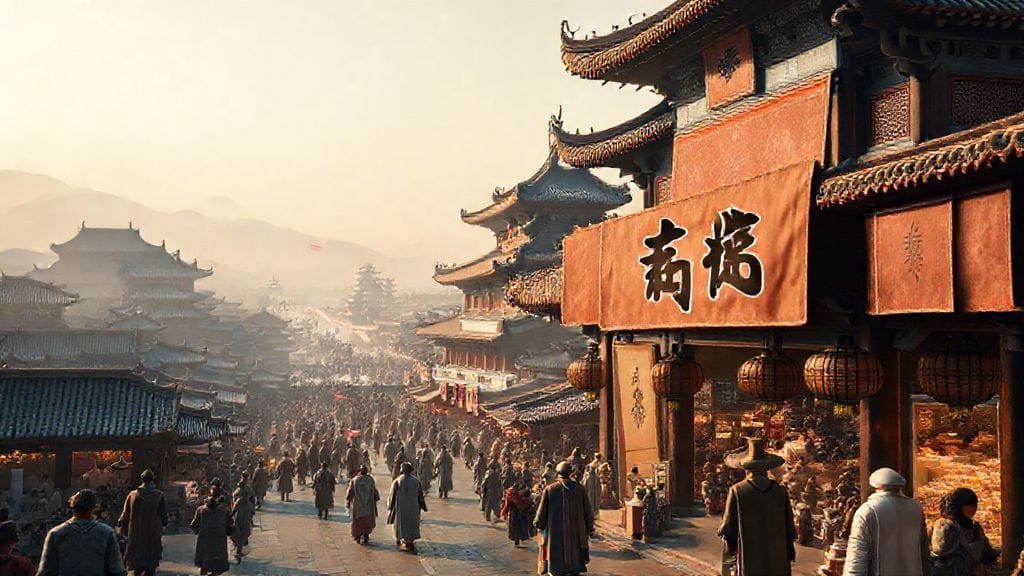
Chang’an, modern-day Xi’an, was not just a city but a vibrant microcosm of the Tang Dynasty’s ambitions. Planned with meticulous attention to order and grandeur, it housed nearly a million residents, making it one of the largest cities in the world at the time.
Under Tang rule, Chang’an became a hub of trade, diplomacy, and culture. Merchants from Central Asia, merchants from Persia, travelers and ambassadors mingled in its streets and market squares. The city's layout — gridded streets surrounding imperial palaces, government offices, and religious temples — symbolized order imposed on chaos.
This capital was also a stage for imperial ceremonies and political rituals that reinforced the dynasty’s legitimacy. For many, Chang’an represented not just political might but the cultural epicenter of a civilization reborn.
Building an Empire: Administrative Reforms and Governance
Emperor Taizong and his successors swiftly recognized that lasting power required more than military might. They embarked on an ambitious overhaul of the administrative structure inherited from previous dynasties.
A foundational aspect was the codification of laws into what became known as the Tang Code — a comprehensive legal framework blending Confucian ideals with pragmatic governance. Officials were appointed not based solely on lineage but increasingly through meritocratic evaluations, reducing corruption and fostering competence.
The empire was divided into provinces and prefectures governed by appointed magistrates, who were directly accountable to the central government. This structure aimed to balance local autonomy with centralized control, helping the Tang maintain authority over vast territories.
The Equal-Field System: Redefining Land Ownership
One of the most transformative reforms during this era was the implementation of the Equal-Field System, designed to address long-standing imbalances in land ownership that had fueled social unrest.
This system distributed public land to families based on size and labor capacity, curtailing excessive land accumulation by elites. It ensured a more equitable tax base and provided peasants with stable livelihoods. While not perfect and subject to regional variations, the policy stabilized rural communities and underpinned agricultural productivity.
The Equal-Field System reflected the Tang rulers' innovative blend of Confucian social values and practical governance, emphasizing harmony between ruler and ruled.
The Imperial Examination: Meritocracy Takes Root
Perhaps the most enduring legacy of early Tang rule was the expansion and formalization of the Imperial Examination system. This series of rigorous tests selected candidates for government positions based on knowledge of Confucian texts, poetry, legal statutes, and administrative skills.
By institutionalizing this meritocratic process, the Tang Dynasty opened government service beyond aristocratic families, enabling talented individuals from various backgrounds to enter the civil service. This fostered a more dynamic and effective administration, limiting nepotism and encouraging education.
The Imperial Examination would remain a hallmark of Chinese governance for a millennium, shaping the intellectual and political elite.
Cultural Flourishing Amid Political Stability
The consolidation of power under the Tang Dynasty created a fertile ground for one of China’s most celebrated cultural apogees. Peace and stability allowed arts and intellectual pursuits to thrive.
Poets such as Li Bai and Du Fu composed works still revered for their emotional depth and technical brilliance. Calligraphy, painting, and sculpture reached new heights, often sponsored by the imperial court.
Tang China became known not only for its governance but also as a land of refined aesthetic sensibilities and scholarly innovation, intertwining governance with cultural prestige.
Military Expansion and Borders Secured
During these foundational years, the Tang rulers pushed beyond the traditional boundaries of China. Strategic military campaigns subdued rival states and nomadic tribes along the northern and western frontiers.
Emperor Taizong famously campaigned against the Turks, securing the Silk Road and expanding Tang influence into Central Asia. These actions ensured secure trade routes and increased the dynasty’s diplomatic leverage.
Successful border management required sophisticated logistics, strong garrisons, and often the integration of local elites into Tang administration — strategies that demonstrated the dynasty’s adaptive governance.
The Role of Buddhism and Taoism in State and Society
Religious life during the early Tang period was vibrant and interwoven with politics. Buddhism, having spread vigorously since the earlier centuries, enjoyed imperial patronage and became a major force in art, philosophy, and public life.
At the same time, Taoism retained significant influence, and the state often balanced support between these traditions to maintain societal harmony.
The Tang emperors themselves engaged with both religions, attending ceremonies and constructing temples, thus reinforcing their divine legitimacy and appealing to diverse subjects.
Empress Wu Zetian: The Woman Behind the Throne
Though her reign would commence after the period of consolidation we are focused on, Empress Wu Zetian’s rise was rooted in the stability shaped during Emperor Taizong’s era.
As a consort wielding considerable influence, Empress Wu would eventually become the only female emperor in Chinese history, reshaping court politics and further centralizing power.
Her ascent underscores how early Tang consolidation created a political environment both dynamic and fraught, where court intrigue and power struggles continued even amid reform.
Challenges and Rebellions: The Early Tests of Tang Authority
Despite their successes, the early Tang rulers faced persistent challenges. Regional rebellions occasionally erupted, fueled by ethnic tensions, economic hardships, or disaffected elites.
The dynasty’s response combined military suppression with policy adaptations, displaying a pragmatic approach to governance rather than strict authoritarianism.
These internal conflicts tested the resilience of the Tang state but also contributed to institutional learning that reinforced future stability.
The Legacy of Taizong’s Rule on China and Beyond
Emperor Taizong’s effective governance laid a foundation that would inspire centuries of Chinese rulers. His blending of Confucian ideals with militaristic pragmatism created a paradigm for balanced rulership.
Beyond China, the Tang model influenced neighboring states such as Korea, Japan, and Vietnam, which adopted its administrative and cultural frameworks.
His reign remains emblematic of enlightened leadership, exploring the balance between power, justice, and cultural flourishing.
The Expansion of the Silk Road under the Tang
With borders secured and political order established, the Tang Dynasty invigorated international trade routes. The Silk Road network flourished, connecting China to Central Asia, the Middle East, and beyond.
This expansion brought not only material wealth but also facilitated cultural exchange — technologies, religions, and ideas flowed freely. Camel caravans, merchants, and envoys transformed Chang’an into a cosmopolitan nexus.
The Silk Road’s vitality under the Tang opened China to the world in unprecedented fashion, underscoring the dynasty’s global significance.
Art, Poetry, and Scholarship: A Golden Age of Culture
The consolidation period coincided with an extraordinary cultural efflorescence. Imperial patronage encouraged remarkable advances in literature, painting, and historical scholarship.
Poetry, in particular, became the pulsing heartbeat of intellectual life, with poets navigating themes from nature’s beauty to human impermanence, and even political allegory.
Historians compiled meticulous chronologies crucial for governance, while technological innovations advanced printing and papermaking.
This era transformed China’s cultural identity and left an indelible artistic legacy.
Daily Life in Chang’an: Cosmopolitanism and Diversity
Life in the Tang capital was vibrant and diverse. Markets thrived with exotic goods: spices, silks, perfumes, and foreign fruits. Streets bustled with merchants, musicians, Buddhist monks, and foreign envoys.
The city was a melting pot, home to Persians, Indians, Turks, Sogdians, and many others, coexisting and contributing to a dynamic urban culture.
Festivals and public performances highlighted communal spirits, while scholars debated Confucian and Buddhist doctrines in teahouses.
Chang’an was not only a political capital but also a beacon of cross-cultural coexistence.
Diplomatic Relations with Neighboring States
The early Tang rulers skillfully managed relations with adjacent powers. Through tributary systems, marriage alliances, and diplomatic missions, they extended influence over Korea’s kingdoms, the Tibetan Plateau, and steppe nomads.
These relationships helped secure the empire’s borders and facilitated trade and cultural exchange.
Tang diplomacy blended military strength with negotiation and recognition of local autonomy, a complex balancing act that preserved regional peace.
The Economic Boom and Urban Development
Peaceful consolidation sparked a notable economic upswing. Agricultural productivity improved due to land reforms, irrigation projects, and state-sponsored granaries.
Urban centers expanded, with Chang’an showcasing grand architecture, marketplaces, and artisan quarters.
Coinage reforms standardized currency, boosting commerce internally and abroad.
This economic vitality provided the material foundation for the Tang’s military and cultural ambitions.
The Decline of Aristocracy and Rise of Bureaucracy
A critical social transformation during this period was the gradual erosion of the hereditary aristocracy’s dominance and the rise of a professional bureaucracy.
The expansion of the imperial examination diluted aristocratic monopolies on power, making official posts accessible based on talent rather than birth.
This shifted the social fabric, promoting social mobility and creating a complex administrative class essential to managing the sprawling empire.
Summary of the Tang Consolidation Era
From 626 to 649, the Tang Dynasty’s consolidation of rule marked a pivotal chapter in Chinese history. Through military conquest, political savvy, and ambitious reforms, the dynasty turned a fractured realm into a stable, prosperous empire.
Cultural, administrative, and economic innovations established a golden standard that would resonate for centuries.
Yet, this success was not a foregone conclusion but a testament to calculated risk, visionary leadership, and the collective resilience of a civilization determined to rise from chaos.
Conclusion
The early decades of the Tang Dynasty’s rule remain one of history’s most compelling stories of recovery, transformation, and triumph. It was a moment when an empire, bruised but unbroken, summoned new ideas and leadership to redefine what was possible.
The legacy of these years—the laws written, the poetry composed, the cities built—echoes across time, reminding us that even after turmoil, human creativity and governance can pave the way for enduring greatness.
The Tang consolidation is not just an episode in Chinese history; it is a universal testament to resilience and the quest for order, culture, and justice amidst human complexity.
FAQs
Q1: What were the main causes leading to the rise of the Tang Dynasty?
The collapse of the Sui Dynasty due to military failures, heavy taxation, and widespread rebellions created a power vacuum that Li Yuan and his son Li Shimin exploited to establish the Tang Dynasty.
Q2: Who was Emperor Taizong, and why is he significant?
Emperor Taizong, formerly Li Shimin, was the second Tang emperor who consolidated power through military victories and political reforms, establishing foundations for administrative efficiency and cultural flourishing.
Q3: What was the Equal-Field System, and how did it affect Tang society?
It was a land redistribution policy designed to ensure equitable land ownership, reduce aristocratic power, and stabilize agricultural production, which in turn strengthened the economy and social order.
Q4: How did the Imperial Examination system impact the Tang administration?
By promoting meritocracy, the examination system opened government service to talented individuals beyond aristocracy, improving bureaucratic competence and reducing corruption.
Q5: What role did Chang’an play during the Tang consolidation period?
As the imperial capital, Chang’an was the political, economic, and cultural center of the empire, notable for its size, diversity, and cosmopolitan atmosphere.
Q6: How did the Tang Dynasty influence cultures outside China during its early years?
Through the expansion of the Silk Road and diplomatic ties, Tang ideas, governance models, Buddhism, art, and technologies spread to Korea, Japan, Central Asia, and beyond.
Q7: Were there internal challenges to Tang rule during the consolidation phase?
Yes, the Tang faced regional rebellions and court intrigues; however, their effective military and political responses helped maintain stability.
Q8: What cultural achievements are associated with the Tang consolidation period?
Poetry by figures like Li Bai and Du Fu, advances in painting and calligraphy, as well as scholarly works and religious art, epitomize this era’s vibrant cultural life.

