Table of Contents
- The Clash of Titans: Tang and Tibet at the Crossroads
- Early Entanglements: From Friendly Exchanges to Brewing Rivalries
- The Geopolitical Chessboard: Chang’an, Lhasa, and the Heart of Asia
- The Strategic Importance of the Tibetan Plateau
- Religious Undercurrents: Buddhism as a Diplomatic Tool
- The First Conflicts: Skirmishes and Siegecraft in the 8th Century
- The 713 Treaty: A Moment of Hope in the Fog of War
- Shifting Sands: The Fragile Peace between Towers and Palaces
- War Rekindled: Tibetan Incursions and Tang Retaliation
- The Siege of Chang’an: A Capital Under Shadow
- The Treaty of 783: A Delicate Balance of Power
- Diplomats and Envoys: Personalities Behind the Negotiations
- The Role of Marriage Alliances: Bonds and Betrayals
- The Cultural Exchange: Art, Language, and Ideology in Conflict
- Economic Stakes: Control Over Silk Road and Trade Routes
- The Military Innovations: Armies of Tibet and Tang in Contrast
- The Impact on Local Populations: Life in Borderlands during Conflict
- The Role of Religion in Peace and War: Monasteries and Political Power
- The Legacy of the Tang–Tibetan Treaties: Lessons in Diplomacy
- Echoes in Later History: Tibet and China Beyond the 8th Century
- Conclusion: From War to Treaty—A Story of Endurance and Diplomacy
- FAQs: Understanding the Tang-Tibetan Conflict and Treaties
- External Resource
- Internal Link
The Clash of Titans: Tang and Tibet at the Crossroads
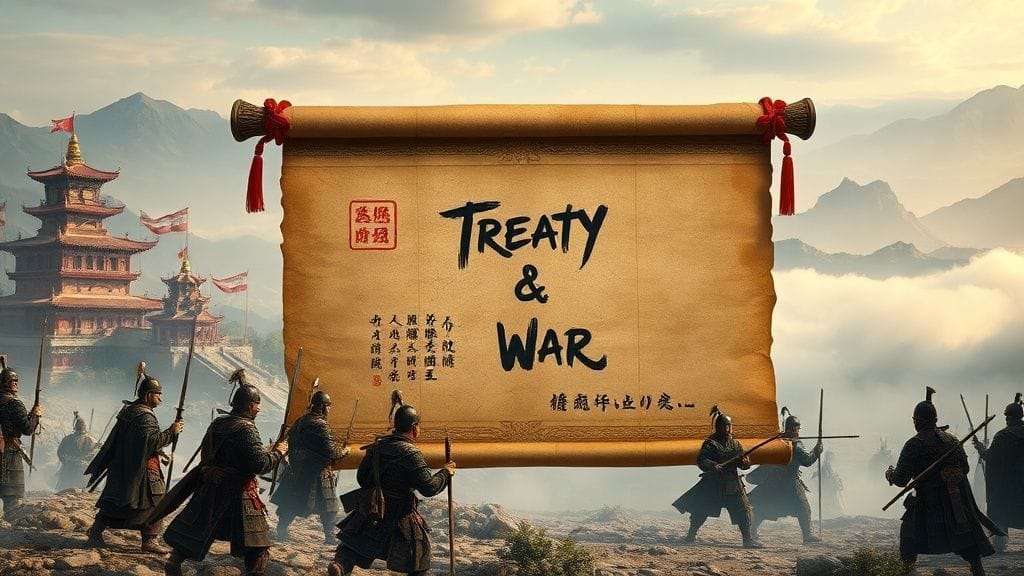
In the twilight of the 8th century, two immense civilizations—China’s Tang dynasty and the Tibetan Empire—darted between moments of fiery conflict and fragile diplomacy. The ancient capitals of Chang’an and Lhasa, distant yet intertwined, became focal points of a geopolitical drama that shaped the fate of Asia. The air was thick with tension—fierce warriors gathering, emissaries traveling across treacherous mountain passes, and the hopes of peace hanging by the finest of threads. The dance of war and treaties that marked this era was not merely a tale of military might but one etched with religious devotion, cultural exchange, and political ambition.
Imagine the smoky amphitheater of a Tibetan fortress at dawn: fluttering prayer flags snapping in the sharp mountain wind, soldiers preparing for battle, while far away in Chang’an’s palatial halls, the emperor’s advisors debate the fragile balance between empire and insurgency. This is the world into which we step—a world where every treaty signer bore the weight of history, and every sword clash echoed the cries of millions.
Early Entanglements: From Friendly Exchanges to Brewing Rivalries
The roots of Tang-Tibetan relations stretched far before the late 8th century conflicts. Initially, Buddhism acted as a bridge, fostering mutual respect and regular exchanges of monks, scholars, and gifts. The Tibetan Empire, under the ambitious Songtsen Gampo in the 7th century, embraced Buddhism partly as a diplomatic overture to the Tang court. Tang China, at its zenith, welcomed this pious alignment, seeing Tibet as both a spiritual ally and a buffer in the volatile western frontiers.
Yet, beneath this veneer of harmony lurked the seeds of rivalry. As Tibet expanded westward and Tang China grappled with internal rebellions and frontier instability, clashes over territory became inevitable. The rich and strategic regions along the Silk Road—vital arteries of commerce and influence—became contested zones. Tang armies pushed against growing Tibetan influence, while the Tibetan rulers yearned to solidify their place among Asia’s great powers.
The Geopolitical Chessboard: Chang’an, Lhasa, and the Heart of Asia
To understand the oscillation between diplomacy and war, one must envision the vast geography linking these two capitals. Chang’an, the beating heart of imperial China, was a cosmopolitan marvel, bustling with merchants, scholars, and bureaucrats. To the west, Lhasa rose like a jewel amid the Himalayas, serving as both a political and spiritual nerve center for the Tibetan Empire. Between them lay forbidding mountain ranges, treacherous deserts, and the labyrinth of oasis towns that controlled the commerce of silk, spices, and ideas.
In this rugged landscape, power was a mosaic of military fortresses, secured trade routes, and religious sanctuaries. The Tibetan Empire’s command of much of the western Silk Road challenged Tang’s authority, threatening to fracture one of the most lucrative and culturally transformative corridors in the ancient world. The stakes went beyond mere land—they touched on legitimacy, wealth, and the very identity of empires.
The Strategic Importance of the Tibetan Plateau
The Tibetan Plateau’s high-altitude expanse was no mere backdrop; it was a fortress of nature, fierce and unforgiving. Control over this region dictated access to Central Asia and critical Silk Road passes. For the Tang dynasty, securing the plateau’s edges meant protecting western provinces such as the Hexi Corridor and ensuring the security of trade caravans.
For Tibet, domination over these passes was a ticket to expanded influence and a safeguard against Chinese encroachment. Armed with cavalry skilled in mountain warfare and the resolve born of harsh terrain, Tibetan forces leveraged their natural environment to pose a genuine threat to Tang ambitions.
Religious Undercurrents: Buddhism as a Diplomatic Tool
Religion wove a complex thread in the fabric of Tang-Tibetan relations. Buddhism, flourishing in both courts, offered avenues for diplomacy and soft power. Tibetan kings courted Chinese Buddhist institutions to legitimize their reign, while Tang emperors saw the faith as a bridge to pacify and influence their western neighbors.
Yet, this shared devotion was far from a guarantee of peace. Doctrinal differences, competition for pilgrimage sites, and religious patronage became sources of subtle conflict. Monks and scholars often doubled as envoys, their spiritual authority carrying political weight. The establishment of Buddhist monasteries near contested borders served simultaneously as sanctuaries and strategic outposts.
The First Conflicts: Skirmishes and Siegecraft in the 8th Century
Despite periods of negotiation, the 8th century witnessed numerous violent clashes. The Tang armies, experienced but stretched thin by rebellions and internal power struggles, met the Tibetan cavalry—well-adapted to high-altitude combat—in fierce border skirmishes.
One of the earliest notable confrontations involved Tibetan incursions into the Tang-controlled Dunhuang area, a vital cultural and commercial hub. Tibetan forces, adept at swift raids, sometimes turned the tables during sieges, challenging the Tang’s superior numbers with mountainous ingenuity.
Military records from the time detail fierce battles where forces contended not just with each other but with the unforgiving climate—a test of endurance, resolve, and morale.
The 713 Treaty: A Moment of Hope in the Fog of War
Amidst hostilities, the Tang and Tibetan courts sought moments to recalibrate tensions. The 713 treaty, often viewed by historians as a pivotal treaty in Sino-Tibetan relations, emerged after prolonged confrontations.
Signed in the wake of Tibetan military advances, the treaty established defined spheres of influence and pledged non-aggression—a fragile yet necessary ceasefire. Envoys negotiated terms that touched upon prisoner exchanges, marriage alliances, and mutual respect for religious practices.
Despite the treaty's diplomatic elegance, it bore the marks of compromise born from exhaustion, never eradicating underlying territorial disputes.
Shifting Sands: The Fragile Peace between Towers and Palaces
Following the 713 treaty, peace remained elusive. Both empires fortified their borders, engaged in espionage, and jockeyed for diplomatic advantage. Tibetan emissaries traveled to Chang’an bearing gifts and subtle reminders of their military might, while Tang officials debated the balance between harsh reprisal and peaceful accommodation.
This uneasy calm fostered cultural borrowing: Tibetan artisans introduced ceramics and murals influenced by Tang aesthetics, while Chinese bureaucrats studied Tibetan administrative models. Yet, every gesture of goodwill was shadowed by mutual suspicion.
War Rekindled: Tibetan Incursions and Tang Retaliation
By the mid-8th century, hostilities again erupted with vigor. Tibetan forces launched a series of calculated incursions deeper into Tang territories, seeking to capitalize on imperial distractions, including the An Lushan Rebellion that rocked Chang’an.
The Tang court, drained but defiant, mounted vigorous counterattacks. Military strategists recalibrated tactics to meet the distinct challenges posed by Tibetan warfare. Desperate clashes enveloped the borderlands, whipsawed between territorial gains and devastating losses.
The Siege of Chang’an: A Capital Under Shadow
One of the most dramatic moments came when Tibetan forces threatened the outskirts of Chang’an itself—a symbol of imperial prestige. While not a full-scale siege, the proximity of Tibetan armies shook the city’s confidence.
According to contemporary sources, the vast capital was transformed overnight; city walls were reinforced, Buddhist rituals intensified in hopes of divine protection, and the air thickened with a mixture of fear and defiance. Though the siege was repelled, the psychological blows endured, marking a turning point in Tang consciousness.
The Treaty of 783: A Delicate Balance of Power
After years of oscillating conflict, a second significant treaty emerged in 783. This accord reaffirmed border demarcations, trade privileges, and mutual recognition of sovereignty.
Crafted with painstaking diplomacy, the treaty reflected lessons learned: war was costly, and cooperation, even with an adversary, held benefits. Yet, it underscored the persistent challenge—the two powers were fated to coexist in a competitive equilibrium, not peace.
Diplomats and Envoys: Personalities Behind the Negotiations
Behind each treaty stood individuals whose lives were entwined with the fate of empires. Figures like Princess Jincheng, a Tang royal married to the Tibetan king, acted as living bridges between worlds. Envoys braved perilous journeys through mountain passes, often months-long, carrying messages that could defuse wars or ignite new conflicts.
Letters, edicts, and symbolic gifts bore the weight of nuanced power plays. Skillful negotiators combined linguistic prowess with keen understanding of cultural symbolism—pivotal in a world where misinterpretation could mean renewed invasions.
The Role of Marriage Alliances: Bonds and Betrayals
Marriage was a tool of statecraft, sealing fragile treaties with family bonds. The marriage of Chinese princesses to Tibetan rulers, initiated early in the 7th century and continued sporadically, symbolized goodwill.
However, these unions were fraught with tension—differences in court customs, religion, and political expectations sometimes led to bitter betrayals or resumption of hostilities. Yet, they remain potent reminders of attempts to bridge empires on personal and political levels.
The Cultural Exchange: Art, Language, and Ideology in Conflict
The borderlands between Tang and Tibet were fertile grounds for cultural cross-pollination. Artistic styles merged; Tibetan thangka paintings absorbed Tang silk embroidery techniques, while Chinese scripts influenced the development of Tibetan writing.
Philosophical ideas, particularly Buddhist interpretations, traversed these lands, enriching both traditions yet occasionally sowing ideological discord. Despite the scars of war, the shared legacy of cultural hybridity endured beyond political rivalries.
Economic Stakes: Control Over Silk Road and Trade Routes
At the heart of conflict lay control over commerce. The Silk Road was more than a trade route; it was a lifeline, an artery of wealth and influence stretching from Chang’an to the Mediterranean.
Both empires recognized that dominance over key passes brought wealth and political leverage. Control over precious goods—silk, spices, horses, and metals—fueled their ambitions. Likewise, imposts and tariffs collected from merchants became vital sources of state revenue.
The Military Innovations: Armies of Tibet and Tang in Contrast
The military forces of Tibet and Tang showcased disparate strengths shaped by geography and tradition. Tibetan armies excelled in cavalry tactics, mobile warfare, and mountain ambushes, capitalizing on elevated terrain.
Tang forces boasted large, disciplined infantry, sophisticated siege equipment, and logistical prowess. The interaction of these military cultures spurred innovations—siege techniques adapted for mountain fortresses, and new formations to counter cavalry raids.
The Impact on Local Populations: Life in Borderlands during Conflict
War brought hardship for the civilians caught between these great powers. Border communities suffered raids, forced conscription, and disrupted trade. Yet, many adapted, becoming merchants, translators, or cultural intermediaries.
Religious institutions often acted as sanctuaries and stabilizing forces, while some towns thrived by catering to traveling armies or diplomatic missions. Oral traditions from this period preserve stories of resilience, betrayal, and hope.
The Role of Religion in Peace and War: Monasteries and Political Power
Buddhist monasteries operated as both spiritual havens and centers of political influence. Their monks served as mediators and chroniclers, occasionally inciting peace or supporting war efforts depending on prevailing rulers.
The Tibetan leadership framed themselves as dharma kings, fusing governance with religious legitimacy, while the Tang court patronized Buddhist institutions to reinforce divine mandate. This religious symbiosis complicated wars: to attack sacred sites risked broader backlash, yet control over monasteries meant power consolidation.
The Legacy of the Tang–Tibetan Treaties: Lessons in Diplomacy
The repeated cycles of conflict and treaty negotiation between Tang and Tibet reveal timeless themes of diplomacy—how states balance hard power with negotiation, and how culture, religion, and personal ties shape international relations.
Although fleeting, the treaties provided frameworks for coexistence amid rivalry, influencing later Sino-Tibetan relations and offering insights into managing border disputes in hierarchical empires.
Echoes in Later History: Tibet and China Beyond the 8th Century
The patterns set in the 8th century persisted across subsequent centuries. Tibetan and Chinese relations waxed and waned with shifting imperial fortunes, yet the echoes of these early treaties shaped later interactions.
Moreover, the Silk Road’s decline and the arrival of new powers altered regional dynamics, but the cultural and political interplay initiated during this era left an indelible imprint on the fabric of Asian history.
Conclusion
The late 8th century struggle between the Tang dynasty and the Tibetan Empire reads like an epic saga destined to embody both the horror of war and the hope of peace. It was a story where mighty armies clashed under icy peaks and humble monks carried messages that sought to save realms from ruin.
Ultimately, the Tang–Tibetan treaties and their alternation with war illustrate the complicated reality of empire: ambition tempered by pragmatism, cultural affinity entwined with rivalry, and humanity’s persistent endeavor to find diplomacy amid the roar of battle. The shadows of Chang’an and the prayer flags of Lhasa remind us that history is never linear—it is a tapestry of conflict and compromise, fear and faith, steel and silk.
FAQs
Q1: What triggered the initial conflicts between Tang China and Tibet in the 8th century?
A1: While initial relations were cooperative, competition over control of trade routes along the Silk Road and territorial expansion, combined with internal instability in Tang China, sparked military clashes.
Q2: How did Buddhism influence Tang-Tibetan relations?
A2: Buddhism served as a shared cultural and diplomatic language, fostering exchanges and legitimizing rulers. However, religious differences also occasionally exacerbated tensions.
Q3: Who were key figures in the Tang-Tibetan diplomatic efforts?
A3: Princess Jincheng is notable as a Chinese royal married into Tibetan royalty, symbolizing alliance. Various envoys and monks also played crucial roles, though many remain unnamed in historic records.
Q4: What were the primary terms of the 713 and 783 treaties?
A4: Both treaties established border demarcations, promised non-aggression, facilitated prisoner exchanges, and at times involved marriage alliances to cement peace.
Q5: How did the conflict affect the Silk Road trade?
A5: Control over Silk Road passes was central to hostilities. War disrupted caravans, but treaties attempted to safeguard commerce, recognizing its economic importance.
Q6: Did these treaties lead to lasting peace?
A6: The treaties brought temporary calm but did not resolve underlying rivalries, resulting in further cycles of war and negotiation.
Q7: What legacy did these conflicts leave for Sino-Tibetan relations?
A7: They set precedents for diplomatic engagement, cultural exchange, and military rivalry that influenced relations for centuries.
Q8: How did local populations endure these conflicts?
A8: Civilians faced hardships like raids and conscription but also adapted through trade and cultural mediation, often relying on religious institutions for support.

