Table of Contents
- The Night the Earth Broke: Tangshan’s Fateful Evening
- A City Unaware: Life in Tangshan Before the Quake
- Cracks in the Earth: The Geology Behind the Disaster
- Political Underpinnings: China’s Turmoil in the Mid-1970s
- The Early Warning Signs: Science and Blindness
- At 3:42 A.M.: When the Ground Roared
- Collapse and Chaos: Tangshan’s Destruction Unfolds
- Survivors and Stories: Humanity Amidst the Rubble
- Government Response: A State Under Pressure
- Silence and Secrecy: The Political Handling of the Tragedy
- International Awareness: A Disaster Hidden from the World
- Reconstruction: Rising from the Ashes
- Human Cost: Death Toll, Trauma, and Memory
- Scientific Advances: What Tangshan Taught Us About Earthquakes
- Cultural Ripples: The Earthquake in Chinese Arts and Memory
- Legacy of 1976: Tangshan’s Place in Global Disaster History
- The Earthquake’s Broader Impact on Chinese Society
- Modern Tangshan: A City Reborn
- Lessons Learned and Unlearned in Disaster Preparedness
- The Tangshan Earthquake Today: Memorials and Reflections
The Night the Earth Broke: Tangshan’s Fateful Evening
It was barely past midnight on July 27, 1976, when sleep enveloped Tangshan’s bustling streets and ironworks, a city humming with industrial life in Hebei Province. Families had settled down, unaware of the nightmare that would seize them in mere hours. Suddenly, the earth beneath them erupted into chaos. The ground lurched violently, buildings crumpled like paper, and screams pierced the stifling dark of the early morning. At precisely 3:42 a.m., the world tilted on its axis for Tangshan. This wasn’t merely an earthquake; it was a cataclysm so profound that it shattered the city’s façade of resilience and marked 1976 as a year of sorrow in China’s history.
The Tangshan earthquake was one of the deadliest natural disasters of the 20th century, with an official death toll surpassing 240,000 and many more injured, displaced, and traumatized. The ground cracked open, swallowing homes and factories alike, while the sky above wavered under a chilling silence that followed the roar. But this catastrophe was not just a seismic event; it was a mirror reflecting China’s political turbulence, scientific limitations, and human endurance all at once.
A City Unaware: Life in Tangshan Before the Quake
Tangshan, an industrial powerhouse, was a city defined by its coal mines and steel production—its very economic pulse tied to the earth beneath it. By the 1970s, it boasted a population near one million, a cadre of workers hardened by labor, and a landscape dotted by factory smokestacks and rail yards. From the surface, Tangshan appeared energetic and proud, a linchpin in the so-called Fourth Front — the backbone of China’s industrial future.
Yet in the days before the earthquake, the city awoke each morning under the looming shadow of political campaigns and social upheaval. The Cultural Revolution was winding down, the agony of political purges still echoing through its neighborhoods. People carried on, caught between ideological fervor and the simple hopes for daily survival. Children played in schoolyards; steelworkers clocked in for long shifts; families gathered at night, unaware that their routines were about to be annihilated.
Cracks in the Earth: The Geology Behind the Disaster
Tangshan lies atop a complex and restless geological fault system, part of the broader North China Plain fault zones. The seismic history of the region was not unknown—minor tremors had shaken the area over centuries—but none foreshadowed the enormity of the 1976 epicenter. The earthquake measured a staggering 7.6 on the Richter scale, releasing energy equivalent to a massive bomb exploding deep beneath the city’s foundations.
The quake slip occurred along the Tangshan Fault, a strike-slip fault where two blocks of crust grind horizontally against each other. However, China’s seismic monitoring infrastructure, still in its infancy, had limited capacity for early warning. The sudden release of built-up stress within the earth’s crust happened without clear precursors, delivering its violent shock like an unseen whipcrack.
Political Underpinnings: China’s Turmoil in the Mid-1970s
At the time of the earthquake, China was enduring the final stages of the Cultural Revolution (1966–1976), a decade marked by political purges, social chaos, and ideological fervor under Mao Zedong’s leadership. Tangshan’s disaster struck a nation already scarred by internal upheaval, with the central government absorbed in factional struggles and recovery from socio-political disruptions.
The earthquake occurred just weeks after the death of Premier Zhou Enlai and only two months before Chairman Mao’s own death, placing it within a tender and volatile epoch. The chaos within the government bureaucracy impacted disaster response and information dissemination, adding layers of complexity to the tragedy’s handling.
The Early Warning Signs: Science and Blindness
In the weeks leading up to the earthquake, unusual seismic activity was recorded: swarms of microearthquakes rattled the region, some of them felt by residents. For local geologists and seismologists, these tremors stirred fears. Yet interpreting such signs was fraught with difficulty. The Cultural Revolution had decimated China’s scientific community, with many experts silenced, sidelined, or imprisoned.
When some scientists attempted to alert authorities to the heightened seismic risks, their warnings were largely ignored or suppressed—politics often overruled scientific reasoning. The lack of effective early warning systems tragically left Tangshan vulnerable at the moment the earth finally gave way.
At 3:42 A.M.: When the Ground Roared
The earthquake shattered the predawn stillness. Within seconds, the earth twisted and roared like a steel beast enraged, splitting the ground and toppling buildings with merciless force. The quake lasted barely 15 seconds, but those moments contained eternal devastation.
Entire apartment blocks, schools, factories, and infrastructure disintegrated into mounds of debris. The city’s water systems ruptured, fires ignited, and communication lines snapped. Counts of injured and dead mounted immediately, though the full scale of the catastrophe would remain obscured for some time. The streets became a hellscape of panic, dust, and darkness—a cacophony of chaos born from the breaking earth itself.
Collapse and Chaos: Tangshan’s Destruction Unfolds
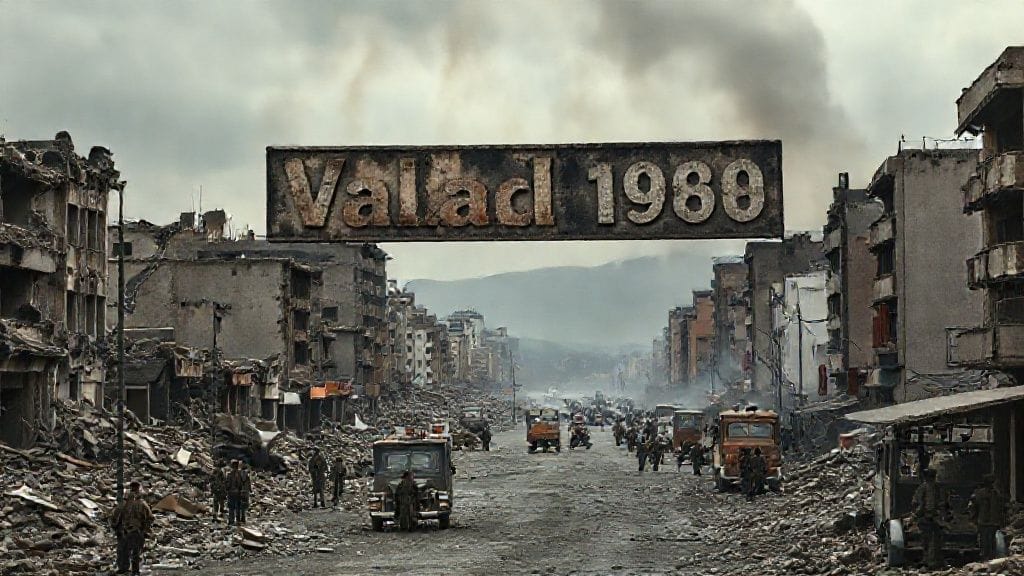
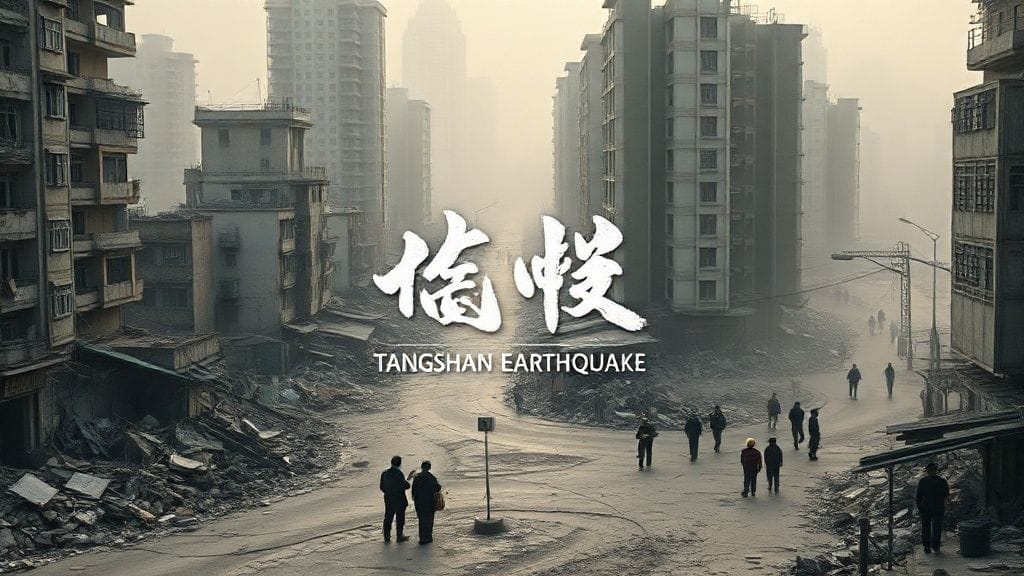
The magnitude of destruction was staggering. Over 85% of Tangshan’s buildings were reported damaged or destroyed. Remarkably, even reinforced concrete structures collapsed. The industrial heart of the city—the steel mills and coal mines that symbolized China’s modernization—were crippled.
Hospitals, schools, and fire stations were leveled, hampering rescue efforts from the outset. Roads were fractured, railways disrupted, and the electric grid was wiped out. As the first light of day appeared, the true horror became apparent: hundreds of thousands had lost their homes, loved ones, and their very sense of safety.
Survivors and Stories: Humanity Amidst the Rubble
Among the ruins, stories of extraordinary survival and heartbreak emerged. Some survivors recounted being woken by the shaking and miraculously escaping collapsing buildings. Others spoke of being trapped beneath debris for days, clutching hope and each other’s hands in suffocating darkness.
There were tales of strangers risking their lives to pull others from the wreckage; children found beneath collapsed schools; families reunited by sheer determination amid piles of concrete. Yet alongside these were accounts of grief so raw it defied words—parents who lost entire families, streets emptied of neighbors, entire communities shattered.
Government Response: A State Under Pressure
The Chinese government mobilized troops, medical teams, and emergency responders to Tangshan in an unprecedented scale of mobilization. Despite the tumultuous political climate, efforts to save survivors and maintain public order were immediate and dogged.
Military units became the backbone of search and rescue operations, using manpower to shift heavy debris where equipment was lacking. Temporary shelters sprang up, and hospitals, many functioning despite damage, struggled to treat thousands of injured. Yet, challenges abounded: transport bottlenecks, resource shortages, and the scale of destruction severely limited response efficiency.
Silence and Secrecy: The Political Handling of the Tragedy
For months after the disaster, official reportage remained sparse and vague. The government treated information about the death toll and extent of damage with extraordinary caution, fearing the earthquake might be interpreted as a political failure or divine punishment.
Foreign media received delayed and limited access. The Chinese Communist Party controlled the narrative tightly, emphasizing themes of unity, resilience, and socialist reconstruction. Families mourned quietly, and public mourning rituals were subdued or carefully orchestrated. This controlled silence added to a collective sense of isolation and pain.
International Awareness: A Disaster Hidden from the World
Most of the world first learned about the Tangshan earthquake through sparse international news reports, broadcast only weeks after the event. The government’s reticence and the sensitivity of the period—China still isolated diplomatically on many fronts—meant that foreign aid offers were minimal and largely symbolic.
In time, international seismologists analyzed the event’s data, recognizing it as a key moment in understanding earthquake dynamics. But truly, the Tangshan catastrophe remained overshadowed globally compared to other contemporary disasters, in part due to the shroud of secrecy that surrounded it.
Reconstruction: Rising from the Ashes
The rebuilding of Tangshan was a Herculean task. The Chinese government launched an ambitious reconstruction program, mobilizing resources and personnel to restore the city’s infrastructure, industry, and housing.
By 1980, much of Tangshan had been reconstructed, showcasing new urban planning designed to improve resistance to future quakes. Entire new districts rose from ruins, with buildings constructed to updated seismic standards. The city also became a symbol of Chinese resilience—a phoenix reborn, but scarred forever by the nightmare.
Human Cost: Death Toll, Trauma, and Memory
Official death tolls estimate approximately 242,769 people perished, though some accounts suggest the number could be higher. The magnitude of human loss was staggering, leaving tens of thousands of families grieving, orphaned children, and survivors bearing lifelong physical and psychological scars.
Trauma studies in the years following revealed widespread post-traumatic stress and a lingering fear of natural disasters throughout the region. Memorials and ceremonies have since become spaces for collective remembrance, yet the earthquake’s emotional imprint remains a private and public wound.
Scientific Advances: What Tangshan Taught Us About Earthquakes
The catastrophe spotlighted deficiencies in China’s earthquake preparedness and scientific capability, spurring reforms in seismic monitoring and early warning systems. Tangshan became a case study for improving urban construction codes, disaster management, and public education.
Chinese seismology advanced in the following decades, leading to the establishment of more comprehensive networks and research on fault prediction mechanisms. Although perfect prediction remains elusive, the Tangshan tragedy profoundly shaped disaster science in China and beyond.
Cultural Ripples: The Earthquake in Chinese Arts and Memory
The earthquake’s trauma found expression in Chinese literature, film, and music, albeit cautiously due to political restrictions. Poets memorialized lost lives, while filmmakers depicted stories of survival and suffering.
Tangshan’s disaster became a cultural motif reflecting human resilience against nature’s fury and political silence. It also raised questions about memory—how a nation processes collective tragedy, honors victims, and learns from sorrow.
Legacy of 1976: Tangshan’s Place in Global Disaster History
In the annals of global disasters, the Tangshan earthquake stands as a grim reminder of nature’s sudden violence and the critical importance of preparedness. The scale of death and destruction remains one of the deadliest modern earthquakes worldwide.
Tangshan also exemplifies the complex interplay between natural disasters and political contexts. Its legacy challenges historians and policymakers to consider how governance, transparency, and science shape both tragedy and recovery.
The Earthquake’s Broader Impact on Chinese Society
Beyond Tangshan, the earthquake influenced Chinese society broadly—prompting reforms in emergency response, compelling shifts in urban planning, and fostering a nascent awareness of disaster risk across the nation.
Moreover, it exposed vulnerabilities in central governance, scientific practice, and political communication. The disaster’s handling became a subtle impetus for reform during the transition that followed Mao’s death later in 1976.
Modern Tangshan: A City Reborn
Today, Tangshan is a thriving city, renewed yet marked by its history. Modern skyscrapers, industrial plants, and cultural centers now rise where rubble lay. The city balances growth with remembrance—memorial parks and museums ensure the earthquake is not forgotten.
Visitors to Tangshan can sense the omnipresent undercurrent of resilience and memory, a city rebuilt with the scars of its past etched into both stone and heart.
Lessons Learned and Unlearned in Disaster Preparedness
The Tangshan earthquake underscored vital lessons about early warning, urban vulnerability, and crisis management. Yet, challenges remain, not only in China but worldwide, about integrating science, governance, and public education in disaster preparedness.
Tangshan’s tragedy reminds us that seismic events are inevitable, but loss of life need not be. The continuing evolution of policy and technology is a testament to the earthquake’s enduring, if painful, legacy.
The Tangshan Earthquake Today: Memorials and Reflections
Every year, Tangshan commemorates July 28 with solemn ceremonies honoring victims and survivors. These moments of reflection offer a collective sigh for the lives lost and a renewed commitment to safety.
As new generations grow in the rebuilt city, the stories of 1976 serve as an intergenerational link—a poignant reminder of Earth’s unpredictability and human tenacity.
Conclusion
The Tangshan earthquake of July 1976 was more than a geological phenomenon—it was a crucible of human endurance amid overwhelming devastation. In its shaking wake, lives were lost, cities collapsed, and a nation confronted its fragility. Yet, through ruin, Tangshan emerged resilient—a city and a story of rebirth.
This disaster unveils profound truths about the intricate relationship between nature and society: how political climates shape responses, how scientific knowledge can mean the difference between death and survival, and above all, how human spirit perseveres amid the darkest hours. The earth may have broken that night, but the people of Tangshan showed the world that from destruction can rise not only rubble but hope.
FAQs
Q1: What caused the Tangshan earthquake?
A1: The earthquake was caused by a sudden release of built-up stress along the Tangshan Fault, a strike-slip fault beneath the city. This geological movement resulted in a magnitude 7.6 earthquake.
Q2: How many people died in the Tangshan earthquake?
A2: Official estimates place the death toll around 242,769, making it one of the deadliest earthquakes in modern history. Some unofficial estimates suggest higher numbers.
Q3: Why was the disaster not widely reported internationally at the time?
A3: Political sensitivity and government secrecy during a turbulent period meant information was tightly controlled. Foreign media had limited access, delaying international awareness.
Q4: How did China’s political climate affect the response to the earthquake?
A4: The chaos of the Cultural Revolution and leadership transitions affected resource allocation, information dissemination, and disaster management, leading to a muted and delayed response.
Q5: What lessons did the Tangshan earthquake teach scientists and policymakers?
A5: It highlighted the need for improved seismic monitoring, urban building codes, early warning systems, and disaster preparedness strategies.
Q6: How is the Tangshan earthquake remembered in China today?
A6: Through annual memorial ceremonies, museums, and monuments, the tragedy is commemorated with emphasis on honoring victims and promoting disaster awareness.
Q7: Did the Tangshan earthquake influence earthquake science globally?
A7: Yes, it provided valuable data and lessons around seismic activity, urban vulnerability, and the human impact of such disasters, influencing research worldwide.
Q8: How has Tangshan changed since the earthquake?
A8: The city was rebuilt extensively with modern infrastructure and safety measures. It is now a symbol of resilience, growth, and remembrance.