Table of Contents
- Dawn over Istanbul: The proclamation of the Tanzimat Edict
- The Ottoman Empire on the brink: Context before 1839
- Sultan Abdulmejid I and the legacy of reform
- The role of the Gülhane Park: Symbolism and setting
- The influence of Egyptian and European crises on Ottoman reform
- Key architects behind the Tanzimat Edict
- The text of the Edict: Promises and principles unveiled
- Humanizing reform: The hopes of Ottoman subjects
- The Declared Guarantees: Rights and security for all citizens
- The military reforms embedded in the Tanzimat
- Fiscal overhauls: Restructuring taxation and administration
- Reactions within the Ottoman elite: Support and opposition
- The response from minority communities and non-Muslims
- European powers watching closely: Diplomacy and pressure
- The Tanzimat as a blueprint for modernization
- Early implementation challenges and setbacks
- The legacy of Tanzimat in Ottoman law and society
- From Gülhane to the Hamidian era: Continuity and change
- Reflections by contemporaries: Eyewitness accounts and chronicles
- How Tanzimat influenced later nationalist and reform movements
- The Tanzimat in a global context: Modernization in the 19th century
- Cultural and intellectual shifts sparked by the Edict
- The Tanzimat’s imprint on the Ottoman Empire’s final decades
- Lessons from the Gülhane Edict for modern states
- Conclusion: The enduring human story of reform and hope
Dawn over Istanbul: The proclamation of the Tanzimat Edict
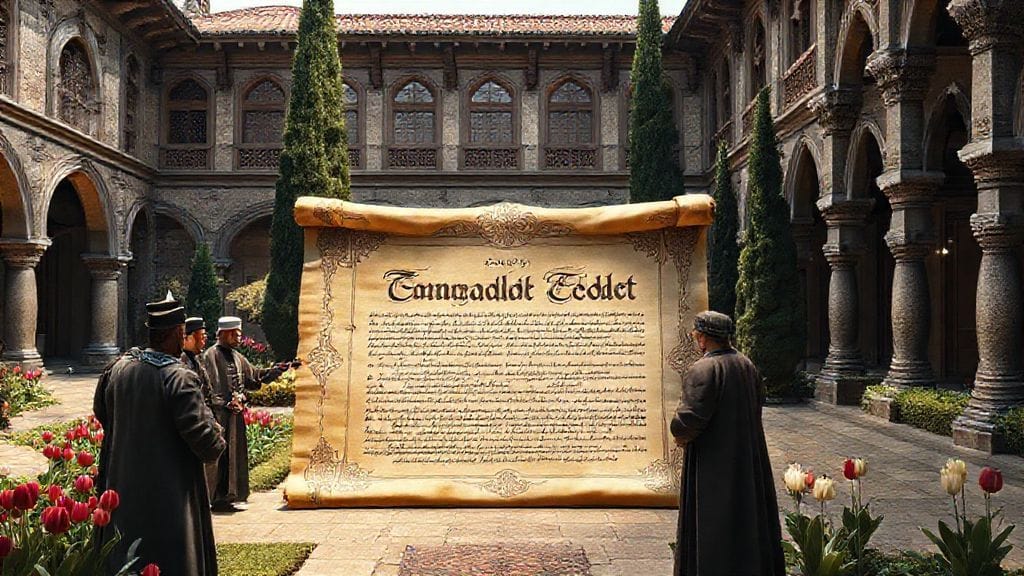
November 3, 1839. The crisp autumn air settled over Istanbul with a palpable tension that vibrated through the stone walls of the imperial palace and into the bustling streets below. From the verdant serenity of Gülhane Park, the grand estate adjoining Topkapi Palace, a proclamation was about to change not just the fate of the Ottoman Empire, but the very notion of governance and society in a profoundly multicultural and multiethnic realm. As the scroll was read aloud, promising equality, justice, and reformed governance, countless subjects listened—some with hope, others with skepticism, but all aware that something unprecedented had begun.
This was the Tanzimat Edict, also known as the Imperial Edict of Gülhane—an ambitious declaration calling for sweeping reforms, meant to modernize the Empire, quell unrest, and create an Ottoman identity encompassing all its peoples. The weight of centuries seemed to rest on this moment, a new dawn shimmering with promise yet shadowed by doubt.
The Ottoman Empire on the brink: Context before 1839
To understand the Tanzimat Edict, one must first grasp the fragile world it emerged from. By the early 19th century, the Ottoman Empire was often described as the “Sick Man of Europe.” Once a sprawling and invincible dominion stretching across three continents, it now faced mounting internal decay and external threats. Corruption was rampant, provincial governors wielded near-autonomous power, and economic structures faltered under the pressure of an evolving global economy. Meanwhile, nationalist awakenings flickered across the Balkans and Anatolia, threatening fragmentation.
The Empire’s military, once legendary, lagged far behind the Western powers in tactics and technology. Its tax system was burdensome and chaotic, complicating everything from infrastructure investments to basic governance. Most importantly, the traditional social contract—based on a hierarchical Islamic framework with the Sultan as Caliph—was increasingly questioned, both internally and by European monarchies viewing the Ottomans through a lens of enlightenment and imperial rivalry.
Sultan Abdulmejid I and the legacy of reform
Upon the throne in 1839 sat Sultan Abdulmejid I, a young ruler born into a time of urgent necessity. Ascending power after the lamed reign of Mahmud II—himself a reformer who abolished the Janissaries and began centralization—Abdulmejid was tasked with ensuring the survival of an empire on the edge. Under his guidance, the Tanzimat reforms would be launched not as a mere update but as a radical blueprint for an Ottoman renaissance.
Abdulmejid was influenced by exposure to European political thought, enlightened by advisers and reformers within his court who saw that survival hinged on adaptation. Yet he also faced an intricate balancing act: upholding Islamic law and Ottoman traditions while surrendering some of the absolute powers that had defined the Sultanate for centuries.
The role of the Gülhane Park: Symbolism and setting
Gülhane Park, rarely a mere backdrop for historical milestones, embodied layers of symbolism at the day of proclamation. Its name, meaning “Rosehouse,” evoked nature, beauty, and life—a stark contrast to the political turmoil looming over the Empire. This place in the shadow of Topkapi Palace served as a venue for military parades and public announcements, a liminal space between the imperial seat of power and the public realm.
By choosing Gülhane, the decision-makers sent a powerful message: reforms were to bloom openly, not hidden behind palace walls. The declaration read there was metaphorically rooted in a garden of hope—a new life for an ancient empire.
The influence of Egyptian and European crises on Ottoman reform
No historical event arises in isolation. The 1830s brought crises that profoundly shaped Ottoman urgency to reform. Muhammad Ali of Egypt’s revolt and military successes against Ottoman forces not only inflicted humiliating losses but threatened to permanently fracture imperial authority. The Ottoman defeat in the First Egyptian-Ottoman War (1831-1833), and the subsequent Treaty of Hünkâr İskelesi with Russia, highlighted geopolitical vulnerabilities.
Simultaneously, the growing presence and influence of European powers—Britain, France, and Russia—presented both challenges and opportunities. The Empire needed to negotiate these external pressures through diplomacy but also internally to prove itself “modern” enough to earn respect and deter interference.
Key architects behind the Tanzimat Edict
The Tanzimat decree did not spring from Sultan Abdulmejid alone. It was the product of a team of reform-minded intellectuals, bureaucrats, and statesmen, many inspired by European enlightenment ideas. Figures like Mustafa Reşid Pasha, the Grand Vizier who had studied European law and governance, were instrumental in drafting the Edict. Their vision blended Ottoman-Islamic traditions with reformist zeal.
Reşid Pasha and his colleagues recognized that the survival of the Empire necessitated reforms not only in military and administration but in civil rights and law—concepts hitherto alien or limited in the Ottoman context.
The text of the Edict: Promises and principles unveiled
At its core, the Tanzimat Edict promised three main things: security of life, honor, and property for all subjects of the Empire, regardless of religion or ethnicity; a just and reformed tax system; and fair military conscription. This was a radical departure from previous governance, where Muslim elites often held privileged status, and legal and financial burdens were unequally distributed.
The Edict declared an end to arbitrary confiscations and tax farming (iltizam), aiming for clarity and fairness. It also pledged reforms to ensure the equality of all people under the law, marking an embryonic form of citizenship transcending communal and religious divides.
Humanizing reform: The hopes of Ottoman subjects
Imagine the perspectives of Ottoman subjects then. To a Greek Christian merchant in Smyrna, the promise of legal equality sparked dreams of fair trials and protection from predatory tax collectors. For a Kurdish tribal leader, the calls for central control were fraught with fear and hope—would old customs evaporate, or could peace and order finally be achieved? A Muslim peasant in Anatolia might wonder whether justice would reach beyond those with court connections.
Across the Empire’s mosaic of peoples—Armenian, Arab, Jewish, Albanian—this edict meant something different yet universally revolutionary: that the state might one day view them all as equal parts of a grand social body.
The Declared Guarantees: Rights and security for all citizens
The most emblematic phrase in the Tanzimat was the guarantee of life, honor, and property security. It spoke to universal human dignity—language particularly striking in a 19th-century imperial context where hierarchy and sectarian privilege prevailed. These guarantees sought to bind the Empire’s vast territory into a legal unity.
However, it is critical to note that these guarantees rested against a backdrop where numerous local power brokers still wielded unchecked authority. The Edict represented a legal ideal, a challenging aspiration rather than a swiftly realized reality.
The military reforms embedded in the Tanzimat
Closely linked to the survival of the state was the reform of the Ottoman military. Earlier, Mahmud II’s destruction of the Janissaries had cleared the way for modernization, but the Tanzimat pushed further: introducing conscription based on equality rather than exemptions for non-Muslims and privileged classes.
Modernizing the army was not merely about efficiency; it was about central control and creating a sense of citizenship duty binding all subjects, Muslims and non-Muslims alike, to the defense of the Empire.
Fiscal overhauls: Restructuring taxation and administration
Financial collapse threatened to unravel all hopes for reform. The Tanzimat sought to replace the extortionate tax farming system with direct taxation managed by civil officials—an effort designed both to increase revenues and reduce corruption.
Such reforms were fundamental not only for the government’s solvency but as a cornerstone of the modern state, from where infrastructure projects, justice administration, and social programs could theoretically expand.
Reactions within the Ottoman elite: Support and opposition
It’s impossible to overstate how controversial the Tanzimat was among Ottoman elites. Some bureaucrats and reformists embraced it as a path to preserving the Empire and their own relevance. Others, including conservative religious authorities and landed notables, feared the erosion of traditional privileges and Islamic law.
Court intrigues, power struggles, and debates about identity—whether Ottomanism, Islamic governance, or ethnic nationalism should prevail—played out behind the scenes and shaped how the Tanzimat evolved.
The response from minority communities and non-Muslims
For the Empire’s large non-Muslim minorities—Greeks, Armenians, Jews, and others—the Tanzimat was often greeted cautiously optimistic. It promised greater protection and legal recognition, a respite from systemic discrimination codified in the millet system.
Yet many also realized that equality on paper did not always translate to equal treatment in practice. The Edict’s principles inspired new forms of self-expression but could not immediately erase centuries of social hierarchy.
European powers watching closely: Diplomacy and pressure
The Tanzimat was as much an act of international diplomacy as internal reform. Britain and France, seeking to maintain the Ottoman Empire as a buffer against Russian expansion, hailed reform efforts, sometimes using them as leverage to push their own agendas regarding minority protections.
Meanwhile, Russia eyed the reforms with suspicion, mindful of its role as protector of Orthodox Christians but wary of a strong Ottoman state. The Edict’s success or failure would reverberate far beyond Istanbul.
The Tanzimat as a blueprint for modernization
Viewed from our vantage point, the Tanzimat represents one of the 19th century’s earliest attempts at constructing a modern, bureaucratically managed empire embracing principles of citizenship and legal equality. It sought to graft European enlightenment ideals onto an Islamic imperial framework, producing a hybrid model of reform.
This blueprint would influence authoritarian modernization elsewhere, revealing the complexity of steering tradition and innovation through times of upheaval.
Early implementation challenges and setbacks
However thrilling the promises were, practical implementation faced enormous hurdles: entrenched local powers resisted, bureaucratic inefficiencies persisted, and communication across the vast empire remained difficult. Tax reforms sometimes alienated peasants; military conscription was unevenly applied.
These struggles reminded reformers that systemic change was a marathon, not a sprint.
The legacy of Tanzimat in Ottoman law and society
Nonetheless, the Tanzimat laid groundwork that would transform Ottoman institutions: new civil codes, secular courts, and a nascent concept of citizenship emerged. The Ottoman Empire increasingly saw itself as a legal order rooted in notions of equality—not just hierarchy.
Though partial and imperfect, the Tanzimat planted seeds that would bloom later under the Young Ottomans and constitutional movements.
From Gülhane to the Hamidian era: Continuity and change
The reforms launched at Gülhane resonated through the subsequent decades, influencing Sultan Abdulhamid II’s reign. Though the latter reversed some liberal aspects, the Tanzimat’s ideals persisted underground, inspiring later reforms and resisting total regression.
The era between 1839 and the early 20th century is thus a vital chapter in the empire’s final act, revealing tensions between authoritarianism and modernity.
Reflections by contemporaries: Eyewitness accounts and chronicles
We are fortunate to hear voices who witnessed or commented on the Tanzimat. Foreign diplomats marveled at its boldness; Ottoman intellectuals grappled with its implications; minority leaders recorded their cautious hope. Their writings reveal an empire awake to its vulnerabilities yet yearning toward transformation.
One Ottoman historian wrote: "The Sultan's promise is a lantern in the darkness—but can it illuminate the path ahead for all?"
How Tanzimat influenced later nationalist and reform movements
The Tanzimat’s promise of equality inadvertently fueled nationalist sentiments among its diverse peoples. While intended to forge unity, it also encouraged minorities to develop political consciousness and demands for autonomy—especially in the Balkans.
Reformists and revolutionaries alike would invoke the Edict’s ideals to press for change, setting the stage for the Empire’s eventual dissolution and the birth of new nation-states.
The Tanzimat in a global context: Modernization in the 19th century
Globally, the Tanzimat paralleled modernizing efforts elsewhere—Meiji Japan’s transformations, Russian reforms, and European constitutional experiments. It highlights the global 19th-century struggle of empires to transition from traditional to modern states, balancing identity, sovereignty, and power.
Cultural and intellectual shifts sparked by the Edict
The Tanzimat fostered a renaissance of Ottoman intellectual life. Newspapers, novels, and schools proliferated. Ideas of citizenship, secular law, and equality found expression in literature and education, planting the seeds for a modern civic culture.
The Tanzimat’s imprint on the Ottoman Empire’s final decades
The reforms persisted as institutional backbones amid political tumult, wars, and revolutions until the Empire’s dissolution after World War I. Many institutions born of Tanzimat survival, legal systems, and social structures shaped the Turkish Republic and neighboring countries.
Lessons from the Gülhane Edict for modern states
Today, the Tanzimat remains a powerful example of state-led reform amid crisis—embedding ideals of equality and law in a divided society. It teaches that modernization is complex, often incomplete, but driven by human hopes for justice and dignity.
Conclusion
The proclamation of the Tanzimat Edict in Gülhane Park was more than a formal announcement—it was a beacon of hope, a restless promise in an empire struggling to reinvent itself. It reconciled dreams of justice with the realities of power, weaving a fragile social contract spanning faiths, ethnicities, and classes. Although flawed and fraught with opposition, the Tanzimat revealed a profound human yearning: to live under laws that protect life and dignity, to belong equally in a shared political future.
As history unfolded, its shadows stretched far beyond Istanbul—into legal codes, nationalist awakenings, and the very identity of modern Turkey and its neighbors. But at its heart, the Tanzimat remains a testament to the courage of reformers who dared to envision a new order, from the garden of Gülhane to the turbulent crossroads of empire and modernity.
FAQs
Q1: What prompted the Ottoman Empire to issue the Tanzimat Edict in 1839?
A1: The Empire faced military defeats, economic difficulties, growing nationalist unrest, and external pressures from European powers. It needed urgent reforms to survive in a rapidly changing world.
Q2: Who was the main figure responsible for drafting the Tanzimat Edict?
A2: Mustafa Reşid Pasha, the Grand Vizier, played a pivotal role, inspired by European political thought and committed to modernization.
Q3: What were the main promises of the Tanzimat Edict?
A3: Guarantees of security for life, honor, and property for all subjects; reform of taxation and the military system; and establishment of legal equality.
Q4: How did different Ottoman communities react to the Edict?
A4: Reactions varied: many non-Muslim minorities welcomed the promise of equality while conservative Muslim elites often resisted changes threatening traditional privileges.
Q5: Did the Tanzimat Edict immediately transform the Ottoman Empire?
A5: No, implementation faced many challenges, including entrenched local resistance and slow bureaucratic reforms. Changes were gradual and uneven.
Q6: How did the Tanzimat influence later Ottoman history?
A6: It laid the groundwork for modernization and constitutionalism, influencing later reform movements and the Empire’s late 19th-century transformations.
Q7: What global context influenced the Tanzimat reforms?
A7: The 19th-century wave of modernization efforts worldwide—in Japan, Russia, and Europe—pressed empires to reconcile tradition and innovation.
Q8: Is the Tanzimat legacy still relevant today?
A8: Yes, especially in Turkey and former Ottoman territories, as a symbol of legal equality, reform, and the struggle to build inclusive states.