Table of Contents
- Awakening Fury: The Calm Before the Storm at Tavurvur
- East New Britain’s Volcanic Legacy: History of Tavurvur and Rabaul
- The Geology Behind the Giant: Understanding Tavurvur’s Tectonic Context
- August 29, 2014: Dawn Shattered by Fire and Ash
- The First Signs: Smoke, Tremors, and Growing Anxiety
- The Eruption Unfolds: Explosions, Lava Flows, and Darkening Skies
- Chaos in Rabaul: Human Responses to Nature’s Wrath
- Emergency Evacuations: Stories of Fear, Resilience, and Survival
- Scientists on the Frontline: Monitoring Tavurvur’s Unpredictable Temper
- Impact on Communities: The Cost of the Eruption
- Environmental Toll: Transformations in Landscape and Ecosystem
- Economic Shocks: From Tourism to Agriculture, a Region on Edge
- Cultural Resonance: Volcanic Myth and Modern Memory in Papua New Guinea
- International Aid and Cooperation: A Global Response to Local Disaster
- Lessons Learned: Advances in Volcanic Monitoring Post-2014
- The Aftermath: Rebuilding Lives and Restoring Hope in East New Britain
- Tavurvur Today: A Volcano Dormant but Not Silent
- Remembering the 2014 Eruption: Commemoration and Education
- Broader Implications: Volcanism and Human Vulnerability in the Pacific Ring of Fire
- Conclusion: The Unyielding Dance Between Fire, Earth, and Humanity
- FAQs on the Tavurvur 2014 Eruption
- External Resource
- Internal Link
The morning of August 29, 2014, in East New Britain, Papua New Guinea, began as it often did: humid tropical air thick with distant whispers of the sea, children chased one another through narrow village paths, and the banana trees swayed lazily in the gentle breeze. Yet beneath this tranquil facade, Tavurvur — the jagged volcanic sentinel perched over the town of Rabaul — was stirring. Slowly, ominously, nature was assembling an explosive reminder of its capricious power.
Awakening Fury: The Calm Before the Storm at Tavurvur
For locals and visitors alike, Tavurvur was both an imposing natural monument and a whispered warning. Its past was littered with violent eruptions, but for nearly two decades prior, the volcano had been relatively quiet. That morning, something was different. A faint plume began to rise, barely noticeable at first, against a backdrop of blue sky.
The early warning signs were subtle: increasing seismic tremors rattled houses, smoke darkened ashy horizons, and wildlife became unsettled. Traders in Rabaul crowded market stalls, casting anxious glances toward the looming mountain. Children hesitated in their games, sensing the change without understanding.
But no one could have predicted the intensity of what was to come.
East New Britain’s Volcanic Legacy: History of Tavurvur and Rabaul
Tavurvur's fiery history is woven deeply into Rabaul’s identity. This stratovolcano, part of the Rabaul caldera complex, erupted with terrifying force in 1937, suffocating the town with ash and molten rock. That eruption obliterated the former capital, forcing a reluctant relocation.
Again, in 1994, Tavurvur rumbled back to life alongside its volcanic sibling Vulcan, blanketing the region in ash once more and forcing near-total evacuations. These events etched a collective memory of survival and respect for the volcano’s destructive might.
By 2014, the people of East New Britain had learned to live in uneasy coexistence with a mountain that could turn their world upside down in mere hours.
The Geology Behind the Giant: Understanding Tavurvur’s Tectonic Context
Tavurvur’s fury is born from the restless deep — the volatile intersection of tectonic plates in the Pacific Ring of Fire. The region is a geopolitical and geophysical hotspot where the Indo-Australian Plate dives beneath the Pacific Plate, creating immense pressure and magma reservoirs beneath the earth’s crust.
These geological dynamics make Tavurvur highly active and unpredictable. Magma’s ascent from deep chambers to the surface creates the violent eruptions, spewing ash clouds high into the stratosphere and reshaping the landscape below.
Understanding this tectonic ballet is not just academic; it is a matter of survival for the communities living in its shadow.
August 29, 2014: Dawn Shattered by Fire and Ash
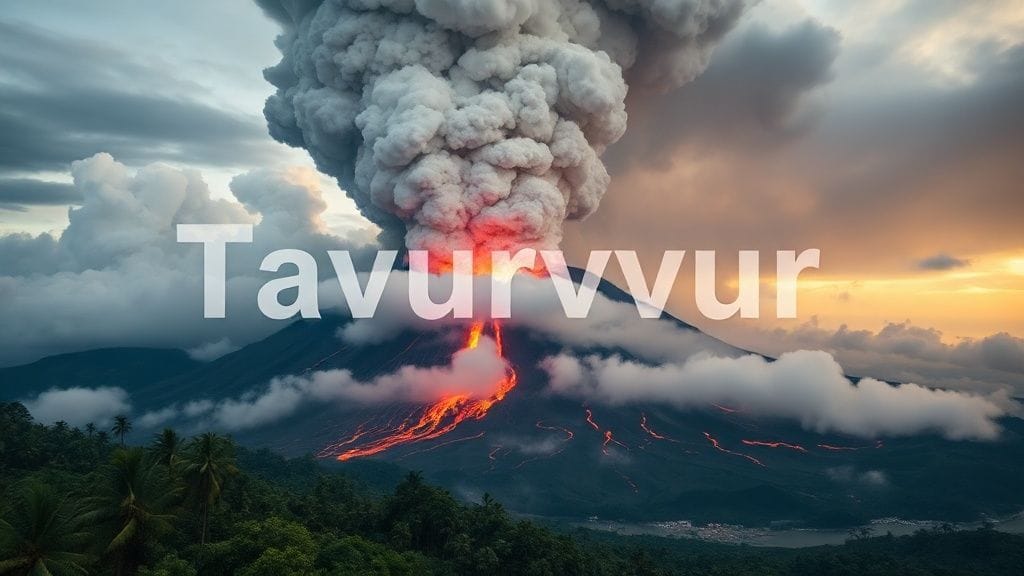
That fateful morning, Tavurvur roared awake with a volatile energy that would soon become undeniable. After days of increasing tremors, the initial explosion ripped through the waking air just before 7 am, sending a towering column of ash and gas upwards — a volcanic plume stretching kilometers into the sky.
Rabaul's residents scrambled as fear swept through the town. Buildings trembled, windows shattered, and the dark ash began to blanket streets and homes. The eruption was violent and sustained, pushing rivers of molten lava along the volcano’s flanks.
Something raw and ancient had been unleashed.
The First Signs: Smoke, Tremors, and Growing Anxiety
In the days leading to August 29, locals had already noticed unusual activity. Villagers reported deep rumbles and ground shaking — a language from beneath the earth’s crust that communicated danger only the senses could interpret.
Weather stations recorded increasing seismicity. The Papua New Guinea Volcanic Observatory, tasked with monitoring such events, issued alerts that raised alarms but also noted the complex challenge of predicting the exact timing and scale of the eruption.
People prepared as best they could, gathering essentials and sharing warnings. Yet the suddenness of the eruption stunned many.
The Eruption Unfolds: Explosions, Lava Flows, and Darkening Skies
By mid-morning, Tavurvur’s eruption was in full force. Chunks of incandescent rock were hurled skyward, with lava coursing down the volcano’s slopes, igniting vegetation and threatening nearby villages.
The ash cloud, billowing and dense, blocked out the sun in places, turning day into an eerie twilight. Respiratory difficulties arose as fine ash particles flooded the air. Volcanic bombs and pyroclastic flows posed lethal threats.
For hours, nature’s fury reached a crescendo, painting a grim spectacle of destruction from which few places on earth are immune.
Chaos in Rabaul: Human Responses to Nature’s Wrath
For Rabaul’s citizens, the eruption was both literal and figurative upheaval. Families rushed to evacuate, with narrow roads choked by panicked traffic. Elderly residents, children, and the ill were most vulnerable, moved by neighbors and emergency services in a frantic bid to escape the ashfall.
Local government centers quickly transformed into refuge points. Makeshift clinics treated minor injuries and respiratory issues. Communication lines strained as news spread of the eruption’s scale.
Yet amid the turmoil, stories of human kindness, courage, and faith emerged. Neighbors helped neighbors; strangers became allies.
Emergency Evacuations: Stories of Fear, Resilience, and Survival
Evacuation procedures were put to the test. For many, leaving meant abandoning homes, livelihoods, and irreplaceable memories. The journey to safer areas was fraught with difficulty, from blocked roads to overcrowded shelters.
One poignant account comes from a schoolteacher, who stayed calm while guiding dozens of children through ash-covered trails. Another survivor recalled the haunting silence that followed the initial blast, broken only by distant cries and the crackle of burning forests.
The resilience of East New Britain’s people was palpable, etched in every hurried step away from danger.
Scientists on the Frontline: Monitoring Tavurvur’s Unpredictable Temper
Volcanologists, seismologists, and emergency managers worked around the clock. They relied on instruments measuring ground movement, gas emissions, and thermal changes, making crucial real-time decisions.
Their efforts were heroic yet humbling in face of the volcano's immeasurable power. Data gathered during the eruption would later inform improved predictive models and emergency protocols.
As one scientist noted, “We listen to the earth’s language but must always expect the unexpected.”
Impact on Communities: The Cost of the Eruption
The immediate impact on Rabaul's population was profound. Thousands were displaced, homes reduced to ash-covered ruins, and public infrastructure severely damaged or destroyed.
The eruption also took a psychological toll. Beyond physical loss, trauma and anxiety shaped community life for months. Schools remained closed; people’s livelihoods in fishing and agriculture were interrupted.
Yet in tragedy, communities showed a remarkable capacity to rebuild — an indomitable will rooted deeply in cultural identity and connection to land.
Environmental Toll: Transformations in Landscape and Ecosystem
The eruption altered East New Britain's landscape. Ash layers buried flora and fauna habitats, while lava flows reshaped valleys and coastline.
The air quality deteriorated sharply, affecting health and animals. Some endemic species faced survival challenges. Rivers, often a lifeline, were choked with debris, affecting freshwater supplies.
But nature, in its tenacity, would begin to heal, as pioneer plants arrived and ecosystems slowly regenerated in the volcanic soil — a testament to life’s cyclical dialogue with destruction.
Economic Shocks: From Tourism to Agriculture, a Region on Edge
Rabaul, a town once thriving on tourism and agriculture, faced economic rupture. The eruption shut down the local airport temporarily, isolated trade routes, and destroyed crops critical to subsistence and cash income.
Small businesses suffered huge losses. Aid agencies stepped in, but rebuilding economic stability would be a slow and complex process.
The eruption underscored the fragile balance between development and disaster risk in volcanic regions.
Cultural Resonance: Volcanic Myth and Modern Memory in Papua New Guinea
Volcanoes like Tavurvur are far more than geological phenomena in Papua New Guinean culture. They are living entities within local mythology — potent symbols of creation, destruction, and ancestral spirits.
The 2014 eruption reawakened traditional beliefs and rituals, blending them with scientific understanding. Stories told by elders frame the event within a continuum of respect, warning, and spiritual reflection.
This cultural dimension is essential to comprehending how communities cope with volcanic hazards beyond mere emergency response.
International Aid and Cooperation: A Global Response to Local Disaster
The eruption attracted attention beyond Papua New Guinea’s borders. International agencies, including UN bodies, Australia, and regional neighbors, mobilized financial and technical support.
Disaster relief programs delivered shelter, medical aid, and food supplies. Expertise in volcanic hazard management was shared to enhance future preparedness.
This global-local collaboration illustrated how interconnected humanity is when confronted by nature’s extremes.
Lessons Learned: Advances in Volcanic Monitoring Post-2014
Post-eruption analyses led to significant progress in monitoring and managing volcanic risks. Enhanced seismic networks, satellite remote sensing, and community-based alert systems improved response times.
These technological and organizational advances may save lives in future episodes, not only at Tavurvur but in other vulnerable regions worldwide.
The 2014 eruption became a case study in balancing science, policy, and local realities.
The Aftermath: Rebuilding Lives and Restoring Hope in East New Britain
Recovery was a slow and arduous road. Reconstructing homes, schools, and infrastructure required sustained effort and funding.
Community solidarity emerged as a foundation for healing. Cultural ceremonies commemorated the event and honored lost lives.
New environmental management practices integrated local knowledge, blending tradition with innovation. Slowly, hope returned to Rabaul’s ash-streaked horizon.
Tavurvur Today: A Volcano Dormant but Not Silent
Years after the eruption, Tavurvur remains under watchful eyes. Occasional steam emissions remind all that the mountain sleeps lightly; its rest is only temporary.
The region has embraced a vigilant coexistence, where scientific monitoring and community awareness go hand in hand.
Tavurvur’s story is ongoing — a chapter in the eternal narrative between earth’s restless core and human resilience.
Remembering the 2014 Eruption: Commemoration and Education
Memory is both a balm and a beacon. Schools in East New Britain incorporate volcanic education, passing down lessons from 2014 to newer generations.
Memorial events honor those affected, ensuring the eruption is not forgotten but serves as a catalyst for preparedness and respect for nature.
History here is living, dynamic, an inheritance of caution and courage.
Broader Implications: Volcanism and Human Vulnerability in the Pacific Ring of Fire
The Tavurvur 2014 eruption is a vivid reminder of the immense risks faced by millions living along the Pacific Ring of Fire.
It highlights challenges in disaster risk reduction, climate change adaptation, and sustainable development in volatile environments.
Understanding Tavurvur’s story offers universal insights into how humanity can navigate the delicate balance between survival and the earth’s elemental forces.
Conclusion
The 2014 eruption of Tavurvur was not merely a geological event but a profound human drama — a moment when the ancient rhythms of earth’s fire touched the lives, dreams, and futures of the people of East New Britain. It exposed vulnerability yet illuminated resilience. It taught us that nature’s power is both awe-inspiring and humbling, demanding respect and preparedness.
From the smoke-filled skies over Rabaul rose not just destruction but a reaffirmation of life’s tenacity — a cycle of loss and renewal etched in volcanic ash and human spirit. As Tavurvur sleeps for now, its story remains a vivid testament to the unyielding dance between fire, earth, and humanity.
FAQs on the Tavurvur 2014 Eruption
Q: What caused the 2014 Tavurvur eruption?
A: The eruption was triggered by tectonic activity along the Pacific Ring of Fire, where the Indo-Australian Plate subducts beneath the Pacific Plate, generating magma that surfaced violently.
Q: How many people were affected by the eruption?
A: Thousands of residents in Rabaul and surrounding areas were displaced, with significant impacts on housing, health, and livelihoods.
Q: Were there any fatalities during the 2014 eruption?
A: Fortunately, due to effective evacuation, there were no confirmed direct fatalities, though the psychological and economic effects were severe.
Q: How did the local community respond to the eruption?
A: Communities mobilized quickly, with mass evacuations, neighborly support, and traditional rituals blending with scientific warnings to manage the crisis.
Q: What measures have been taken since 2014 to monitor Tavurvur?
A: Enhanced seismic monitoring, satellite surveillance, and community alert systems have been implemented to improve early warning and response capabilities.
Q: How has the eruption affected Rabaul’s economy?
A: The eruption disrupted agriculture, tourism, and infrastructure, leading to economic setbacks that are still being addressed through rebuilding efforts.
Q: What role does Tavurvur play in local culture?
A: Tavurvur is integral to local mythology, seen as a spiritual entity, which shapes how communities interpret and respond to its eruptions.
Q: Why is the Tavurvur eruption significant beyond Papua New Guinea?
A: It exemplifies the challenges faced by millions living near active volcanoes in the Pacific Ring of Fire, highlighting the need for global cooperation in disaster risk reduction.

