Table of Contents
- The Fiery Arrival: Witnessing the Birth of Chinyero’s Fury
- The Canary Islands on the Brink: Historical Context of Early 18th Century Tenerife
- Tenerife’s Geological Soul: Understanding the Volcanic Landscape
- Causes and Precursors: What Sparked the Chinyero Eruption?
- The First Signs: Early Tremors and Local Reactions
- The Eruption Unfolds: The Irresistible Force of Fire and Smoke
- Life Under Siege: The Impact on Local Communities
- The Human Story: Eyewitnesses, Survivors, and Oral Traditions
- The Role of Religion and Superstition in Times of Disaster
- The Response: Immediate Measures Taken by Authorities
- An Interrupted Era: Economic and Social Disruptions in Tenerife
- Volcanic Activity and Meteorological Effects: Nature’s Lingering Touch
- The End of the Eruption: How Chinyero Quieted Its Roar
- After the Fire: Recovery and Reconstruction
- Scientific Legacy: What Chinyero Taught Volcanologists
- Long-Term Environmental Impact: Landscapes Remade
- Chinyero in Canary Islands’ Collective Memory and Culture
- Comparisons with Other Significant Canary Islands Eruptions
- Modern Monitoring: Lessons from the Past for Present Security
- The Symbolic Power of Chinyero: Volcanoes, Identity, and History
- The Global Context: Early 18th Century Europe and Natural Disasters
- Untold Stories: Heroes and Tragedies Against the Lava’s Advance
- Conclusion: A Fiery Testament to Nature and Human Resilience
- FAQs: Unraveling the Mysteries of Chinyero’s Eruption
- External Resource
- Internal Link
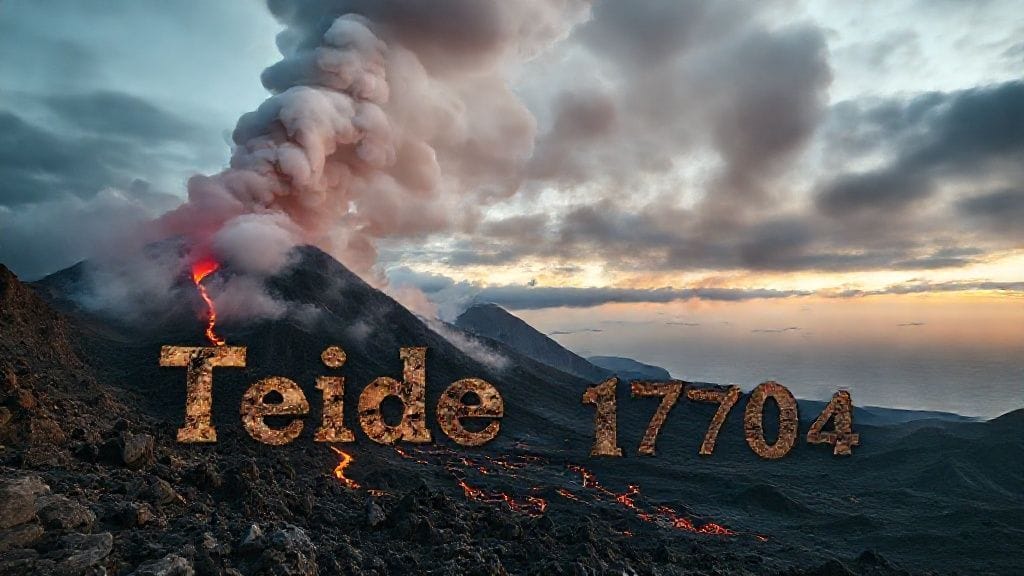
Flames ripped through the serene slopes of Tenerife’s northwest in the cold winter of 1704. The ground shattered with terrifying cracks, disgorging rivers of molten rock that carved through pine forests and fields alike. Amidst the roar and ash, the small towns below grappled with a force they barely comprehended — the fiery birth of what would come to be known as the Chinyero eruption. It was a spectacle of devastation and wonder, a natural drama unfolding on the Canaries’ volcanic stage, forever etching its mark on the islands and their people.
The Canary Islands on the Brink: Historical Context of Early 18th Century Tenerife
At the dawn of the 18th century, Tenerife was a vibrant, growing island under Spanish rule, part of a strategic archipelago in the Atlantic Ocean. The islands served as crucial stops for ships traversing between Europe, Africa, and the Americas. Agriculture and trade flourished with crops like sugar, wine, and cochineal dye. Yet beneath this apparent prosperity lingered ancient tensions — between the surviving indigenous Guanche culture and colonial settlers, between island factions defying Madrid’s distant control, and between humans and the ever-simmering earthquakes reminding them of Tenerife’s volatile heart.
This fraught backdrop set the stage for a calamity that would test the islanders’ endurance and adaptation. Fear and awe of the natural world were deeply ingrained, especially in an era marked by limited scientific understanding and the blending of faith with superstition.
Tenerife’s Geological Soul: Understanding the Volcanic Landscape
Tenerife is a colossal volcanic edifice — it is an island made principally of fire and stone. Dominated by its towering summit volcano, Teide, one of the tallest peaks in Spain, Tenerife’s terrain is a complex mosaic of lava fields, ancient rock, and rich soil born from volcanic eruptions spanning hundreds of thousands of years.
The Chinyero eruption in 1704 was not an isolated phenomenon. It was part of a series of eruptions that shaped the island’s northwest flank. Teide’s volcanic system has multiple vents and fissures prone to occasional bursts of activity. To grasp the 1704 eruption is to understand this restless geodynamic personality — an island straddling the cusp of serenity and explosive transformation.
Causes and Precursors: What Sparked the Chinyero Eruption?
Volcanic eruptions are the Earth's underground fury breaking surface, and Chinyero was no exception. Long before the eruption’s visible onset, subterranean pressures built up from molten magma rising deep beneath the island. The movement was likely triggered by the gradual injection of basaltic magma that accumulated within the crust, fracturing existing rock layers.
Locals may have heard groans and witnessed subtle earthquakes; a handful might have seen steam or smoke from fissures long before the actual lava flowed. But the alert system for such events in the 1700s was, naturally, no more than local folk warnings and religious interpretations.
The First Signs: Early Tremors and Local Reactions
In late November 1704, tremors that shook homes and rattled ceramics were reported by inhabitants near the volcano’s northwest slope, particularly around the village of Santiago del Teide. These quakes grew in intensity and frequency, unsettling livestock and sowing anxiety among the farming communities.
Many sought solace in prayers and processions, invoking saints and Virgin Mary’s intercession, hoping divine mercy could halt the brewing catastrophe. Solar and lunar omens fed the collective anxiety as the sky darkened with smoke and ash, presaging arrival of a force no prayer could stem.
The Eruption Unfolds: The Irresistible Force of Fire and Smoke
On the ominous night of November 18, 1704, the earth ruptured. A powerful fissure opened in the Chinyero volcanic complex, violently releasing fountains of lava and choking plumes of black smoke. Rivers of molten rock tore through forests with a roar likened to a thousand thunderclaps, engulfing everything in their path.
Villages lay in the shadow of a glowing curtain of fire, with rivers of lava advancing relentlessly towards the fertile lands below. Smoke darkened the skies, and ash rained down upon distant towns, including the bustling port of Garachico, altering daily life dramatically.
Life Under Siege: The Impact on Local Communities
The eruption forced families to abandon homes, livestock to run wild, and crop harvests to perish under volcanic ash and lava flows. The fertile fields that sustained the island’s economy were rendered useless in vast patches, threatening food insecurity and economic collapse.
Stories from survivors tell of frantic escapes, abandoned possessions, and the omnipresent fear of being overtaken by the invincible wall of fire. Yet, communities also rallied, neighbors helping neighbors in the dark uncertainty, a testament to the human spirit amid natural calamity.
The Human Story: Eyewitnesses, Survivors, and Oral Traditions
Although written records from 1704 are scarce, a rich oral tradition persists in Tenerife, capturing the eruption’s human dimension. Elders recounted tales of night skies set aflame, the earth’s convulsions, and the solidarity that arose when tragedy struck unexpectedly.
These narratives echo with awe and respect, preserving the memory of lives forever changed. The eruption was not just a geological event but a shared trauma that forged communal identity, connecting generations through the fire.
The Role of Religion and Superstition in Times of Disaster
In a deeply Catholic society, the eruption was viewed through spiritual eyes. Many interpreted the eruption as divine punishment or a celestial test. Processions, prayers, and offerings were organized to appease supposed supernatural forces.
Such beliefs offered psychological comfort in the face of chaos, a way to make sense of the inexplicable. Yet, they also influenced responses to the disaster, sometimes hindering practical preparation but fostering resilience through faith.
The Response: Immediate Measures Taken by Authorities
The island’s officials and clergy worked to organize relief and maintain order during the eruption’s fury. Evacuations were advised where possible, and relief efforts targeted displaced populations, though resources were limited.
The Spanish colonial administration, distant and slow, struggled to fully grasp the disaster’s scope, but local leaders stepped forward with courage and resourcefulness. Churches became shelters; parish priests acted as mediators and moral supporters.
An Interrupted Era: Economic and Social Disruptions in Tenerife
Tenerife’s economy took a significant hit. Agricultural losses translated into food shortages and income decline. Trade suffered as ports like Garachico, a commercial hub, dealt with ash fallout and disrupted shipments.
Socially, the upheaval highlighted inequalities between landowners and peasantry, with the poorest bearing the brunt of displacement and ruin. But new solidarities also emerged, altering the island’s social fabric.
Volcanic Activity and Meteorological Effects: Nature’s Lingering Touch
The eruption influenced local weather patterns temporarily. Ash clouds affected sunlight penetration, temperatures dropped, and unusual atmospheric phenomena were observed. Crops beyond the immediate lava zone were impacted by ash-fallout, complicating recovery.
Such effects remind us that volcanic eruptions ripple far beyond their fiery core, intertwining with ecological and climatic systems.
The End of the Eruption: How Chinyero Quieted Its Roar
After several months of intense activity, by early 1705, the volcano began to subside. Lava fountains slowed, smoke thinned, and the earth calmed. The cessation marked a fragile reprieve but also unveiled the transformed landscape — blackened fields, new lava flows, and reshaped hills.
The island sighed in relief, but beneath the surface, nature’s potency remained, a constant reminder.
After the Fire: Recovery and Reconstruction
Rebuilding was slow and arduous. Farmers cleared ash-encrusted fields; families rebuilt homes; authorities enacted relief measures. New agricultural methods were adopted to cope with altered soil profiles.
The eruption left scars but also renewed efforts to live in harmony with the island’s volatile nature. Over time, vegetation reclaimed lava flows, and life crept back into the changed terrain.
Scientific Legacy: What Chinyero Taught Volcanologists
Though formal volcanology was in its infancy in the 18th century, the Chinyero eruption became a valuable case study for later scientists. Its flow patterns, eruption style, and impacts informed our understanding of basaltic fissure eruptions.
Modern research connects these historical eruptions to Tenerife’s ongoing volcanic risk, underscoring the need for vigilance and preparedness.
Long-Term Environmental Impact: Landscapes Remade
Chinyero’s lava flows permanently altered Tenerife’s northwest. New landforms emerged. Soil chemistry changed. Local ecosystems adjusted, with some species lost and others flourishing in the changed environment.
These transformations offer a vivid example of nature’s ability to destroy and create anew, a continuous cycle of renewal.
Chinyero in Canary Islands’ Collective Memory and Culture
The eruption has maintained a prominent place in local culture — in songs, legends, place names, and festivals. It symbolizes both destruction and rebirth, a reminder of the islanders’ resilience in the face of nature’s might.
Educational programs and museums preserve this legacy, connecting present and past.
Comparisons with Other Significant Canary Islands Eruptions
Chinyero is often compared with other volcanic events in the archipelago, such as the 1949 San Juan eruption on La Palma or the 1909 vulcanism on Tenerife. Each event tells a chapter in the islands’ fiery biography, revealing patterns and idiosyncrasies of volcanic activity.
Such comparisons enhance understanding of volcanic hazards in the region.
Modern Monitoring: Lessons from the Past for Present Security
Today, Tenerife benefits from advanced seismic and volcanic monitoring systems. Lessons from historical eruptions like Chinyero guide emergency planning and public information campaigns.
Preparedness strategies have vastly improved, aiming to prevent tragedy through early warning and effective evacuation.
The Symbolic Power of Chinyero: Volcanoes, Identity, and History
Volcanoes are more than geological features; in Tenerife, they shape identity. Chinyero stands not just as a historic eruption but as a metaphor for the island’s indomitable spirit — grounded in fire, ash, and renewal.
This symbolism resonates deeply with locals and visitors alike, enriching Tenerife’s cultural landscape.
The Global Context: Early 18th Century Europe and Natural Disasters
The early 1700s were marked by significant upheavals — wars, political change, and various natural disasters across Europe. Tenerife’s eruption fits into a broader tableau where humanity grappled with forces beyond control, seeking meaning and survival amid uncertainty.
This global lens offers perspective on how Chinyero’s eruption was both unique and part of a larger human experience.
Untold Stories: Heroes and Tragedies Against the Lava’s Advance
Behind the geological narrative lie countless personal dramas — families separated, lives lost and saved, sacrifices made. Though many names have been lost to time, stories passed down evoke the courage of those who faced the lava, whether fighting fire or sheltering the vulnerable.
These human tales lend the eruption its poignant and enduring heart.
Conclusion
The Chinyero eruption of 1704–1705 was not merely a geological event but a profound chapter in Tenerife’s human saga. It laid bare nature’s uncompromising power and humanity’s fragile yet resilient response. Across charred landscapes and silent villages, fire and ash reshaped the island physically and culturally, fostering a legacy measured not only in scientific insights but in stories of survival, faith, and renewal. Today, as we watch volcanic tremors beneath Tenerife’s surface, we remember Chinyero — a testament that beneath destruction lies the pulse of life, forever flickering, forever enduring.
FAQs
Q1: What triggered the Chinyero eruption on Tenerife?
A1: The eruption resulted from magma rising beneath the island’s volcanic system, causing cracks and fissures that released lava; this buildup was part of Tenerife’s active volcanic processes.
Q2: How long did the Chinyero eruption last?
A2: The main eruptive activity spanned from November 1704 through the early months of 1705, lasting several months.
Q3: What impact did the eruption have on local communities?
A3: It caused forced evacuations, destruction of crops and property, economic disruption, and long-term changes in the social and agricultural landscape of northwest Tenerife.
Q4: How did the people of Tenerife interpret the eruption at the time?
A4: many viewed it as a divine punishment or test, relying heavily on religious rituals and faith for comfort and explanation amid the disaster.
Q5: What scientific knowledge has the eruption contributed to?
A5: Chinyero is important for understanding basaltic fissure eruptions, aiding volcanologists in hazard assessment and eruption forecasting for Tenerife and similar volcanic areas.
Q6: How is the eruption remembered culturally in the Canary Islands today?
A6: It is commemorated through oral histories, cultural events, educational programs, and remains a symbol of resilience and identity for island inhabitants.
Q7: Are there still volcanic risks in Tenerife related to Chinyero's volcanic system?
A7: Yes, Tenerife remains volcanically active, and monitoring continues to detect signs of potential eruptions; Chinyero’s history informs preparedness efforts.
Q8: How did the natural environment recover after the eruption?
A8: Though devastated initially, vegetation gradually reclaimed lava fields; biodiversity adapted to new conditions, illustrating nature’s resilience.

