Table of Contents
- The Dawn of a New Era: 13th Century Prussia Awaits
- The Baltic Frontier: Lands Untouched and Tensions Rising
- The Old Prussians: Pagan Warriors at the Dawn of Change
- Duke Conrad of Masovia: A Call for Help That Changed History
- The Teutonic Order: Origins, Ideals, and Ambitions
- 1226: The Historic Invitation to Chełmno (Culm)
- A Strategic Move: What the Invitation Signified for the Teutonic Knights
- First Encounters: Teutonic Knights vs. the Old Prussians
- The Conquest Begins: Military Campaigns and Fortifications
- Chełmno Land as a Base: Building a Crusader State
- The Papal Blessing: Legitimacy and Religious Justification
- The Shift in Regional Power: Polish Duchies and the Order’s Rise
- The Social Fabric: Colonization, Christianization, and Cultural Transformation
- Resistance and Rebellion: Prussian Uprisings and Struggles
- The Order’s Governance: Law, Order, and Military Monasticism
- Legacy of the Invitation: From Crusader State to Prussian Kingdom
- Economic Growth and Trade: The Hanseatic Link
- The Teutonic Knights and the Wider Crusading Movement
- Consequences for Eastern Europe: Shaping Borders and Identities
- The Teutonic Order’s Enduring Myth and Memory
- Conclusion: Invitation as a Catalyst of Change
- FAQs: Unraveling Curiosities about the Teutonic Order and Prussia
- External Resource
- Internal Link
The Dawn of a New Era: 13th Century Prussia Awaits
On a brisk day in 1226, under skies stretching over the dense forests and marshland of the Baltic frontier, a decision would echo through the centuries—one that would forever transform the fate of Prussia and the wider region of Eastern Europe. It was a time of uncertainty and raw conflict, with tribal pagan societies standing as bastions of resilience amid shifting political tides. Into this volatile tapestry stepped the Teutonic Order, a military monastic community, invited by Duke Conrad of Masovia to establish a foothold in Prussian lands. This invitation was not just a diplomatic note; it was a summons that ignited a crusading enterprise, one mixing religious zeal, territorial ambition, and cultural conquest.
The Baltic Frontier: Lands Untouched and Tensions Rising
Prussia in the early 13th century was a vast territory of untamed forests, lakes, and marshes nestled along the southeastern shores of the Baltic Sea. Its inhabitants, the Old Prussians, were fiercely pagan tribes, skilled in warfare and deeply rooted in their indigenous religious practices. Surrounded by emerging dynasties and religious states, Prussia was a frontier zone—both a physical buffer and a spiritual battleground. Adjacent Christian realms felt growing unease about the pagan societies, often inspiring calls for crusades and military interventions.
The Old Prussians: Pagan Warriors at the Dawn of Change
The Old Prussians were not simply “pagans” in the reductive medieval sense; they were proud, independent peoples with a sophisticated cultural identity and strong warrior traditions. Polygamous, polytheistic, and tightly knit in clan loyalties, their worldview was shaped by nature worship and ritual. For centuries, they resisted external incursions effectively, using their knowledge of dense forests and swamps to fend off invaders. Yet as the 13th century dawned, pressures from Poland and the expanding influence of the Catholic Church threatened their autonomy.
Duke Conrad of Masovia: A Call for Help That Changed History
Duke Conrad I of Masovia, ruling from the neighboring Polish duchy, faced relentless raids and conflicts with the Old Prussians. His lands were vulnerable to the pagan raids that disrupted trade, agriculture, and local stability. Desperate for a military ally who could secure borders and assist in converting the Prussians, Conrad reached out to the Teutonic Knights, a religious warrior order freshly returned from crusading efforts in the Holy Land and the Baltic.
This invitation was a pivotal moment: a pragmatic alliance, yet also a catalyst for far-reaching consequences. Conrad’s request was carefully crafted, offering land and privileges to the Teutonic Knights should they aid him in subduing the Prussian tribes.
The Teutonic Order: Origins, Ideals, and Ambitions
Founded during the Third Crusade in 1190 to assist pilgrims and act as a hospital brotherhood, the Teutonic Order rapidly evolved into a formidable militarized monastic order. Emulating the Knights Templar and the Hospitallers, the Teutonic Knights combined religious devotion with martial prowess—vows of poverty, chastity, and obedience mixed with an unwavering commitment to crusade against non-Christians.
By the early 13th century, the Order shifted focus towards the Baltic region, where papal support and a climate of “holy war” against pagans afforded opportunities for territorial expansion under religious auspices. The invitation from Conrad of Masovia aligned perfectly with their ambitions: a chance to secure a new mission field and establish a sovereign monastic state.
1226: The Historic Invitation to Chełmno (Culm)
In 1226, the formal invitation to the Teutonic Order was extended, establishing Chełmno (known as Culm in German) Land as their base of operations. This was not just a geographic marker but fertile ground for the Order’s future conquests. Chełmno’s strategic location at the Vistula River crossroads allowed control of vital trade routes and a staging post for campaigns deeper into Prussia.
Duke Conrad guaranteed the Order lands they could conquer and pledged political support. Pope Honorius III enthusiastically endorsed the mission, granting a papal bull that transformed the initiative into a sanctioned crusade. Thus, what began as a call for military assistance became a crusader expedition blessed by the highest religious authority.
A Strategic Move: What the Invitation Signified for the Teutonic Knights
This invitation was more than a military contract; it was the Order’s key to sovereign dominion in the Baltic. The lands of Chełmno, previously an open frontier, became the nucleus of what would grow into a crusader state under monastic rule. Unlike earlier crusades bound by transient objectives, this mission offered permanent territorial acquisition—a rare and powerful incentive.
For the Order, the invitation validated their mission to Christianize through conquest, allowing them to harness military, political, and religious legitimacy all at once. But the road ahead was uncertain. The Old Prussians had no intention to submit peacefully to foreign knights or new faiths.
First Encounters: Teutonic Knights vs. the Old Prussians
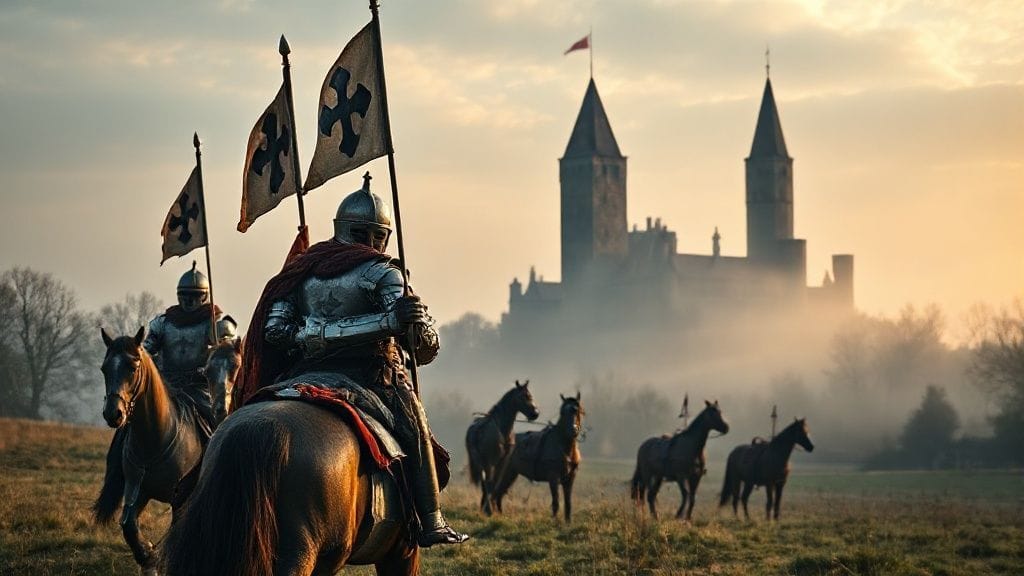
The initial clashes were brutal and relentless. The Order’s knights, heavily armored, trained in siege warfare and disciplined combat, contrasted sharply with the guerrilla tactics of Prussian warriors familiar with their harsh terrain. Immediately, it became clear that the campaign in Prussia would not be a swift or straightforward conquest.
Historical chronicles describe ambushes in dark forests, fierce resistance from fortified hill forts (known as “gords”), and intermittent truces. Across winter cold and summer heat, the knights persevered, relying on reinforcements from Western Europe and financial support from Christian rulers enthralled by the crusading cause.
The Conquest Begins: Military Campaigns and Fortifications
The Order’s military strategy combined direct assaults with a meticulous program of fortress-building. Castles and strongholds began to dot the landscape, serving as bases for further military excursions and centers of administration.
One of their first major strongholds was Marienburg (now Malbork), which would eventually become the Order’s capital and a symbol of their power. The construction of such fortresses allowed the knights to project authority far into Prussian lands and offered refuges against hostile attacks.
Military campaigns were punctuated with periods of negotiation and enforced baptism as the Order sought to establish not merely control but Christian hegemony.
Chełmno Land as a Base: Building a Crusader State
Chełmno Land quickly transformed from a contested frontier into an administrative heart of the Order’s domain. This land became a template for governance, combining feudal law with military discipline and ecclesiastical oversight.
Settlers from Germany and other parts of Europe were invited, steadily changing the demographic landscape through colonization. Cities grew, trade increased, and new social hierarchies emerged under the Order’s strict regulations.
The Papal Blessing: Legitimacy and Religious Justification
The papal bulls issued by Honorius III and later popes framed the Teutonic campaign as an extraordinary crusade—not just to save souls but to create a bastion of Christendom at the Baltic edge. The phrases used in these bulls invoked crusader imagery traditionally associated with the Holy Land.
This spiritual endorsement mobilized knights, priests, and resources across Europe, making the Prussian crusade arguably the longest-lasting and most institutionally entrenched crusading effort outside the Mediterranean.
The Shift in Regional Power: Polish Duchies and the Order’s Rise
While Duke Conrad’s initial goal had been regional defense, the Order’s growing power led to tensions with its Polish neighbors. Over time, the Knights became a quasi-independent state, occasionally allied but more often at odds with Polish rulers.
Their territorial expansion and control over key trade routes in the Baltic made them formidable players in the complex mosaic of medieval Eastern Europe.
The Social Fabric: Colonization, Christianization, and Cultural Transformation
The Order’s arrival led to significant demographic and cultural upheaval. German settlers introduced new agricultural techniques, laws modeled on the Magdeburg rights empowered urban centers, and Christian institutions spread as churches, monasteries, and schools were founded.
Yet, the native Prussians faced forced conversion, displacement, and decline. Their pagan culture gradually faded under the overwhelming pressure of conquest and colonization.
Resistance and Rebellion: Prussian Uprisings and Struggles
Despite the Order’s military might, native resistance persisted for decades. The Great Prussian Uprising (1260–1274) was a formidable expression of indigenous defiance, rallying multiple tribes in a coordinated rebellion that severely challenged the knights’ control.
Although ultimately subdued, these uprisings underscored the incomplete and contested character of the Order’s conquest, where cultural survival and identity clashed with imperial ambition.
The Order’s Governance: Law, Order, and Military Monasticism
The Teutonic Order governed its territory through a theocratic and militarized system centered on the Grand Master and the Chapter. Rigid hierarchies, strict codes of conduct, and an emphasis on combined martial and religious life distinguished this governance.
Law and order were maintained not merely for practical ends but as manifestations of divine will, binding the community under monastic vows and chivalric discipline.
Legacy of the Invitation: From Crusader State to Prussian Kingdom
The 1226 invitation laid the foundation for a political entity that would evolve for centuries: the Teutonic State of Prussia. Over time, it became a European power with influence stretching into the Baltic and beyond.
By the 16th century, following secularization, the Order’s territories transformed into the Duchy, then Kingdom of Prussia—the cradle of the future German state. The geopolitical importance of this moment resounded long after the last knight donned his armor.
Economic Growth and Trade: The Hanseatic Link
Under the Order’s aegis, trade flourished. Access to the Baltic Sea enabled the rise of Hanseatic League cities like Danzig (Gdańsk), linking Eastern Europe to broader European commerce networks.
This economic vitality funded the Order’s military ventures and invited settlement, creating a prosperous yet militarized society.
The Teutonic Knights and the Wider Crusading Movement
The Prussian Crusade was part of a broader European crusading ethos but unique in its longevity and territorial ambition. The Order’s campaigns were justified as acts of faith—“holy war”—and supported by a pan-European network of crusaders, pilgrims, and financiers.
Thus, their story is not isolated but woven into the history of medieval Christendom’s push against paganism and Islam.
Consequences for Eastern Europe: Shaping Borders and Identities
The invitation and ensuing conquest permanently altered the ethnic, religious, and political map of Eastern Europe. The Old Prussian language and culture were largely extinguished, Germanic and Christian influences prevailed, and new frontiers emerged.
This transformation set the stage for centuries of complex identities and regional conflicts centered on Prussia.
The Teutonic Order’s Enduring Myth and Memory
In the centuries that followed, the Order’s story became legend—sometimes vilified, sometimes romanticized. German nationalism in the 19th century reimagined the knights as noble crusaders, while Polish narratives remembered the conquest as subjugation and loss.
Even today, castles like Malbork stand as silent witnesses to this turbulent history.
Conclusion: Invitation as a Catalyst of Change
The 1226 invitation of the Teutonic Order to Chełmno Land was far more than a diplomatic gesture; it was a portal to transformation—military, cultural, spiritual, and geopolitical. It marked the beginning of a crusading state that reshaped an entire region.
Though born from the difficulties of one duke’s border wars, this moment unleashed forces that would ripple across centuries. It reminds us how history hinges on choices made at pivotal crossroads, where faith, power, and ambition collide to forge new worlds.
FAQs
1. Why did Duke Conrad of Masovia invite the Teutonic Order to Prussia?
Conrad struggled to defend his duchy against pagan Prussian raids and sought a powerful military ally to secure his borders and convert the pagans. Inviting the Teutonic Knights combined strategic defense with religious intent.
2. What was unique about the Teutonic Order’s mission in Prussia compared to other crusades?
Unlike crusades focused solely on temporary military campaigns (e.g., the Holy Land), the Teutonic Order’s Prussian mission aimed at permanent territorial acquisition and establishing a sovereign state governed by monastic knights.
3. How did the Old Prussians respond to the arrival of the Teutonic Knights?
The Prussians fiercely resisted, employing guerrilla tactics and uprisings (notably the Great Prussian Uprising). Though ultimately subdued, their resistance lasted decades and showcased the complexity of conquest.
4. What role did the papacy play in legitimizing the Teutonic Order’s expansion?
The Popes issued crusading bulls that declared the Prussian campaign a holy crusade, granting spiritual and political legitimacy, mobilizing European support, and framing the conquest as a religious imperative.
5. How did the Teutonic Order influence the region’s culture and demographics?
Through colonization, Christianization, and imposition of German law and language, the Order transformed a pagan Baltic region into a predominantly Christian, German-speaking society, erasing much of the Old Prussian heritage.
6. What was the long-term legacy of the Teutonic Order’s state?
The Order’s state laid the foundation for the Duchy and later Kingdom of Prussia, which played a central role in European history. Their militarized monastic governance continued to influence political structures in the region.
7. Are the castles built by the Teutonic Order still around?
Yes. Notably, Marienburg Castle (Malbork) survives as a magnificent example of medieval fortress architecture and is a UNESCO World Heritage Site, embodying the Order’s enduring legacy.
8. How is the Teutonic Order viewed in modern Poland and Germany?
Perceptions vary: In Poland, the Order is often seen as an oppressive force; in Germany, it has at times been romanticized as a symbol of medieval chivalry. Historical narratives continue to evolve, reflecting broader cultural debates.

