Table of Contents
- The Final Days of a Revolutionary Mind
- A Life Lived in the Shadows of History
- New York City, 1809: The Setting of a Quiet Passing
- Thomas Paine’s Last Moments: The Man and His Surroundings
- The State of America in 1809: A Nation Still Young and Tumultuous
- Paine’s Revolutionary Legacy: From Pamphlets to Nations
- The Controversies That Followed Paine to the Grave
- Public Reaction: Mourning or Indifference?
- The Burial and the Lost Grave: A Mystery Enshrouded in Time
- Paine’s Philosophical Echoes in 19th-Century America
- The Forgotten Founding Father: How Paine Was Overshadowed
- International Resonance: Paine’s Influence Beyond US Borders
- The Lost Manuscripts: Paine’s Unfinished Thoughts
- Rediscovering Paine in Modern Scholarship
- How Paine’s Death Marked the End of an Era—And the Start of a Legacy
- Conclusion: The Eternal Flame of Radical Thought
- FAQs: Understanding Thomas Paine’s Death and Legacy
- External Resource
- Internal Link
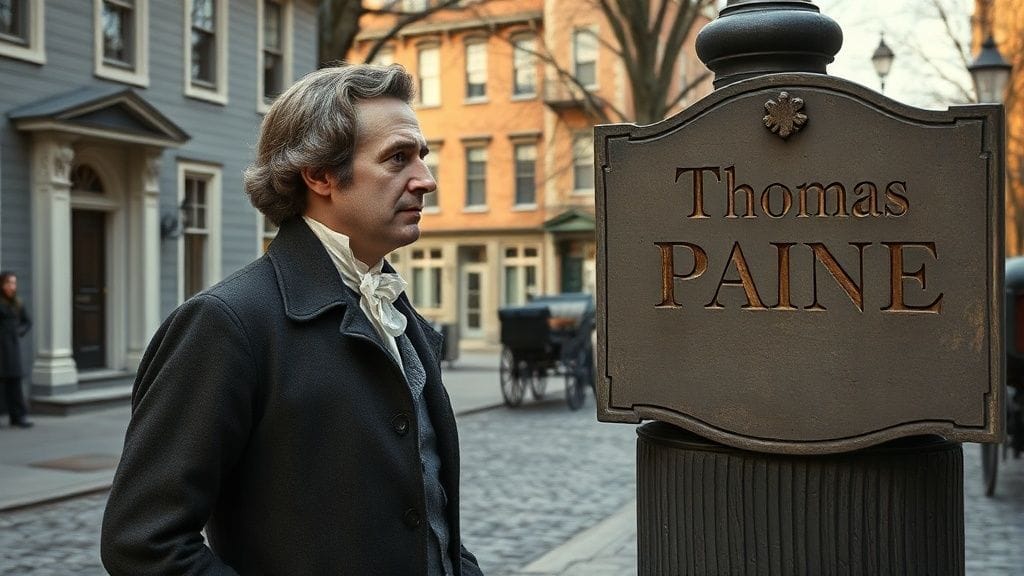
On an early June morning in 1809, the fading light of a spring day settled gently over New York City, casting long shadows across the bustling streets that were a microcosm of a young republic’s complexities. In a modest room, away from the pomp and rhetoric that had marked his earlier years, Thomas Paine breathed his last. The passing of one of the most fiery and influential thinkers of the American and French Revolutions was at once understated and profound—a poignant closing chapter to a life defined by radical ideas and ceaseless battles for justice.
It was a time when the city pulsed with change, the air thick with both hope and uncertainty. Yet within this dynamic environment, Paine's death slipped almost unnoticed into history’s margins, a silent farewell to a man whose words had ignited the fires of liberty and equality across continents.
A Life Lived in the Shadows of History
Thomas Paine was no ordinary deathbed figure; he was a titan of revolutionary thought whose pamphlets and essays challenged monarchies and inspired republics. Born in England in 1737, Paine arrived in America in 1774, riding the swell of impending revolution. His work Common Sense (1776), that blistering call to independence, became a beacon for colonial resistance. Yet his life after revolution was marked by both acclaim and animosity. He dared to question the legitimacy of all forms of oppressive power, advocating for social justice, universal rights, and the abolition of slavery when such views were hardly mainstream.
By the time 1809 approached, Paine had outlived many of his contemporaries, yet strange twists of fortune left him isolated. His support of the French Revolution’s most radical phases, particularly the execution of Louis XVI, had earned him enemies in America. His religious skepticism and radical Enlightenment ideas estranged him further from the conservative currents of early 19th-century American society. Still, Paine’s relentless voice in political discourse would not be silenced until his death.
New York City, 1809: The Setting of a Quiet Passing
New York in 1809 was a city on the cusp of transformation—a melting pot of immigrants, merchants, and politicians, its cobbled streets alive with naval and trade activity. It had lately lost its status as the capital of the young republic, but it remained a hub of cultural and political energy. Rumors swirled amid taverns and town halls of shifting alliances, of Jeffersonian ideals putting to the test the promises of democracy.
In this bustling city, Thomas Paine’s death took place in relative obscurity. Unlike the grand funerals afforded to statesmen and military heroes, Paine’s departure from the world was marked by meager attendance and little official recognition. The man who had once authored the most widely read revolutionary pamphlet found himself on the edges of public memory, his body laid to rest in an unmarked grave, its location now lost to posterity.
Thomas Paine’s Last Moments: The Man and His Surroundings
Accounts from contemporaries describe Paine’s final days as those of a man at peace with his convictions, if not with his world. Living modestly, in a small house on Varick Street, Paine reflected on his life’s work. Despite harsh financial struggles and near social exile, he remained intellectually active, writing essays and letters until the end.
Physically frail, yet mentally sharp, Paine is said to have murmured his enduring belief in the cause of liberty even as his strength failed. "The mind once enlightened cannot again become dark," he purportedly said. In those moments, surrounded by a few loyal friends and admirers, the elder revolutionary’s passion did not flicker out—it glowed faintly, quietly promising that his ideas would outlive him.
The State of America in 1809: A Nation Still Young and Tumultuous
At the time of Paine’s death, the United States was only three decades into its existence as an independent nation. The ideals of liberty and democracy were alive but tested by persistent tensions: political factionalism between Federalists and Democratic-Republicans, Indian wars, the precarious balance between slavery and emancipation, burgeoning industrialization, and complex foreign entanglements.
Paine’s radicalism, which once inspired revolutionaries, was often seen as too extreme by the ostensibly moderate leaders of the early republic. Yet the very challenges confronting the nation echoed Paine’s critiques of inequality and injustice.
Paine’s Revolutionary Legacy: From Pamphlets to Nations
Common Sense was perhaps his most famous work, but it was only the beginning. Paine’s The American Crisis papers rallied troops during desperate battles; Rights of Man defended revolutionary France and human rights; The Age of Reason challenged organized religion and promoted deism and reason over dogma.
His writings did far more than stir rebellion: they helped codify the language of rights, democracy, and government by consent across the Atlantic world. Paine’s influence reached beyond America and France to emergent political movements in Britain and the Caribbean.
The Controversies That Followed Paine to the Grave
But Paine was never uncontroversial. His forthrightness earned him political enemies and social ostracism. Some condemned him as a firebrand, others as an atheist and traitor. His outspoken support of secular governance and his criticism of clergy alienated many Americans steeped in religious tradition.
Even in death, Paine’s name provoked agitation: there were disputes over his burial, attempts to suppress his writings, and a long period when his contributions were minimized in public memory. The mainstream narrative of American independence often elevated figures like Washington and Jefferson while sidelining Paine’s radical vision.
Public Reaction: Mourning or Indifference?
Unlike the resounding national mourning accorded to other founders, Thomas Paine’s death was met with muted response. Newspapers offered brief obituaries, loyal friends organized modest funerals, but the public largely moved on. Political elites preferred to keep certain uncomfortable legacies muted—Paine represented a dissenting voice that unsettled new American sensibilities.
Yet among certain intellectual and working-class circles, Paine was quietly revered as a martyr of democratic principle. This dichotomy revealed the complex tensions in early American society, between revolutionary ideals and the realities of power consolidation.
The Burial and the Lost Grave: A Mystery Enshrouded in Time
Thomas Paine was buried in a small burial ground in New York City, but the exact location of his grave has since been lost—a symbol perhaps of how his memory faded from dominant narratives. Contrasting grand state funerals of his peers, Paine’s unmarked resting place sparked later curiosity and efforts to memorialize his life.
Over the centuries, historians, activists, and admirers have sought to locate and honor the man who dared to envision a world lifted from tyranny. His lost grave is both a literal and figurative monument, a reminder that history’s reckoning with truth is never straightforward.
Paine’s Philosophical Echoes in 19th-Century America
Despite the early neglect, Paine’s ideas continued to ripple through 19th-century reform movements. Abolitionists, suffragists, and labor activists drew on his rhetoric of universal rights and social justice. His critiques of monarchy and aristocracy dovetailed with the growing belief in popular sovereignty.
In short, Paine became a posthumous ancestor of many struggles for equality that defined the century, even if his own complicated legacy remained contested.
The Forgotten Founding Father: How Paine Was Overshadowed
History remembers founders in carefully curated ways; Paine’s radicalism and controversial stances earned him the label of “forgotten founder.” His blended identity as English-born and French-revolution supporter complicated his place in American memory.
Unlike Jefferson or Madison, Paine never held high office, a fact that left him vulnerable to historical marginalization. Yet today, scholars emphasize that no understanding of American independence is complete without him.
International Resonance: Paine’s Influence Beyond US Borders
While America moved on, Thomas Paine’s ideas found fertile ground worldwide. His writings circulated in Europe, the Caribbean, and Latin America, influencing other independence and reform movements.
His advocacy of human rights and republican governance made him a transnational figure in the Age of Revolution, a symbol of Enlightenment values confronting old regimes.
The Lost Manuscripts: Paine’s Unfinished Thoughts
Given the chaos of his final years and sparse preservation of documents, many of Paine’s writings were lost or unpublished at his death. These fragments tantalize historians, suggesting a thinker still evolving, grappling with issues of politics, religion, and society.
Such incomplete legacies remind us of the fragility of revolutionary memory and the ongoing effort to recover lost voices.
Rediscovering Paine in Modern Scholarship
The 20th and 21st centuries witnessed a renewed interest in Thomas Paine. Historians, political theorists, and popular culture have reclaimed him as a foundational figure of democratic ideals.
Exhibitions, biographies, and public commemorations have sought to give Paine his due, explaining how his ideas remain critically relevant in discussions about liberty, inequality, and secularism.
How Paine’s Death Marked the End of an Era—And the Start of a Legacy
Paine’s death symbolized the passing of the revolutionary generation, but also the crystallization of debates about freedom and governance that continue today. While the world he imagined never fully materialized in his lifetime, his ideas planted seeds that would grow in unexpected ways.
In a country still wrestling with its ideals versus its realities, Paine’s legacy challenges every generation to reassess what democracy and justice truly mean.
Conclusion
Thomas Paine’s death on June 8, 1809, was more than the passing of an iconoclast—it was the quiet close of a tumultuous chapter in history. His life was a fierce testament to the power of ideas to shape nations, to challenge tyranny, and to inspire enduring hope in human equality and reason.
That his death was understated reflects the persistent discomfort with radical truths in any age. Yet, Thomas Paine remains an eternal flame for those who dare to dream of a freer, fairer world—a reminder that the courage to speak out, to challenge, and to hope is the very heart of progress.
FAQs
Q1: Why was Thomas Paine’s death so quietly received?
Paine’s radical views on religion and politics alienated many contemporaries, and his lack of political office led to less official recognition. His support of the French Revolution’s extremes also made him controversial, resulting in muted public mourning.
Q2: What was Thomas Paine’s most influential work?
Common Sense (1776) was widely read and vital in encouraging American independence. Additionally, Rights of Man and The American Crisis were significant contributions to revolutionary thought.
Q3: How did Paine influence the early United States?
His writings helped articulate the principles of liberty, equality, and democratic governance, directly impacting the ideological framework of the American Revolution and early republic.
Q4: Why is Paine’s burial site unknown?
Paine was buried in a modest, now lost, grave in New York City without a headstone. Over time, urban development and neglect caused the exact location to be forgotten.
Q5: Did Thomas Paine’s ideas have influence beyond America?
Yes, his revolutionary ideas inspired movements in France, Britain, Latin America, and the Caribbean, becoming a symbol for Enlightenment and republican ideals worldwide.
Q6: How is Thomas Paine remembered today?
Modern scholarship has revived interest in Paine as a foundational thinker. He is celebrated in history, political thought, and popular culture as a visionary advocate for universal rights.
Q7: Why did Paine’s views clash with early American society?
His skepticism of organized religion and radical egalitarianism conflicted with the more conservative and religious segments of society, leading to widespread distrust.
Q8: What lessons does Paine’s life and death offer modern readers?
Paine’s story illustrates the challenge and necessity of radical ideas in social progress and the importance of preserving the voices of dissent as part of collective memory.