Table of Contents
- The Fateful Winter of 1405: Timur’s Last Campaign
- The Shadow of Empire: Timur’s Conquests Before Otrar
- Legendary Warrior and Ruthless Strategist: The Man Behind the Myth
- Setting the Stage: The Political Landscape of Central Asia in the Early 15th Century
- The March to Otrar: Ambitions and Obstacles
- Otrar: A Strategic Crossroads on the Silk Road
- February 18, 1405: The Day Timur’s Heart Stopped
- The Final Battle or an Unfinished Campaign?
- Mysterious Illness or Sudden Demise? Scholars Debate Timur’s Death
- The Immediate Aftermath: Confusion and Mourning in the Camp
- The Role of Otrar and Shymkent in the Tamerlane Legacy
- Succession Crisis: The Fracturing of the Timurid Empire
- The Death’s Ripple Effect on Regional Politics and the Silk Road
- The Historical Memory of Timur’s Death in Central Asia
- The Archaeology and Monuments Tied to Timur’s Last Days
- Timur in World History: An End to an Era of Conquest
- The Complex Legacy of a Conqueror: Between Horror and Admiration
- Revisiting Sources: Chronicles, Letters, and Oral Traditions
- Lessons from Timur’s Passing: Empire, Leadership, and Mortality
- Conclusion: The Silent End of a Firebrand
- FAQs: Understanding Timur’s Death and Its Impact
- External Resource
- Internal Link
1. The Fateful Winter of 1405: Timur’s Last Campaign
A chilling wind swept over the steppes of Central Asia in the winter of 1405, carrying with it the rumble of horses and the muffled sounds of a vast army on the move. Timur, the fiery conqueror known as Tamerlane to the West, was on the cusp of another great military campaign—a final push to extend his empire further into the east. But what began as a march wrapped in swagger and glory soon turned into a somber procession, shadowed by illness, despair, and the foreboding silence of fate.
On February 18, 1405, near the fortified city of Otrar, lying close to modern-day Shymkent in Kazakhstan, Timur’s indomitable spirit finally yielded to mortality. The death of one of history’s most formidable warriors and brilliant strategists was not just the end of a life but the turning of a great epoch, a moment that rippled through kingdoms and centuries alike.
This article seeks to paint a vivid portrait of those final days, to understand the man who shaped an age through fire and blood, and to explore what his death near Otrar truly meant for the world that awaited him.
2. The Shadow of Empire: Timur’s Conquests Before Otrar
Before the cold breath of February silenced Timur’s battle cries, he had carved an empire across vast stretches of Asia and parts of Eastern Europe that few rulers had ever matched in ambition or speed. Born in 1336 in the city of Kesh (now Shahrisabz, Uzbekistan), Timur rose from relatively modest beginnings among the Turkic-Mongol tribes of Transoxiana. His charisma, tactical genius, and brutal resolve coalesced to forge a domain stretching from the heart of Persia to the edges of India, from the deserts of Syria to the frozen reaches of southern Russia.
By 1405, Timur was no longer just a warlord; he was the sovereign of a sprawling empire connected by the fabled Silk Road, flourishing under both terror and trade. His construction of Samarkand as a capital glittering with architectural marvels stood as a testament to his power and vision—a nexus where cultures mingled amidst tales of conquest.
But empire-building is never static. Timur’s ambitions remained relentless, driven by a vision to restore—and surpass—the legacy of Genghis Khan, his distant predecessor. The campaign leading him toward Otrar reflected this passion and restlessness, a desire to seal his dominion over Central Asia’s last unconquered bastions.
3. Legendary Warrior and Ruthless Strategist: The Man Behind the Myth
To grasp the gravity of Timur’s death, one must first understand the man himself—a figure as complex as the land he once ruled. For centuries, historians, poets, and chroniclers have oscillated between demonizing Timur as a merciless despot and admiring him as a patron of the arts and a master statesman.
Timur’s reputation for cruelty was legendary. Cities that resisted often met destruction so complete that survivors reportedly scooped water from wells running red with blood. Yet, paradoxically, he also nurtured intellectual pursuits, inviting scholars, artisans, and architects to his court.
His military tactics combined Mongol mobility with Persian engineering skills, redefining siege warfare and cavalry maneuvers. His victories were not mere conquests but carefully orchestrated campaigns displaying foresight, discipline, and brutal efficiency.
Yet, that formidable mix of ambition and ruthlessness could not stave off the inevitable—a sudden toll that awaited even the mightiest.
4. Setting the Stage: The Political Landscape of Central Asia in the Early 15th Century
The early 1400s were a time of fragmented sovereignties competing for control over the crossroads of Asia. After the fall of the Mongol Ilkhanate and the Timurids’ rise, Central Asia remained a patchwork of khanates, emirates, and tribal confederations.
Otrar, in particular, was a jewel of strategic and economic importance. Located at a crucial junction connecting trade routes slicing through the vast steppes, it was coveted not just for its wealth but as a symbol of dominance in the region.
Moreover, Timur’s empire still faced threats from emerging powers, such as the rising Ming dynasty in China and the Ottoman Empire further west. The conquest of Otrar would mark the consolidation of Timur’s eastern frontiers and likely prepare the stage for new conflicts.
5. The March to Otrar: Ambitions and Obstacles
In late 1404, Timur gathered his vast army, a force of tens of thousands composed of skilled horsemen, siege engineers, and infantry drawn from across his empire’s diverse territories. The campaign toward Otrar was planned meticulously, driven by both strategic imperative and personal resolve.
Yet, the winter posed harsh challenges. Bitter cold, scarce fodder for horses, and the exhaustion of troops weighed heavily on the expedition. Despite these obstacles, Timur pushed forward relentlessly, driven by a desire to complete his lifetime of conquest.
Travellers’ accounts describe a man unwavering, leading from the front even when his body began to betray him. The exact conditions of his health during this march have remained a subject of speculation — fatigue, possible poisoning, or illness took root.
6. Otrar: A Strategic Crossroads on the Silk Road
Otrar, known in ancient times as a thriving trading hub, sat at the confluence of Silk Road routes connecting East and West, North and South. Its position near the present-day border of Kazakhstan, Kyrgyzstan, and Uzbekistan made it a coveted prize for any power seeking regional supremacy.
In the 12th and 13th centuries, Otrar had endured its share of sieges and sieurship changes, famously resisting the early Mongol invasions before falling. By Timur’s era, it remained a critical fortification guarding the northeastern gates to Transoxiana.
Capturing Otrar was not just about territorial expansion; it was about controlling the flow of goods, ideas, and people in one of the most economically vibrant arteries of the medieval world.
7. February 18, 1405: The Day Timur’s Heart Stopped
The dawn of February 18, 1405, unfolded beneath a pale winter sky near Otrar, but for Timur, it was the final page of his own epic. Sources report that during the ongoing siege preparations or negotiations with the city, Timur fell gravely ill.
The exact symptoms remain a matter of debate. Some chroniclers speak of a severe fever; others hint at a stroke or a sudden collapse following exhaustion. What is undisputed is that Timur’s immense vitality—once a hallmark of his boundless energy—had abandoned him.
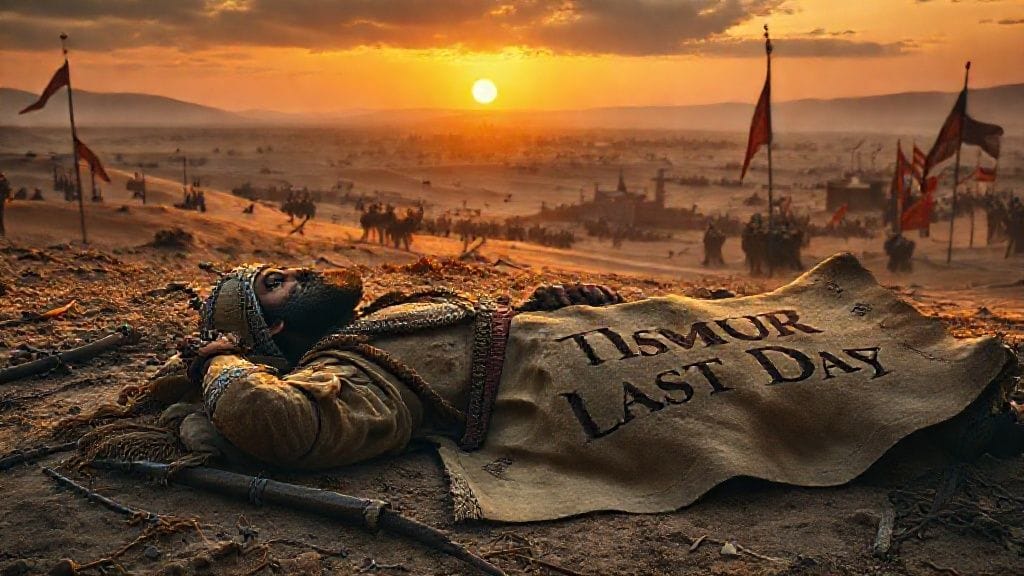
In a camp heavy with silence, surrounded by attendants and generals, the warlord breathed his last. His death marked a monumental moment as the greatest living conqueror of his age succumbed not on a battlefield but in the shadow of an imminent victory.
8. The Final Battle or an Unfinished Campaign?
Timur’s death meant the abrupt halt of the Otrar campaign. Historians insist that while some skirmishes may have continued briefly, any plans for a grand siege dissipated as his generals withdrew or shifted focus.
This untimely end left the city unconquered for a time and raised questions about how the empire would sustain itself without its towering figurehead.
The sudden power vacuum contrasted sharply with Timur’s precise and ironclad rule, igniting uncertainty and igniting succession conflicts that would eventually dissolve much of his empire’s cohesion.
9. Mysterious Illness or Sudden Demise? Scholars Debate Timur’s Death
From the 15th century chronicles of historians like Sharaf al-Din Ali Yazdi to modern analyses, the nature of Timur’s death remains shrouded in mystery.
Was it a natural illness, the physical toll of decades of warfare and travel? Or was it poison, an act of betrayal within the inner circle? Some modern historians have entertained theories of stroke or infection exacerbated by harsh conditions.
Regardless, the enigma surrounding his death adds to the mythic aura that frames Timur as both human and legend—a man who defied death in countless battles only to be claimed by it in a quiet camp near Otrar.
10. The Immediate Aftermath: Confusion and Mourning in the Camp
Following the news of Timur’s death, the immense Mongol-Timurid forces experienced shock and fragmentation. Commanders hastened to secure their positions, and emissaries were dispatched to distant provinces to inform vassals and allies.
Rituals of mourning combined Islamic customs with tribal traditions, marking a profound juxtaposition between Timur’s public persona as an invincible conqueror and the vulnerability exposed by his death.
Yet, even in grief, the seeds of power struggles germinated. Sons and generals jockeyed for authority, with some provinces declaring autonomy or rebelling.
11. The Role of Otrar and Shymkent in the Tamerlane Legacy
Though Timur never secured Otrar in his final campaign, the city’s significance endured as a testament to the limits even great conquerors faced.
In later years, Timur’s descendants continued to attempt control over the region, linking Otrar’s legacy to the Timurid dynasty’s fortunes.
Today, near the modern city of Shymkent, archaeologists seek remnants of that historical moment, unearthing layers of cultural exchange, military architecture, and human stories frozen in time.
12. Succession Crisis: The Fracturing of the Timurid Empire
Timur’s death opened a turbulent chapter for his empire. Unlike Genghis Khan, whose succession system allowed for broader unity among heirs, Timur’s sons and grandsons fought bitterly.
This internecine conflict severed territories and fractured political cohesion, opening pathways for rising forces such as the Uzbeks, Safavids, and Mughals, each tracing ideological or bloodline roots back to Timur’s empire.
The once vast and centralized Timurid domain splintered, yet its cultural and political legacy persisted through descendants who shaped new empires.
13. The Death’s Ripple Effect on Regional Politics and the Silk Road
Far beyond Otrar and Central Asia, Timur’s death reshaped geopolitical dynamics. His empire had secured trade routes that connected Europe to the Far East, and the ensuing instability created opportunities and dangers for merchants, diplomats, and local rulers.
The Ming dynasty in China monitored these developments closely, consolidating its own control in the vacuum left behind.
Even in Europe, Timur’s sudden death was noted; chroniclers and rulers alike pondered what might have been had Timur set his sights westward thereafter.
14. The Historical Memory of Timur’s Death in Central Asia
Within Central Asian culture and collective memory, Timur remains a towering, if controversial, figure. His death near Otrar is remembered less in mythic terms than the moment when the unstoppable force met its inevitable end.
Epic poems, local legends, and historiographies preserve multiple facets—sometimes portraying Timur as a tragic hero, sometimes as a cautionary tale of overreach.
The memory of his death serves as a reflection on power’s fragility even for the mightiest.
15. The Archaeology and Monuments Tied to Timur’s Last Days
Archaeological endeavors around Otrar and Shymkent have uncovered fortress remains, workshop sites, and inscriptions tied to the Timurid era.
Though no tomb for Timur exists at Otrar, his mausoleum in Samarkand stands as an enduring monument to his impact, a place pilgrims and tourists visit seeking to grasp the aura of the enigmatic conqueror.
Excavations continually reveal how the region remained a nexus of cultural fusion shaped by Timur’s fleeting presence.
16. Timur in World History: An End to an Era of Conquest
Timur’s death symbolized the close of an era when horse-mounted warriors could build sprawling empires on sheer military prowess.
The 15th century would increasingly witness the transition toward gunpowder states, standing armies, and emerging bureaucracies.
Yet Timur’s legacy as a brutal yet cultured conqueror fascinated both contemporaries and later generations, influencing rulers from Mughal India to Ottoman Turkey and beyond.
17. The Complex Legacy of a Conqueror: Between Horror and Admiration
Timur embodies one of history’s great paradoxes—a man capable of both grotesque violence and magnificent cultural patronage.
His death near Otrar invites reflection on the human cost of empire-building and on the thin line separating legend from reality.
Historians continue to debate how to reconcile the splendor of his achievements with the shadow of his blood-soaked conquests.
18. Revisiting Sources: Chronicles, Letters, and Oral Traditions
Much of what we know of Timur’s last days comes from Persian chronicles such as “Zafarnama” by Sharaf al-Din Ali Yazdi and accounts by Ibn Arabshah.
Oral traditions in Central Asia add layers of interpretation, often mixing historical fact with mythic embellishment.
Modern historians employ cross-disciplinary methods—archaeology, textual criticism, and epidemiology—to piece together the story anew.
19. Lessons from Timur’s Passing: Empire, Leadership, and Mortality
Timur’s life and death near Otrar offer timeless lessons: the perils of overextension in empire-building, the vulnerability inherent in even the most puissant leaders, and the unpredictable nature of fate.
His final moments remind us that history’s most dramatic actors are bound by the same mortal threads as all humanity.
20. Conclusion: The Silent End of a Firebrand
On that frigid February day in 1405, the fiery blaze of Timur’s life dimmed near the walls of Otrar. His death was quiet, far from the roars of battlefields he usually commanded, yet its impact thundered through the centuries.
The man who had wielded destiny like a sword left an unfinished legacy, a testament to both the glory and fragility of empires built by force. Timur’s passing near Otrar remains a defining moment—a pause between eras, a silence before the chaos of succession, and a symbol of the inevitable human limit beyond even the greatest conqueror’s reach.
FAQs
Q1: What caused Timur’s death near Otrar in 1405?
A1: The exact cause remains uncertain; historians suggest illness (possible fever or stroke), fatigue, or possibly poisoning. Contemporary accounts describe a sudden grave illness, highlighting the harsh conditions of winter campaigning.
Q2: Why was Timur campaigning near Otrar at the time of his death?
A2: Otrar was a strategic city guarding key Silk Road routes. Timur sought to consolidate his empire’s eastern frontiers and control vital trade routes by capturing the city during his final military expedition.
Q3: What happened to Timur’s empire after his death?
A3: Timur’s death triggered a succession crisis among his descendants, resulting in the fragmentation of the Timurid Empire, weakening centralized control and enabling the rise of new regional powers.
Q4: How is Timur remembered in Central Asian history?
A4: Timur is seen as both a brutal conqueror and a patron of culture. His legacy is complex, often reflected in local legends and poetry emphasizing his military genius and his human flaws.
Q5: What role did Otrar play in the Silk Road trade during Timur’s time?
A5: Otrar was a critical fortress and trading hub controlling major east-west routes, making it a coveted strategic objective for any ruler seeking influence over Central Asia’s commerce.
Q6: Did Timur’s death near Otrar immediately end the campaign?
A6: Yes, the campaign stalled and dissolved quickly as his generals retreated or negotiated with local powers amid the empire’s political uncertainty.
Q7: Are there any monuments commemorating Timur’s death near Otrar?
A7: While no known tomb exists at Otrar, the region contains archaeological sites from the Timurid era, and Timur’s mausoleum in Samarkand remains the primary monument to his memory.
Q8: How do historians view Timur’s leadership and military tactics?
A8: Historians recognize Timur as an innovative and ruthless strategist who combined Mongol mobility with Persian siegecraft, enabling rapid and devastating conquests across vast territories.