Table of Contents
- The Moment the Earth Shook: March 11, 2011
- Japan’s Tohoku Region on the Brink: A Prelude to Disaster
- The Gigantic Fault Line Beneath Japan’s Shores
- Morning Tremors: The First Signs of an Unfolding Catastrophe
- The Magnitude 9.0 Earthquake: Unleashing Nature’s Fury
- A Tsunami of Unimaginable Scale: Waves That Overwhelmed Coasts
- The Human Toll: Lives Lost and Communities Shattered
- The Fukushima Daiichi Crisis: A Nuclear Nightmare Begins
- Japan’s Immediate Response: Emergency Services Against the Clock
- The Global Shockwave: Aid, Media, and International Solidarity
- Stories from the Epicenter: Survivors and First Responders Speak
- Rebuilding Amid Ruins: Recovery and Resilience Efforts
- Lessons Learned: Changes in Seismic Preparedness and Nuclear Safety
- The Psychological and Cultural Impact on Japan
- Environmental Aftermath: Ecology Under Threat and Recovery
- The Memory of 3/11: How Japan Commemorates the Disaster
- Scientific Advances Spurred by the Tohoku Earthquake
- Japan’s Infrastructure and Urban Evolution Post-2011
- The Earthquake’s Place in Global Disaster History
- Conclusion: Endurance in the Face of Unseen Forces
- FAQs: Understanding the Tohoku Earthquake
- External Resource
- Internal Link
1. The Moment the Earth Shook: March 11, 2011
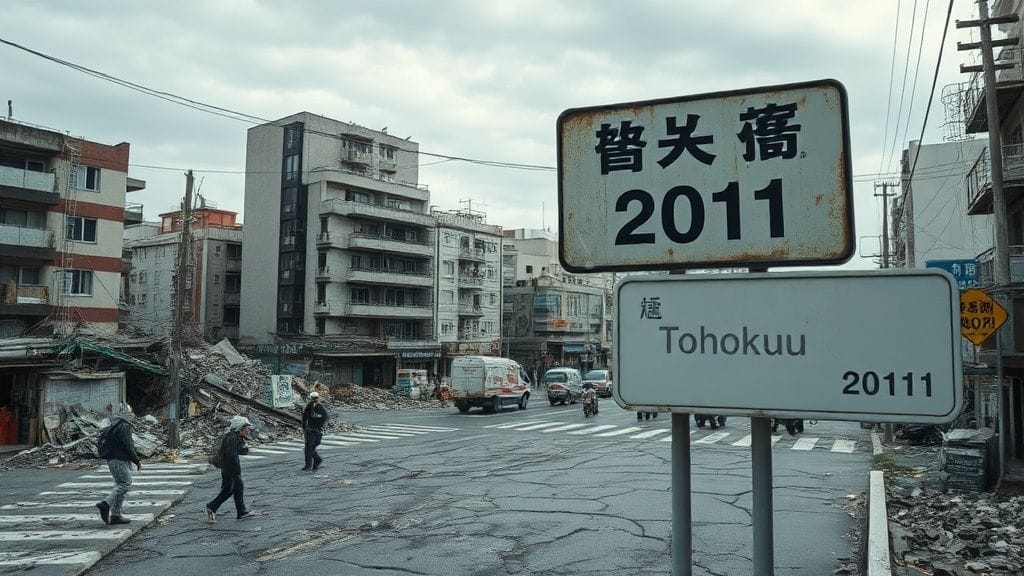
On a bright and deceptively calm Friday morning in Japan, a cataclysm unlike any other unfolded beneath the Pacific Ocean. At precisely 14:46 JST, the ground near the northeast coast of Honshu—the largest of Japan’s islands—roared with a violence so profound it would ripple through time and space. Within a matter of minutes, the earth ruptured, releasing an energy equivalent to 600 million times that of the Hiroshima atomic bomb. Buildings swayed precariously, the sky momentarily darkened with dust and debris, and millions of hearts held their breath. This was the Tohoku earthquake—a seismic awakening of apocalyptic proportions.
But this was no ordinary earthquake. It was a colossal force that would spawn a tsunami wave reaching up to 40 meters, obliterate entire cities, cripple a nuclear power plant, and challenge the very fabric of Japan’s technological prowess and human spirit. People’s lives changed irrevocably. The collective consciousness of a nation—and indeed the world—was transformed by the relentless power of nature that day.
2. Japan’s Tohoku Region on the Brink: A Prelude to Disaster
Tohoku, meaning “northeast” in Japanese, is a region painted with lush mountains, frosted rice fields, and communities steeped in tradition. Before the earthquake, Tohoku was often perceived as a tranquil, rural area, somewhat overshadowed by the bustling metropolitan centers to the south. Yet, it had long been a land vulnerable to earth’s restlessness, situated where the Pacific Plate slides beneath the North American Plate.
Throughout history, Japan’s archipelago has been no stranger to earthquakes. The nation’s deep respect and apprehension toward seismic activity are embedded in its culture. Tales of destruction and resilience pepper its past, but the scale of the impending disaster was unprecedented. Japan was assuredly prepared—earthquake-resistant buildings, regular drills—but no preparation could fully anticipate the sheer magnitude about to be unleashed.
3. The Gigantic Fault Line Beneath Japan’s Shores
Beneath the serene coastline of Tohoku lies a complex tectonic boundary—the Japan Trench. This subduction zone marks where the Pacific Plate dives under the continental plate, a colossal collision that gradually accumulates stress over centuries.
On March 11, 2011, this stored-up tectonic tension finally broke free in a seismic rupture stretching nearly 500 kilometers along the trench. The fault shifted by as much as 60 meters in some places—an incomprehensible displacement that sent shockwaves rushing across the earth.
Dr. Kenji Satake, a prominent seismologist, famously described the event as “a sudden and massive release of the planet’s raw power.” The ground didn’t just move; it essentially tore open, reshaping the seafloor and raising tectonic plates by several meters.
4. Morning Tremors: The First Signs of an Unfolding Catastrophe
In the minutes leading to the main quake, minor tremors played faint harbingers around northeastern Japan. Ordinary residents might have felt a dull rumble or slight shaking, but none predicted the cataclysm to come.
At 14:46, the earth erupted. The ground fractured, buildings vibrated, and emergency broadcasters issued immediate warnings. Yet the intensity overwhelmed even the most robust systems. The depth and power of the quake generated seismic waves that traveled rapidly, catching many unaware despite Japan’s sophisticated early-warning network.
Citizens described scenes of surreal chaos—glass exploding, rooftops swaying, and instruments designed to measure tremors going haywire. In Tokyo, more than 400 kilometers away, the quake rattled skyscrapers, proving the event’s formidable reach.
5. The Magnitude 9.0 Earthquake: Unleashing Nature’s Fury
Ranking as the fourth most powerful earthquake globally since modern measurement began, the Tohoku quake registered a monumental 9.0 on the moment magnitude scale (Mw). To grasp its magnitude: the shaking released approximately 500 terajoules of energy, an almost incomprehensible force.
The shaking lasted nearly six minutes in some places—an eternity of trembling destruction. Concrete cracked, roads buckled, bridges collapsed. Within seconds, the integrity of many structures was compromised.
Notably, the quake shifted Japan’s main island eastwards by as much as 2.4 meters and tilted the earth’s axis by an estimated 10 to 25 centimeters—a stark testament to the earthquake’s planetary impact.
6. A Tsunami of Unimaginable Scale: Waves That Overwhelmed Coasts
If the earthquake was nature’s opening salvo, the ensuing tsunami was its overwhelming crescendo.
Minutes after the ground stopped trembling, an enormous wall of water surged from the Pacific, racing inland at speeds exceeding 700 kilometers per hour. Some waves rose to the terrifying height of 40 meters, engulfing towns in moments.
The Japanese coastline, dotted with fishing villages and ports, was suddenly transformed into a deadly trap. Entire communities, including cities like Miyako, Sendai, and Ishinomaki, were swallowed by the tsunami’s crushing force.
Rescue infrastructure, seawalls, and defense mechanisms designed for smaller waves were utterly overwhelmed. The surge carried boats, cars, and debris inland, laying waste to homes and infrastructure alike.
7. The Human Toll: Lives Lost and Communities Shattered
The human tragedy was staggering. Official figures report over 15,800 confirmed deaths, more than 6,000 injured, and nearly 2,500 people missing—a grim tally underscored by harrowing first-person testimonies and uncounted emotional scars.
Entire families were torn apart. Elderly people unable to escape, children lost, and survivors grappling with the sudden loss of everything they had ever known. Emergency shelters soon swelled with displaced individuals; the emotional trauma permeated the air like a thick fog.
Local governments faced the impossible task of immediate relief and recovery amidst ongoing aftershocks and shortages of food, medicine, and shelter. The disaster laid bare vulnerabilities in rural, aging communities—many isolated by destroyed roads and paralyzed infrastructure.
8. The Fukushima Daiichi Crisis: A Nuclear Nightmare Begins
As the tsunami waves crashed onshore, they struck the Fukushima Daiichi Nuclear Power Plant—one of Japan’s largest nuclear facilities. The inundation disabled cooling systems critical to the reactors.
Without power to cool the reactors, three began overheating, triggering nuclear meltdowns—a scenario Japan had hoped was relegated to history after Chernobyl and Three Mile Island.
Radiation leaked into the surrounding environment, forcing the evacuation of hundreds of thousands of residents within a 20-kilometer radius. The Fukushima crisis transformed a natural disaster into a complex humanitarian, environmental, and engineering challenge, provoking global debate about nuclear energy’s risks and safety.
9. Japan’s Immediate Response: Emergency Services Against the Clock
Japan’s renowned disaster preparedness was put to an extraordinary test. Emergency services, military personnel, and volunteers mobilized rapidly, orchestrating rescue operations amidst chaotic conditions.
The government declared a state of emergency. Search and rescue units combed through rubble; firefighters battled fires ignited by the quake; medical teams worked tirelessly despite shortages and infrastructural collapse.
Communication networks were strained but mostly held. Notably, the country’s early-warning systems, though imperfect, saved countless lives by providing precious seconds of notice before the tsunami’s arrival.
10. The Global Shockwave: Aid, Media, and International Solidarity
The Tohoku earthquake and tsunami reverberated around the world. News outlets broadcast live images of devastation, sparking an unprecedented wave of international empathy and assistance.
More than 100 countries offered aid—monetary donations, rescue teams, supply shipments. Nations from the United States to Australia dispatched naval vessels laden with relief materials.
Global scientific communities united to study the quake’s effects, sharing data that would improve forecasting models and disaster mitigation strategies worldwide.
11. Stories from the Epicenter: Survivors and First Responders Speak
Amid the statistics, personal stories became the powerful human face of the disaster.
Elderly fishermen recalled hearing the ocean’s unusual retreat moments before the tsunami’s onslaught—a natural warning many heeded, saving lives. Families described frantic escapes to higher ground as water swallowed streets.
First responders recounted harrowing scenes of desperation, from pulling survivors from crushed homes to comforting those who had lost loved ones. Among these accounts were acts of heroism, generosity, and remarkable resilience—shining beacons in the darkest hours.
12. Rebuilding Amid Ruins: Recovery and Resilience Efforts
Reconstruction was an enormous, multi-decade effort.
Cities flattened by the tsunami were slowly reborn. Roads were rebuilt, schools reopened, and industries revitalized. Yet the physical rebuilding was matched by a rekindling of community spirit.
Japanese government policies evolved, emphasizing not just infrastructure but also social cohesion and mental health support. Volunteers and NGOs played critical roles in restoring normalcy.
Economic impacts lingered—fisheries and agriculture struggled, and certain areas faced population decline—but the resilience embedded in Japan’s culture shone brightly.
13. Lessons Learned: Changes in Seismic Preparedness and Nuclear Safety
The disaster forced Japan and the world to reexamine risk management.
Building codes were revised, warning systems enhanced, and evacuation protocols updated with lessons from the Tohoku quake’s failures and successes. The nuclear incident sparked a global dialogue on energy policy, leading some countries to reconsider or phase out nuclear power.
Investments in tsunami detection technology and community education grew significantly. A new focus emerged on integrating science, policy, and public engagement to better face future disasters.
14. The Psychological and Cultural Impact on Japan
Beyond material loss, the mental scars shaped a generation.
“Phantom shaking” and post-traumatic stress disorder became common among survivors. The event accentuated national fears, but also renewed appreciation for life and nature’s dual enormity—creative and destructive.
Annual ceremonies commemorate the lost, blending Shinto rituals with modern remembrance. Literature, film, and art have embraced 3/11 as a pivotal cultural moment. The quake’s shadow lingers in the collective psyche, a reminder of vulnerability and hope.
15. Environmental Aftermath: Ecology Under Threat and Recovery
The tsunami and nuclear disaster wrought profound environmental impacts.
Coastal ecosystems suffered massive disruption—forests, wetlands, and marine habitats were decimated or contaminated. Radioactive materials raised fears over food safety and biodiversity.
Over time, nature’s persistence has been remarkable. Efforts to restore habitats continue, with ongoing monitoring—and cautious optimism that ecosystems will slowly heal, though vigilance remains essential.
16. The Memory of 3/11: How Japan Commemorates the Disaster
Every year on March 11, Japan pauses to reflect.
Memorial services, moments of silence, and community gatherings mark the solemn anniversary. Monuments bearing victims’ names stand as enduring testaments to loss and survival.
Educational programs ensure the younger generations carry the memory—lest such tragedy be forgotten or repeated. The Tohoku earthquake sits at the heart of Japan’s modern narrative of endurance.
17. Scientific Advances Spurred by the Tohoku Earthquake
This event catalyzed remarkable advances in seismology and engineering.
Data from the quake refined models of subduction zones, improved early warning algorithms, and deepened understanding of tsunami dynamics. Innovations in structural engineering emerged to better withstand future tremors.
International scientific collaboration accelerated, underscoring how tragedy often propels human knowledge forward.
18. Japan’s Infrastructure and Urban Evolution Post-2011
Post-disaster, Japan invested heavily in revitalizing infrastructure—not merely to restore but to reinvent.
Coastal defenses were enhanced with higher seawalls; evacuation routes redesigned; urban planning integrated disaster risk reduction. Smart technologies and monitoring systems became standard in critical facilities.
This evolution represents Japan’s steadfast commitment to coexist with nature’s unpredictable forces.
19. The Earthquake’s Place in Global Disaster History
The Tohoku earthquake stands as a modern archetype of mega-disaster.
It ranks among the deadliest and most costly natural catastrophes of the 21st century. Its ripple effects shaped global discourse on climate vulnerability, emergency preparedness, and the balance between technological progress and natural limits.
It remains a stark reminder that despite human advancement, certain forces transcend preparation.
20. Conclusion: Endurance in the Face of Unseen Forces
The Tohoku earthquake, with its roar and wrath, tested more than Japan’s buildings. It challenged the resilience of human spirit, the limits of technology, and the bonds of community.
Yet within this calamity emerged stories of courage, compassion, and an unyielding will to rise from the ashes. Japan’s path forward, marked by remembrance and recovery, inspires not only its people but the world.
This colossal quake is more than history—it is a testament to endurance and hope.
FAQs
1. What caused the Tohoku earthquake in 2011?
The earthquake was caused by the sudden movement along the Japan Trench subduction zone, where the Pacific Plate slips beneath the North American Plate, releasing accumulated seismic tension.
2. How powerful was the earthquake and tsunami?
The quake registered a magnitude 9.0, making it one of the largest ever recorded. The ensuing tsunami had waves as tall as 40 meters, devastating Japan’s northeastern coastline.
3. What was the human impact of the disaster?
Over 15,800 people died, thousands were injured or missing, and communities were destroyed, especially from the tsunami’s force and the subsequent nuclear evacuation.
4. How did the Fukushima Daiichi nuclear disaster unfold?
The tsunami disabled cooling systems at the plant, causing meltdowns in three reactors and releasing radioactive materials, leading to widespread evacuations and long-term contamination concerns.
5. What measures has Japan taken since then to prevent similar disasters?
Japan improved building codes, enhanced early-warning systems, upgraded evacuation protocols, and revised nuclear safety standards to mitigate future risks.
6. How is the event remembered today in Japan?
March 11 is commemorated nationwide with ceremonies, memorials, and educational activities to honor victims and convey lessons of resilience.
7. How did the global community respond?
Over 100 countries offered aid, sending resources, expertise, and support, while scientists collaborated internationally to understand the disaster.
8. What scientific advances have resulted from the earthquake?
The event refined seismic and tsunami modeling, improved early-warning technologies, and accelerated research into earthquake-resistant infrastructure.