Table of Contents
- Dawn of a Fateful Day: The Quiet Before the Storm
- Understanding the Tokai–Suruga Bay Region in the Mid-19th Century
- A Land of Living Contrasts: Society and Nature in Edo-Period Japan
- The Science and Mythology of Earthquakes in 1854 Japan
- December 23, 1854: When the Earth Trembled Twice
- The Tokai Earthquake: The Initial Rupture and Its Fury
- The Suruga Bay Tsunami: Waves that Devastated the Coastline
- Eyewitness Accounts: Voices from the Edge of Disaster
- The Scale of Destruction: Death, Damage, and Displacement
- The Role of Samurai and Local Authorities in Crisis Management
- The 1854 Tokai–Suruga Bay Disaster in the Context of the Ansei Era
- Japan’s Seismic History: How Past Quakes Shaped Responses
- The Geological Legacy: Understanding the Earth Beneath Suruga Bay
- International Awareness: Japan and the Emerging Science of Tsunamis
- Rebuilding Communities: The Resilience of Coastal Japan
- The Disaster's Place in Japanese Cultural Memory and Literature
- Lessons Learned: From 1854 to Present-day Tsunami Preparedness
- Comparing 1854 with Later Tokai Earthquakes and Tsunami Events
- Scientific Advances Sparked by the 1854 Disaster
- Conclusion: The Enduring Spirit of a Region That Danced with Disaster
- FAQs: Unraveling the Mystery of the Tokai–Suruga Bay Tsunami
- External Resource
- Internal Link
Dawn of a Fateful Day: The Quiet Before the Storm
The morning of December 23, 1854, dawned crisp and deceptively serene along the shores of Japan’s Suruga Bay. The cold air hung still over the water, and a dim winter sun sifted weakly through hazy skies. Villagers in fishing communities bustled about their routines, unaware that beneath the placid surface of their lives, the very earth was brewing a monumental upheaval that would violently reshape their world. That day, the Tokai region would meet nature’s fiercest rage in the form of a devastating earthquake, quickly followed by a towering tsunami — a double calamity etched forever into the annals of Japanese history.
What made this catastrophe particularly tragic was its swiftness, its raw power, and the way it revealed Japan’s intimate and complicated relationship with seismicity. The Tokai–Suruga Bay disaster did not just inspire fear; it sparked a deep reflection on the vulnerabilities and resilience of coastal life, a reflection that would echo through generations.
Understanding the Tokai–Suruga Bay Region in the Mid-19th Century
To grasp the full impact of the 1854 Tokai–Suruga Bay tsunami, one must first understand the geographical and cultural landscape it struck. The Tokai region, particularly Suruga Bay, sits at the confluence of tectonic giants: where the Philippine Sea Plate dives beneath the Eurasian Plate along the Nankai Trough. This geological fault line is, and remains, one of the most restless in all of Japan.
In 1854, under the rule of the Tokugawa shogunate, this area was a mosaic of bustling towns and serene fishing villages. Suruga Bay was a livelihood cradle — fishermen’s boats catching a wealth of marine life, farmers tending terraced rice fields above the coast, and merchants trading goods via the ancient Tokaido Road linking Edo (modern Tokyo) and Kyoto. The people here lived in close harmony with nature’s pulses, simultaneously respecting and fearing the invisible forces beneath their feet.
A Land of Living Contrasts: Society and Nature in Edo-Period Japan
The Edo period was a time of relative peace but also rigid social order. Within this structure, communities along the coastline preserved traditions and rituals that merged spiritual beliefs with cautious observation of natural phenomena. Shrine ceremonies to appease gods of earth and sea were part of everyday life. Many coastal inhabitants practiced age-old knowledge about changes in sea behavior and animal patterns, passing down warnings about impending disasters.
However, the era’s isolationist policies limited access to scientific explorations from outside Japan. While folk wisdom about earthquakes and tsunamis was rich, the understanding remained shrouded in superstition and incomplete knowledge — a perilous blend in regions prone to the earth’s violent convulsions.
The Science and Mythology of Earthquakes in 1854 Japan
In the mid-19th century, Japan’s grasp of seismic activity was a tapestry woven from fragmented observations and folkloric explanations. Earthquakes were often seen as expressions of divine anger or terrifying myths animating the earth itself. For instance, the Namazu—the giant catfish believed to thrash beneath Japan—was said to cause tremors when agitated.
Notwithstanding these beliefs, the Tokugawa shogunate supported some scholarly efforts to catalog earthquakes and their effects, mainly through diaries and official reports. But the lack of modern instruments meant that true understanding of fault lines and tectonic motion remained elusive.
December 23, 1854: When the Earth Trembled Twice
At approximately 5:00 AM, the calm of the early winter morning was shattered. A powerful earthquake, estimated at magnitude 8.4, ruptured the Tokai segment of the Nankai Trough, sending violent shaking through Suruga Bay and beyond. This wasn’t an isolated event; the famous Ansei-Tōkai earthquake struck just days earlier, on December 23rd, part of a sequence that would rattle the entire region.
The tremors toppled wooden houses, cracked roads, and sent frightened villagers seeking shelter wherever they could. But the earth’s fury was not finished — for within moments to hours, enormous waves surged toward the shoreline, and the waters of Suruga Bay rose like walls of liquid stone, overwhelming towns and sweeping away those unprepared for the horror to come.
The Tokai Earthquake: The Initial Rupture and Its Fury
The Tokai earthquake was a textbook example of a megathrust earthquake, where massive rock plates slip suddenly under immense pressure. The rupture extended for some 100 kilometers beneath Tokai and neighboring areas, and the ground displacement generated aftershocks and subsidence along the coast.
Houses built of wood and paper were no match for the sudden upheaval. Bridges collapsed, roads cracked into chasms, and entire communities found themselves buried under debris or cut off by landslides. Contemporary records tell of a landscape irrevocably altered overnight, a testament to nature’s capacity for swift destruction.
The Suruga Bay Tsunami: Waves that Devastated the Coastline
If the earthquake was a deafening roar, the tsunami was its merciless echo. Surging from the deep ocean and driven by the displacement of the seabed, the tsunami struck Suruga Bay with devastating force. Villages along the coast were engulfed by waves reportedly reaching up to 10 meters in height.
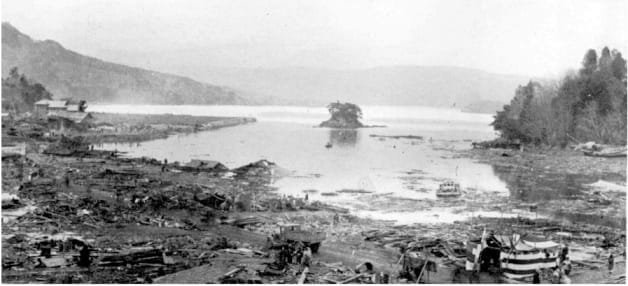
The tsunami’s arrival compounded the disaster, sweeping away countless homes, fishing vessels, and people. Entire stretches of shoreline were transformed into wastelands strewn with wreckage and bodies. Moments that had begun with hope for survival turned to despair as the sea claimed the land once again.
Eyewitness Accounts: Voices from the Edge of Disaster
Personal testimonies bring a haunting immediacy to this tragedy. A fisherman from Numazu recalled feeling the earth’s first tremors, watching in horror as his wife and children fled to higher ground, only to hear the distant roar of waves advancing rapidly.
Another survivor, a farmer near Kakegawa, described the eerie silence that followed the quake, shattered suddenly by crushing waves ravaging his village. These human narratives animate the cold data of magnitude and destruction, reminding us that history is made of lived experience — terrifying, heroic, and heartbreaking in equal measure.
The Scale of Destruction: Death, Damage, and Displacement
While exact numbers remain elusive, historical estimates suggest that thousands perished in the dual disaster. Entire villages were wiped out, and many survivors were rendered homeless or displaced. The economic impact was severe: fishing fleets destroyed, agricultural lands flooded with saltwater, and infrastructure shattered.
For an isolated Japan on the precipice of modernization, the disaster was a brutal reminder of the fragile balance between human endeavor and the relentless forces of nature.
The Role of Samurai and Local Authorities in Crisis Management
In the aftermath, local samurai — the ruling class of the time — and village leaders took charge of relief efforts. They organized rescues, distributed food and shelter, and coordinated rebuilding initiatives under the watchful eyes of higher Tokugawa officials.
This crisis management reflected both the strengths and limitations of the shogunate's governance. While some communities mobilized effective responses, systemic challenges such as rigid social hierarchy and resource scarcity hindered swift recovery.
The 1854 Tokai–Suruga Bay Disaster in the Context of the Ansei Era
The events coincided with the Ansei era, a period marked by natural calamities and political unrest. Earlier in 1854, other significant earthquakes — including the great Ansei Nankai earthquake — struck the region, shaking the fragile order of Tokugawa Japan.
This era of turmoil foreshadowed a coming transformation, as pressure on the feudal system and fears of foreign intrusion mounted, ultimately leading to the Meiji Restoration a decade later.
Japan’s Seismic History: How Past Quakes Shaped Responses
Japan is no stranger to earthquake and tsunami cycles. Records show periodic Nankai Trough ruptures roughly every 100 to 150 years, aligning with physical evidence in sediment layers and historical archives.
The 1854 event was part of this rhythm — a reminder that while individual events are devastating, they fit into broader geological and cultural patterns that have defined Japan for centuries.
The Geological Legacy: Understanding the Earth Beneath Suruga Bay
Modern geology confirms that the Tokai region lies above one of the world’s most studied subduction zones. The 1854 earthquake provided early, though indirect, data for scientists piecing together the mechanisms behind megathrust quakes and tsunamis.
Today, Suruga Bay remains an area of close monitoring, a silent guardian watching for the next inevitable shuffle beneath the waves.
International Awareness: Japan and the Emerging Science of Tsunamis
Though Japan lived largely isolated, knowledge of tsunami phenomena gradually permeated international science, aided by accounts such as those from 1854. Figures like Adolf Erik Nordenskiöld and other geologists drew on reports from Japan to build a more global understanding of seismic sea waves.
The 1854 disaster thus contributed not only to national memory but to the birth of a worldwide scientific discourse aimed at predicting and mitigating tsunami risks.
Rebuilding Communities: The Resilience of Coastal Japan
Despite the destruction, the coastal communities rose again. Fishermen rebuilt their boats, farmers re-cultivated the earth, and markets reopened. Reconstruction was slow and fraught with hardship but driven by a profound tenacity — a cultural hallmark of Japan’s engagement with natural disasters.
Stories of communal solidarity and assistance during the recovery period attest to the strength rooted in place and tradition.
The Disaster's Place in Japanese Cultural Memory and Literature
The Tokai–Suruga Bay tsunami found voice not only in official records but in poetry, paintings, and oral traditions. Artists captured the trembling earth and monstrous waves with dramatic intensity, and survivors passed down stories warning future generations.
This cultural imprint fortified a collective consciousness around disaster awareness and respect for nature’s unpredictable moods.
Lessons Learned: From 1854 to Present-day Tsunami Preparedness
While immediate scientific understanding was limited, the 1854 disaster underscored the need for better observation and readiness. Over time, this event helped seed early efforts at seismic study in Japan, eventually culminating, over a century later, in sophisticated early warning systems that save lives today.
The tragedy thus stands as an instructive chapter in humanity’s ongoing dialogue with the earth’s tremors.
Comparing 1854 with Later Tokai Earthquakes and Tsunami Events
The Tokai region remained vulnerable to similar catastrophes — most notably the 1944 Tōnankai and 1946 Nankai earthquakes and tsunamis. Comparison reveals both continuities and advancements in preparedness, emergency response, and engineering.
These lessons help keep history alive not as distant memory but as urgent guide.
Scientific Advances Sparked by the 1854 Disaster
The devastation spurred interest in seismic phenomena among Japan’s scholars. In the following decades, pioneering seismologists like John Milne and Japanese scientists built foundations for modern seismology, engendering methods to monitor and understand quakes.
Many of these advances trace their intellectual lineage to the shockwaves of 1854.
Conclusion: The Enduring Spirit of a Region That Danced with Disaster
The December 23, 1854 Tokai–Suruga Bay earthquake and tsunami was more than a moment of destruction; it was a crucible that forged resilience, inspired inquiry, and shaped the destiny of a region — and a nation — intimately tied to the rhythm of the earth.
As waves recede and time marches on, the legacy of 1854 beckons us to remember the power of nature and the courage of those who face it, reminding us that even amid devastation, human strength and dignity shine brightest.
FAQs: Unraveling the Mystery of the Tokai–Suruga Bay Tsunami
Q1: What caused the Tokai–Suruga Bay earthquake and tsunami of 1854?
The disaster was caused by a megathrust earthquake along the Nankai Trough subduction zone, where the Philippine Sea Plate slips beneath the Eurasian Plate. The sudden rupture generated violent shaking and displacement of the seabed, triggering the tsunami.
Q2: How many people died in the 1854 Tokai–Suruga Bay tsunami?
Precise numbers remain uncertain, but historical estimates suggest thousands perished, with countless homes destroyed and communities displaced.
Q3: How did the local communities respond to the disaster?
Local samurai and village leaders organized relief efforts, including rescue, food distributions, and rebuilding, despite limited resources and structural challenges of the Tokugawa era governance.
Q4: What role did the 1854 disaster play in advancing earthquake science?
While scientific tools were rudimentary at the time, the event helped stimulate scholarly interest in seismic phenomena, eventually influencing modern seismology and tsunami research.
Q5: Are the Tokai and Suruga Bay areas still at risk for similar events?
Yes, the region remains a seismic hotspot, actively monitored by scientists due to the historic recurrence of large earthquakes and associated tsunamis.
Q6: How is the 1854 tsunami remembered in Japanese culture?
Through art, literature, and oral traditions, the disaster is embedded in cultural memory, serving as a cautionary tale and tribute to human endurance.
Q7: What makes the Nankai Trough different from other earthquake zones?
Its size, tectonic activity, and tendency to produce megathrust earthquakes capable of generating large tsunamis distinguish it as one of the world’s most dangerous fault lines.
Q8: How has disaster preparedness changed in Japan since 1854?
Japan has developed sophisticated early warning systems, improved building codes, and national disaster response protocols rooted in the lessons of past catastrophes, including the 1854 event.