Table of Contents
- Introduction
- Early Life and Hostage Years
- Rise Through the Sengoku Period
- Alliance with Oda Nobunaga
- Role in the Battle of Sekigahara
- Establishment of the Tokugawa Shogunate
- Edo as a Political Capital
- Bakufu Governance and Feudal Order
- Sankin-kōtai and Daimyō Control
- Legal and Social Structure
- Economic Development and Isolationism
- Religious Policy and Christianity
- Succession and Abdication
- Death and Deification
- Legacy of the Edo Period
- Conclusion
- External Resource
- Internal Link
1. Introduction
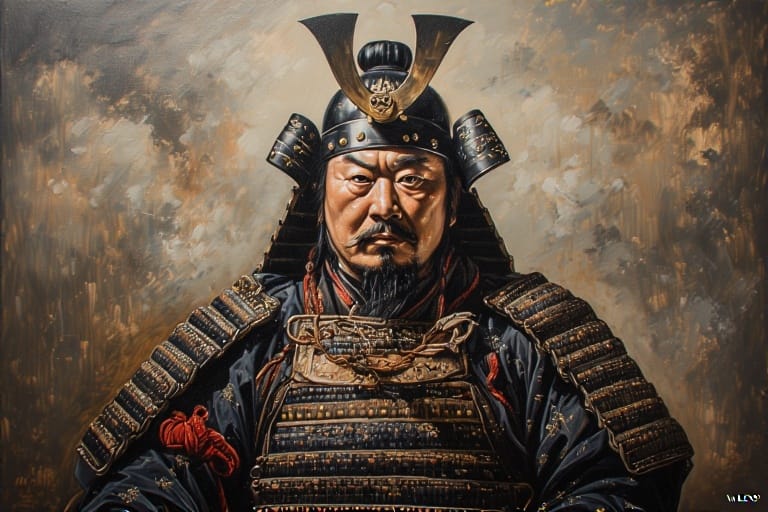
In an age marked by ceaseless warfare and political fragmentation, Tokugawa Ieyasu emerged as a visionary strategist and formidable leader who transformed Japan’s fractured domain into a stable, centralized state. Born on January 31, 1543, in Okazaki, Japan, Ieyasu laid the foundations of what would become one of the longest and most influential shogunates in Japanese history—the Tokugawa Shogunate—ushering in the Edo Period, a time of peace, isolation, and structured governance that lasted for more than two centuries.
2. Early Life and Hostage Years
Born to the Matsudaira clan, a minor daimyo family in Mikawa Province, Ieyasu’s early life was shaped by the strategic importance of his lineage. At the age of six, he was taken hostage by the Imagawa clan—a common practice in the Sengoku era to ensure allegiance. During his years as a hostage, Ieyasu was exposed to samurai culture, military training, and political maneuvering, skills that would shape his later rule.
3. Rise Through the Sengoku Period
Upon gaining his freedom after the death of Imagawa Yoshimoto in 1560, Ieyasu allied with Oda Nobunaga, a rising warlord. This alliance was strategic, granting Ieyasu political protection and military resources. He consolidated his power in the Tokai region and slowly expanded his influence across central Japan.
4. Alliance with Oda Nobunaga
Oda Nobunaga was a pivotal figure in Ieyasu’s rise. Their relationship was complex but mutually beneficial. Ieyasu supported Nobunaga’s campaigns and was entrusted with key positions and responsibilities. This alliance also allowed Ieyasu to learn from Nobunaga’s administrative and military strategies.
5. Role in the Battle of Sekigahara
Following Nobunaga’s assassination and the death of his successor Toyotomi Hideyoshi, a power vacuum emerged. Ieyasu seized this opportunity. The decisive Battle of Sekigahara in 1600 was a turning point. Ieyasu led the Eastern Army against a coalition of rivals, securing a decisive victory. This battle effectively made him the unchallenged military power in Japan.
6. Establishment of the Tokugawa Shogunate
In 1603, Ieyasu was granted the title of Shogun by the emperor, formalizing his authority. He established his government in Edo (modern-day Tokyo), marking the beginning of the Tokugawa Shogunate. Though he abdicated in 1605 in favor of his son Hidetada, he remained the de facto ruler until his death.
7. Edo as a Political Capital
Under Ieyasu, Edo transformed from a fishing village into a powerful political and administrative center. The city’s design was strategic, with the Tokugawa castle at its heart and roads radiating outward, symbolizing centralized control.
8. Bakufu Governance and Feudal Order
Ieyasu established a bakufu (military government) based on a rigid feudal hierarchy. The shogunate maintained control over daimyō (regional lords) through a combination of surveillance, taxation, and loyalty enforcement. Samurai were retained as the warrior class but were increasingly placed into administrative roles.
9. Sankin-kōtai and Daimyō Control
One of Ieyasu’s most effective policies was sankin-kōtai, which required daimyo to alternate residence between their domains and Edo. This policy drained daimyo resources and kept potential rebellion in check by ensuring family members remained as effective hostages in Edo.
10. Legal and Social Structure
Ieyasu codified legal standards in the Buke Shohatto, a set of laws regulating samurai behavior and loyalty. Society was stratified into four main classes: samurai, farmers, artisans, and merchants. Social mobility was limited, and this rigid structure helped maintain order.
11. Economic Development and Isolationism
Although militaristic in nature, the Tokugawa era saw immense economic growth. Agricultural productivity improved, and urban centers like Edo, Kyoto, and Osaka became bustling hubs of commerce and culture. Ieyasu also began policies of sakoku (national isolation), limiting foreign influence to control Christianity and preserve internal unity.
12. Religious Policy and Christianity
Christianity, introduced by Portuguese missionaries in the mid-16th century, was viewed with suspicion. Ieyasu issued edicts banning missionary activity and persecuting converts. His actions laid the groundwork for the seclusion policies that followed under later shoguns.
13. Succession and Abdication
Though Ieyasu formally passed the shogunate to his son, he continued to wield immense behind-the-scenes power. This seamless transition ensured the stability and longevity of the shogunate, which continued for over 260 years.
14. Death and Deification
Tokugawa Ieyasu died in 1616 at the age of 73. He was posthumously deified as Tōshō Daigongen, and a grand mausoleum was built at Nikkō Tōshō-gū, which remains a major cultural and historical site in Japan.
15. Legacy of the Edo Period
Ieyasu’s legacy is unparalleled in Japanese history. He is credited with unifying the country, ending centuries of warfare, and establishing a system that would provide peace and stability until the Meiji Restoration in 1868. The policies he enacted helped forge a distinct Japanese identity and cultural renaissance.
16. Conclusion
Tokugawa Ieyasu’s rise from hostage to hegemon is a testament to his patience, strategy, and foresight. His shogunate not only reshaped Japan’s political landscape but also redefined the role of governance, law, and society. His impact continues to echo through Japan’s cultural memory and historical scholarship.