Table of Contents
- The Dawn of August 10, 1913: Bucharest Awakens to Change
- The Aftermath of the Balkan Wars: A Tense Peninsula
- The Players in the Balkan Drama: Nations on Edge
- Seeds of Conflict: Nationalism and Old Grievances
- The Treaty of London and Its Fallout
- Why a Second Balkan War Erupted
- The Stage is Set: Negotiations Move to Bucharest
- August 1913: A City at the Heart of Diplomacy
- The Delegations Assemble: From Istanbul to Belgrade
- The Battle Lines of Negotiation: Claims and Compromises
- Romania’s Role: The Unexpected Powerbroker
- Serbia and Bulgaria: From Allies to Adversaries
- Greece’s Ambitions and Struggles for Territory
- Montenegro’s Small but Vocal Presence
- The Signing Ceremony: Protocol and Symbolism
- Key Provisions: Redrawing the Map of the Balkans
- Immediate Reactions: Celebrations and Resentments
- The Treaty’s Impact on Bulgarian National Pride
- Romania: The Unexpected Winner and Its New Territories
- Serbia’s Gains and the Seeds of Future Discord
- Greece’s Consolidation of the Southern Territories
- The Ottoman Empire’s Diminishing Shadow
- International Context: Great Powers Weigh In
- The Treaty as a Prelude to World War I
- Long-Term Legacy: Borders, Conflicts, and Memory
The Dawn of August 10, 1913: Bucharest Awakens to Change
On a humid summer morning, the streets of Bucharest pulsed with an unusual energy. The city, known for its blend of Ottoman, French, and Romanian architecture, had become something of a crucible—its air thick with expectation and unease. Word had spread quickly: after months of brutal conflict, the Balkan states were gathering to sign a treaty that would either secure peace or sow further discord. On August 10, 1913, the Treaty of Bucharest was to be signed, redrawing the borders of Southeast Europe and reshaping futures. Yet, beneath the ceremonial smiles and handsome suits, the stakes could not have been higher. For many, this treaty was not merely a diplomatic formality; it was a reckoning.
The streets buzzed with onlookers and journalists, diplomats hurried along with thick dossiers tucked under their arms, and guards lined the avenues with tense discipline. Eastern Europe was at a precipice—one forged by recent wars that had bathed the Balkans in blood and ambition. The Treaty of Bucharest promised an end to the Second Balkan War, but the peace it heralded was fragile, tentative, and fraught with the weight of history.
The Aftermath of the Balkan Wars: A Tense Peninsula
The Balkan Peninsula, often called the "powder keg of Europe," had for centuries been a mosaic of ethnicities, religions, and empires. The rapid decline of Ottoman authority in the 19th and early 20th centuries created a dangerous vacuum. By 1912, the First Balkan War had erupted, an alliance of Balkan states overthrowing Ottoman control over much of Southeastern Europe. Yet victory bred jealousy; territorial spoils proved divisive rather than unifying.
The Second Balkan War ignited swiftly in June 1913 when Bulgaria, dissatisfied with its share of the spoils, attacked its former allies Serbia and Greece. This conflict escalated quickly, drawing in Romania and the Ottoman Empire, both eager to carve out their own gains in the disintegrating Ottoman territories. The war wrought devastation, with battles fought over mountainous terrain under sweltering summer skies. By August, exhaustion dominated all, forcing the powers to the negotiating table.
The Players in the Balkan Drama: Nations on Edge
At the core stood four principal actors whose ambitions and grievances defined the conflict: Bulgaria, Serbia, Greece, and Romania. Each was hungry for land, dignity, and security.
Bulgaria, smarting from what was perceived as betrayal and insufficient territory after the First Balkan War, entered the second conflict determined to assert its claims, particularly over Macedonia. Serbia, emboldened by recent victories, sought to consolidate territorial gains and secure access to the Adriatic. Greece, triumphant but wary of Bulgarian designs, aimed to protect and expand its holdings, particularly in Salonika and Epirus. Romania, hitherto a distant player in the Balkans' internal quarrels, seized the moment to assert its own geopolitical interests in Southern Dobruja and beyond.
The Ottoman Empire, though shattered, still hoped to regain lost ground, especially in Eastern Thrace, adding another layer of complexity to the conflict.
Seeds of Conflict: Nationalism and Old Grievances
Beneath the complex web of alliances and military maneuvers lay the fiery essence of nationalism. Each Balkan nation was driven by a potent mix of history, culture, and a longing for self-determination that too often collided in violent confrontations.
Macedonia, a mountainous region with a patchwork of ethnic groups—Slavs, Greeks, Turks, and Albanians—was the most coveted and contested prize. Bulgaria claimed it as the heart of its national revival; Serbia saw it as critical to its expansion and access routes; Greece connected it with visions of a "Greater Greece." The inability to agree on Macedonia’s future was a powder keg that exploded into war.
Moreover, international meddling and historical grudges lingering from the Ottoman era added to the tension. Nationalist rhetoric inflamed populations, painting neighbors as historic enemies and justifying aggressive claims.
The Treaty of London and Its Fallout
Before Bucharest, the Treaty of London, signed in May 1913, officially ended the First Balkan War, forcing the Ottoman Empire to cede nearly all European territories. However, the treaty’s failure to provide a clear resolution for Macedonia’s fate sowed discord among the victors.
Bulgaria, expecting a more generous share, felt cheated, especially as Serbia and Greece strengthened their hold on the region. The ambiguous phrasing and contested boundaries created fertile ground for renewed conflict. By June, war erupted anew between erstwhile allies, setting the stage for the Bucharest negotiations.
Why a Second Balkan War Erupted
The second conflict was sparked by Bulgaria’s unilateral attempt to claim disputed lands in Macedonia. The move surprised Serbia and Greece, who swiftly joined forces against their former ally. The war soon spread as Romania declared war on Bulgaria, motivated by a desire to secure strategic territory and boost national prestige. The Ottomans also took advantage, regaining some ground in Eastern Thrace.
Within weeks, Bulgaria found itself isolated, fighting several fronts and suffering defeats. The overwhelming opposition forced a swift conclusion and opened the door to peace talks in Bucharest, though many believed the diplomatic battle would prove harder than the military one.
The Stage is Set: Negotiations Move to Bucharest
Bucharest, capital of Romania, assumed the center stage for what would become one of the most consequential treaties of the early twentieth century. The city had witnessed imperial ambitions and national awakenings, now hosting representatives from the Balkan capitals, each with heavy expectations.
The Romanian government, sensing an opportunity to assert regional influence, welcomed the delegations and prepared for intense negotiations. Tensions ran high—not just between nations, but among generals, politicians, and diplomats whose national pride and strategic calculus were put to the test.
Hotel rooms became war rooms, whispered conversations decided fates, and noon meetings carried the weight of kingdoms.
August 1913: A City at the Heart of Diplomacy
For days, Bucharest was transformed. Streets hummed with the comings and goings of armored cars, messengers, and journalists eager to report the progress. Cafés doubled as informal gathering spots for heated discussions, while the city’s opera house and parliament building hosted official sessions.
This atmosphere of controlled tension contrasted sharply with the memory of the recent bloodshed just beyond Romania’s borders. It was as if the city itself held its breath—waiting to see if it would broker lasting peace or merely a pause in inevitable future conflict.
The Delegations Assemble: From Istanbul to Belgrade
The delegations were as diverse as the cultures they represented. Bulgaria sent its prime minister and foreign minister, determined to reclaim honor. Serbia’s representatives were pragmatic but firm, having tasted victory. Greece’s team combined veterans of war with skilled negotiators. Romania, keen to solidify its gains, played a pivotal, somewhat unexpected role. Even the Ottoman Empire, diminished but persistent, came to defend what remained.
Each delegation carried maps, historical claims, and the emotional scars of war, all converging on Bucharest with questions yet unanswered.
The Battle Lines of Negotiation: Claims and Compromises
The talks were grueling and often contentious. Bulgaria demanded the contested territory in Macedonia and Eastern Thrace; Serbia and Greece resisted fiercely. Romania pressed for the strategic Southern Dobruja, and the Ottomans eyed Eastern Thrace.
Hours stretched into days, with discussions shifting from grand principles to nitty-gritty border lines along rivers, hills, and villages. Anecdotes tell of heated exchanges, late-night compromises, and moments when talks nearly collapsed. Still, the pressure to end the bloodshed and focus on rebuilding motivated most.
Romania’s Role: The Unexpected Powerbroker
Romania had entered the war late but emerged from Bucharest with a diplomatic victory. Its demands for Southern Dobruja were granted, expanding Romanian territory and influence significantly.
This success elevated Romania’s status in European politics, though it also exposed fissures with Bulgaria, sowing future animosity. The Romanian approach, blending firmness with strategic flexibility, earned international respect but few friends in Bulgaria.
Serbia and Bulgaria: From Allies to Adversaries
The treaty crystallized a bitter break between Serbia and Bulgaria, previously allies against the Ottomans. The new borders favored Serbia with valuable access to Macedonia, while Bulgaria lost significant territory.
Bulgarian nationalists saw this as a betrayal—sparking resentment that would reverberate for decades. Conversely, Serbia’s gains laid foundations for its growing regional ambitions, particularly its aspirations toward the Adriatic Sea.
Greece’s Ambitions and Struggles for Territory
Greece emerged from the treaty affirmed in its acquisition of northern Epirus and much of Macedonia, including Salonika, a vital port city. This consolidation fostered a stronger Greek national identity and set the stage for future expansionist desires.
However, Greece remained wary, cautious of Bulgaria’s hostility and mindful of its complex relationship with Serbia and larger powers.
Montenegro’s Small but Vocal Presence
Though often overshadowed, Montenegro had stakes as well, maintaining influence over limited territories and asserting its sovereignty in this complex dance. The treaty recognized Montenegro’s gains but its small size prevented it from dominating negotiations.
Still, Montenegrin leaders prided themselves on their contribution to the wars and their ability to secure a place at the negotiating table.
The Signing Ceremony: Protocol and Symbolism
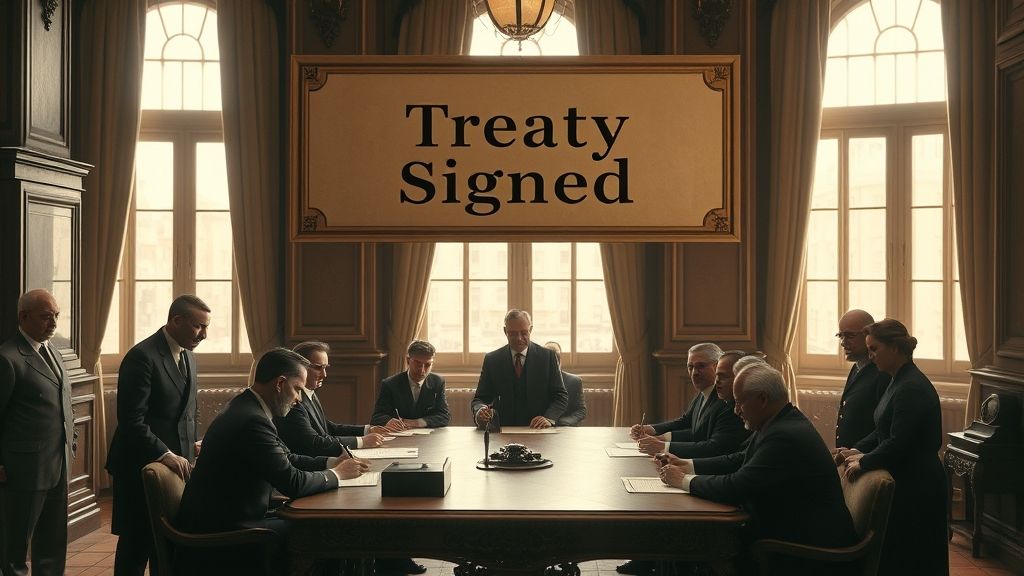
On August 10, the Treaty of Bucharest was formally signed amidst a mix of solemnity and restrained triumph. The ceremony was meticulously choreographed to appease egos while projecting stability.
Photos capture delegates shaking hands, exchanging documents, and offering forced smiles—each aware the peace achieved was tentative. Flags fluttered, reporters scribbled, and the world took note: a new chapter in Balkan history had been penned.
Key Provisions: Redrawing the Map of the Balkans
The treaty’s articles extensively redefined borders, addressing strategic interests with mixed fairness.
- Bulgaria ceded territory in Macedonia to Serbia and Greece, and Southern Dobruja to Romania.
- Serbia expanded into Vardar Macedonia and part of Kosovo.
- Greece officially gained northern Epirus and parts of Macedonia, including Salonika.
- The Ottoman Empire recovered some land near Adrianople (Edirne), though greatly diminished.
- Recognition was given to Montenegro’s modest territorial gains.
This redrawing sought to balance power but inevitably left many dissatisfied.
Immediate Reactions: Celebrations and Resentments
Across the Balkans, reactions varied wildly. Romanian newspapers celebrated their nation’s “diplomatic triumph,” while Bulgarian presses mourned a “national tragedy.” Serbian and Greek cities held public festivities, but a common undercurrent of unease persisted.
Officials warned of future challenges, recognizing that new borders created new minorities and unresolved ethnic tensions.
The Treaty’s Impact on Bulgarian National Pride
For Bulgaria, the treaty was a bitter pill. Losses were not only territorial but symbolic—a wound to national pride and a blow to its aspirations as a regional power.
This humiliation fueled political instability and revanchist movements, contributing to the volatile environment that would soon engulf Europe in even greater conflict.
Romania: The Unexpected Winner and Its New Territories
Romania’s role in the treaty transformed it into a key player in Southeastern Europe. The acquisition of Southern Dobruja secured natural strategic advantages and boosted domestic confidence.
Yet, this gain also tied Romania’s fate more closely to Balkan affairs, complicating its future diplomacy.
Serbia’s Gains and the Seeds of Future Discord
Serbia emerged territorially stronger, laying the foundation for its ambitions that would culminate in the formation of Yugoslavia after World War I.
However, these expansions created friction with neighboring Austria-Hungary and Bulgaria, planting seeds of future conflicts.
Greece’s Consolidation of the Southern Territories
Greece’s territorial gains strengthened the national state, enriching it with new populations and critical ports.
This consolidation also fostered a more assertive foreign policy in the coming years, particularly during World War I and beyond.
The Ottoman Empire’s Diminishing Shadow
The treaty marked a further retreat of Ottoman influence in Europe. Though granted back Eastern Thrace, the empire was a shadow of its former self, soon to be embroiled in internal revolutions and external conflicts.
The loss of European territories was a solemn symbol of imperial decline.
International Context: Great Powers Weigh In
The great powers of Europe—Austria-Hungary, Russia, Germany, Britain, and France—watched closely. Each had interests in the Balkans, whether strategic or colonial.
While none directly intervened in Bucharest, their diplomatic influence shaped negotiations and would play crucial roles in subsequent regional crises.
The Treaty as a Prelude to World War I
Though ending the Second Balkan War, the Treaty of Bucharest foreshadowed the catastrophic global conflict ahead. The treaties failed to resolve underlying ethnic tensions, rivalries, and ambitions.
The Balkan Powder Keg remained primed—sparking in 1914 with the assassination of Archduke Franz Ferdinand in Sarajevo.
Long-Term Legacy: Borders, Conflicts, and Memory
A century later, the Treaty of Bucharest stands as both a milestone and a cautionary tale. It reshaped Balkan borders, influenced national identities, and left legacies of resentment that shaped the twentieth century’s conflicts.
The treaty reminds us of the fragile balance between diplomacy and force, and the human cost of drawing lines on maps.
Conclusion
The Treaty of Bucharest, signed on the humid afternoon of August 10, 1913, was far more than a piece of paper. It was a mirror to the ambitions, fears, and fractures of a region long imperiled by its diversity and history. In its wake, the Balkans were transformed—territorially, politically, and emotionally—setting the stage for the cataclysms of the twentieth century. Yet, even amid the hardship and rivalry, these negotiations reveal the enduring human desire for order, security, and recognition. As we reflect on Bucharest’s grand treaty, we glimpse not just the complexities of history, but the delicate art of peace-making amid the ashes of war.
FAQs
Q1: What triggered the need for the Treaty of Bucharest in 1913?
A: The treaty was necessary to end the Second Balkan War, which erupted due to disagreements over the division of territories won from the Ottoman Empire in the First Balkan War.
Q2: Which countries were the primary signatories of the Treaty of Bucharest?
A: Bulgaria, Serbia, Greece, Romania, and the Ottoman Empire were the primary parties involved in the treaty negotiations.
Q3: Why was Romania considered an unexpected powerbroker in these negotiations?
A: Romania joined the conflict late but skillfully used the diplomatic talks to gain significant territory (Southern Dobruja) and increase its regional influence.
Q4: How did the treaty affect Bulgaria’s national ambitions?
A: It was a significant setback that reduced Bulgaria's territorial gains, leading to national resentment and future instability.
Q5: What role did nationalism play in the Balkan conflicts leading up to the treaty?
A: Nationalism fueled fierce competition among the Balkan states, as each sought to assert sovereignty over ethnically mixed and historically contested lands.
Q6: How did the Treaty of Bucharest influence the geopolitical landscape before World War I?
A: While it temporarily halted warfare, the treaty left many ethnic and political issues unresolved, contributing to tensions that helped spark World War I.
Q7: Did the Ottoman Empire regain any territories through the treaty?
A: Yes, the Ottoman Empire recovered some land in Eastern Thrace, but overall, it continued to lose influence in Europe.
Q8: What is the lasting legacy of the Treaty of Bucharest?
A: It reshaped the Balkan borders and national identities, but also sowed seeds of future conflicts and is remembered as a critical moment in the turbulent history of Southeastern Europe.