Table of Contents
- The Quiet Dawn Before the Treaty: Arabia in 628
- Muhammad’s Vision: Pilgrimage and Peaceful Intentions
- The Road to Hudaybiyyah: Tensions Between Muslims and Quraysh
- The Caravan and the Unexpected Halt: Setting the Stage
- Negotiations Begin: The Ambassadors Meet
- The Terms of the Treaty: A Surprising Peace Agreement
- The Immediate Reactions: Confusion and Discontent Among the Muslims
- The Quraysh’s Perspective: Strategic Patience or Victory?
- The Role of Allies and Tribes: Shifting Alliances
- The Psychological Landscape: Trust, Suspicion, and Resilience
- Breaking Down the Clause: The Controversial Return of Emigrants
- The Treaty as a Political Masterstroke: Analysis of Muhammad's Strategy
- The Year of Respite: Peace and Its Benefits for the Muslim Community
- Pilgrimage Delayed but Not Denied: Spiritual Resilience
- The Collapse of the Treaty: How Breaches Led to Renewed Conflict
- The Conquest of Mecca: The Treaty’s Final Consequence
- Historical Interpretations: From Betrayal to Triumph
- Hudaybiyyah in Islamic Memory and Tradition
- Lessons from Hudaybiyyah: Diplomacy in Times of Conflict
- The Treaty’s Modern Resonance: Peace Treaties and Political Strategy Today
- Conclusion
- FAQs
- External Resource
- Internal Link
1. The Quiet Dawn Before the Treaty: Arabia in 628
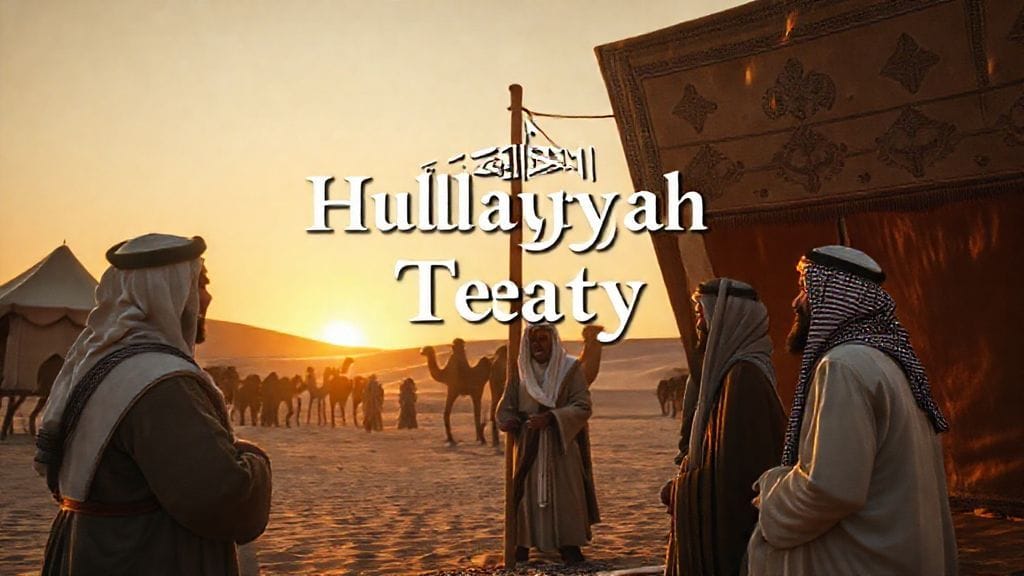
The blistering sun cast long shadows over the restless dunes as a caravan approached the outskirts of Hudaybiyyah, a nondescript valley nestled between Mecca and Medina. In the early months of the year 628 CE, Arabia was a land simmering with tension. Tribal loyalties were fragile, the memory of brutal conflicts still fresh, and the struggle for spiritual and political dominance seeped into every conversation and every decision. But on this particular dawn, the air held a peculiar stillness—as if the desert itself was awaiting the unfolding of an event that would challenge the very notions of war, peace, and faith.
Hundreds of Muslims, led by the Prophet Muhammad himself, advanced not with the intent to conquer by force, but rather to seek peace through pilgrimage—a ceremony synonymous with Mecca’s religious identity. Yet, this was not the pilgrimage of old; it was a silent challenge, a march adorned with armor but carried out in solemn hope. The Treaty of Hudaybiyyah was about to reshape the course of Islamic history.
2. Muhammad’s Vision: Pilgrimage and Peaceful Intentions
Muhammad’s decision to approach Mecca peacefully was layered with spiritual and strategic significance. Since the hijra, the flight from Mecca to Medina a few years prior, the Muslim community had been embattled on multiple fronts. The Quraysh — the dominant tribe ruling Mecca — had repeatedly banished and persecuted early Muslims, determined to extinguish the growing faith they saw as a threat to their tribal and religious authority.
The pilgrimage season, known as the Hajj, was a revered event uniting tribes throughout Arabia. For Muhammad, approaching Mecca during this season embodied a powerful assertion: the Muslims’ right to worship in their ancestral homeland peacefully. But sighs of war still floated in the desert breeze. Could such an invitation to peace be accepted or would it spark violence anew?
3. The Road to Hudaybiyyah: Tensions Between Muslims and Quraysh
The previous years had been marked by violent encounters — battles like Badr and Uhud shaping the bitter rivalry between the nascent Muslim community and the entrenched Quraysh elite. Although a truce had been attempted earlier, deep distrust simmered beneath the surface. The Meccans feared that allowing the Muslims into the city signified conceding power and influence.
Meanwhile, Muhammad’s followers were wary, some reluctant to risk their lives on a journey that could easily be a trap. Yet the Prophet’s unyielding faith in peaceful resolution convinced them that negotiation was not weakness but a step toward survival and progress.
4. The Caravan and the Unexpected Halt: Setting the Stage
When Muhammad and his followers arrived near Mecca, armed yet peaceful, they intended merely to perform their rituals and depart. However, the Quraysh stopped their approach outside the sacred precincts, refusing them permission to enter the city that day. Instead, a tense standoff unfolded in the plain of Hudaybiyyah—named after the nearby water spring.
Multiple skirmishes threatened, but cooler heads prevailed. Orchestrated diplomacy began to replace potential bloodshed. This unexpected halt in their journey was not a surrender, but a prelude to one of the most complex negotiations of the era.
5. Negotiations Begin: The Ambassadors Meet
Envoys from both sides convened with grim determination, knowing the fragile future of the Arabian peninsula hung in the balance. Prominent figures from the Quraysh and Muhammad’s companions engaged in extended discussions under the scorching desert sun.
Words were chosen carefully. The atmosphere was tense but respectful—both sides understood that open conflict could tip the region into chaos. The dialogue that ensued was not merely political but steeped in cultural nuances about honor, religious rights, and tribal sovereignty.
6. The Terms of the Treaty: A Surprising Peace Agreement
The eventual treaty, while seemingly unfavorable to the Muslims at first glance, was revolutionary. Its chief points included a ten-year truce, mutual non-aggression, the Muslims’ agreement to postpone their pilgrimage until the following year, and a clause requiring any Quraysh adherents who fled to Medina to be returned.
At first glance, it seemed the Muslims had compromised too much, especially the return of fugitives clause, which contradicted the spirit of earlier sanctuary in Medina. But the genius of Muhammad’s diplomacy lay in his long-term vision.
7. The Immediate Reactions: Confusion and Discontent Among the Muslims
When the news reached Medina, many Muslim followers were disheartened. The treaty felt like a defeat; some openly questioned the wisdom of accepting such terms from the Quraysh, a sworn enemy.
The Prophet himself faced criticism, and his leadership was tested. Yet, his serene confidence in the treaty’s potential to pave a path toward peace and eventual freedom remained unshaken.
8. The Quraysh’s Perspective: Strategic Patience or Victory?
For the Quraysh leaders, the treaty offered a reprieve from constant warfare and allowed them to consolidate power without fearing immediate attacks from Medina. It was a tactical decision—keeping their adversaries at bay without the costs of open conflict.
Yet, it also represented a de facto recognition of Muhammad’s growing influence. The truce effectively acknowledged the Muslim community as a political entity worthy of negotiation.
9. The Role of Allies and Tribes: Shifting Alliances
The treaty’s impact rippled across allied tribes and nomadic groups. Several tribes who had aligned themselves with Muhammad or the Quraysh reevaluated their loyalties. The peace allowed new diplomatic avenues previously closed by hostility.
For some tribes, the treaty created opportunities for trade and alliance-building; for others, it was a source of frustration, caught between allegiances and the shifting balance of power.
10. The Psychological Landscape: Trust, Suspicion, and Resilience
Trust was scarce, yet precious. The desert’s harshness mirrored the fragile atmosphere of the growing communities. The mutual suspicion between Muslims and Quraysh did not vanish overnight, but the ability to sit across a tent and chart peace was itself a testament to evolving political maturity.
Muhammad’s leadership cultivated resilience precisely because he prepared his followers for the slow, steady work of nation-building rather than instant triumph.
11. Breaking Down the Clause: The Controversial Return of Emigrants
One of the most contentious points—the obligation to return any Meccan fugitive seeking asylum in Medina—posed a moral and political quandary. Fleeing persecution had been a cornerstone of early Muslim refugee identity.
In practice, this clause tested the community’s commitments, and cases emerged that strained both Muslim ethics and political pragmatism. Ultimately, it underscored the complex interweaving of faith, law, and realpolitik the nascent Islamic state was beginning to navigate.
12. The Treaty as a Political Masterstroke: Analysis of Muhammad's Strategy
Historians have often marveled at Muhammad’s foresight in accepting seemingly harsh terms. The treaty allowed the Muslims to pause hostilities and consolidate internally, gaining time to strengthen socially, economically, and militarily.
By securing peace, Muhammad demonstrated that victories did not always come from the sword but from patient diplomacy and psychological strategy. The Treaty of Hudaybiyyah was a masterstroke redefining resistance and coexistence.
13. The Year of Respite: Peace and Its Benefits for the Muslim Community
During the treaty’s peace, the Muslim community thrived. Trade routes became safer, allowing economic growth. The reduction of conflict enabled greater focus on religious propagation and legal consolidation, helping transform the community’s identity from a persecuted minority into a more stable polity.
Muslims could now send missionaries peacefully to different tribes, gradually increasing Islam’s footprint across Arabia.
14. Pilgrimage Delayed but Not Denied: Spiritual Resilience
Though the Muslims were barred from performing the pilgrimage that year, their faith remained undimmed. This delay was not a defeat but a test of spiritual endurance. Many accepted the postponement as a challenge to their devotion.
When the following year arrived, the Muslims entered Mecca peacefully to perform the pilgrimage, fulfilling what Muhammad had long envisioned. It was a moment of joyous triumph born from patience.
15. The Collapse of the Treaty: How Breaches Led to Renewed Conflict
Despite the treaty’s promise of peace, violations soon surfaced. Allied tribes clashed, and skirmishes threatened to spiral into all-out war. The Quraysh’s lack of control over some factions and Medina’s growing strength made the delicate balance impossible to maintain.
Eventually, these breaches nullified the treaty, setting the stage for the decisive conquest of Mecca—a turning point that the Treaty of Hudaybiyyah helped make inevitable.
16. The Conquest of Mecca: The Treaty’s Final Consequence
In 630 CE, only two years after Hudaybiyyah, Muhammad’s forces entered Mecca with minimal resistance. The conquest was bloodless but transformative. The city that had once barred Muslims was now the spiritual and political heart of the Islamic world.
The treaty’s earlier framework had prepared the ground—breaking down hostility, establishing legitimacy, and showcasing the power of negotiation intertwined with preparation.
17. Historical Interpretations: From Betrayal to Triumph
Throughout history, interpretations of the Treaty of Hudaybiyyah have evolved. Early Muslim narratives hailed it as a divinely inspired turning point aiding Islam’s spread. Some critics initially viewed its terms as humiliating compromises.
Modern scholarship, however, increasingly recognizes the treaty as a sophisticated act of statecraft, deliberately balancing idealism and pragmatism.
18. Hudaybiyyah in Islamic Memory and Tradition
Within Islamic tradition, Hudaybiyyah is remembered as a symbol of patience, faith, and strategic foresight. The treaty is cited in the Quran and Hadith, highlighting lessons about peace, trust in God, and the importance of wise leadership.
Anniversaries of the treaty inspire reflection on the complexities of peace-making in a fractured world.
19. Lessons from Hudaybiyyah: Diplomacy in Times of Conflict
The Treaty offers timeless lessons on negotiation amid mistrust. It underscores that real peace often requires concessions and long-term perspective. Hudaybiyyah teaches that compromise need not mean surrender—it can be a form of strength.
Across centuries and cultures, it serves as a blueprint for resolving conflicts where identities and fears run deep.
20. The Treaty’s Modern Resonance: Peace Treaties and Political Strategy Today
In today’s global landscape, where conflicts still erupt over religious, ethnic, and political lines, the Treaty of Hudaybiyyah’s legacy echoes powerfully. It is a testament to the enduring value of dialogue, even when stakes are high.
Diplomats and leaders often study this event for insights into overcoming impasse and building sustainable peace.
Conclusion
The Treaty of Hudaybiyyah stands as a beacon of wisdom amid chaos—a story where faith, courage, and diplomacy converged in the harsh Arabian desert. It reminds us that history’s greatest victories are not always won on battlefields but often around negotiation tables, within moments of patience, and in acts of courage that defy immediate triumph.
Muhammad’s journey at Hudaybiyyah was more than a peace treaty; it was a lesson in resilience and vision, echoing through time as an enduring symbol of hope amid division.
FAQs
Q1: What were the main causes leading to the Treaty of Hudaybiyyah?
The treaty arose from prolonged conflict between Muhammad’s Muslim community in Medina and the Quraysh tribe of Mecca. Muhammad’s attempt to perform a peaceful pilgrimage led to negotiations to avoid further bloodshed.
Q2: Why did some Muslims initially feel the treaty was unfavorable?
Some clauses, especially the return of fleeing Meccans, seemed to compromise the safety and freedom of the Muslim community. The delay of pilgrimage was also seen as a setback.
Q3: How did the Treaty of Hudaybiyyah benefit Muhammad strategically?
It allowed Muslims to consolidate power, gain peace for a decade, spread Islam peacefully, and gain political legitimacy.
Q4: What clause in the treaty caused the most controversy?
The clause requiring Muslims to return any Meccan fugitives entering Medina was the most contentious.
Q5: How long did the treaty last before it collapsed?
The treaty lasted about two years before breaches led to renewed conflict.
Q6: What was the ultimate outcome of the Treaty of Hudaybiyyah?
It paved the way for the peaceful conquest of Mecca and a decisive shift in Arabian power dynamics.
Q7: How is the Treaty of Hudaybiyyah viewed in Islamic tradition?
It is remembered as a critical moment of faith, wise leadership, and patient diplomacy.
Q8: Can the Treaty of Hudaybiyyah inspire modern peace efforts?
Yes, it offers lessons on negotiation, trust-building, and strategic patience relevant in contemporary conflicts.