Table of Contents
- A New Dawn in Lausanne: The Moment the Treaty Was Signed
- The Collapse of an Empire: The Aftermath of the Ottoman Defeat
- Seeds of Conflict: The Prelude to Peace Negotiations
- The Shadow of Sèvres: Why the Treaty Failed
- The Birth of the Turkish Republic and the Quest for Sovereignty
- Lausanne as a Crossroads: Switzerland’s Role as Peace Broker
- The Key Players: Architects of the Treaty
- Negotiation Battles: From Stalemate to Agreement
- Redrawing Borders: Defining the Modern Middle East
- Minority Rights and Population Exchanges: Human Stories Behind the Text
- The Fate of the Straits: Control Over a Strategic Waterway
- Economic Clauses: Stabilizing a War-Torn Region
- Reactions Across the Globe: From Istanbul to London and Paris
- The Treaty’s Impact on Greece and Its People
- The Long Shadow of Lausanne: Political and Cultural Legacy
- The Treaty in the Eyes of Mustafa Kemal Atatürk
- Repercussions for Armenian and Kurdish Populations
- The Treaty’s Role in Modern Turkish Nationalism
- Revisiting Lausanne: Historical Debates and Controversies
- Conclusion: A Treaty That Shaped the 20th Century
- FAQs: Understanding the Treaty of Lausanne
- External Resource
- Internal Link
1. A New Dawn in Lausanne: The Moment the Treaty Was Signed
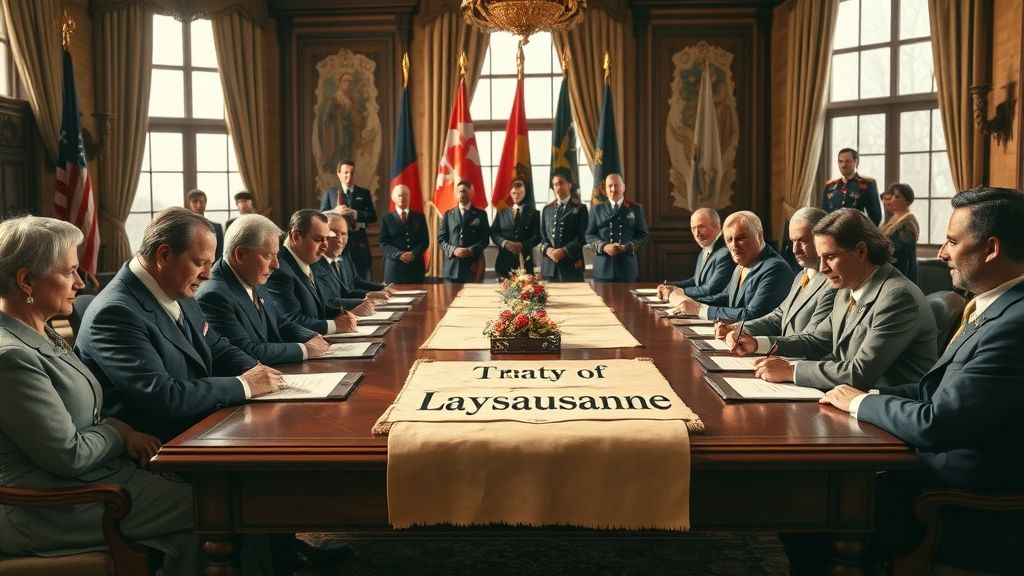
On a late summer day, July 24, 1923, the grand halls of Lausanne in Switzerland echoed with the final strokes of pens marking an end to years of turmoil. The Treaty of Lausanne, a document both monumental and nuanced, was signed, bringing closure to the vestiges of the Ottoman Empire and defining the boundaries of modern Turkey. The moment was fraught with tension, brimming with hope and heartbreak—a symbol of rebirth for Turkey but a bitter pill for those who had lost land, rights, and lives. For those witnessing it, Lausanne was more than a city; it was the theater of transition from war to uneasy peace.
As the ink dried on this treaty, diplomats from multiple nations exchanged weary glances. They knew that while borders had been drawn and peace declared, the ghosts of conflict would haunt the region for decades. And yet, the Treaty of Lausanne was hailed at the time as a triumph of diplomacy—a rare instance where shattered empires and nascent nations found a fragile accord.
2. The Collapse of an Empire: The Aftermath of the Ottoman Defeat
To understand the Treaty of Lausanne, one must first peer into the ruins of the Ottoman Empire, which stretched for over six centuries. By 1918, after the devastation of World War I, the once-mighty empire lay fragmented and defeated. The empire’s entrance into the war alongside the Central Powers sealed its fate, with Allied forces occupying key territories once held under Ottoman dominion.
The empire’s multicultural fabric, woven with Turks, Armenians, Greeks, Kurds, Arabs, and many others, frayed irreparably as nationalist movements surged. The war not only decimated populations but also fueled animosities. In the empire’s twilight years, visions of autonomy or independence clashed violently with imperial loyalty, setting the stage for the seismic geopolitical shifts to come.
3. Seeds of Conflict: The Prelude to Peace Negotiations
As the guns fell silent in 1918, the victorious Allied powers sought to redraw the map of the Near East to their advantage. The Ottoman Empire was carved up with little consideration for ethnic and historical realities. This process initiated a wave of grievances, especially from emerging Turkish nationalists.
Central to this unrest was the Treaty of Sèvres (1920), designed by the Allies to dismantle Ottoman control by granting vast territories to Greece, Armenia, France, Italy, and others. The treaty sought to impose partitions that many Turks rejected outright, seeing it as an existential threat to their homeland. These conditions ignited the Turkish War of Independence under the leadership of Mustafa Kemal Pasha, a fiery movement determined to salvage sovereignty.
4. The Shadow of Sèvres: Why the Treaty Failed
Sèvres, signed in 1920, was a treaty no one expected to last. Its punitive measures against Turkey ruptured the delicate fabric of peace and inflamed nationalist passions. The forced ceding of Anatolia’s lands to Greece, the establishment of an independent Armenia, and international control of the Straits provoked fierce opposition.
The Turkish National Movement, galvanized by outrage and a vision of a new republic, refused to acknowledge Sèvres as legitimate. The aggressive expansionist ambitions of Greece led to military confrontations, notably the Greco-Turkish War (1919-1922), as Turkish forces reconquered lost territory inch by inch.
Ultimately, Sèvres was left unimplemented — a flawed edifice crumbling under the will of a resurgent people.
5. The Birth of the Turkish Republic and the Quest for Sovereignty
Mustafa Kemal Atatürk epitomized Turkey’s turbulent transformation. Emerging from the wreckage of empire, he declared the foundation of the Republic of Turkey in 1923, seeking to modernize and secularize the nation.
Atatürk’s vision for Turkey demanded recognition of new borders, sovereignty over the Straits, and the rejection of foreign interference. The nationalist victories on the battlefield strengthened his diplomatic hand, allowing Turkey to negotiate from a position of strength at Lausanne.
This was a defining moment, not just for Turkey, but for the postwar world, demonstrating how determined nationalism could alter imposed treaties and rewrite history.
6. Lausanne as a Crossroads: Switzerland’s Role as Peace Broker
Lausanne was more than an arbitrary location—it was a symbol of neutrality and internationalism. Switzerland offered a quiet yet dignified backdrop for the fraught talks, away from the turmoil of former Ottoman lands.
Between November 1922 and July 1923, diplomats, generals, and politicians met within its classical halls, navigating impossible demands, old wounds, and new ambitions. The Swiss city became the crucible where a new order was forged.
Its serene environment contrasted with the storm raging in the negotiators’ minds—a reminder that peace was fragile, negotiated inch by inch.
7. The Key Players: Architects of the Treaty
The treaty negotiations were shaped by formidable personalities: İsmet İnönü, Turkey’s chief negotiator and ally to Atatürk, embodied resilience and pragmatism. On the other side, representatives from Britain, France, Italy, Greece, and others sought to salvage interests damaged by conflict.
British diplomat Lord Curzon, known for his imperial perspectives, tried balancing imperial interests with emerging realities. Greece’s Nikolaos Politis struggled to defend his country’s losses. Armenian and Kurdish representatives watched the process with trepidation, their peoples’ futures hanging in the balance.
These human aspects of diplomacy remind us that treaties are the products not just of documents, but of personalities and passions.
8. Negotiation Battles: From Stalemate to Agreement
Early sessions in Lausanne were filled with tension, as Turkish demands seemed both maximalist and non-negotiable. The question of the Straits—allowing free passage between the Black Sea and the Mediterranean—became a central sticking point.
Population exchanges, demanded by Greek and Turkish delegations alike, raised humanitarian concerns but became a crucial compromise. Minority protections were hotly debated, as fears of ethnic cleansing loomed large.
After months of often bitter discussions and deadlock, incremental breakthroughs emerged. By July 1923, concessions and understandings melded into the text that would bear Lausanne’s name.
9. Redrawing Borders: Defining the Modern Middle East
The treaty carved new borders almost with surgical precision, extinguishing claims that stretched beyond Turkey’s core lands. Anatolia and Eastern Thrace would be Turkish, while territories under Greek or Allied control were returned or confirmed.
Significantly, the treaty nullified many provisions of Sèvres, returning sovereignty over Istanbul and the Straits to Turkey, and removing foreign military presence.
These decisions laid the foundations of present-day Turkey and influenced the geopolitical landscape of the entire region.
10. Minority Rights and Population Exchanges: Human Stories Behind the Text
Behind the dry legal clauses were millions of lives uprooted and unsettled. One of the treaty’s most remarkable and tragic provisions was the compulsory population exchange between Greece and Turkey, uprooting close to two million people—orthodox Greeks from Anatolia and Muslims from Greece.
Families left ancestral homes, villages emptied overnight, and old friendships shattered. The exchange was meant to secure peace by creating ethnically homogeneous states but created enduring trauma.
Minority protections codified in the treaty sought to guarantee rights for those left behind, but enforcement often lagged, leading to ongoing tensions.
11. The Fate of the Straits: Control Over a Strategic Waterway
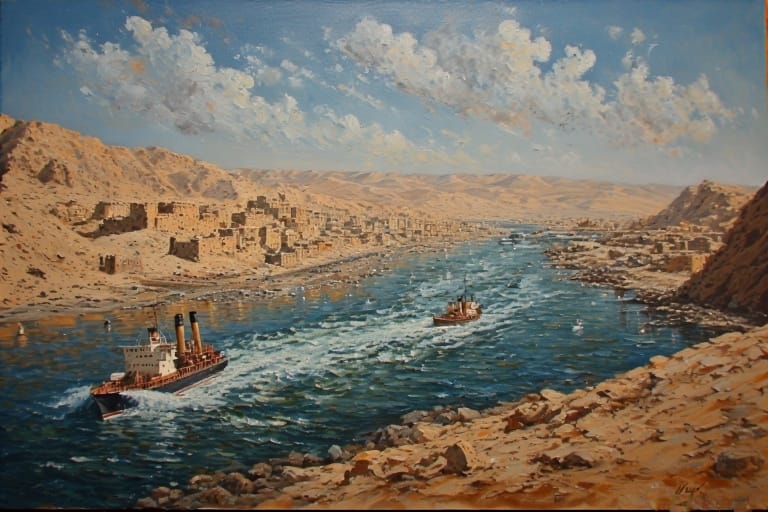
The Bosporus and Dardanelles straits have long been vital chokepoints connecting continents and seas. Under Sèvres, they were to be internationalized—controlled by a commission dominated by the Allies.
Lausanne reversed this, granting Turkey full sovereignty over the Straits while guaranteeing free passage in peace and war. This balanced Turkish pride and strategic security with international trade realities.
The shifting control of the Straits symbolized Turkey’s reassertion on the world stage and had lasting geopolitical consequences during subsequent conflicts.
12. Economic Clauses: Stabilizing a War-Torn Region
World War I and the dissolution of the Ottoman Empire had left economic devastation in their wake. Lausanne contained provisions addressing reparations, debts, and trade.
The treaty canceled Ottoman debts incurred before 1914, providing relief to the economically crippled young Republic. It sought to normalize relations with neighboring states and restore commerce along key routes.
Though economic stabilization was modest at first, these clauses laid groundwork for future growth and integration.
13. Reactions Across the Globe: From Istanbul to London and Paris
The treaty’s signing reverberated worldwide. In Turkey, celebrations mixed with solemn reflection on the price paid. Atatürk hailed the treaty as recognition of Turkey’s sovereignty and a victory of determination.
In London and Paris, relief mingled with frustration. British and French governments saw concessions as necessary but bitter. Greece mourned its losses bitterly, leading to political upheavals.
Armenian and Kurdish communities faced despair, as their hopes for statehood were dashed.
14. The Treaty’s Impact on Greece and Its People
For Greece, Lausanne marked a severe geopolitical reversal. The catastrophic defeat in Asia Minor and subsequent population exchange created waves of refugees that would reshape Greek society.
The treaty marked the end of the Megali Idea—the vision of a Greater Greece—and forced a painful redefinition of national identity.
Despite loss, Greece’s survival and adaptation also demonstrated resilience amid shifting 20th-century realities.
15. The Long Shadow of Lausanne: Political and Cultural Legacy
Nearly a century later, Lausanne remains a cornerstone of Eastern Mediterranean geopolitics. The borders it established have largely endured, and Turkey’s sovereignty over its territory is internationally recognized.
The treaty is invoked in Turkish political discourse as a symbol of hard-fought independence. However, contested minority rights and unresolved regional tensions reflect the treaty’s limits.
The population exchanges shaped collective memories on both sides of the Aegean, blending trauma and identity.
16. The Treaty in the Eyes of Mustafa Kemal Atatürk
Atatürk regarded Lausanne as the triumph of his vision for a modern Turkey, calling it “the peace that gave us life.” The treaty liberated Turkey from semi-colonial constraints and paved the way for sweeping reforms.
Yet Atatürk was pragmatic—he recognized that territorial compromise was necessary to achieve sovereignty and preserve unity.
His leadership blended military prowess with diplomatic finesse to secure Turkey’s place among nations.
17. Repercussions for Armenian and Kurdish Populations
Armenians and Kurds were indirectly the biggest losers of Lausanne. Armenian territorial claims were discarded, post-World War I hopes of statehood unrewarded.
Kurds, though acknowledged as a distinct people, saw no independent state arise. The treaty’s silence on Kurdish autonomy sowed seeds for future conflicts.
These omissions reflect the limits of early 20th-century minority protections and the victors’ focus on stability over justice.
18. The Treaty’s Role in Modern Turkish Nationalism
Lausanne is foundational in Turkish nationalist narrative. It validated Turkish sovereignty and territorial integrity at a time when Western powers aimed to fragment the region.
The treaty’s legacy feeds into nationalism and political identity, often cited in disputes over Cyprus, the Straits, and minority issues.
It became a symbol of resistance to foreign domination and a blueprint for sovereign statehood.
19. Revisiting Lausanne: Historical Debates and Controversies
Historians continue to debate Lausanne’s fairness and its role in shaping the modern Middle East. Was it a diplomatic success or a missed opportunity for more just solutions?
Some criticize the population exchanges as ethnic cleansing. Others debate the treaty’s dismissal of minority claims and the geopolitical interests behind its clauses.
These discussions deepen our understanding of postwar diplomacy’s complexities and consequences.
Conclusion
The Treaty of Lausanne stands as a monument to the complex aftermath of empire and war—a link between destruction and creation. It embodies the turbulence of a region redefined by blood, politics, and dreams. It is a story of nationalism surging from ruins, of diplomacy balancing power and principle, and of peoples whose lives were transformed forever.
More than just a printed document, Lausanne is a human story etched into geography and memory. It reminds us that peace can come at a cost, and that history often writes in shades of grey, where victory and loss intertwine.
Lausanne’s legacy endures, a testament to resilience, ambition, and the enduring quest for identity amidst the shifting tides of history.
FAQs
Q1: What were the primary causes leading to the Treaty of Lausanne?
The Treaty was primarily caused by the collapse of the Ottoman Empire post-WWI, the rejection of the Treaty of Sèvres by Turkish nationalists, and the Turkish War of Independence which forced Allied powers to renegotiate terms.
Q2: Who were the main negotiators of the Treaty?
Key figures included İsmet İnönü for Turkey, Lord Curzon for Britain, and representatives from France, Italy, Greece, and other Allied nations.
Q3: How did the Treaty affect the borders of modern Turkey?
The treaty recognized Turkey’s sovereignty over Anatolia and Eastern Thrace, annulled the divisions set by Sèvres, and established the borders very similar to those Turkey holds today.
Q4: What was the significance of the population exchange between Greece and Turkey?
The compulsory exchange uprooted nearly two million people, aiming to create ethnically homogeneous states but resulting in immense human suffering and lasting social changes.
Q5: Why was control over the Straits important?
The Straits connect the Black Sea to the Mediterranean, vital for commercial and military navigation; the treaty restored Turkish control, ending international oversight and strengthening sovereignty.
Q6: How did the Treaty impact minority populations like Armenians and Kurds?
The treaty largely ignored their aspirations for independence or autonomy, sidelining Armenian territorial claims and Kurdish self-determination, which led to ongoing struggles.
Q7: What was Mustafa Kemal Atatürk’s view of the treaty?
Atatürk saw it as a diplomatic victory securing Turkish independence and sovereignty, enabling his vision for a secular, modern nation-state.
Q8: Does the Treaty of Lausanne still influence politics today?
Yes, it remains a foundational document in Turkish national identity and informs geopolitical disputes and minority rights discussions in the region.