Table of Contents
- The Dawn of a New Century: Setting the Scene in 1199 France
- The Death of Richard the Lionheart: A Kingdom in Question
- Philip II Augustus and King John: Rivalry Forged in Shadows
- The Geopolitical Web of Normandy and Anjou
- The Role of the Church: Pope Innocent III’s Influence
- Negotiations Begin at Le Goulet: Tensions on the Loire
- The Treaty of Le Goulet Signed: Terms and Conditions
- Symbolism and Ceremony: Rituals of Power in Medieval Diplomacy
- Immediate Repercussions: The Fragile Balance of Power
- The English Crown’s Response: John’s Struggles and Strategies
- Philip II’s Consolidation of Power: From Feudal Lord to Sovereign
- The Impact on Anglo-French Relations: Seeds of Future Conflict
- The Fate of Vassal Lords: Fealty, Loyalty, and Betrayal
- Economic Implications: Control of Trade and Territories
- The Treaty’s Legacy: Prelude to the Angevin Decline
- The Treaty’s Place in the Hundred Years’ War Origins
- Reflection in Chronicles: Chroniclers’ Views on the Treaty
- Le Goulet Today: The Landscape of Memory
- Conclusion: How a River Crossing Altered Medieval Europe
- FAQs about the Treaty of Le Goulet
- External Resource
- Internal Link
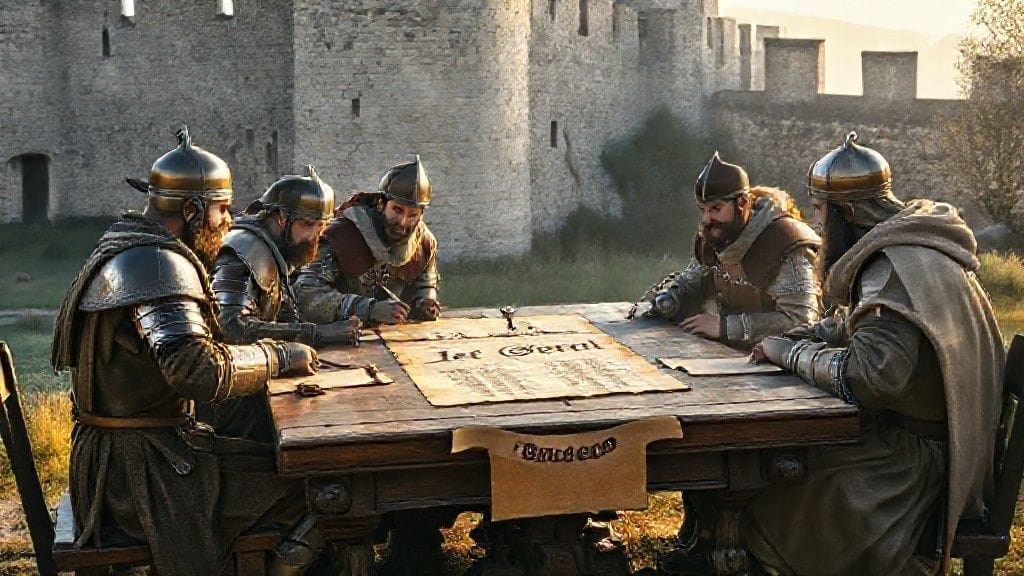
The chill of early spring 1199 clung to the Loire valley as nobles and kings gathered in the shadow of the small but vital crossing at Le Goulet. The air was thick with tension, the scent of wet earth mingling with the smoke of distant fires. It was here, amid fractured loyalties and looming dynastic upheavals, that a treaty was forged—one that would set the course not just for two kingdoms, but for the destiny of medieval Europe itself.
1. The Dawn of a New Century: Setting the Scene in 1199 France
As the 12th century gave way to the 13th, the political fabric of Western Europe was frayed and delicate. The Plantagenet dynasty held vast lands stretching from the sea fortresses of England to the rolling Loire valley and beyond. Normandy and Anjou were jewels in the Angevin crown, yet their possession was anything but secure.
Richard I of England, known as Richard the Lionheart, was more famed for his exploits on the Crusades than for administrating these territories. With his death in 1199, precarious equilibrium teetered. Power vacuums are an invitation for ambition.
2. The Death of Richard the Lionheart: A Kingdom in Question
Richard’s sudden death from an arrow wound during a siege in Limousin left an ambiguous legacy. His brother, John, a figure less battle-hardened, less politically adept, moved quickly to claim his crown. But turbulence roiled beneath the surface.
Philip II Augustus of France, King and tactician, was no passive spectator. He eyed the Angevin empire with hunger and calculated a strategy that would transform the map of France. The balance of power was thrown into a precarious new tension, and Le Goulet emerged as a vital focal point.
3. Philip II Augustus and King John: Rivalry Forged in Shadows
Instead of outright war at first, the rival kings engaged in a chess game of vassalage, claims, pressure, and conflict. The Treaty of Le Goulet became the fulcrum on which their contest rested.
Philip was a master of expanding royal authority, and John was anxious to hold his inheritance together. The stakes for both men were personal and political: who would command these lands, who would bend whom into fealty?
4. The Geopolitical Web of Normandy and Anjou
Normandy was not just any territory; it was a bridge between England and France, a source of military and economic strength. Anjou too was vital, with its network of castles and loyal barons.
Complicating matters, numerous local lords held their own ambitions, sometimes switching allegiances between the French crown and the English king. The treaty negotiations at Le Goulet were as much about these tangled feuds as they were about royal diplomacy.
5. The Role of the Church: Pope Innocent III’s Influence
The papacy under Innocent III was a political force of immense power. Though not a direct party to the Treaty of Le Goulet, the pope’s role as arbiter and spiritual overlord was ever-present.
Both kings sought the pope’s favor to legitimize their claims, but Innocent’s ambitions extended beyond passive diplomacy. His influence over the treaty and subsequent disputes was subtle but crucial, channeling medieval notions of divine right and feudal obligation.
6. Negotiations Begin at Le Goulet: Tensions on the Loire
The locale of Le Goulet was strategic and symbolic: a narrow crossing over the Loire River, a gateway between northern and southern France. Here, the kings and their envoys met amid an atmosphere thick with mistrust and wary respect.
Negotiations were long and fraught. Stories tell of heated arguments, subtle threats, and last-minute concessions. Every clause carried weight—over sovereignty, fealty, control of castles, and recognition of vassals.
7. The Treaty of Le Goulet Signed: Terms and Conditions
Finally, in May 1200, the Treaty of Le Goulet was sealed. Its key provisions granted King John recognition as the legitimate overlord of Henry II’s former domains—Normandy, Anjou, and others—but only as a vassal to Philip II.
John was compelled to pay homage for these lands, surrender some disputed castles, and confirm Philip’s overlordship. In return, Philip acknowledged John’s right to the English crown and agreed to recognize his succession line.
This precarious acknowledgment laid bare a new hierarchy: England’s king now stood, at least in France, as a subordinate ruler.
8. Symbolism and Ceremony: Rituals of Power in Medieval Diplomacy
The treaty's ratification was more than ink on parchment; it was an orchestrated spectacle filled with medieval ritual. The homage ceremony was a public assertion of power and submission, the physical embodiment of political relationships.
Vassals knelt; lords exchanged badges; swords were kissed and presented. Such rituals conveyed messages louder than words—a king humbled before his rival, a lord bound in chains of allegiance.
9. Immediate Repercussions: The Fragile Balance of Power
On paper, peace had returned. But the underlying tensions were only veiled.
The loss of some lands sowed resentment in King John; Philip’s ambitions were far from sated. The treaty bought a delicate truce but no genuine friendship.
Many barons on both sides distrusted their new overlords, fomenting future rebellions and intrigues. The fragile peace at Le Goulet was a prelude to storms that would later engulf the region.
10. The English Crown’s Response: John’s Struggles and Strategies
King John’s reign following the Treaty of Le Goulet was marked by a determined, if troubled, effort to hold onto his continental possessions.
Unlike his brother Richard, John was a shrewd administrator but lacked his martial charisma. His struggles with powerful nobles, both in England and France, were exacerbated by the humiliations imposed by the treaty.
Yet John adapted. He built alliances, fortified defenses, and even pursued marriage ties to solidify claims—a desperate bid to maintain what was slipping away.
11. Philip II’s Consolidation of Power: From Feudal Lord to Sovereign
Philip’s vision extended beyond Le Goulet. He was busy building a centralized monarchy, curtailing the power of rebellious barons, and incorporating territories into the royal domain.
The treaty was a key piece in this puzzle—subordinating the Angevin king was a symbolic and practical victory. It was a triumph of statecraft over feudal fragmentation.
12. The Impact on Anglo-French Relations: Seeds of Future Conflict
The Treaty of Le Goulet did not end hostilities; it merely transformed their nature.
The acknowledgment of Philip’s superiority planted the seeds of resentment that would blossom into the Angevin-French wars of the early 13th century—wars that would echo into the Hundred Years’ War centuries later.
The subtle shift in allegiance reshaped diplomacy and warfare in Western Europe.
13. The Fate of Vassal Lords: Fealty, Loyalty, and Betrayal
Lords caught between the English and French crowns became pawns and players in their own right. The treaty altered their loyalties unpredictably.
Some switched sides for advantage; others clung to their ancient allegiances. The bargaining and betrayals among nobility were constant, shaping the landscape of feudal politics.
14. Economic Implications: Control of Trade and Territories
Territorial control meant economic control. Normandy and Anjou held vital river routes, markets, and fortifications.
The treaty’s territorial rearrangement affected trade patterns, taxation, and the flow of resources. Local economies were at the mercy of distant kings and shifting alliances, reminding us wealth was intertwined with power.
15. The Treaty’s Legacy: Prelude to the Angevin Decline
Though it temporarily recognized John's claims, the Treaty of Le Goulet exposed the Angevin empire’s deep vulnerabilities.
Within years, John would lose much of his continental holdings to Philip. The treaty thus marks the twilight of Angevin dominance in France, a decline that altered European political geography.
16. The Treaty’s Place in the Hundred Years’ War Origins
Historically, the Treaty of Le Goulet is often seen as an early chapter in the centuries-old Anglo-French rivalry culminating in the Hundred Years' War.
It redefined sovereignty and vassalage in ways that fueled disputes over rightful claims to land and crown, setting the stage for one of medieval Europe's longest conflicts.
17. Reflection in Chronicles: Chroniclers’ Views on the Treaty
Medieval chroniclers like Roger of Wendover and William of Newburgh documented the tensions surrounding Le Goulet.
Their accounts reveal contemporary perceptions—some saw the treaty as pragmatic compromise, others as humiliating submission. These narratives tell us as much about medieval mindset as about the event itself.
18. Le Goulet Today: The Landscape of Memory
Now a quiet crossroads, Le Goulet bears little trace of the historical drama that unfolded on its banks.
Yet, beneath the placid landscape flows the Loire, silently witnessing centuries of alliances, wars, and treaties. The place reminds us how geography shapes history and memory.
19. Conclusion: How a River Crossing Altered Medieval Europe
The Treaty of Le Goulet, signed amid uncertainty and ambition, was more than an agreement; it was a turning point. It revealed how personal ambition, feudal rites, and geopolitical pressures converged to reshape two great kingdoms.
This treaty laid down rules that would echo through royal courts, battlefields, and dynasties for generations, changing Europe’s medieval order and carving the path to modern states.
Conclusion
The signing of the Treaty of Le Goulet stands as a poignant example of how diplomacy and power interlace in history. At a seemingly modest crossing on the Loire, medieval monarchy displayed its intricate dance of dominance and submission, ambition and pragmatism.
King John’s reluctant homage to Philip II was not simply a feudal formality—it was a moment charged with emotion, political calculation, and a foreshadowing of empire’s twilight. Through this treaty, Europe glimpsed the complex realities of medieval governance: where kings, barons, and churches enacted dramas that would echo across centuries.
The treaty marked the end of an era, yet also the beginning of new conflicts and ideas about sovereignty and rule. Le Goulet reminds us that history is often shaped in places unremarkable at first glance, where human passions and political necessities meet with lasting effect.
FAQs about the Treaty of Le Goulet
Q1: Why was the Treaty of Le Goulet necessary in 1200?
A1: The treaty was needed to settle disputes over the succession of lands formerly held by Richard the Lionheart after his death, particularly to resolve tensions between Philip II of France and John of England over Normandy and Anjou.
Q2: What were the main terms of the Treaty of Le Goulet?
A2: King John recognized Philip II as his overlord for his continental lands, paid homage for them, surrendered some castles, and Philip recognized John as King of England and heir to his father’s domains.
Q3: How did the treaty affect Anglo-French relations?
A3: While temporarily easing conflict, it established a fragile peace that ultimately led to increased rivalry, setting foundations for later wars, including the Hundred Years’ War.
Q4: What role did the Church play in the Treaty?
A4: Though not a direct party, Pope Innocent III acted as a spiritual authority legitimizing monarchic claims, influencing negotiations and ensuring that religious sanction underscored secular power.
Q5: How did the treaty impact the local lords of Normandy and Anjou?
A5: It compelled adjustment of loyalties, with many nobles torn between allegiance to England or France, causing shifting alliances and instability in regional politics.
Q6: Was King John weakened by this treaty?
A6: Yes, in France, John was subordinated to Philip and forced to relinquish some territorial control, which weakened his continental power and sowed seeds for later losses.
Q7: Does the Treaty of Le Goulet still hold significance today?
A7: Absolutely, historians regard it as a pivotal moment in medieval diplomacy and as a forerunner to the long-standing Anglo-French conflicts shaping European history.

