Table of Contents
- A City of Light and Shadows: Paris in 1229
- The Long Shadow of Heresy: Origins of the Albigensian Crusade
- The Cathar Challenge: Faith, Power, and Resistance
- The Spark Ignites: The Beginning of the Crusade in 1209
- Brutality and Zealotry: The Crusade’s Darkest Years
- The Siege of Béziers: “Kill Them All”
- Raymond VII and the Truce Attempts
- Political Chessboard: The French Crown’s Growing Ambitions
- The Role of the Papacy: Innocent III’s Determination
- The March Toward Paris: Diplomacy and War Entwined
- The Treaty Signed: Paris, 1229 – A Hard-Won Peace
- Terms of Submission: The Fate of Occitania
- The Inquisition Emerges: Control Beyond the Battlefield
- Cultural and Social Devastation in Southern France
- Raymond’s Resignation and the End of Catholic Resistance
- The Treaty’s Impact on French National Identity
- The Decline of the Cathars: From Heresy to Legend
- Economic Repercussions: From Prosperity to Ruin
- Artistic and Intellectual Aftershocks in Occitania
- The Crusade’s Legacy in European Religious History
- Memory and Myth: The Cathars in Modern Imagination
- Paris as Victor: The City’s Place in Medieval Power Politics
- From Crusade to Statecraft: Seeds of Centralization
- Conclusion: Peace, Loss, and the Dawn of a New Order
- FAQs: Understanding the Treaty of Paris and the Albigensian Crusade
- External Resources
- Internal Link
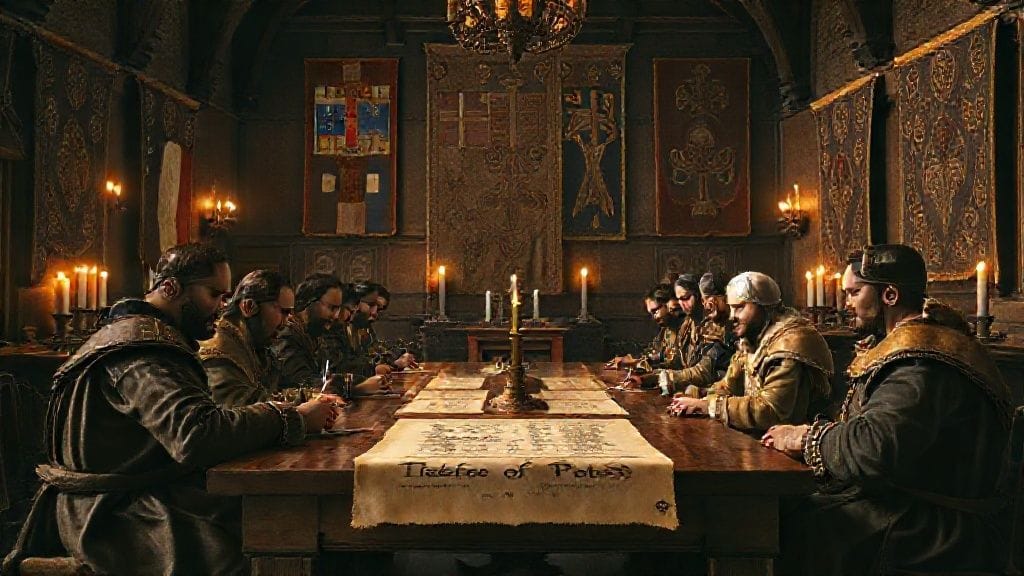
Paris, 1229. The capital of France buzzed with an energy tinged by triumph and weariness alike. In the halls of power, beneath the vaulted ceilings and flickering candlelight, a solemn treaty was being drawn—a document that would quietly but irrevocably change the fate of southern France and the religious landscape of medieval Europe. The Treaty of Paris, signed this year, marked the end of one of the most brutal and complex military-religious campaigns of the Middle Ages: the Albigensian Crusade.
This was not simply a treaty between two armies; it was an instrument of conquest, confession, and transformation. But before the quill laid ink to parchment, years of bloodshed, ideology, and political maneuvering had left their mark on France’s soul. The story of the Treaty of Paris is a journey through faith and fanaticism, kingdoms and heresies, power and resistance. To understand its significance is to grasp a pivotal moment when the medieval world was reshaped forever.
1. A City of Light and Shadows: Paris in 1229
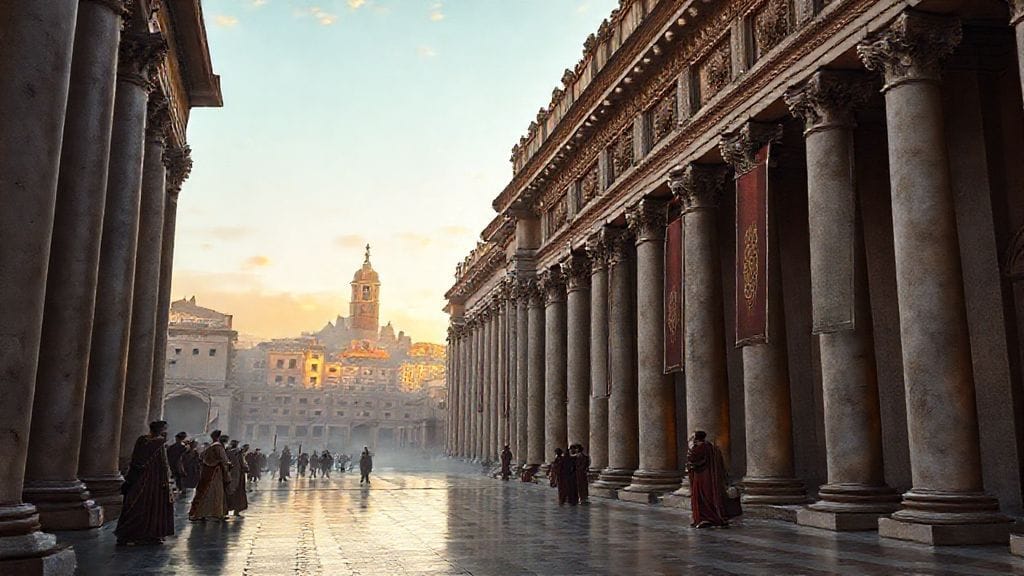
Paris, already emerging as a center of royal power and culture, was a city at the crossroads of medieval Europe. Its narrow streets echoed with the sounds of merchants, scholars, and pilgrims, while its elevated Notre-Dame Cathedral served as a symbol of divine authority. The city stood as the seat of King Louis IX, a monarch known for his devoutness and vision to strengthen the French kingdom.
In 1229, Paris would host negotiations that brought a bloody chapter to a close, even as the city itself symbolized the growing influence of centralized royal power. Yet, beneath the religious statuary and regal tapestries, the treaty’s signing belied a grim reality: a conflict that had seen entire towns razed, families torn apart, and centuries-old religious traditions crushed. This dichotomy between Parisian grace and provincial devastation was the essence of the times.
2. The Long Shadow of Heresy: Origins of the Albigensian Crusade
To grasp why the Treaty of Paris was needed at all, one must look south—to the region known as Occitania, where the Cathars had taken root. Emerging in the 12th century, Catharism was a Christian dualist movement that challenged the authority and doctrines of the Catholic Church. The Cathars preached a return to spiritual purity, rejecting the materialism and corruption they attributed to the official clergy.
This alternative faith, with its stark theological contrasts and communities tightly knit by shared beliefs, threatened not only the Church’s spiritual monopoly but also the political fabric of southern France. The Catholic hierarchy’s response was resolute: to stamp out heresy by any means necessary. What began as an ecclesiastical concern soon morphed into an armed crusade backed by the pope and Crusaders alike, framing a religious purging as an extension of the Holy War ethos that had animated earlier conflicts in the Levant.
3. The Cathar Challenge: Faith, Power, and Resistance
The Cathars were more than just heretics in the eyes of the Catholic Church. Their presence represented a formidable political obstacle. Nobles in the Languedoc region, many sympathetic or directly allied with the Cathar faith, enjoyed significant autonomy from the French crown. This independence fostered a unique culture often marked by relative tolerance, economic prosperity, and sophisticated societal norms distinct from northern France.
Leaders like Raymond VI of Toulouse navigated a delicate path, sometimes opposing, sometimes tolerating Cathar communities, and at other moments submitting to royal and papal pressures. The Church’s determination to enforce orthodoxy, however, meant that no accommodation would suffice. Resistance was met with increasing brutality as the Crusade pressed on, deepening the fractures in Occitan society.
4. The Spark Ignites: The Beginning of the Crusade in 1209
The official commencement of the Albigensian Crusade came in 1209, when Pope Innocent III called for a military expedition against the Cathars. This marked one of the rare occasions when a crusade was directed not at the Muslim-infidel in the Holy Land, but at European Christians deemed heretics.
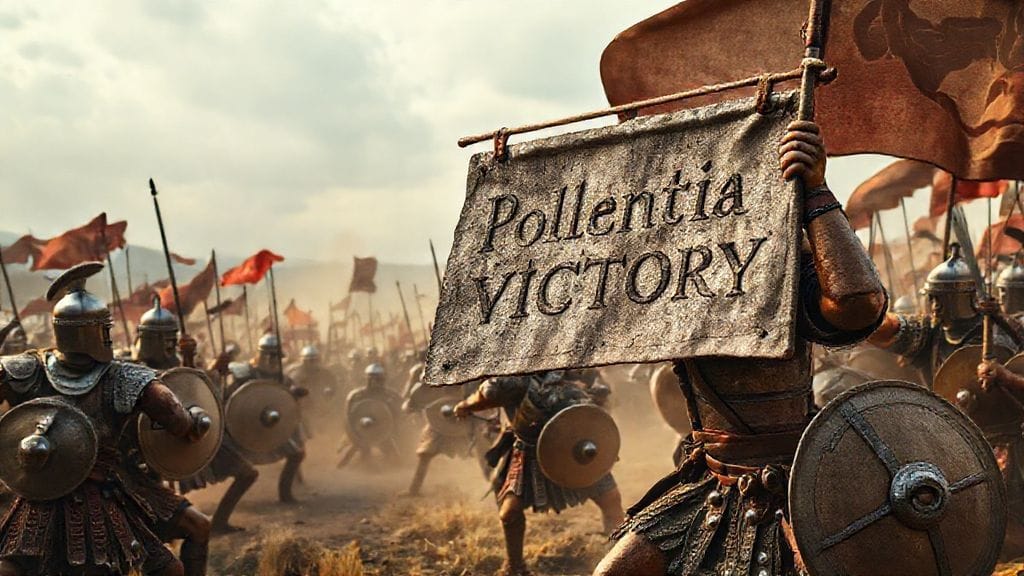
In July 1209, a crusading army assembled mainly from northern France and beyond set out under the banner of a holy cause. The campaign’s brutal logic swiftly became evident: religious zeal justified scorched earth tactics, civilian massacres, and complete subjugation. The infamous sack of Béziers, where the rallying cry “Kill them all; God will know his own” reportedly echoed, underscored the merciless character of the offensive.
5. Brutality and Zealotry: The Crusade’s Darkest Years
The first decade of the crusade was marked by terrifying violence, sieges, and a relentless campaign against communities identified with Cathar beliefs. Entire cities were besieged, destroyed, or brought under strict Catholic control. The defenders, often outnumbered and outgunned, faced terrible choices: death, flight, or forced conversion.
The accounts from this time reveal staggering human suffering. Chroniclers, both sympathetic and hostile to the Cathars, describe families torn apart and the cultural fabric of the Languedoc rent asunder. Yet, amid the carnage, the Cathars maintained their faith with remarkable resilience until the mid-1220s, when the French crown and papacy doubled down on military and judicial pressure.
6. The Siege of Béziers: “Kill Them All”
On August 22, 1209, the siege of Béziers became one of the cruellest and most emblematic moments of the crusade. The town, a suspected Cathar stronghold, was stormed by crusaders. According to tradition, papal legate Arnaud Amalric uttered the infamous decree: “Caedite eos. Novit enim Dominus qui sunt eius” – “Kill them all, for the Lord knows those who are His.”
The result was a massacre with thousands slaughtered irrespective of their faith or innocence. This moment epitomized the merciless fusion of religious justification and military conquest that defined the crusade. The fall of Béziers sent a chilling message throughout Occitania: resistance was futile and costly.
7. Raymond VII and the Truce Attempts
Raymond VII, son of Raymond VI, inherited a shattered Toulouse and a hereditary burden of defending Occitania’s independence and spiritual identity. His life straddled negotiation and warfare, as successive truce attempts alternated with renewed hostilities.
Despite his efforts to broker peace and safeguard his people’s freedoms, the forces aligned against him—royal armies, papal legates, and the Inquisition—were increasingly assertive. The fragile truces were tactical pauses rather than lasting solutions. It was only with the treaty negotiations centered in Paris that a definitive settlement took shape.
8. Political Chessboard: The French Crown’s Growing Ambitions
From the outset, the French crown viewed the Albigensian Crusade as an opportunity to intervene decisively in the south. The kingdom of France was still a patchwork of semi-independent fiefs, and the rich territories of Occitania represented an enticing prize.
King Louis VIII and later Louis IX pursued military campaigns and political marriages to absorb these lands. The crusade thus evolved from a papal religious venture into a state-building project, setting the stage for the territorial unification of France. The 1229 treaty in Paris symbolized this shift toward centralized royal power.
9. The Role of the Papacy: Innocent III’s Determination
Pope Innocent III was a towering figure whose vision framed the crusade’s moral and ideological underpinnings. For him, suppressing heresy was not only a spiritual duty but a measure to preserve Christendom’s unity.
He viewed the Cathars’ dualistic theology as a direct spiritual threat, and their refusal to submit as defiance that endangered souls. His support extended beyond mere words: Innocent authorized crusaders, granted indulgences, and propelled the Inquisition’s foundation. His death in 1216 did not diminish the Church’s relentless campaign, which his successors perpetuated with equal fervor.
10. The March Toward Paris: Diplomacy and War Entwined
As military campaigns stalled and wearied both sides, the pathway toward negotiation opened. Royal agents and papal emissaries gathered in Paris—a city that would witness an uneasy but pivotal agreement between the crown and the southern nobility.
The negotiations balanced demands for submission, territorial concessions, and assurances of loyalty. The negotiations were agonizing, fraught with mistrust but underscored by an exhaustion with prolonged conflict. This moment of accord was more than a ceasefire: it was a reordering of political and religious authority in France.
11. The Treaty Signed: Paris, 1229 – A Hard-Won Peace
The Treaty of Paris, signed in April 1229, formalized the submission of Raymond VII and marked an official end to the Albigensian Crusade. The terms were harsh: Raymond renounced claims to territories, pledged fealty to King Louis IX, and agreed to suppress heresy in his lands under the vigilance of the Church and monarchy.
The treaty transferred significant authority to the crown and marked a decisive turning point. Where once the south had flourished under a different culture and partial autonomy, it would now be integrated more closely into the kingdom of France’s expanding domain.
12. Terms of Submission: The Fate of Occitania
With the treaty, Occitania’s fate was sealed—no longer a refuge for heterodox beliefs but a region to be rigorously controlled. The Southern nobility had to accept lords imposed or approved by the crown, and the Inquisition was empowered to root out remaining Cathar sympathizers.
The cultural autonomy of Occitania was undermined as the French language and northern legal codes advanced. The treaty effectively dissolved centuries-old structures of local governance and heralded a homogenizing process with far-reaching consequences.
13. The Inquisition Emerges: Control Beyond the Battlefield
The Treaty of Paris also stimulated the institutionalization of the Inquisition, which would become a cornerstone of religious enforcement in Europe. This tribunal pursued suspected heretics with relentless rigor, combining theological inquiry with judicial and often brutal methods.
The Inquisition extended the crusade’s reach from the battlefield into everyday life, ensuring that resistance to the Catholic orthodoxy was extinguished. Its presence would remain a dark shadow over Occitania well beyond the 13th century.
14. Cultural and Social Devastation in Southern France
The crusade and treaty inflicted profound social trauma across the south. Towns were depopulated, economies shattered, and traditional institutions destroyed. The rich troubadour culture, with its poetic and musical heritage, suffered decline under the weight of repression.
Socially, the scars ran deep: entire families vanished, communities converted or fled, and an atmosphere of suspicion and fear took root. Yet, traces of Occitan language and identity ‘survived’ clandestinely, whispering resistance even amid devastation.
15. Raymond’s Resignation and the End of Catholic Resistance
Raymond VII’s acceptance of the treaty was both a personal defeat and a political necessity. His subsequent years were spent consolidating what remained of his domain, now circumscribed by royal authority and Church mandates.
For the Cathar heresy and its political protectors, this moment marked the end of organized resistance. The movement faded from visible prominence, though legends and secret adherents persisted. The medieval world had shifted—heresy was no longer merely a spiritual error but a crime punishable with death.
16. The Treaty’s Impact on French National Identity
More than a regional peace accord, the Treaty of Paris was a crucible in the formation of the French nation-state. It underscored the ascendancy of a centralized monarchy capable of exerting authority over diverse and far-flung territories.
This process laid the groundwork for a unified French linguistic and cultural identity, drawing formerly independent polities into a cohesive kingdom. The treaty can thus be seen as a stepping stone toward the modern state, albeit forged in fire and blood.
17. The Decline of the Cathars: From Heresy to Legend
Though effectively destroyed as a viable religious movement by 1229, the Cathars took on a life of myth and legend in later centuries. Romantic and nationalist narratives in the 19th and 20th centuries revived interest in their supposed purity, resistance, and tragedy.
Historians continue to debate their beliefs and social role, but their story is inseparable from the events culminating in this treaty—a moment when orthodoxy crushed heterodoxy with irreversible force.
18. Economic Repercussions: From Prosperity to Ruin
The war devastated some of the wealthiest regions in Europe at the time. Trade routes disrupted, vineyards and fields abandoned, populations depleted. Recovery would take decades, and much of the south’s earlier commercial dynamism was lost.
The treaty imposed new economic structures aligned with northern customs and taxation, integrating the south into the kingdom’s fiscal system but also altering centuries-old local traditions.
19. Artistic and Intellectual Aftershocks in Occitania
Before the crusade, Occitania was a vibrant hub of poetry, courtly love, and intellectual exchange. The conflict curtailed these flourishing arts as nobility was displaced or forced to silence, and the crucible of religious persecution dissuaded free cultural expression.
Yet, echoes of Occitan culture permeated French literature and European arts, influencing subsequent generations despite the political suppression. The cultural renaissance of the Renaissance and beyond would occasionally hark back to this “lost world.”
20. The Crusade’s Legacy in European Religious History
The Albigensian Crusade, sealed by the Treaty of Paris, stands as a unique instance of a crusade waged within Christian Europe itself. It established precedents for handling heresy with military force combined with inquisitorial machinery—a model repeated in later centuries.
It also reshaped Church-state relations, bolstering papal authority and centralizing royal power under the guise of religious conformity. The treaty’s legacy is thus intertwined with the emergence of modern Europe’s religious and political order.
21. Memory and Myth: The Cathars in Modern Imagination
Today, the Cathars inspire fascination, from history enthusiasts to novelists and filmmakers. Their story is often idealized as a tale of spiritual purity crushed by intolerance. The Treaty of Paris marks a key historical milestone in that narrative—an undeniable closure to a tragic chapter.
Commemorations, archaeological sites, and scholarly debates continue to revive and reinterpret the period, blending fact and myth in cultural memory.
22. Paris as Victor: The City’s Place in Medieval Power Politics
The treaty elevated Paris not just as a religious and cultural capital but a political one. It became the epicenter from which royal authority expanded decisively southward. The city’s symbolic and strategic victory conveyed a message of royal supremacy dressed in pious legitimacy.
Paris’s role in the treaty underscores the shifting power balances—away from feudal fragmentation toward an organized state governed by law and monarchy.
23. From Crusade to Statecraft: Seeds of Centralization
The transition from war to peace after 1229 marked the beginning of administrative and political centralization in France. The crown began imposing royal officials, codifying laws, and ensuring loyalty in regions formerly under loose control.
This process constituted a fundamental transformation in medieval governance, laying the foundation for the powerful, centralized French monarchy of the later Middle Ages and the Renaissance.
24. Conclusion: Peace, Loss, and the Dawn of a New Order
The Treaty of Paris in 1229 was more than an end to a crusade—it was a pivot in history. It brought peace to a fractured land but only after immense suffering. It extinguished an alternative faith and imposed new political realities. Yet from that suffering and suppression emerged the contours of modern France.
History remembers the treaty as a moment of reconciliation through dominance, where hope for peace was intertwined with loss—for the Cathars, for Occitania, and for the medieval pluralism that had briefly flourished. The 1229 peace was hard-won and costly, an emblem of the complex interplay between faith, power, and identity that continues to fascinate and haunt us.
Conclusion
The Treaty of Paris that ended the Albigensian Crusade represents one of the pivotal junctures of medieval European history. Its signing in 1229 did not just close a chapter of brutal warfare; it articulated a new political and religious order that resonated far beyond southern France. At its heart lies a story of faith crushed under the weight of orthodoxy enforced by the sword and law, of a people and culture assimilated into a centralized monarchy, and of a kingdom setting its course toward becoming a nation-state.
Yet within this historical milestone, the echoes of loss and resistance linger—stories of the Cathars, their communities, and the social fabrics forever altered. The treaty is a stark reminder of how peace, in history, often emerges from the crucible of pain, and how the shape of modernity often takes form through sacrifice and suppression.
Through examining the Treaty of Paris, we glimpse the complexities of power, faith, and identity that remain timeless, human, and deeply compelling.
FAQs
1. What exactly was the Albigensian Crusade?
The Albigensian Crusade (1209–1229) was a military campaign initiated by the Catholic Church to eliminate the Cathar heresy in southern France. It involved brutal warfare against Cathar believers and their protectors, as well as political conquest by the French crown.
2. Why was the Treaty of Paris in 1229 so important?
This treaty ended the crusade, formalized the submission of southern nobles, particularly Raymond VII, and integrated Occitania into the Kingdom of France. It also paved the way for stronger Church and royal control over the south.
3. Who were the Cathars?
The Cathars were a Christian dualist sect considered heretical by the Catholic Church. They rejected many institutional aspects of the Church and preached spiritual purity, leading to conflict with ecclesiastical authorities.
4. How did the Treaty affect the culture of southern France?
The treaty led to the suppression of the Occitan language and culture, the rise of the Inquisition, and the decline of the region’s unique social and artistic traditions.
5. What role did the Papacy play in the crusade?
The popes, especially Innocent III, were the primary instigators of the crusade, viewing it as a necessary action to defend the faith and combat heresy within Christendom.
6. What were the long-term political consequences of the treaty?
It set the stage for a centralized French monarchy and the gradual integration of southern France into a unified nation-state, diminishing regional autonomy.
7. How is the Albigensian Crusade remembered today?
It is remembered as a tragic episode of religious intolerance, cultural destruction, and political consolidation, and the Cathars have become romanticized symbols of resistance and suppressed purity.
8. Did the Treaty of Paris completely eliminate Catharism?
While it marked the effective end of organized Catharism, some adherents continued secretly for decades, but the movement was largely eradicated through military defeat and inquisitorial persecution.