Table of Contents
- The Long Shadow of Hundred Years’ War Fades
- England’s Last Venture on French Soil: The 1475 Campaign
- Edward IV’s Ambitions and the Rise of Burgundy
- The Armies Assemble: Expectations and Preparations
- Crossing the Channel: The Invasion of France Begins
- A Land Resisting: French Defense in the Midst of Turmoil
- The Stalemate before Picquigny: A Game of Wits and Waiting
- The Meeting at Picquigny: From Battle Plans to Negotiations
- Louis XI’s Calculated Diplomacy: The Art of Peace
- The Treaty of Picquigny: Terms that Altered the Balance
- Payment for Peace: The French Pension to Edward IV
- The English Nobility’s Unease and Court Intrigues
- The Aftermath: England’s Retreat and French Consolidation
- Political Ripples in England and France
- The Decline of English Claims to the French Crown
- A Europe Watching: Reactions Beyond the Channel
- The Treaty’s Role in Ending Decades of Conflict
- Cultural and Social Impacts in Both Kingdoms
- Legacy in Diplomacy: How Picquigny Shaped Treaty-making
- Reflections on Power, War, and Peace in Late Medieval Europe
The sun was setting low over the sleepy town of Picquigny on the afternoon of August 29, 1475, casting long shadows over muddy fields and wary soldiers. Instead of the drums of war and clash of swords, an eerily quiet negotiation unfolded under the canopy of a great oak on the banks of the Somme. What began as a bold military invasion by Edward IV of England had instead ended in a handshake laden with promises, pensions, and the quietly uttered concession marking the twilight of centuries of English claims in France.
The Long Shadow of Hundred Years’ War Fades
For more than a century, the English and French crowns had contended fiercely over the legitimacy of the English claim to the French throne. The Hundred Years’ War, a defining conflict of medieval Europe, had left devastation, shifting alliances, and a sense of wearied endurance across the realms. By the mid-15th century, the tides had turned heavily in favor of France, with English holdings in the continent shrinking to nearly a memory.
Yet, the echo of kings past and the allure of lost provinces continued to haunt English policy. The crown and nobility faced internal unrest and sought to reassert their martial glory—and, sometimes, their legitimate claims—through military ventures that reignited embers of this long war in new forms.
England’s Last Venture on French Soil: The 1475 Campaign
Edward IV, having secured his hold on the English throne amidst the torn backdrop of the Wars of the Roses, saw an opportunity to capitalize on rising tensions within France. Discontent was rampant after the reign of Charles VII, whose successor, Louis XI, was both clever and ruthless. Edward’s court, bolstered by alliances with Burgundy and other mercenary powers, concocted an expedition to reclaim Norman territories and assert English influence in continental affairs.
It was not just a matter of political posturing but a deeply ingrained sense of dynastic entitlement. Lost lands and crowns called to every English monarch, demanding action—even if the time for renewal of old claims looked increasingly uncertain.
Edward IV’s Ambitions and the Rise of Burgundy
Central to this campaign was Edward’s skillful alliance with Charles the Bold, Duke of Burgundy, a regional powerhouse whose ambitions sometimes rivaled those of France itself. Burgundy’s mercenary forces and financial resources were vital, but the alliance was complicated by mutual suspicion. Charles, while supporting Edward, was also wary of English ambitions eclipsing his own designs on French territory.
Edward sought to parlay this alliance into a powerful strike that would not only embarrass Louis XI but potentially redraw borders in his favor. Burgundy, torn between loyalty and pragmatism, was ready to flex muscle but reluctant to plunge into a prolonged war that might backfire.
The Armies Assemble: Expectations and Preparations
By mid-summer 1475, English troops had gathered at Calais—the last major English possession on the continent, albeit dwindling in strength. War banners fluttered, knights armoured themselves in steel, and foot soldiers sharpened their blades. The English nobility hoped for a swift, decisive campaign to reclaim Normandy and assert dominance.
Preparation was not merely martial glory but embedded in the economic stakes of controlling French ports and trade. The mercenary armies brought with them a mix of chivalry, greed, and desperation—soldiers aware that their pay depended on success as much as on martial valor.
Crossing the Channel: The Invasion of France Begins
In July, Edward IV led his forces across the Channel amid favorable winds and cautious optimism. The landing at Calais was peaceful, underscoring the world-weariness of the region. Unlike earlier centuries’ brutal sieges and pitched battles, this campaign bore hints of something more tentative.
Louis XI, aware of this invasion, had no intention of facing the English in open battle where the chivalric code might favor the seasoned English knights. Instead, the French king employed delaying tactics, scorched earth policies, and fortified cities to sap the enemy’s will.
A Land Resisting: French Defense in the Midst of Turmoil
The French kingdom was far from united. Louis XI’s reign had been marked by constant palace intrigue, rebellious nobles, and shifting allegiances. Nonetheless, these very factors worked to frustrate the English advance. Louis’s intelligence network anticipated every move, forcing Edward’s army into a gridlocked series of skirmishes with little gain.
Morale dipped as time dragged on. Soldiers strained under the summer heat and overextended supply lines. The grand ambitions of conquest faced the harsh realities of campaigning on hostile terrain with an adversary unwilling to fight on equal terms.
The Stalemate before Picquigny: A Game of Wits and Waiting
By late August, both sides had settled into a tense standstill near Picquigny. Edward’s forces were encamped, provisions stretched thin, and political pressure mounting from England to avoid an expensive, drawn-out conflict.
Conversely, Louis XI saw an opening not for battle but negotiation. Known as the “Universal Spider” for his cunning political moves, Louis preferred treaties over casualties. This stalemate before Picquigny was less the prelude to a battle than a delicate prelude to diplomacy.
The Meeting at Picquigny: From Battle Plans to Negotiations
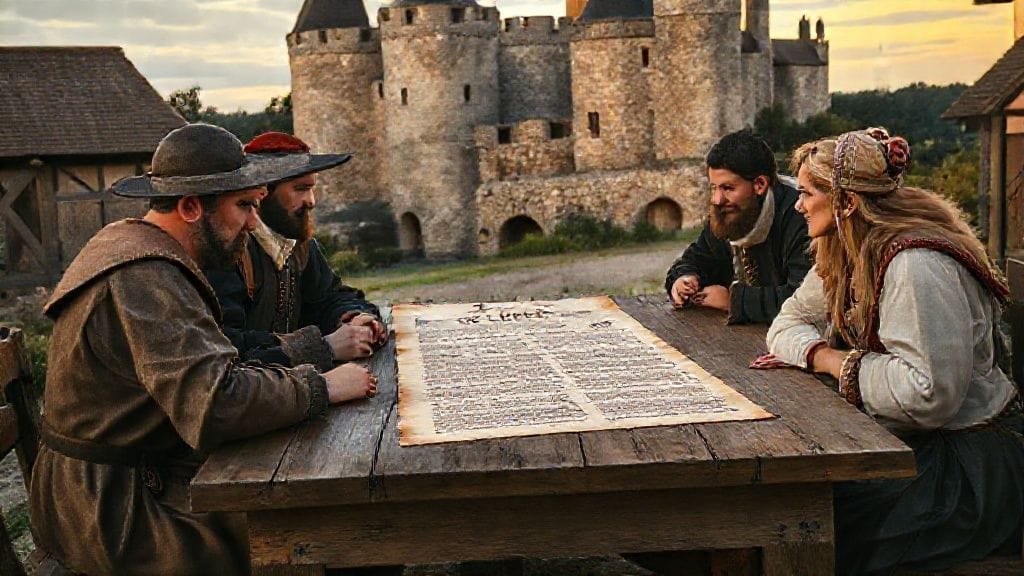
On August 29, instead of lances and arrows, armed delegates and royal envoys met beneath an oak tree near the town of Picquigny. The negotiation was tense and fraught with mistrust. Edward demanded recognition of his rights and substantial financial compensation; Louis was prepared to buy peace on his own terms.
The meeting was delicate. The English expected war honours, while the French sought a pragmatic closure designed to prevent future invasions. Both kings knew that the months and years ahead would test the limits of their agreement, but for the moment, a fragile truce was crafted.
Louis XI’s Calculated Diplomacy: The Art of Peace
Louis XI’s approach to Picquigny was masterful. Instead of risking the uncertain costs of continuous war, he offered a pension to Edward IV—75,000 crowns paid upfront and an annual sum thereafter—in exchange for an end to hostilities and a formal renunciation of English claims to French territory.
This treaty did not merely end a single campaign; it reshaped the relationship between two monarchies. Louis emerged as the shrewd statesman who bought peace with gold and guaranteed stability with diplomacy, prioritizing France’s long-term consolidation.
The Treaty of Picquigny: Terms that Altered the Balance
The Treaty of Picquigny stipulated several key points: the cessation of hostilities, the payment of a large pension to Edward IV, agreements on prisoner exchanges, and promises not to support each other’s enemies. Edward agreed not to pursue his claim to the French crown militarily, effectively ending the English “Hundred Years’ War” ambitions.
Moreover, it created a precedent for royal diplomacy in place of battlefield resolution, a shift that would echo in European statecraft for centuries.
Payment for Peace: The French Pension to Edward IV
The gold lavished on Edward IV was substantial: a payment equivalent to modern millions of dollars in today’s money. This pension, quarterly and reliable, functioned as a bribe—or a peacekeeping stipend—ensuring that Edward had every incentive to maintain peace.
It was a pragmatic solution from Louis XI, transforming potential enemies into dependent allies and shifting the war economy into one of mercenary diplomacy and political calculation.
The English Nobility’s Unease and Court Intrigues
Back in England, however, the treaty stirred unease among the nobility who had hoped for tangible territorial gains. The pension seemed a humiliating sellout to some, and rumors spread of treachery and discontent at court.
Many expected that the war spirit would soon flare again, but Edward’s cautious stance and recognition of England’s limitations marked a turning point. The waning of English continental ambitions became tangible, even if not universally accepted.
The Aftermath: England’s Retreat and French Consolidation
With the treaty, English forces withdrew to Calais, their last foothold in France and increasingly isolated. The English crown, distracted by internal strife and the Wars of the Roses, had little appetite for further French entanglements.
France, under Louis XI, embarked on a process of centralization and recovery. The lost provinces of Normandy and Aquitaine remained beyond English reach, marking a decisive end to claims that had haunted both kingdoms for centuries.
Political Ripples in England and France
Politically, the Treaty of Picquigny showcased the emerging power of centralized monarchies able to negotiate peace as a tool of governance rather than simply enforcing victory through war. It weakened the role of feudal levies and noble adventurism in favor of state diplomacy.
In England, the treaty was an uneasy peace that foreshadowed increased internal instability and the eventual loss of continental possessions. In France, it bolstered Louis XI’s reputation and stabilized his reign.
The Decline of English Claims to the French Crown
Though England’s formal claims theoretically remained, their enforcement was effectively abandoned after Picquigny. The treaty stands as a symbolic closure to one of the most protracted and formative conflicts in European history, signaling a shift from medieval dynastic wars to early modern statecraft.
English attention turned inward, resolving civil conflicts and focusing on the British Isles, signaling an end to the epoch of continental claims.
A Europe Watching: Reactions Beyond the Channel
Other European powers watched cautiously. Burgundy felt betrayed, the Pope supported peace, and Spain began contemplating its own expansionist policies. The Treaty of Picquigny subtly altered the chessboard of European politics by demonstrating that monetary diplomacy could prevent costly warfare.
The Treaty’s Role in Ending Decades of Conflict
While not an end to all hostilities, Picquigny marked the last major chapter of the Hundred Years’ War era. It served as a model for future treaties that combined pragmatism, payment, and diplomacy over knightly valor and drawn battlefields.
The story of Picquigny is one of learned restraint and political realism replacing the romantic, often tragic ideals of medieval warfare.
Cultural and Social Impacts in Both Kingdoms
Culturally, the treaty and the English retreat influenced literature, heraldry, and public sentiment. Chroniclers lamented lost glories while subtle shifts in identity occurred: England began to see itself less as a continental empire and more as a maritime power.
In France, the renewed stability fostered growth in arts and centralized administration, helping to shape the French Renaissance.
Legacy in Diplomacy: How Picquigny Shaped Treaty-making
The Treaty of Picquigny is a landmark in the evolution of diplomacy. It institutionalized the practice of paying pensions to potential enemies—a precedent seen later in treaties across Europe.
Its success underscored that kings were no longer just warlords, but actors on a diplomatic stage where gold could be as mighty as sword or crown.
Reflections on Power, War, and Peace in Late Medieval Europe
Looking back, Picquigny teaches us about the limits of martial ambition and the infinite complexities of sovereign power. It reminds us that history is often shaped in silence beneath shady trees rather than under the blazing glare of battle.
The treaty was not just an end but a beginning—the birth of a new political era in Europe, where peace became a currency as valuable as lands gained in war.
Conclusion
The Treaty of Picquigny stands as a quiet but profound moment in European history. It marked the end of an era steeped in blood, claims, and cruel battles between England and France—nations whose destinies often intersected on the knife edge of war.
Louis XI’s shrewd diplomacy and Edward IV’s reluctant acceptance of peace reflected a growing understanding among rulers that survival depended not solely on battlefield triumph but on negotiation, patience, and pragmatism.
The treaty may lack the cinematic grandeur of a glorious victory or a catastrophic defeat, but its significance is immense—a testament to the shifting nature of power and politics in late medieval Europe. It closed a chapter on English dreams of French crowns while opening a window toward modern statecraft, diplomacy, and the cautious pursuit of peace.
From the whispered promises beneath the oak of Picquigny flowed new possibilities for both kingdoms and for Europe itself.
FAQs
Q1: What triggered Edward IV’s 1475 campaign against France?
A1: Edward IV sought to reclaim lost territories and assert England’s traditional claims to the French throne. The campaign was also motivated by alliances, especially with Burgundy, and a desire to restore English prestige following internal conflicts.
Q2: Why did Louis XI prefer negotiation over open battle?
A2: Known for his political cunning, Louis XI wanted to avoid costly warfare that could weaken France internally. He used diplomacy, financial incentives, and intelligence to outmaneuver the English without risking his army in battle.
Q3: What were the key terms of the Treaty of Picquigny?
A3: The treaty ended hostilities, included a large pension from France to Edward IV, prisoner exchanges, and stipulated that England would cease pursuing claims to French territories through military means.
Q4: How did the treaty affect English ambitions in France?
A4: It effectively ended English efforts to reclaim the French crown and continental territories, signaling a shift away from long-held dynastic claims.
Q5: What was the reaction among the English nobility to the treaty?
A5: The treaty was met with mixed feelings; some viewed it as a pragmatic peace to avoid costly war, while others saw it as a humiliating surrender and betrayal of English honor.
Q6: How did the Treaty of Picquigny influence European diplomacy?
A6: It popularized the concept of paying pensions to secure peace and shaped future diplomatic negotiations by emphasizing pragmatism over conflict.
Q7: Did the Treaty of Picquigny bring lasting peace?
A7: While it marked the end of major English-French conflicts from the Hundred Years’ War period, regional skirmishes and other European conflicts continued. However, it did soften hostilities for a significant time.
Q8: What legacy did the Treaty leave for France?
A8: It strengthened Louis XI’s position and facilitated the centralization of royal power, contributing to the rise of a more unified French state.

