Table of Contents
- The Aftermath of the First Arab Siege: A City on the Brink
- Constantinople’s Strategic Importance in the 7th Century
- The Arab Expansion: A Rising Tide Against Byzantium
- The First Arab Siege of Constantinople: A Crucible of Fate
- The Siege’s Demise: Byzantine Resilience and Greek Fire
- The Treaty of 678: An Uneasy Peace Written in Diplomacy
- Byzantine Diplomacy: Negotiating from Strength Despite Adversity
- The Terms of the Treaty: Boundaries, Tribute, and Recognition
- The Arab Caliphate’s Perspective: From Siege to Settlement
- The Role of Emperor Constantine IV in Shaping History
- The Military Innovations that Turned the Tide
- The Siege’s Immediate Aftermath: Recovery and Rebuild
- Wider Repercussions: The Byzantine-Arab Frontier Stabilizes
- How the Treaty Shifted the Power Balance in the Mediterranean
- The Role of Religion and Ideology in Conflict and Peace
- The Long Shadow of the Treaty: Future Byzantine-Arab Relations
- Cultural Exchanges Amidst Hostility: An Unexpected Legacy
- The Siege Legacy in Byzantine and Arab Chronicles
- Lessons of the Treaty for Later Medieval Diplomacy
- Conclusion: The Treaty’s Enduring Echoes in History
- FAQs: Understanding the Treaty and Its Context
- External Resource: Further Reading and References
- Internal Link: Explore More on History Sphere
The Aftermath of the First Arab Siege: A City on the Brink
In the summer heat of 678, the ancient walls of Constantinople bore witness to a city caught between despair and determination. The orange glow of fires lit the horizon where Arab forces, relentless and vast, had pressed the capital of Byzantium to its limits. For weeks, the city’s defenders had withstood wave after wave of attacks—engines of war pointed skyward, arrows darkening the air, ships filling the Sea of Marmara with an ominous presence. And then, as the sun set behind the massive Theodosian Walls, a fragile hope emerged. The prolonged siege had faltered. The Arab armies retreated, battered and emptied of their fiery enthusiasm. The city breathed, bruised but unbroken.
This moment, soaked with sweat and fear yet pregnant with relief, marked not just the end of a siege but the dawn of a treaty that shaped the Mediterranean world for decades. The Treaty with the Byzantines in 678 was far more than ink on parchment; it was a complex pause in a bloody narrative of conquest and resistance—a chapter revealing the limits of imperial ambition and the power of diplomacy born out of survival.
Constantinople’s Strategic Importance in the 7th Century
To comprehend the gravity of this treaty, one must first understand why Constantinople mattered so profoundly. Founded by Emperor Constantine the Great in 330, this city had emerged as the heart of the Byzantine Empire, a jewel linking Europe and Asia, gateway between the Mediterranean and the Black Sea. Its position astride the Bosporus strait made it a fortress of unmatched strategic significance: a bastion guarding trade routes, controlling naval access, and symbolizing the continuation of Rome’s legacy.
By the 7th century, Constantinople was not only a hub of commerce and culture but also a prize of religious and political symbolism. The city’s imposing Theodosian Walls, first erected in the 5th century, were architectural marvels, boasting multiple layers of defense that could repel even the most determined attackers. The capital’s survival was synonymous with the survival of Byzantium itself.
The Arab Expansion: A Rising Tide Against Byzantium
Yet, this was also a world in flux. The rapid expansion of Islam from the Arabian Peninsula had transformed the geopolitical landscape. Within decades following Prophet Muhammad’s death in 632, Arab armies surged outward, toppling the Persian Sassanids and overrunning vast Byzantine provinces in the Levant, Egypt, and North Africa. Their ambitions were relentless, pressing ever toward the heart of Byzantium.
The two empires—one rooted in the ancient Christian Roman tradition, the other in a vibrant new Islamic order—collided not just militarily but ideologically. Control over Constantinople offered the Arabs a gateway to Europe, a prize that would elevate their nascent caliphate into a global power. Likewise, for the Byzantines, losing the city meant losing their cultural and political soul.
The First Arab Siege of Constantinople: A Crucible of Fate
The Arab siege of Constantinople, which unfolded circa 674–678, was more than a military campaign: it was a trial by fire. Arab forces, led by the caliph Muawiya I, mounted a massive naval and land operation against the city. Their fleets crowded the sea lanes, their troops pitching camps outside the city, intending to starve and batter their way into conquest.
But Constantinople was prepared. Emperor Constantine IV, having learned the brutal tactics of siege warfare, marshaled his defenses with a mix of strategy and innovation. Greek fire, a secret incendiary weapon, became the defender’s trump card, setting ablaze enemy ships with terrifying effect. Supply lines held, morale steadied, and the drawn-out siege entered a war of attrition.
The Siege’s Demise: Byzantine Resilience and Greek Fire
After nearly five years of siege warfare, the turning point was dramatic. The Arab fleet suffered a crushing defeat in the waters off the Golden Horn, crippled by Greek fire and counterattacks. Tired, dwindling, and demoralized, the Arab forces faced a Byzantine defense that refused to break. It was more than military might—it was a testament to the city’s spirit and the emperor’s resolve.
This victory was not an end but a threshold. The wounds inflicted by years of conflict, economic strain, and loss lingered, forcing both parties to reconsider their costly confrontation.
The Treaty of 678: An Uneasy Peace Written in Diplomacy
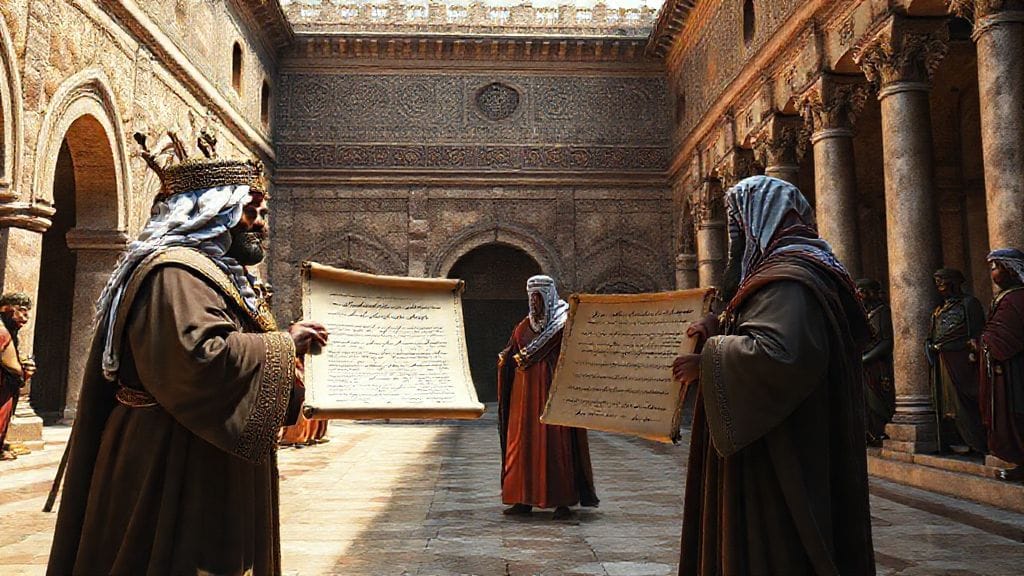
In 678, with both powers exhausted, a treaty was negotiated and agreed upon—marking a rare moment of diplomatic resolution in an otherwise violent era. From the shadowed chambers of Constantinople to the tented courts of the caliphate, emissaries exchanged terms balancing pride and pragmatism.
The Treaty of 678 was not a triumph for either side but a fragile ceasefire born of mutual fatigue. It effectively acknowledged Byzantine sovereignty over the city and parts of Asia Minor, while granting tribute and recognition to the caliphate’s dominion elsewhere. This accord established a precarious balance of power and opened channels for future interaction amidst enemy lines.
Byzantine Diplomacy: Negotiating from Strength Despite Adversity
Emperor Constantine IV’s role in this diplomatic success cannot be overstated. He steered the empire through crisis, leveraging military resilience to negotiate from a position of relative strength. The treaty preserved Constantinople’s autonomy and the empire’s core territories, affirming Byzantium’s endurance amid relentless external pressures.
Byzantine negotiators showcased their longstanding traditions of statecraft—their ability to weave complex agreements incorporating politics, economics, and religion, evidence of their sophistication even in the darkest hours.
The Terms of the Treaty: Boundaries, Tribute, and Recognition
The treaty’s specifics, carefully recorded by chroniclers, illustrate a compromise. Arab forces agreed to halt further sieges, withdrew their fleets, and apparently consented to pay tribute, symbolizing an acknowledgment of Byzantine authority over Constantinople. In exchange, Byzantium tacitly recognized Arab control over newly conquered provinces, delineating spheres of influence more clearly than before.
Some historians suggest the treaty involved the establishment of a demilitarized zone or buffer region, though details remain elusive. The peace was uneasy, a truce rather than a lasting friendship.
The Arab Caliphate’s Perspective: From Siege to Settlement
From the caliphate’s standpoint, the treaty marked a pragmatic shift. The siege’s failure illustrated the limits of expansion—not every city could be conquered by force. The caliphate’s leaders recognized the enormous cost in lives and resources and the futility of prolonged conflict against Constantinople’s walls.
The treaty allowed them to consolidate control over other fertile territories, focus on internal governance, and prepare for future campaigns elsewhere.
The Role of Emperor Constantine IV in Shaping History
A visionary yet pragmatic leader, Constantine IV’s reign was defined by crisis management and innovation. His introduction of Greek fire transformed naval warfare, infusing defenders with renewed hope. More than a commander, he was a shrewd politician, balancing military action with diplomatic acumen.
This treaty amplified his legacy, proving that survival in the medieval world depended not only on swords and spears but also on words, treaties, and patience.
The Military Innovations that Turned the Tide
Greek fire, often described as a "liquid fire" that burned even on water, was the secret weapon that devastated the Arab fleet. While its exact composition remains a historical mystery, its psychological and material impact was colossal.
Beyond Greek fire, Byzantine fortifications, soldier discipline, and logistical ingenuity combined to resist the Arab onslaught. The city’s layered walls absorbed the battering ram and siege engines, while constant supply via land routes prevented starvation.
The Siege’s Immediate Aftermath: Recovery and Rebuild
With the siege lifted, Constantinople undertook urgent recovery. The population, exhausted by years of tension and deprivation, slowly resumed life. Repairs to walls and infrastructure commenced. The psychological shock faded into historical memory, replaced by cautious optimism.
Economically, the peace allowed the resumption of trade, both within Byzantine domains and with neighboring states, breathing life back into the city’s markets and docks.
Wider Repercussions: The Byzantine-Arab Frontier Stabilizes
The treaty ushered in a period of relative calm along the volatile frontier zones. While skirmishes continued, full-scale attempts to capture Constantinople ceased for some decades. This uneasy peace provided both empires time to rebuild and rearm, shaping the medieval Mediterranean landscape.
How the Treaty Shifted the Power Balance in the Mediterranean
By confirming Byzantine control over its capital and surrounding territories, the treaty maintained a Christian bulwark against Muslim expansion into Europe. Its ripple effects influenced trade, missionary activity, and political alliances for generations.
Conversely, the Arab world consolidated holdings in the Levant and North Africa, carving out an empire that would influence global history well beyond the 7th century.
The Role of Religion and Ideology in Conflict and Peace
This conflict was as much spiritual as territorial. Both Byzantium and the caliphate saw themselves as protectors of their faiths—Christianity and Islam, respectively. The siege and treaty thus carried profound religious symbolism, underscoring the intertwining of belief and politics.
Yet, paradoxically, the treaty’s terms required practical acceptance of coexistence, foreshadowing complex interfaith relations that would evolve over centuries.
The Long Shadow of the Treaty: Future Byzantine-Arab Relations
Though the treaty interrupted hostilities, it neither erased rivalry nor enmity. Subsequent decades witnessed renewed conflicts and ephemeral alliances, but the 678 treaty remained a precedent for negotiation between these giant civilizations.
It set the stage for diplomacy as a tool of statecraft in a world often dominated by war.
Cultural Exchanges Amidst Hostility: An Unexpected Legacy
Despite conflict, the treaties and ensuing peace fostered pockets of exchange: ideas, technologies, and goods traversed boundaries. Byzantine and Arab scholars, artisans, and traders influenced one another, contributing to a shared heritage of science, art, and philosophy.
This cultural osmosis enriched both civilizations, sowing seeds that would bloom in later centuries.
The Siege Legacy in Byzantine and Arab Chronicles
Historical records paint contrasting portraits. Byzantine historians lionized the siege's defense as divine favor and imperial strength; Arab chroniclers expressed frustration but tempered it with respect for Byzantine resilience.
Together, these narratives preserve a multifaceted view of the siege and treaty—symbols of endurance, loss, and the complex dance of empires.
Lessons of the Treaty for Later Medieval Diplomacy
The 678 treaty exemplifies how medieval states balanced warfare and negotiation. It teaches the importance of recognizing limits, using innovation and diplomacy hand-in-hand, and embracing pragmatic solutions amid ideological differences.
These lessons reverberate even into modern diplomatic thought.
Conclusion
The Treaty with the Byzantines in 678 was more than a cessation of hostilities—it was a testament to human resilience, strategic brilliance, and the enduring power of diplomacy. In an age dominated by sword and fire, it showcased that survival hinged not just on military might but on the wisdom to forge peace from conflict.
Constantinople, battered yet unbowed, stood as a symbol of hope, bridging worlds and histories. This treaty, inked in the wake of desperation and defiance, echoes in the corridors of time reminding us that even amid siege and sorrow, dialogue can find a foothold.
FAQs
1. Why was Constantinople such a vital city for both Byzantines and Arabs?
Constantinople's strategic location controlled key trade routes and military passages between Europe and Asia. For the Byzantines, it was their imperial heart; for the Arabs, a gateway to European conquest.
2. What innovations helped Byzantium repel the Arab siege?
The secret weapon Greek fire proved decisive, burning enemy ships and breaking the siege. Additionally, the city's formidable walls, disciplined soldiers, and logistical support were crucial.
3. Who was Emperor Constantine IV, and why is he significant?
Constantine IV was the Byzantine emperor during the siege, renowned for his leadership both in battle and diplomacy. He orchestrated the defense and negotiated the pivotal treaty.
4. What were the main terms of the 678 treaty?
Though specifics are sparse, the treaty ended active sieges, acknowledged Byzantine sovereignty over Constantinople, and involved the payment of tribute to the Arab caliphate—establishing a fragile balance.
5. How did religion influence the conflict and treaty?
Both empires viewed themselves as defenders of their faiths, intertwining religious zeal with political ambition. Yet the treaty required pragmatic coexistence despite ideological divides.
6. What impact did the treaty have on future Byzantine-Arab relations?
It set a precedent for diplomatic engagement, creating a temporary peace that influenced political and military interactions for decades, though tensions and conflicts would resume later.
7. Did cultural exchanges occur despite hostilities?
Yes. Trade, scholarship, and technology crossed borders, enriching both societies and contributing to a shared intellectual and cultural legacy despite ongoing conflict.
8. Why is the treaty considered important in medieval history?
It exemplifies the complexity of warfare and diplomacy, showcasing how enduring conflict can find pauses through negotiation and how empires manage survival amid shifting power dynamics.

