Table of Contents
- An Unfolding Crisis in East Asia: April 1895 in Tokyo
- The Shadow of the First Sino-Japanese War
- The Treaty of Shimonoseki: Triumph and Trepidation
- Why the Triple Intervention? The Great Powers’ Calculus
- Russia’s Ambitions in Manchuria and Korea
- France and Germany: Allies in a Common Cause
- Japan’s Surge as a Rising Imperial Power
- The Venue: Tokyo, April 23, 1895 – A Day of Diplomatic Force
- The Negotiations Begin: A Clash of Visions
- The Forced Revision: Terms and Demands
- Japanese Reaction: From Dignity to Discontent
- The Global Context: Imperialism and Balance of Power
- Consequences for Japan: Nationalism and Military Expansion
- Effects on China: Humiliation and Continued Decline
- The Role of Public Opinion: Press, Protests, and Politics
- The Impact on Russo-Japanese Relations and the Road to War
- France and Germany: Beyond the Treaty Revision
- Japan’s Long-Term Strategic Response
- Reflection on Imperialism: The Ethics of the Triple Intervention
- Legacy in East Asian Diplomacy
- The Treaty of Shimonoseki’s Revision in Later Historical Memory
- Conclusion: A Turning Point Etched in Unequal Treaties
- FAQs: Insights into the Triple Intervention Treaty Revision
- External Resource
- Internal Link
An Unfolding Crisis in East Asia: April 1895 in Tokyo
The air hung heavy with tension on that late April day in Tokyo. The spring breeze carried an undercurrent of unease as diplomats from three imperial powers gathered in a city still basking in the afterglow of Japan’s seismic victory over China. Yet beneath the surface of jubilation lurked an impending storm: the Triple Intervention—the forcible revision of the Treaty of Shimonoseki that would recalibrate the power dynamics of East Asia. The date, April 23, 1895, marks a watershed moment, a diplomatic shockwave that rippled through Japan’s ambitions and the fragile equilibrium of imperial rivalry.
It was a moment brimming with contradictions—triumph shadowed by humiliation, hope tempered by coercion, and the raw force of diplomacy wielded like a club rather than a handshake. This event, little known outside specialist circles yet crucial to understanding the path of modern East Asia, tells a story as human as it is geopolitical, filled with the passions of empires and the national wounds inflicted in their wake.
The Shadow of the First Sino-Japanese War
To understand the Triple Intervention, one must trace back to the turbulent wildfire of the First Sino-Japanese War (1894–1895). Japan, a country only three decades out of feudal isolation and hustling towards modernization with remarkable speed, challenged centuries-old Chinese dominance over Korea.
The war was brutal yet brief, exposing the Qing dynasty’s staggering decay and the emerging prowess of a modernized Japan. The Japanese victory was not just military but symbolic—a new era dawned in East Asia where the balance of power was no longer as it had been for centuries. When the Treaty of Shimonoseki was signed in April 1895, it embodied this shift: the cession of Taiwan and the Liaodong Peninsula to Japan, along with the recognition of Korean independence—a strategic windfall signaling Japan’s arrival on the imperial stage.
The Treaty of Shimonoseki: Triumph and Trepidation
The terms of the treaty were momentous—Taiwan’s fertile lands and strategic ports, the Liaodong Peninsula with its coveted Port Arthur harbor, and a large indemnity from China all pronounced Japan’s victory. For the Japanese government and public alike, it was a vindication of sacrifice and modernization.
Yet, triumph quickly morphed into trepidation. Western powers watched Japan with wary eyes, giants eager to check the rise of this “new Asia.” Russia, France, and Germany perceived the lease of the Liaodong Peninsula as an affront to their own regional interests and sought to undercut Japan’s gains. The imminent diplomatic confrontation would thrust Tokyo into the eye of an imperial storm.
Why the Triple Intervention? The Great Powers’ Calculus
The Triple Intervention—the combined diplomatic pressure from Russia, France, and Germany—was not a spontaneous outburst but a calculated move born of imperial self-interest. Russia coveted control over Manchuria and the warm-water port of Port Arthur, vital to its aspirations for Pacific naval power and the Trans-Siberian Railway’s security. France, aligned with Russia through the Franco-Russian alliance, saw the move as a check against Japanese and indirectly British expansionism. Germany, a rising continental power eager to expand its prestige and colonies, sought to assert itself on the Asian stage.
Together, these powers formed an unlikely alliance, united in a strategy to force Japan to rescind its claim to the Liaodong Peninsula—leveraging diplomacy backed by the implicit threat of military might.
Russia’s Ambitions in Manchuria and Korea
At the heart of the intervention was Russia’s expansive ambition in Northeast Asia. For decades, Russia had coveted Port Arthur, a rare warm-water port free of seasonal ice, to cement its Pacific fleet’s dominance year-round. Manchuria offered vast resources and a corridor to Korea—regions critical to Russia’s strategic security and imperial designs.
The sudden acquisition of Liaodong by Japan threatened to block or at least complicate these ambitions. Russia, deploying both diplomatic pressure and the looming presence of its massive armies, sought to wrest control from Japan, planting the seeds for future confrontation.
France and Germany: Allies in a Common Cause
Though their stakes were less directly threatened than Russia’s, France and Germany joined the intervention for both alliance obligations and geopolitical calculation. France’s global rivalry with Britain and desire to maintain balance with Russia in Eurasia, coupled with Germany’s surge as a colonial power under Kaiser Wilhelm II, made the intervention an opportunity to assert influence and forge a united stance against the unpredictable Japanese rise.
Their involvement underscored the complicated web of imperial alliances and rivalries that would come to characterize pre-World War I diplomacy.
Japan’s Surge as a Rising Imperial Power
For Japan, the victory in the First Sino-Japanese War was a validation of its rapid transformation. The Meiji Restoration had set the country on an unprecedented path to modernization—industrialization, military reform, and an assertive foreign policy.
Yet Japan’s newfound status exposed it to a world still dominated by European imperialism, clashing with existing powers unwilling to tolerate its rise. The Triple Intervention was to be Japan’s first painful lesson in the brutal realpolitik of the great powers.
The Venue: Tokyo, April 23, 1895 – A Day of Diplomatic Force
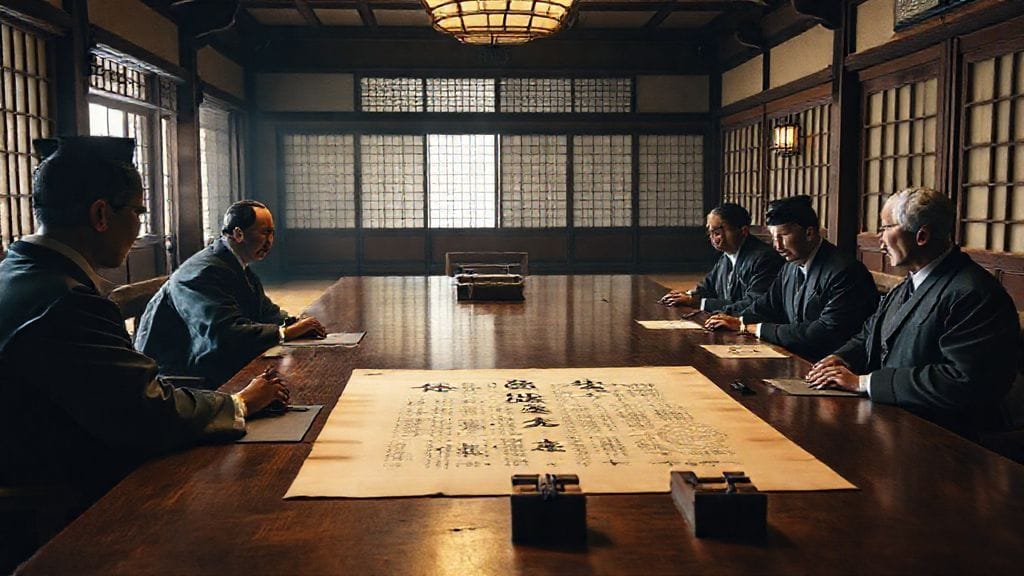
The intervention’s details took shape in Tokyo itself—indicative of the sudden diplomatic pressure imposed on the Japanese capital. On April 23, 1895, representatives of Russia, France, and Germany presented Japan with a joint note demanding the return of the Liaodong Peninsula to China.
The atmosphere was fraught. Japanese officials, elated just days before at the treaty’s signing, found themselves outmatched in bargaining. The heavy-handedness of the demand shocked Japan’s sense of dignity and sparked intense debate within the government.
The Negotiations Begin: A Clash of Visions
Negotiations between the Japanese and the triple powers quickly revealed the tactical gap. Japan’s insistence on upholding the Treaty of Shimonoseki met with cold pragmatism from the western diplomats, who held all the cards.
Japan was pressured to concede, under threat of military escalation from Russia’s formidable forces. The diplomats framed the intervention as an insistence on maintaining regional stability, yet the underlying motive—preserving spheres of influence—was unmistakable.
The Forced Revision: Terms and Demands
Under duress, Japan agreed to revise the treaty, relinquishing control of the Liaodong Peninsula in exchange for monetary compensation. The humiliating concession deprived Japan of a strategic foothold and marked a diplomatic setback.
This forced amendment was a stark reminder of Japan’s limitations as an emerging power caught in the web of entrenched imperialism.
Japanese Reaction: From Dignity to Discontent
The news of the forced revision sparked outrage across Japan—from government ministers embarrassed by the humiliation to a populace galvanized into renewed nationalism. Newspapers decried the “illegal” intervention, and political factions debated the necessity of bolstering Japan’s military and industrial strength.
This collective humiliation helped catalyze the surge of militant nationalism that would orient Japan’s policies in the coming decades.
The Global Context: Imperialism and Balance of Power
The Triple Intervention must be seen within the broader context of 19th-century imperialism—the scramble for colonies, spheres of influence, and control over strategic resources.
The treaty revision was not merely a bilateral dispute but a manifestation of the delicate balance great powers sought to maintain, even as competing interests simmered beneath. Europe’s global rivalry shaped Asian diplomacy in profound ways.
Consequences for Japan: Nationalism and Military Expansion
Far from deterring Japan, the intervention fueled determination. It became a catalyst for military expansion, naval buildup, and strategic planning that culminated decades later in conflicts such as the Russo-Japanese War of 1904.
The intervention instilled lessons on global power politics that resonated deeply in Japan’s modernization narrative.
Effects on China: Humiliation and Continued Decline
For the Qing dynasty, the intervention was a paradox. It deprived Japan of territory but left China still profoundly weakened and humiliated by the war and treaty terms.
The dynasty’s inability to defend sovereignty further eroded its legitimacy, foreshadowing revolutionary upheavals in the decades to come.
The Role of Public Opinion: Press, Protests, and Politics
Japan’s press landscape erupted with discussions and denunciations of foreign pressure. Patriotism surged, and public opinion increasingly demanded a robust response to imperialist encroachments.
The period witnessed the rise of political movements advocating for national strength rooted in military and industrial capacity.
The Impact on Russo-Japanese Relations and the Road to War
The intervention sowed seeds of future conflict. The bitterness over Liaodong and Manchurian issues fueled rivalry between Russia and Japan, culminating in the Russo-Japanese War a decade later—a conflict that would reshape global perceptions of power.
France and Germany: Beyond the Treaty Revision
Though less directly involved in East Asian affairs after the intervention, France and Germany’s participation was a statement of their imperial ambitions and a precursor to their entanglements in global alliances leading to World War I.
Japan’s Long-Term Strategic Response
The trauma of the Triple Intervention influenced Japan’s strategic decisions—pushing it towards naval expansion, forging new alliances, and developing a more aggressive foreign policy aimed at countering Western encroachment.
Reflection on Imperialism: The Ethics of the Triple Intervention
The episode invites reflection on the ethics of imperialism—how power politics victimized a rising nation seeking rightful gains, and how the self-interest of great powers imposed unequal treaties and diplomatic coercion.
Legacy in East Asian Diplomacy
The Triple Intervention foreshadowed the patterns of rivalry, diplomacy, and conflict that would dominate East Asian international relations well into the 20th century.
The Treaty of Shimonoseki’s Revision in Later Historical Memory
In Japan, the intervention is remembered as a moment of national humiliation but also as a turning point that sharpened resolve and reshaped national identity.
Conclusion: A Turning Point Etched in Unequal Treaties
The Triple Intervention treaty revision was a defining moment—where the rising Japanese sun was eclipsed by the combined shadows of European imperialism. It was a stark lesson in the ruthlessness of international diplomacy in an age of empire, but also the crucible in which Japan forged its resolve to emerge as a major power. The day of April 23, 1895, in Tokyo, thus remains etched in history not just as a diplomatic imposition, but as the beginning of Japan’s determined march towards equality among nations.
FAQs
Q1: What triggered the Triple Intervention in 1895?
The Triple Intervention was triggered by Japan's acquisition of the Liaodong Peninsula through the Treaty of Shimonoseki following the First Sino-Japanese War, which alarmed Russia, France, and Germany, leading them to pressure Japan to relinquish the territory.
Q2: Which countries were involved in the intervention, and why?
Russia, France, and Germany intervened, primarily driven by Russia’s strategic interests in Manchuria and Port Arthur, while France and Germany aligned themselves to curb Japan’s rise and preserve imperial balance in Asia.
Q3: How did Japan respond to the forced revision of the treaty?
Japan reacted with shock and outrage, seeing it as a humiliation. The intervention deepened nationalist sentiments and triggered efforts to strengthen Japan’s military and industrial capacity.
Q4: What were the implications for the Qing dynasty in China?
China remained weakened and humiliated despite the intervention; the Qing dynasty’s inability to prevent repeated foreign encroachments undermined its political legitimacy.
Q5: Did the Triple Intervention influence future conflicts in East Asia?
Absolutely. The intervention exacerbated tensions between Russia and Japan, contributing to the conditions leading up to the Russo-Japanese War of 1904–1905.
Q6: How is the Triple Intervention remembered in Japanese history?
It is remembered as a national humiliation but also as a catalyst for Japan’s push towards modernization, military expansion, and assertive foreign policy.
Q7: What role did imperialism play in shaping the intervention?
Imperial rivalries and the desire to maintain spheres of influence among great powers were the core drivers of the intervention, illustrating the era’s brutal power politics.
Q8: Did France and Germany have significant direct interests in East Asia at this time?
While their interests were less direct than Russia’s, their participation was motivated by alliance politics and their aspirations to expand influence in Asia.