Table of Contents
- A Shattered Evening in St. Petersburg: The Assassination of Tsar Alexander II
- The Sovereign and His Era: A Reformer Caught in the Crosswinds
- The Great Emancipator: Alexander II’s Monumental Reforms
- Seeds of Discontent: Revolutionary Fever and Rising Radicalism
- The People and the Palace: Social Contrasts Beneath the Imperial Dome
- The Narodnaya Volya: Architects of Conspiracy and Terror
- The Plot Thickens: Attempts on the Tsar’s Life Before 1881
- The Fateful March 13: A City on Edge and a Target in Sight
- The Fatal Attack on the Catherine Canal: Chaos and Courage
- The Last Words and Death of Alexander II: A Monarch’s Final Moments
- Immediate Aftermath: Shockwaves Through the Russian Empire
- The Government’s Response: Reaction, Repression, and Reform Rolled Back
- The Succession: Alexander III and the Return to Autocracy
- The International Reverberations: A World Watching Russia’s Fate
- Memory and Myth: The Tsar’s Assassination in Russian History and Culture
- The Long Shadow of Terror: How 1881 Shaped Revolutionary Strategies
- Reflections on Violence and Power: Lessons from Alexander II’s End
1. A Shattered Evening in St. Petersburg: The Assassination of Tsar Alexander II
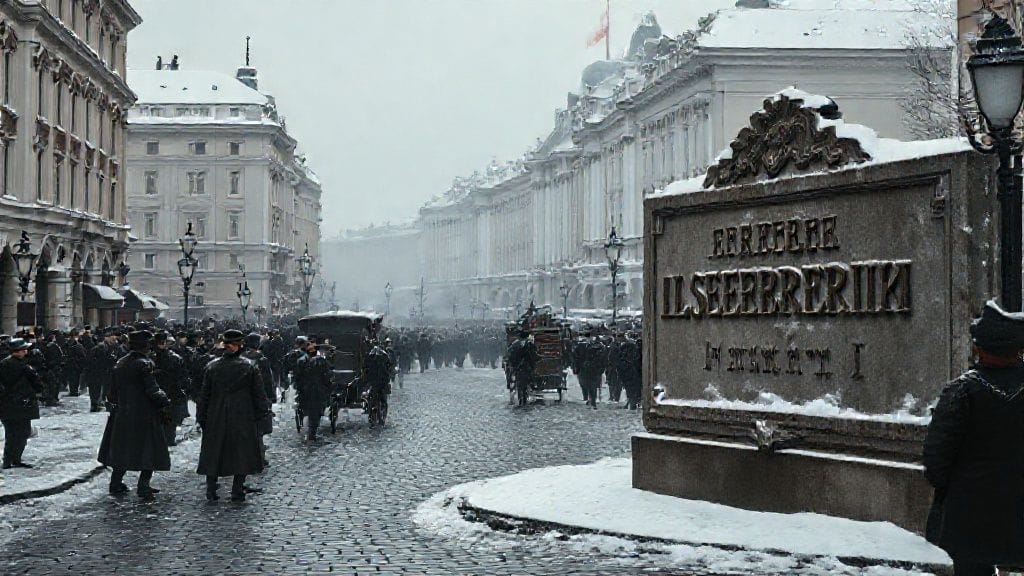
The chill of a March evening in 1881 hung over the marble and cobblestone streets of St. Petersburg like a creeping fog. Gas lamps flickered weakly against the early twilight, casting long shadows on the imposing facades of imperial grandeur. It was a night like many others, yet it was destined to fracture the peace of an empire and etch a brutal scar on Russian history forever. Tsar Alexander II, the “Liberator” who had emancipated the serfs and embraced reforms unmatched in his dynasty, was assassinated at the hands of revolutionaries intent on uprooting autocracy itself.
As the Tsar’s carriage rolled along the narrow embankment beside the Catherine Canal, a violent explosion tore through the air. Crowds were thrown into chaos; cries of horror mixed with the acrid smell of gunpowder and blood. Alexander II staggered, his body a canvas riddled with the deadly marks of the attack. The end had come, abrupt and merciless, closing a chapter of hope, progress, and deep contradictions.
2. The Sovereign and His Era: A Reformer Caught in the Crosswinds
Alexander II was not an ordinary monarch. Ascending the throne in 1855 during the Crimean War’s devastating toll, he inherited an empire in crisis. Russia was backward compared to Western powers, its rigid social order creaking under the weight of modernization. The young tsar was determined to steer his country out of stagnation. His reign would be marked by ambitious, sometimes contradictory reforms aimed at patching a crumbling feudal system.
Yet, born into an autocracy, Alexander II remained tethered to the divine right ideology that positioned him above his subjects. A reformer in conscience but a ruler wary of change, he faced pressures from conservatives and radicals alike. His era reflected the paradoxes of Russia herself: tradition confronting upheaval, privilege clashing with justice, dream confronting harsh reality.
3. The Great Emancipator: Alexander II’s Monumental Reforms
Alexander’s most celebrated act—and the cornerstone of his legacy—was the Emancipation Manifesto of 1861. This historic decree freed over 23 million serfs, granting them personal liberty and an allotment of land. For the first time, millions of peasants were no longer chattel but people under the law.
Yet emancipation’s promises were only partially fulfilled. Land allotments came with heavy redemption payments, and the communal “mir” system shackled peasants to collective obligations and limited individual freedoms. Still, the reform transformed Russia’s social fabric, fueling hope that change was possible.
Beyond emancipation, Alexander II launched judicial reforms introducing jury trials, opened local self-government institutions called zemstvos, promoted military modernization, and sought to expand education. He was, in many ways, the architect of a nascent modern Russia, though never fully willing—or able—to dismantle autocratic power itself.
4. Seeds of Discontent: Revolutionary Fever and Rising Radicalism
Reform bred both optimism and opposition. Among peasants, nobility, workers, and intellectuals, conflicting hopes simmered. Radical intellectuals and growing underground movements found emancipation insufficient and condemned the persistence of autocracy.
The 1860s and 1870s witnessed the emergence of revolutionary groups inspired by anarchist, socialist, and populist ideals. Movements like the “Narodniki” (Populists) believed in “going to the people” — inspiring peasants to rise and sweep away old ways. However, Russian society’s complex realities resisted such upheavals.
By the late 1870s, frustration with slow reforms and harsh repression gave rise to more militant groups, notably the “Narodnaya Volya” (People’s Will). They rejected peaceful reform and embraced political violence as a tool to dismantle the autocracy.
5. The People and the Palace: Social Contrasts Beneath the Imperial Dome
St. Petersburg in the late 19th century was a city of stark contradictions. Grand palaces, theaters, and boulevards contrasted with crowded slums and noisy factories. The imperial family lived in painted splendor, oblivious or indifferent to the daily struggles faced by workers and peasants channeled into the capital.
The industrial working class was growing, facing brutal working conditions and minimal rights. Radical ideas filtered into urban centers, unsettling the delicate balance. Meanwhile, landless peasants yearned for dignity and survival. The only constant was the growing gulf between the ruled and their rulers.
Alexander II’s regime seemed increasingly isolated—caught between aristocratic privilege and a restless, evolving population demanding voice and justice.
6. The Narodnaya Volya: Architects of Conspiracy and Terror
Among revolutionary factions, the Narodnaya Volya stood apart for their boldness. Formed in 1879, they operated as a secret society determined to overthrow autocracy by targeting its pinnacle: the Tsar himself.
Their ideology was ruthless and clear: only by eliminating the Tsar could Russia cleanse itself of tyranny and begin anew. Instead of mass rebellion, they adopted terrorist tactics — assassinations, bombings, and sabotage.
The group was layered in compartmentalized cells, shielding members from discovery. Despite crackdowns, they persisted, convinced that their cause justified any cost. Alexander II was their obsession—and their goal.
7. The Plot Thickens: Attempts on the Tsar’s Life Before 1881
Alexander II had survived several assassination attempts before that fateful March day. Bombs were hurled at his carriage in 1879 and 1880; bullets narrowly missed him on multiple occasions. Each attack heightened imperial security but also the paranoia gripping the regime.
The Tsar remained undeterred, continuing his reform agenda. Yet his assassins grew ever more determined. With every failed attempt, their methods became more sophisticated, their resolve hardened.
The tension in St. Petersburg in early 1881 was palpable—the city awaited the inevitable.
8. The Fateful March 13: A City on Edge and a Target in Sight
March 13, 1881 (March 1 in the Julian calendar used in Russia), dawned gray and cold. Alexander’s routine brought him through familiar streets, visible to watchers and enemies alike.
On that day, the Narodnaya Volya had positioned several bomb-throwers along the route. After one assailant’s attack failed to kill the Tsar, another managed to throw a second bomb, fatally wounding Alexander II.
The scene was chaotic—crowds screamed, soldiers scrambled, and the Tsar, grievously injured but alive for a short time, was hurried away.
9. The Fatal Attack on the Catherine Canal: Chaos and Courage
The Catherine Canal embankment became the scene of carnage. As the first bomb exploded near the Tsar’s carriage, unscathed but shaken, Alexander insisted on stepping out to assess damage. That was the fatal mistake.
The second bomb, hurled by Ignacy Hryniewiecki, struck close, tearing into the Tsar’s legs and torso. Despite his mortal wounds, Alexander remained conscious, reportedly uttering words of concern for his people.
Eyewitnesses tell of onlookers frozen in horror and the rushed emergency care that arrived too late. Within hours, the "Liberator" was dead.
10. The Last Words and Death of Alexander II: A Monarch’s Final Moments
In the damp, somber chamber where he lay wounded, Alexander II’s final moments were marked by a paradoxical mixture of pain and dignity. Accounts suggest his last reliances were not on revenge but on the hope for his empire.
“I am dying,” he reportedly told a minister, “but I have done what I could.” The phrase echoed a ruler whose reforms had changed millions of lives yet failed to quell the tide of revolution.
His death symbolized the fragility of progress amid violence and the perilous position of a ruler caught between worlds.
11. Immediate Aftermath: Shockwaves Through the Russian Empire
News of the Tsar’s assassination sent shockwaves across the empire. Markets faltered, officials scrambled, soldiers tightened their grip on the streets. The nobility mourned a sovereign they revered; radicals both celebrated and recoiled at the price paid.
Mass arrests followed. Those connected to the Narodnaya Volya were hunted down, and public executions staged to deter further violence. The assassination was a moment of no return—marking the closing of one epoch and the grim opening of another.
12. The Government’s Response: Reaction, Repression, and Reform Rolled Back
The new Tsar, Alexander III, inherited a volatile throne. His response was swift and severe. He dismantled many of his father’s reforms, ushering in an era of brutal repression.
The secret police expanded their powers. Censorship tightened. Political opposition was crushed ruthlessly. Alexander III believed the empire could survive only through strong autocratic control, not half-measures or reformist experiments.
For decades, this repressive legacy would shape Russian governance, slowing progress and feeding revolutionary fires beneath.
13. The Succession: Alexander III and the Return to Autocracy
Alexander III's reign represented the empire's retreat into conservatism and suspicion. Rejecting liberalism and constitutional ideas, he invested in Russian nationalism and orthodoxy.
No more “Great Reforms” would come from this throne. The autocrat’s word was law, and his word was absolute. This reactionary shift polarized society further, alienating moderates and radicals alike.
Paradoxically, it set the stage for the more violent revolutionary convulsions of the early 20th century.
14. The International Reverberations: A World Watching Russia’s Fate
Globally, the assassination startled monarchies and republics alike. Russia’s stability was seen as a key to European balance.
Diplomats debated the fragility of autocratic regimes in an age of burgeoning democracy and socialism. For revolutionaries elsewhere, it was both inspiration and warning.
The event fed the discourse on political violence, the efficacy of terror, and the fate of empires under modern pressures. Alexander II’s death was a cautionary tale and a grim beacon.
15. Memory and Myth: The Tsar’s Assassination in Russian History and Culture
Over time, the assassination took on mythic proportions in Russian history. Alexander II was remembered as the “Tsar Liberator,” a martyr to modernization and justice.
Literature, art, and later Soviet historiography revisited his reign and violent end with varying interpretations—sometimes as a victim of backward forces, sometimes as a flawed reformer undone by revolution.
Memorials and scholarly debates have kept his complex legacy alive, fueling reflection on Russia’s path through turmoil.
16. The Long Shadow of Terror: How 1881 Shaped Revolutionary Strategies
The assassination influenced revolutionary thought for decades. It proved both the potency and limits of targeted violence.
While the immediate impact was repression, the idea that political murder could shake a regime resonated in later movements—from Bolsheviks to anarchists worldwide.
Yet, it also raised ethical dilemmas and questions about justice, sacrifice, and the fate of a people caught between power and resistance.
17. Reflections on Violence and Power: Lessons from Alexander II’s End
Alexander II’s assassination stands as a poignant intersection of progress and violence, hope and despair. It teaches the fragile balance between reform and revolution; between ruler and ruled.
Was the Tsar too timid or too bold? Did his reforms sow the seeds of his downfall or delay it? The unanswered questions mirror the eternal struggles within societies confronting change.
His death resonates as a human tragedy—a man, a dynasty, and a nation ensnared in the relentless tides of history.
Conclusion
The assassination of Tsar Alexander II was not merely the violent extinguishing of a monarch’s life; it was the unraveling of an era steeped in contradictions and ambitions. Alexander was a man who dared to believe in progress amid autocracy—a sovereign whose reforms touched millions but could not outpace the restless demands for deeper transformation. His death marked a turning point, a harsh reminder that the path from oppression to freedom seldom unfolds peacefully, and that the weight of history often crashes down with devastating force.
Yet within this tragic moment lies a vivid human story: a ruler’s hope, a nation’s turbulence, and the shadows of ideals born in the fires of conflict. Alexander II’s legacy endures, reminding us that the struggle for justice and dignity transcends time, forever challenging us to reconcile power, compassion, and change.
FAQs
Q1: What motivated the assassination of Alexander II?
A: The assassination was driven by revolutionary groups like Narodnaya Volya who saw the Tsar as the embodiment of autocracy. Despite his reforms, they believed his regime was irredeemably oppressive and sought violent change.
Q2: How significant were Alexander II’s reforms in Russian history?
A: His reforms, especially the emancipation of the serfs, were monumental. They transformed Russian society by dismantling the centuries-old serfdom but were limited in scope and failed to satisfy all social groups, leaving tensions unresolved.
Q3: Who was responsible for the assassination?
A: The assassination was carried out by members of the radical group Narodnaya Volya, with Ignacy Hryniewiecki throwing the fatal bomb.
Q4: What immediate effects did the assassination have on Russia’s political climate?
A: It led to severe governmental repression, a rollback of reforms, and the rise of Alexander III’s conservative and authoritarian regime, intensifying control over political dissent.
Q5: How did Alexander II’s death influence revolutionary movements globally?
A: The assassination inspired both admiration and caution. It demonstrated the power and peril of political terror, influencing tactics and debates among revolutionaries in Europe and beyond.
Q6: How is Alexander II remembered in modern Russia?
A: He is often remembered as the “Tsar Liberator,” a ruler who took bold steps toward modernization but whose legacy remains complex. His assassination symbolizes the tragic conflicts of an empire on the brink of transformation.
Q7: Did the assassination end the push for reform in Russia?
A: While it halted reform under Alexander III, the underlying social and political pressures continued to build, eventually culminating in the revolution of 1917.
Q8: Where can I learn more about Tsar Alexander II and his assassination?
A: Comprehensive information is available on Wikipedia and numerous historical texts exploring Russian imperial history and revolutionary movements.