Table of Contents
- The Fateful Morning of September 14, 1847: Dawn Over a Besieged City
- Prelude to Conflict: The Road to War Between the United States and Mexico
- Manifest Destiny and the American Dream of Expansion
- Mexico's Internal Struggles and Political Turmoil
- Early Battles and the U.S. Campaign in Mexican Territory
- The Siege of Mexico City: Strategies and Stalemates
- General Winfield Scott: The Architect of the Invasion
- Urban Warfare: Fighting in the Streets of Mexico City
- The Fall of Chapultepec: Gateway to the Capital
- Civilians Caught in the Crossfire: Stories of Fear and Resilience
- The Mexican Army’s Last Stand and Retreat
- The U.S. Flag Raised over the National Palace: Symbolism and Consequences
- Reactions in Mexico: Shock, Anguish, and Emerging Resistance
- International Perspectives: How Foreign Powers Viewed the Capture
- Treaty Talks Begin: The Path to the Treaty of Guadalupe Hidalgo
- The Human Cost: Lives Lost and Communities Devastated
- Legacy of Occupation: The U.S. Military Presence in Mexico City
- Political Reverberations in Washington and Mexico City
- The Capture’s Role in Shaping U.S.-Mexico Relations for Decades
- Reflections from Soldiers and Civilians: Letters and Diaries
- A City Transformed: Mexico City’s Recovery and Historical Memory
- The September 14th Event in Modern Mexican and American History
- Conclusion: A City Conquered but Not Forgotten
- FAQs: Clarifying the Historic Capture
- External Resource
- Internal Link
The Fateful Morning of September 14, 1847: Dawn Over a Besieged City
The sun rose pale over a city gripped by smoke and tension. Mexico City, ancient capital of a proud nation, lay under siege. The air was thick with gunpowder and fear, the distant thunder of artillery echoing through stone streets crowded with frightened families, weary soldiers, and political leaders clinging to hope and honor. On September 14, 1847, the United States army, victorious and emboldened, breached the final defenses. The moment was electric, a profound rupture born of war, ambition, and destiny.
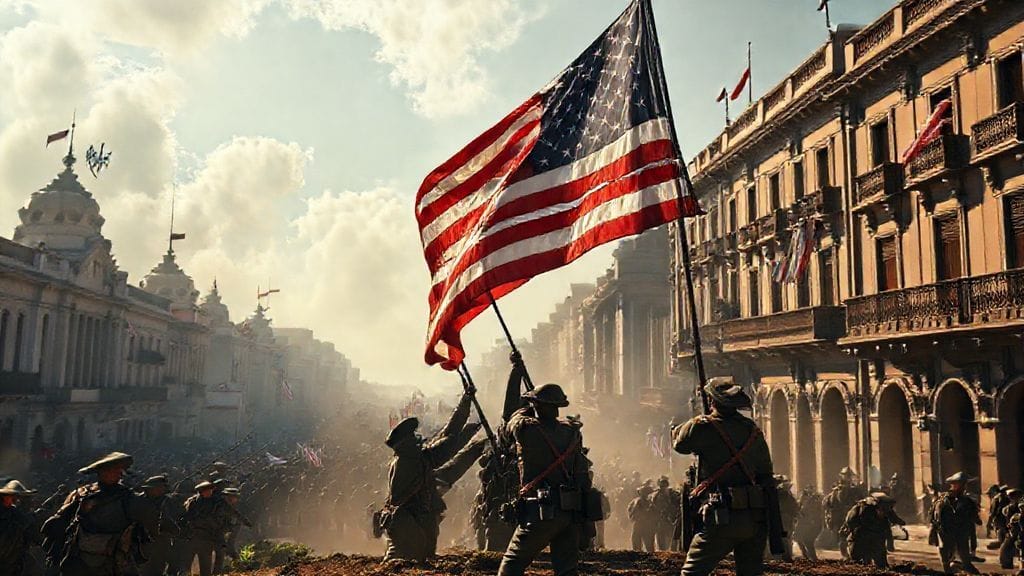
As the U.S. flag was hoisted over the National Palace—the heart of Mexican power—an invisible line was crossed. This was not merely a military conquest but a profound moment of loss and upheaval. Mexico City had fallen. The capital’s ancient stones bore witness to history that would forever alter two nations and a continent.
Prelude to Conflict: The Road to War Between the United States and Mexico
To understand the capture of Mexico City, one must gaze back to the tangled origins of the Mexican-American War. In the years preceding 1847, relations between the two countries had been fraught with tension, suspicion, and tragedy. The young United States, invigorated by the doctrine of Manifest Destiny—the belief that the nation was destined to stretch from the Atlantic to the Pacific—looked southward with growing covetous eyes.
Meanwhile, Mexico was a fragile state, recently independent from Spain, struggling to stabilize its borders, government, and economy. The annexation of Texas by the U.S. in 1845, which Mexico deemed a rebellious province, was a spark to a powder keg already brimming with diplomatic and territorial disputes.
Manifest Destiny and the American Dream of Expansion
The idea that the United States was fated to expand westward and southward animated American politicians and citizens alike. President James K. Polk was a fervent believer, presenting the expansion as a patriotic and providential mission. Texas had joined the Union; California and New Mexico lay to the west, sparsely held by the Mexican nation but rich with promise.
The war emerged not only from border disputes but from a broader ideology of American exceptionalism that justified territorial conquest. For Polk and his supporters, capturing Mexico City was a goal that would secure the nation’s destiny as a continental empire.
Mexico's Internal Struggles and Political Turmoil
Mexico, for its part, was a nation deeply divided. Following independence from Spain in 1821, its political landscape was fractured by ideological battles between liberals and conservatives, federalists and centralists. Coups and rebellions destabilized the government repeatedly.
The war with the United States compounded these difficulties, draining resources and fracturing public confidence. Mexico lacked a unified command and faced logistical nightmares that hampered any sustained resistance to the better-equipped American forces. Nevertheless, the spirit of resistance persisted in soldiers and civilians alike who viewed the invasion as a fight for the very soul of their country.
Early Battles and the U.S. Campaign in Mexican Territory
The capture of Mexico City was the climax of a long and arduous campaign that began months earlier with American landings at Veracruz in March 1847. General Winfield Scott led approximately 10,000 troops on a daring amphibious assault—the largest of its kind yet on American shores—establishing a beachhead that would serve as the springboard for the advance on the capital.
From Veracruz, the U.S. army trampled across the Mexican interior, victorious in battles at Cerro Gordo, Contreras, and Churubusco. Each victory chipped away at Mexican morale and defenses, tightening the noose around Mexico City. Yet, every step was hard-fought and bloody, revealing the high stakes of the conflict.
The Siege of Mexico City: Strategies and Stalemates
Mexico City, perched on a plateau, was naturally defensible but not impregnable. Its defenses included forts, walls, and natural terrain advantages. The American forces had to wage siege warfare amid hostile terrain and scorching sun.
General Scott’s strategy involved encircling the city to cut supply lines and gradually overpower fortified positions. Despite the American advances, Mexican defenders put up fierce resistance, engaging in guerrilla tactics and harassing the invaders continuously.
The days and nights leading up to September 14th were marked by artillery exchanges, skirmishes, and tense maneuvers. Fatigue was as much an enemy as the opposing army; soldiers on both sides endured hunger, heat, and exhaustion.
General Winfield Scott: The Architect of the Invasion
At the center of this drama stood General Winfield Scott, a towering figure—both literally and figuratively—in American military history. Known as “Old Fuss and Feathers” for his strict discipline and flamboyant style, Scott was a seasoned commander who understood the political and symbolic importance of capturing the Mexican capital.
His decision to conduct a direct assault on Mexico City, rather than prolong the siege, was bold. It reflected his calculations that swift victory would force Mexico to negotiate and reduce further American losses. Yet his plan required his troops to confront entrenched Mexican forces in some of the city’s most fortified outposts.
Urban Warfare: Fighting in the Streets of Mexico City
For the first time in this war, American soldiers found themselves fighting house-to-house, block-by-block in an urban environment unfamiliar and unforgiving. Street fighting was chaotic, brutal, and disorienting.
The battle raged through neighborhoods such as Belén and San Ángel, with each building becoming a fortress. Mexican troops and militia poured through alleyways, setting ambushes and holding barricades. The Americans advanced with bayonets and artillery, facing sniper fire and resistance that slowed their progress.
This style of combat was costly and demanded extraordinary courage and tenacity from both sides. The fall of key defensive positions eventually allowed the Americans to break into the city proper.
The Fall of Chapultepec: Gateway to the Capital
Perhaps the most famous and tragic engagement during the capture was the Battle of Chapultepec on September 13, the day before the capital fell. Chapultepec Castle, perched on a hill, was Mexico’s last major fortress protecting the city.
Mexican cadets, some as young as 13, fought heroically alongside regular troops to defend the castle. Their sacrifice became a poignant symbol of Mexican resilience and youth caught in the jaws of war.
American forces eventually stormed the castle, overcoming fierce resistance. The fall of Chapultepec cleared the path toward the city center and foreshadowed the impending collapse of Mexico City’s defenses.
Civilians Caught in the Crossfire: Stories of Fear and Resilience
The siege and capture were not only military events but profound civilian tragedies. Mexico City’s residents—shopkeepers, artisans, children, and the elderly—found themselves trapped amid cannon fire and destruction.
Accounts from the time tell of families fleeing into churches seeking shelter, of food shortages, and terrifying moments when homes were converted into makeshift hospitals or barricades. Some joined insurgent efforts; others prayed for survival.
This human dimension deepens the historic narrative, reminding us that war’s costs ripple far beyond generals and armies.
The Mexican Army’s Last Stand and Retreat
After the loss of Chapultepec and southern strongholds, Mexican forces retreated to central parts of the city, hoping to regroup. However, demoralized and outmatched, they faced dwindling ammunition and food, while US artillery battered their positions.
Eventually, Mexican commanders realized the city could not be held without incurring devastating civilian casualties and further destruction. Negotiations for surrender began under great duress, with some Mexican leaders bitterly opposing any capitulation.
The U.S. Flag Raised over the National Palace: Symbolism and Consequences
On September 14th, the sight of the American flag flying over the National Palace was a moment heavy in symbolism. It marked the undeniable conquest of Mexico's capital, a blow to Mexican sovereignty and pride.
For the United States, it was a triumph of military skill and national will. Dispatches sent back home celebrated it as a validation of Manifest Destiny and a step toward continental greatness.
Yet beneath these triumphal headlines lay a deeply contested reality—a city occupied, a population subdued, and a war far from over in hearts and minds.
Reactions in Mexico: Shock, Anguish, and Emerging Resistance
News of the capital’s fall sent shockwaves through Mexico’s political and social strata. The humiliation was profound, yet defeat also sparked new waves of patriotism and determination to resist occupation.
Many Mexicans viewed the invasion as an existential threat, fueling guerrilla warfare and popular resistance in other regions. Leaders such as Benito Juárez would later emerge from this crucible to rebuild and redefine the nation.
International Perspectives: How Foreign Powers Viewed the Capture
The capture of Mexico City did not escape the notice of the international community. European powers, including Britain and France, watched closely, calculating their own strategic interests in the Americas.
Some viewed the U.S. actions with apprehension, concerned about the implications of growing American influence. Others sympathized with Mexico but remained cautious. The event helped to cement the United States’ evolving role as a continental superpower, even as it exposed the fragility of neighboring nations.
Treaty Talks Begin: The Path to the Treaty of Guadalupe Hidalgo
With Mexico City in American hands, the political landscape shifted toward negotiation. The Mexican government, fractured and pressured, eventually agreed to talks that led to the Treaty of Guadalupe Hidalgo in 1848.
This treaty ceded vast territories to the U.S., including California, Arizona, and New Mexico, reshaping the map of North America forever. The capture of the capital was a decisive factor in bringing these negotiations forth.
The Human Cost: Lives Lost and Communities Devastated
The capture of Mexico City and the war more broadly were costly. Estimates suggest thousands of soldiers and civilians perished, while countless others were wounded or displaced.
Entire neighborhoods bore scars of cannon fire and destruction. Medical services were overwhelmed, and survivors faced hunger and disease. These human costs resonate as a somber counterpoint to military glory, reminding us of war’s brutal reality.
Legacy of Occupation: The U.S. Military Presence in Mexico City
The occupation of Mexico City lasted for several months after its capture. American troops attempted to maintain order while awaiting treaty proceedings, but tensions remained high.
The presence of foreign soldiers in the heart of Mexico was a vivid and painful symbol of national humiliation, yet it also underscored the complexities of war—military victory did not translate easily into political domination or popular acceptance.
Political Reverberations in Washington and Mexico City
Back in Washington, General Scott was hailed as a hero, while President Polk’s expansionist policies were both celebrated and criticized. The capture emboldened American ambitions but also ignited debate over the moral and political costs of empire.
In Mexico City, leadership crises erupted, hastening political realignments that would influence the nation’s 19th-century trajectory. The event was both a terminal blow and a seed of future transformation.
The Capture’s Role in Shaping U.S.-Mexico Relations for Decades
The fall of Mexico City set a precedent in U.S.-Mexico relations marked by tension, distrust, and occasional reconciliation. The war and occupation left a legacy of grievance that would influence border policies, trade agreements, and cultural perceptions for generations.
Understanding this event reveals much about the complexities, conflicts, and eventual cooperation between the two nations sharing the longest non-militarized border in the world today.
Reflections from Soldiers and Civilians: Letters and Diaries
Personal writings from Americans and Mexicans alike illuminate the raw emotions tied to the capture. Letters home describe the exhaustion and fears of combat, the surreal experience of city fighting, and the burden of victory.
Mexican diaries recount sorrow, courage, and a profound sense of loss but also a resilience that endured beyond occupation. These voices humanize history, transcending statistics and politics.
A City Transformed: Mexico City’s Recovery and Historical Memory
In the aftermath, Mexico City gradually rebuilt from its wounds. The siege and capture remain etched in public memory as moments of national trauma and heroism.
Monuments, annual commemorations, and school curricula reflect the enduring significance of September 14, 1847, as both a rupture and an invitation to remember the strength found in adversity.
The September 14th Event in Modern Mexican and American History
Today, the capture of Mexico City serves as a touchstone in the shared yet contested history of Mexico and the United States. It is a reminder of imperial ambition, the price of war, and the enduring ties—sometimes fraught—between neighbors.
Its study fosters understanding of how past conflicts shape present realities and offers lessons on the costs and limits of military conquest.
Conclusion
The capture of Mexico City on September 14, 1847, stands as one of the most dramatic and consequential moments in North American history. It was a day when the dreams of expansion collided with the tenacity of a nation defending its heart. The fall of the city was not merely a military event but a profound upheaval that ripped through the political, social, and emotional fibers of Mexico and the United States.
Yet the story does not end in conquest. From the ruins of war rose questions of identity, sovereignty, and justice that would echo for centuries. The city, scarred but unbroken, endured as a symbol of resilience and a reminder of the enduring complexities of power and peace.
Studying this event reveals the human face of history—the hopes, fears, sacrifices, and courage that define our shared past and illuminate paths forward.
FAQs
Q1: What precipitated the U.S. invasion leading to the capture of Mexico City?
A1: The annexation of Texas, border disputes, and the U.S. doctrine of Manifest Destiny fueled tensions that escalated into war in 1846. The military campaign culminating in the capture of Mexico City was part of a broader effort to expand American territory.
Q2: Who was General Winfield Scott and what was his role?
A2: General Scott was the commander of U.S. forces in the Mexican campaign, responsible for planning and leading the amphibious landing at Veracruz and the subsequent march to Mexico City, culminating in the city’s capture.
Q3: How did Mexican civilians experience the siege and capture?
A3: Civilians endured intense hardship—displacement, hunger, casualties, destruction of property—but also showed resilience, often aiding or resisting in various ways, illustrating the profound human cost beyond the battlefield.
Q4: What was the significance of the Battle of Chapultepec?
A4: It was the decisive assault on the main fortress protecting Mexico City, marked by fierce resistance, notably by young cadets. Its fall opened the path for the U.S. army to enter the capital.
Q5: How did the capture of Mexico City affect Mexican politics?
A5: The defeat exacerbated political instability, leading to leadership crises and changes that shaped Mexico’s mid-19th-century history, including the rise of new political figures and ideologies.
Q6: What were the consequences of the city’s capture for U.S.-Mexico relations?
A6: The event deepened mistrust and resentment but also set the stage for negotiations resulting in the Treaty of Guadalupe Hidalgo, which redrew the map of North America and influenced bilateral relations to this day.
Q7: How is the capture remembered in Mexico today?
A7: It is commemorated as a pivotal moment of sacrifice and resistance, with monuments and ceremonies honoring those who fought and died defending the city and nation.
Q8: What lessons does the capture of Mexico City hold for modern readers?
A8: It highlights the complexities of war, the human costs of conquest, and the enduring importance of diplomacy, respect for sovereignty, and historical memory in shaping just relations between nations.