Table of Contents
- The Dawn of a New World Order: Santiago de Cuba on July 17, 1898
- The Key to the Caribbean: Strategic Importance of Santiago de Cuba
- The Spanish-American War: Origins and Escalation
- Tensions at Sea: The Naval Blockade and the Battle of Santiago Bay
- Preparing for the Siege: The American Military Build-up
- The Cuban Struggle: The Intertwined Fates of Rebel and Invader
- The July Assault Begins: Morning Fog and Thunder
- The Heroic Charge: Theodore Roosevelt and the Rough Riders
- The Spanish Defense: Fortified but Fading
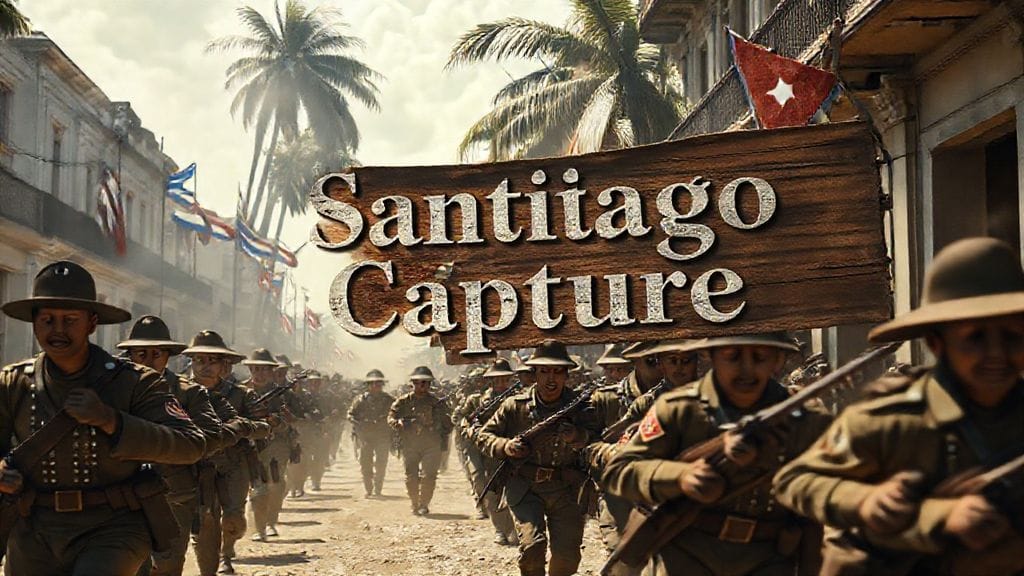
- Urban Warfare in Santiago: Streets Turned Battlefield
- The Fall of Morro Castle: Symbol of a Lost Empire
- Civilian Lives Amidst Conflict: Stories from Santiago’s Inhabitants
- The Surrender: A City’s Capitulation and the End of Hostilities
- Aftermath: The U.S. Occupation and the Cuban Question
- Global Reverberations: The Rise of American Imperialism
- Remembering Santiago: Monuments, Memory, and Myth
- Lessons from the Siege: Military Innovation and Diplomacy
- The Legacy of July 17, 1898 in Cuban-American Relations
- Conclusion: Santiago’s Capture as a Turning Point in History
- FAQs: Clarifying the Siege and its Significance
- External Resource
- Internal Link
1. The Dawn of a New World Order: Santiago de Cuba on July 17, 1898
The morning sun filtered faintly through the humid Caribbean haze. Santiago de Cuba stood at the precipice of change, the streets echoing with whispers of uncertainty and fear. Somewhere beyond the city’s conch-laiden harbor, a fleet of American warships waited patiently, silhouetted against the pastel sky. On July 17, 1898, a chapter written in gunpowder and blood was about to reach its climax. The U.S. forces poised to capture Santiago de Cuba were not just seizing a city; they were heralding the dawn of a new era, both for Cuba and for the United States.
The air was thick with anticipation—and dread. For more than three centuries, Santiago had served as a cornerstone of Spanish colonial dominance in the Caribbean. Now, centuries-old walls were braced against an army that represented a rising imperial power. But this was not merely a tale of military conquest; it was a collision of cultures, ideals, and dreams. What unfolded was a dramatic, intricate dance that tested valor, diplomacy, and the very fate of a continent.
2. The Key to the Caribbean: Strategic Importance of Santiago de Cuba
Santiago de Cuba, nestled on the southeastern coast of the island, was much more than a picturesque colonial city. It was Spain's nerve center in the Caribbean, a vital naval base, and the last stronghold protecting its decaying empire in the New World. The city’s port controlled the mouth of the Bay of Santiago, a natural harbor fortified by the formidable Morro Castle, a bastion that had repelled invaders for centuries.
In the ever-shifting chessboard of empire, control of Santiago meant dominance over sea routes, the ability to project naval power, and a symbolic grip over the fading Spanish colonial presence. For the United States, eager to assert its influence in the hemisphere, capturing Santiago was indispensable. It was the key to crippling Spanish resistance and securing a foothold in Cuba that could not be contested.
3. The Spanish-American War: Origins and Escalation
The capture of Santiago must be understood within the broader tapestry of the Spanish-American War, a conflict ignited by a combustible mixture of nationalism, economic interests, and ideological fervor. The Cuban War of Independence had raged since 1895, with Cuban revolutionaries battling to throw off Spanish rule.
American sympathy for the Cuban cause had grown, amplified by sensationalist journalism—“yellow press”—and outrage over reports of Spanish atrocities. The mysterious explosion of the USS Maine in Havana Harbor on February 15, 1898, served as the war’s immediate catalyst, presumed by many in the U.S. to be a Spanish act of sabotage.
President William McKinley, initially reluctant to engage in war, found himself under mounting pressure. The declaration of war in April 1898 set in motion a rapid mobilization. Spain, already burdened by internal troubles and waning power, faced a determined adversary with unmatched industrial might and moral fervor.
4. Tensions at Sea: The Naval Blockade and the Battle of Santiago Bay
The war’s early phase pivoted on control of the seas. The U.S. Navy immediately blockaded Cuban ports, trapping the Spanish fleet in Santiago Bay. For weeks, American warships maintained the siege, choking off supplies and reinforcements.
On July 3, 1898, the stalemate shattered with the dramatic Battle of Santiago Bay. Rear Admiral Pascual Cervera’s fleet attempted a desperate breakout. The ensuing naval battle was swift and devastating. American ships, superior in firepower and speed, annihilated the Spanish fleet, sinking or capturing every vessel.
This naval victory was decisive. With Spanish naval power neutralized, Santiago was isolated. The city’s fall was imminent, but the fight on land was far from over.
5. Preparing for the Siege: The American Military Build-up
The victory at sea only set the stage. American forces, a diverse mix of regular army troops, volunteers, and famed Rough Riders, gathered on the outskirts of Santiago. Logistics were daunting: dense tropical jungle, rugged terrain, disease, and climate all conspired against the attackers.
Commanders like General William Rufus Shafter had to coordinate infantry, artillery, and cavalry units with a precision that tested the limits of 19th-century military strategy. Yet morale remained high, fueled by the promise of victory and the patriotic zeal to end Spanish rule.
Meanwhile, Cuban rebels covertly offered intelligence and guerrilla support, making the siege an alliance of necessity and survival. The stage was set, and the stakes could not have been higher.
6. The Cuban Struggle: The Intertwined Fates of Rebel and Invader
Long before American boots touched Santiago’s soil, Cuban insurgents had waged a brutal campaign for independence. Men like Antonio Maceo and José Martí had kept the flame alive, at tremendous cost.
Though wary of American intentions, Cuban rebels saw the U.S. intervention as a potential stepping stone to sovereignty. Their knowledge of the terrain, skills in irregular warfare, and relentless resolve proved invaluable during the siege.
Yet, the alliance was uneasy. The capture of Santiago complicated Cuban aspirations, foreshadowing future conflicts over the island’s fate. The Cuban people, caught between ancient colonial masters and burgeoning imperialists, were pawns in a larger game.
7. The July Assault Begins: Morning Fog and Thunder
On July 17, the American assault on Santiago de Cuba commenced in earnest. Before dawn, troops advanced through thick jungle and smoke, the sounds of musket and cannon fire mingling with the cries of the wounded.
The day opened with confusion and chaos—a mix of dense underbrush and sniper fire slowed the attack. But relentless American forces pressed forward, determined to breach Spanish defenses.
Nature itself seemed to rage against them: tropical downpours soaked the soldiers, turning paths into quagmires and weaponry to rust. Yet, amid mud and blood, the invaders carved a path toward the city’s gates.
8. The Heroic Charge: Theodore Roosevelt and the Rough Riders
No narrative of Santiago is complete without the daring charge of Theodore Roosevelt and his Rough Riders. A cavalry regiment composed of rugged cowboys, miners, and Ivy Leaguers, this colorful band embodied the spirit of the American west and nation alike.
Roosevelt, already a national figure, led a harrowing uphill assault on Kettle Hill, inspiring his men with sheer will and charisma. Against steep odds, the charge succeeded, breaking Spanish lines and opening the way towards the city.
This episode became emblematic of American valor and the mythos of the ‘Rough Rider’—a legacy immortalized long after the guns fell silent.
9. The Spanish Defense: Fortified but Fading
Spanish defenders held fast at first, relying on 19th-century fortifications and their own familiarity with the terrain. Morro Castle, with its thick stone walls and commanding view, was a formidable obstacle.
Yet, supply shortages, disease outbreaks, and dwindling morale eroded their will. Reinforcements were impossible to secure following the naval defeat. Captain General Arsenio Linares found himself balancing stubborn defense and pragmatism.
As artillery shells pummeled their positions and troops fell, Spanish soldiers faced the grim choice of fight to the last or surrender with honor. The answer came with the inevitable collapse of the city’s outer defenses.
10. Urban Warfare in Santiago: Streets Turned Battlefield
Unlike many colonial sieges that ended with bombardment and surrender, the fight in Santiago soon spilled into narrow streets and plazas. The city, with its colonial architecture and labyrinthine alleys, became a brutal arena.
American troops fought block by block, relying on street-level skirmishes, bayonet charges, and hand-to-hand combat. Civilians were caught in the crossfire, their homes shattered, and lives uprooted.
The close quarters reduced the technological advantage, demanding courage and improvisation from soldiers on both sides. Santiago’s streets bore the scars of the battle for decades.
11. The Fall of Morro Castle: Symbol of a Lost Empire
On July 17, after hours of bombardment and infantry assault, Morro Castle fell. Its surrender was a psychological and strategic blow to the Spanish cause—a fortress that had guarded Santiago for centuries now in American hands.
The capture of Morro signaled the collapse of Spanish resistance and the nearing end of their colonial presence in Cuba. It was more than masonry and cannons; it was a symbol of empire crumbling before the winds of history.
American victory here was celebrated with fanfare, but also tinged by the grim realities of war’s destruction.
12. Civilian Lives Amidst Conflict: Stories from Santiago’s Inhabitants
War is often reduced to strategies and statistics, but for Santiago’s citizens, the 1898 siege was an ordeal of fear, loss, and resilience. Families sheltered in cellars, shops became makeshift hospitals, and communities scrambled to survive.
Eyewitness accounts tell of compassion amid chaos—local priests aiding the wounded, neighbors sharing scant resources, children playing amidst rubble. Women like María Álvarez, who tended to soldiers of both sides, emerged as unsung heroes.
These human stories remind us that history is lived in lived bodies, hearts, and dreams, long after banners fall.
13. The Surrender: A City’s Capitulation and the End of Hostilities
By late afternoon on July 17, the Spanish officials realized further resistance was futile. Negotiations began under the watchful eyes of American commanders.
The formal surrender of Santiago marked not just the fall of a city, but the conclusion of a prolonged campaign that had shocked the international order. The documents signed preserved honor for Spanish officers but cemented the reality of colonial twilight.
For U.S. troops, relief and triumph mixed with exhaustion. For Cubans, a new dawn loomed, uncertain and complex.
14. Aftermath: The U.S. Occupation and the Cuban Question
The capture of Santiago led directly to American occupation of Cuba. While Spain formally relinquished control in the Treaty of Paris later that year, Cuba’s future was ambiguous.
The U.S. military government faced the daunting task of reconstruction, public health crises—including yellow fever and malaria—and political restructuring. Cuba’s independence was proclaimed, yet within the shadow of American influence.
This period sowed seeds for future conflict, resentment, and debate over sovereignty and imperialism that echoes to this day.
15. Global Reverberations: The Rise of American Imperialism
The fall of Santiago de Cuba was a potent symbol signaling the United States’ arrival as a world power. For the first time, America extended its reach beyond the continental borders into the Caribbean and Pacific.
Overnight, debates about imperialism, race, and America’s “Manifest Destiny” took center stage in political discourse. Cuba became a testing ground for new foreign policy doctrines, while the war ignited similar conflicts in the Philippines, Guam, and Puerto Rico.
The capture of Santiago, once a localized battle, reshaped the geopolitical map in profound and lasting ways.
16. Remembering Santiago: Monuments, Memory, and Myth
The legacy of the siege is etched in monuments across the United States and Cuba. Statues commemorating Roosevelt’s Rough Riders stand alongside memorials honoring Spanish soldiers and Cuban martyrs.
Historical narratives have often romanticized the event, blending fact and legend. Roosevelt’s charge became myth; Spain’s defeat was portrayed as inevitable; Cuban independence framed as a gift rather than a struggle.
Yet museums and scholars strive to peel back layers, offering balanced perspectives that honor all voices touched by this pivotal moment.
17. Lessons from the Siege: Military Innovation and Diplomacy
The siege showcased new approaches in combined arms warfare, the use of volunteer regiments, and naval siege tactics. Medicine and logistics faced tropical challenges that shaped future military doctrines.
Diplomatically, it underscored the necessity of clear policy regarding occupied territories and the complexities of nationalist movements under foreign oversight.
Military historians continue to study Santiago to understand the dynamics of power transition through conflict.
18. The Legacy of July 17, 1898 in Cuban-American Relations
More than a century later, the capture of Santiago remains a cornerstone in the fraught relationship between Cuba and the United States. It was the moment when Cuba’s fate was irrevocably altered—inspiring nationalist pride and bitter memories of external domination.
Subsequent events—the Platt Amendment, the Cuban Revolution, and Cold War tensions—can trace roots back to the decisions made in and after this historic siege.
Understanding Santiago helps illuminate the complexities of sovereignty, freedom, and interventionism that continue to shape the Americas.
Conclusion
The capture of Santiago de Cuba on July 17, 1898, was far more than a military victory; it was a moment when history pivoted on the knife-edge between fading colonial empires and emergent world powers. The blood-stained streets of Santiago witnessed not only the clash of armies but the collision of ideals—liberty and empire, independence and expansionism.
This event invites us to remember that history is not a line drawn neatly between winners and losers but a tapestry woven from courage, sacrifice, and human dreams. The soldiers who fought, the civilians who endured, and the leaders who gambled—each contributed to a story that still resonates, reminding us that every bastion, no matter how seemingly impregnable, can fall—and from its ruins, a new world is born.
FAQs
Q1: Why was Santiago de Cuba so important to both Spain and the United States?
Santiago’s strategic location as a naval hub and gateway to the Caribbean made it critical for controlling sea routes and regional power. For Spain, it was the last major stronghold in Cuba; for the U.S., capturing Santiago meant dismantling Spanish control and gaining influence in the hemisphere.
Q2: What triggered the Spanish-American War, and how did it relate to Santiago’s capture?
The war was triggered by the Cuban struggle for independence, American economic and humanitarian concerns, and the explosion of the USS Maine. Santiago’s capture was a major military objective to break Spanish resistance and hasten the war’s end.
Q3: Who were the Rough Riders, and what role did they play?
The Rough Riders were a volunteer cavalry regiment famously led by Theodore Roosevelt. They played a pivotal role in the assault on Kettle Hill and helped break Spanish defensive lines, their charge becoming legendary.
Q4: How did Cuban insurgents influence the siege?
Cuban rebels provided valuable intelligence, local knowledge, and guerrilla support, aiding American forces. However, their dream of full independence faced complications from U.S. occupation after the siege.
Q5: What were the consequences of Santiago’s fall for Spain and Cuba?
Spain lost its last significant colony in the Americas, signaling the end of its empire. Cuba entered a period of American occupation, setting the stage for its complex path to sovereignty.
Q6: How is the capture of Santiago remembered today?
It is commemorated through monuments and historical narratives in both the U.S. and Cuba. While romanticized in some accounts, modern history seeks to present a balanced view respecting all parties’ experiences.
Q7: Did the capture of Santiago influence U.S. foreign policy?
Yes. It marked the emergence of American imperialism, encouraging expansion beyond continental borders and shaping future involvement in global affairs.
Q8: What lessons have historians drawn from the siege?
Beyond military tactics, the siege highlights the challenges of occupation, the consequences of intervention, and the importance of understanding diverse perspectives in conflict zones.