Table of Contents
- A Fiery Awakening: The Ubinas Volcano Comes Alive
- The Silent Giant of Southern Peru
- Ancient Echoes: Ubinas in Historical Perspective
- Geological Forces at Work: Understanding Ubinas’ Restlessness
- The Calm Before the Storm: Early Signs in Late 2005
- February 2006: The First Plumes of Ash and Fire
- The Dance of Smoke and Ash: The Eruption Unfolds
- Life Under Threat: The Impact on Local Communities
- The Role of Science: Monitoring and Predicting Disaster
- Peru’s Response: Authorities and Emergency Measures
- Ecological Aftermath: A Land Transformed
- Cultural Resonance: Ubinas in the Eyes of the Locals
- Media Spotlight: International Attention and Misunderstandings
- Global Lessons: What the 2006 Eruption Taught Volcano Science
- A Volcanic Dialogue: Stories from Survivors and Scientists
- Long-term Consequences: Economy, Health, and Environment
- The Volcano’s Return to Quietude: Late 2006 and Beyond
- Ubinas Today: Volcano Surveillance and Preparedness
- Eruptive Patterns: Comparing Ubinas with Other Andean Volcanoes
- Conclusion: The Enduring Legacy of the 2006 Fiery Awakening
- FAQs: Understanding Ubinas and Volcanic Risks in Peru
- External Resource
- Internal Link
1. A Fiery Awakening: The Ubinas Volcano Comes Alive
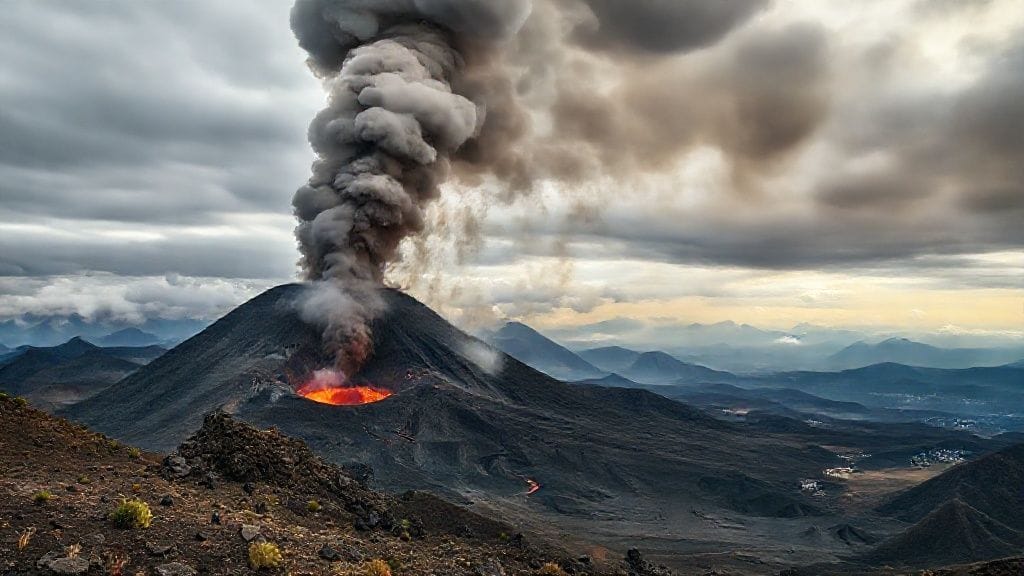
The night sky above the Peruvian Andes flickered ominously in early 2006, illuminated not by the usual stars’ serenity but by an ominous glow — the awakening of Ubinas Volcano, Peru’s most active and most feared volcanic giant. Beneath the frigid air and serene heights, a battle of molten rock and sky was unfolding, one that would reshape lives, landscapes, and the collective memory of a region long familiar with volcanic whispers. It was not merely an eruption; it was a drama of nature that unfolded with the suddenness of a storm breaking upon placid waters. Villagers from the surrounding valleys looked up at the rising columns of ash and gas, a mixture of awe and terror gripping their hearts — a powerful reminder of the relentless forces shaping their world.
2. The Silent Giant of Southern Peru
Ubinas stands tall and solitary, rising to 5,672 meters in the Moquegua Region of southern Peru. For centuries, it has been a sentinel watching over the desert plateaus and Andean highlands, its cone resting quietly, sometimes emitting subtle signs of its deep magma chambers’ heartbeat. Known locally as “Uwinita,” the volcano was often a place of reverence and fear, entwined with indigenous myths that portrayed it as both protector and destroyer.
Though dormant for long stretches, Ubinas’ reputation as Peru’s most active volcano sets it apart. Its violent past, recorded sporadically since the era of the Incas and ethnically embedded in local folklore, had been punctuated by episodes of ashfall and pyroclastic clouds — reminders that its silence could never be mistaken for peace.
3. Ancient Echoes: Ubinas in Historical Perspective
The 2006 eruption was not the first in recorded history. Chroniclers and local oral traditions speak of eruptions dating back several centuries. Spanish colonial archives note major activity in the 16th and 17th centuries that led to widespread evacuations and crop failures. Archaeologists have even identified ash layers in surrounding soils corresponding to eruptions over a millennium ago.
One particularly vivid testament comes from accounts of the late 19th century, when Ubinas reportedly erupted in a series of violent explosions, blanketing villages in ash and causing river systems to clog with volcanic debris. Though a remote area, its communities have historically adapted with a blend of respect, superstition, and pragmatic resilience.
4. Geological Forces at Work: Understanding Ubinas’ Restlessness
The seismic cradle of Ubinas lies where the Nazca tectonic plate dives beneath the South American plate — a classic subduction zone known for its volatile volcanic activity. This convergence forces magma to rise through cracks in the Earth’s crust, feeding Ubinas’ fiery heart.
Scientists studying Ubinas have noted its typical eruption style: explosive, with sudden bursts of ash reaching high into the atmosphere, threatening both local air quality and aviation. Magma composition usually rich in andesite gives the eruptions a viscous nature, causing pressure to build beneath the surface until violent release.
Throughout the decades preceding 2006, Ubinas had offered mild tremors, minor ash emissions, and fumaroles, suggesting a volcano simmering beneath a fragile crust.
5. The Calm Before the Storm: Early Signs in Late 2005
In late 2005, subtle but unmistakable tremors began to ripple beneath Ubinas. Communities noted unusual sulfuric smells in the air, and faint ash plumes appeared on clear mornings. For many, this was a curious anomaly; for volcanologists at Peru’s Geophysical Institute, it was a clarion call.
Seismic records showed increasing frequency and intensity of volcanic earthquakes, signaling magma’s aggressive push upward. Yet the volcano remained superficially mute, hiding the increasing tension beneath layers of rock and ice.
6. February 2006: The First Plumes of Ash and Fire
February arrived with dramatic changes. On the 27th, late in the evening, the first large eruption erupted in a sudden, thunderous roar that echoed across the stark landscape. Flames and incandescent rocks were shot skyward, while dark ash clouds billowed several kilometers high.
Villagers in San Juan de Chucura and Matalaque, perched on the volcano’s flank, were jolted awake, scrambling to protect livestock and seek shelter. The volcano’s fury was immediate and uncompromising — a grim reminder that the Earth’s subterranean forces could rewrite the lives of humans in moments.
7. The Dance of Smoke and Ash: The Eruption Unfolds
In the weeks that followed, Ubinas breathed fire and ash in erratic pulses. Phreatic explosions — steam-driven bursts caused by groundwater heating — added another layer of unpredictability, hurling scorching debris across the slopes. Ash blanketed fields, turning skies to dusk even at midday.
Cameras and satellites tracked the expanding ash cloud’s trajectory, noting its impact on air traffic routes from Lima to the southern borders. Livestock perished or were stabled indoors, and respiratory illnesses surged among residents forced to inhale fine volcanic dust.
This volcanic dance was as mesmerizing as it was dangerous: a smoky ballet choreographed by nature’s invisible hand.
8. Life Under Threat: The Impact on Local Communities
For campesinos, herders, and small farmers, the eruption spelled hardship beyond imagination. Fields once fertile now lay coated in thick layers of pumice and ash. Water sources were contaminated, livestock succumbed to stress or direct injury, and cattle migrations were curtailed by ash-slicked terrain.
School closures and road blockades due to ashfall isolated villages, straining supplies. Fear of renewed explosions turned into anxiety and despair as communities grappled with the invisible threat suspended in every breath they took.
Local folklore had warned of such times, but modern dependence on fragile agriculture and minimal infrastructure made these centuries-old warnings painfully real.
9. The Role of Science: Monitoring and Predicting Disaster
Behind the scenes, volcanologists and seismologists worked tirelessly to monitor the unfolding crisis. Emergency alerts, real-time seismic data, and satellite imagery were harnessed to anticipate Ubinas’ next moves.
Peru’s National Geophysical Institute established surveillance stations around the volcano’s base, relaying crucial data to authorities. Modeling eruption parameters remained a challenge, yet early detection of increased seismicity allowed some villagers to evacuate in time.
Still, the unpredictability of such a complex natural system underscored the limitations of even the most advanced scientific tools.
10. Peru’s Response: Authorities and Emergency Measures
The Peruvian government, initially caught off-guard by the sudden eruption, marshaled resources rapidly. Evacuation centers were opened, with basic medicine and food aid delivered in convoys across treacherous terrain.
Coordination between the Ministry of Environment, local municipalities, and international aid agencies revealed strengths and weaknesses in disaster preparedness. The 2006 Ubinas eruption became a case study in emergency logistics for Andean nations.
Public information campaigns were launched to inform residents about respiratory safety, the importance of masks, and structural dangers posed by ashfall.
11. Ecological Aftermath: A Land Transformed
The eruption imposed an ecological transformation as old vegetation died beneath suffocating ash, altering watersheds and soil chemistry. Yet, paradoxically, volcanic ash enriches soil over time, hinting at future agricultural revival.
Species adapted to volcanic environments showed remarkable resilience — birds returning to ash-laden trees, insects recolonizing new niches, and early successional plants carving out a foothold on barren slopes.
Scientists monitored these natural regeneration processes, fascinated by nature’s capacity for renewal amid destruction.
12. Cultural Resonance: Ubinas in the Eyes of the Locals
For the indigenous communities, the 2006 eruption was not just a natural disaster, but a spiritual event resonating with ancestral beliefs. Elders spoke of Ubinas as a living entity, expressing its anger and reminding humans of their fragile place in the cosmos.
Ceremonies and offerings to “Apu” (mountain spirits) were performed, seeking protection and harmony. These cultural expressions provided emotional solace and a framework for understanding the cataclysm in deeply rooted terms.
Such beliefs continue to shape community responses to volcanic risk, blending science and tradition.
13. Media Spotlight: International Attention and Misunderstandings
As ash clouds drifted beyond Peru’s borders, international news outlets seized the dramatic images, often veering toward sensationalism. Headlines proclaimed “Peru’s Fiery Fury” or “Andean Giant Awakens,” stirring fears far beyond local realities.
Scientists criticized some media for oversimplifying complex volcanic phenomena, while locals sometimes felt their plight was exoticized rather than understood.
Nonetheless, global focus yielded material support and heightened awareness of volcanic hazards in the Andes region.
14. Global Lessons: What the 2006 Eruption Taught Volcano Science
Ubinas’ 2006 eruption contributed valuable data to volcanology, especially in understanding small-to-moderate explosive eruptions at high altitudes. It highlighted the importance of integrating local knowledge, rapid seismic monitoring, and remote sensing.
Researchers gained insights into gas emissions, ash dispersal patterns, and eruption precursors applicable worldwide, aiding mitigation strategies in similar volcanic zones.
The event underscored how even volcanoes considered moderate in scale wield profound influence on human societies.
15. A Volcanic Dialogue: Stories from Survivors and Scientists
Conversations between survivors and scientists revealed layers of human endurance and scientific inquiry interwoven in the shadow of Ubinas. Farmers recounted harrowing nights spent under ashfall; scientists shared moments of exhilaration tracking the volcano’s heartbeat.
These narratives illuminate the human element often eclipsed by technical descriptions — emotions, fears, hopes, and the inexorable link between people and the land they inhabit.
16. Long-term Consequences: Economy, Health, and Environment
Years after the eruption waned, the region continued to face challenges. Economic setbacks from lost harvests necessitated aid and investment. Respiratory problems persisted among children and elderly exposed to ash.
Environmental monitoring remained essential, as subtle soil changes and water acidity altered livelihoods. Yet, rebuilding sparked cooperation and ingenuity among communities, fostered by lessons in resilience and adaptation.
17. The Volcano’s Return to Quietude: Late 2006 and Beyond
By late 2006, Ubinas’ rumblings diminished. Plumes of ash thinned and eventually ceased. The mountain seemed to retreat, returning to an ominous silence pierced only by weak fumaroles.
Yet volcanoes never forget their fiery past. Scientists continue to watch the giant vigilantly, aware that beneath its calm exterior, molten forces churn restlessly.
18. Ubinas Today: Volcano Surveillance and Preparedness
More than a decade later, Ubinas remains under constant surveillance. Modern instrumentation, community alert systems, and educational outreach have strengthened preparedness.
Peru invests in technology and infrastructure, hoping to balance human activity with nature’s unpredictability.
The memory of 2006 serves as a somber benchmark, reminding authorities and citizens alike that vigilance is a continuous necessity.
19. Eruptive Patterns: Comparing Ubinas with Other Andean Volcanoes
Ubinas shares features with volcanic neighbors like Sabancaya and Misti, yet each tells a different story of eruption styles, magma chemistry, and risks.
Comparative studies enrich regional knowledge, shaping disaster response and resilience across the dynamic Andean volcanic belt.
20. Conclusion: The Enduring Legacy of the 2006 Fiery Awakening
Ubinas’ eruption of 2006 was a stark testament to nature’s power and humanity’s vulnerability. It rekindled ancient dialogues between people and mountain, science and spirit, destruction and renewal.
This fiery chapter in Peru’s history reveals a world where earth’s molten heart pulses beneath fragile lives, urging respect, preparedness, and humility.
The legacy of Ubinas endures in the ash-stained faces, resilient fields, and watchful eyes of those who live in its shadow — a story both cautionary and hopeful.
Conclusion
The 2006 eruption of Ubinas was much more than a geological event; it was a profound human episode carved into the landscape of southern Peru. As the volcano roared back to life after years of dormancy, it forced a reckoning — with nature’s unpredictability, the fragility of livelihoods, and the enduring strength of community. The tale of Ubinas is woven from ancient myths, scientific inquiry, and the voices of those who lived through smoke and ash. It teaches us that volcanic disasters, while devastating, are also moments of awakening and learning. Looking back, one can almost hear the volcano’s solemn vow, echoing through time: to remind us that beneath the mountains we inhabit, there lies a restless, transformative force, as old as the Earth itself.
FAQs
1. What caused the 2006 eruption of Ubinas Volcano?
Ubinas’ 2006 eruption was triggered by magma rising through the Earth’s crust driven by tectonic forces along the Nazca and South American plates’ subduction zone. Increasing magma pressure caused explosive eruptions.
2. How did the eruption affect local populations?
The eruption forced evacuations, contaminated water and air, damaged crops and livestock, and caused respiratory illnesses. It disrupted daily life and economic activities in communities around Ubinas.
3. Was the 2006 event predicted effectively?
Yes and no. Scientists detected increased seismic activity before the eruption, enabling some early warnings. However, the suddenness and variability of eruptions presented challenges for precise predictions.
4. What was the role of cultural beliefs during the eruption?
Local indigenous peoples viewed Ubinas as a powerful spiritual entity. Traditional rituals and beliefs helped communities cope emotionally and culturally with the eruption’s threat.
5. How did the government respond to the eruption?
The Peruvian government coordinated evacuations, health campaigns, and emergency aid. Although initial preparedness faced challenges, lessons learned improved future disaster management.
6. What environmental impact resulted from the eruption?
The ashfall altered soil and waterways, damaging vegetation but also enriching soil over time. Wildlife was temporarily displaced but ecosystems showed resilience in recovery.
7. How does Ubinas compare to other volcanoes in Peru?
Ubinas is Peru’s most active volcano and typically has explosive eruptions with ash plumes, differing in style and frequency from neighbors like Misti or Sabancaya.
8. Has volcanic monitoring improved since 2006?
Yes, modern monitoring technology and community-preparedness initiatives have since enhanced early warning systems and public awareness around Ubinas and other volcanic threats.

