Table of Contents
- A Winter Day in Washington That Began Like Any Other
- Storm Clouds Gathering: The Long Road to January 6
- The Capitol as a Symbol: From Civil War to the 21st Century
- Election Night 2020 and the Birth of the “Stop the Steal” Narrative
- Planning a Siege: Online Radicalization and Open Conspiracy
- The Morning Rally: Words, Crowds, and a Dangerous Energy
- The March to the Capitol: From Chants to Clashes
- Breaching the Outer Defenses: Barriers, Barricades, and First Blood
- Inside the People’s House: Chaos in Marble Halls
- Lawmakers Under Siege: Evacuation, Hiding, and Courage
- The Long Hours of Uncertainty: Reinforcements and Retaking the Capitol
- Counting the Cost: Lives Lost, Wounds Carried, Trauma Etched
- The Political Earthquake: Impeachment, Investigations, and Denial
- The January 6 Committee: Reconstructing a Day of Rupture
- A Nation Looking in the Mirror: Memory, Myth, and Polarization
- Global Shockwaves: How the World Saw America’s Temple of Democracy Breached
- Digital Platforms, Disinformation, and the Architecture of Radicalization
- Security, Law, and the Ongoing Legal Reckoning
- Echoes in American History: From Fort Sumter to Oklahoma City
- The Human Faces of January 6: Regret, Defiance, and Grief
- How Democracies Remember: Monuments, Testimony, and Education
- Conclusion
- FAQs
- External Resource
- Internal Link
Article Summary: On January 6, 2021, the world watched in disbelief as a crowd, galvanized by false claims of a stolen election, stormed the U.S. Capitol and shattered the illusion of invulnerability surrounding American democracy. This article retraces that day in Washington, D.C., from the charged morning rally near the White House to the moment rioters battered through police lines and roamed the halls of Congress. It sets the united states capitol attack within a much longer history of polarization, extremist rhetoric, and contested elections in the United States. Along the way, it follows lawmakers, police officers, staffers, and rioters themselves through fear, adrenaline, and moral choice. It also examines the legal, political, and social aftermath: impeachments, hearings, prosecutions, and an ongoing war over memory and meaning. The narrative explores how digital platforms and disinformation fed the radicalization that culminated in the united states capitol attack, and how institutions struggled to respond. By looking back at earlier crises in American history, it asks whether January 6 was an aberration or a grim continuation of old patterns. Finally, the article reflects on how democracies remember their darkest hours, and what the Capitol attack reveals about the fragility—and the resilience—of constitutional government.
A Winter Day in Washington That Began Like Any Other
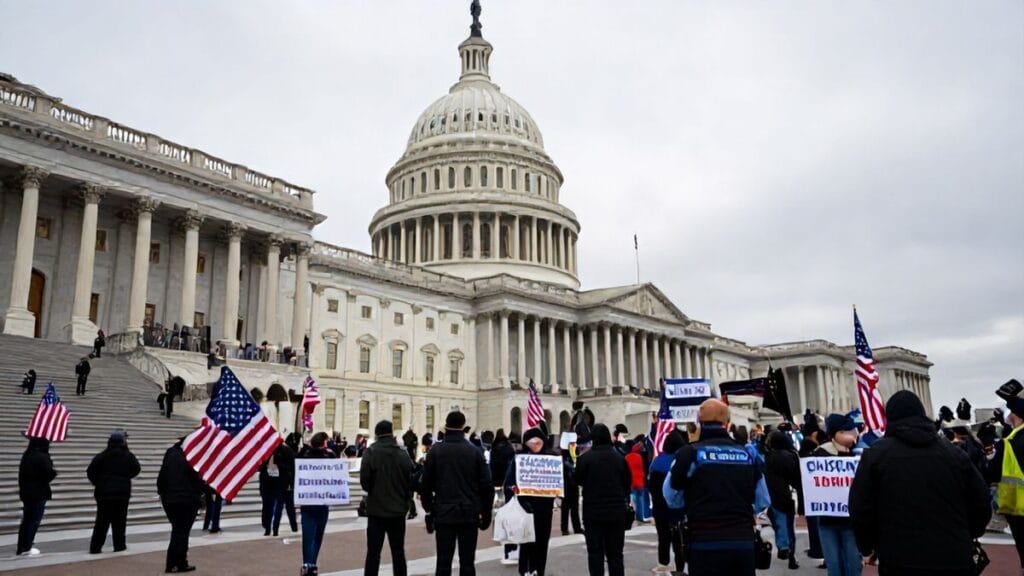
On the morning of January 6, 2021, Washington, D.C., wore its usual winter gray, the kind of leaden sky that flattens monuments and drains color from the Potomac. Tourists were fewer than usual—not just because it was January, but because the United States was still in the grip of the COVID-19 pandemic. Yet within shouting distance of the White House and the wide green stretch of the National Mall, a crowd was gathering that would soon twist this ordinary day into a dark entry in the nation’s chronicle. The united states capitol attack did not begin with shattered windows and overturned desks; it began with coffee bought from food trucks, flags unfurled in the cold wind, and people filing through metal detectors to attend a rally they believed might change history.
Many of those present had traveled through the night from small towns and sprawling suburbs, from Southern states, the Rust Belt, the Mountain West. Some came in church buses, others in caravans of pickup trucks plastered with slogans. They arrived armed with smartphones, livestreaming apps, and a sense—carefully nurtured over weeks—that something precious had been stolen from them. The city’s federal architecture, so often a mere backdrop for field trips and family photos, seemed to them a contested battleground. They would later claim that they were the patriots and that the real insurgents were inside the dome of the Capitol, preparing to certify an election they believed illegitimate. At that hour, however, the Capitol still stood serene on its hill, its white dome an almost naïve silhouette against the sky, unaware that it would soon be encircled, then invaded, by its own citizens.
Storm Clouds Gathering: The Long Road to January 6
No such day arrives without warning. The united states capitol attack was the violent crest of a tide that had been rising for years. Polarization, the erosion of trust in institutions, the spread of conspiracy theories, and the algorithmic echo chambers of social media had all been working, mostly invisibly, beneath the surface. America in the early 21st century was a country in which neighbors could watch the same event and live in entirely different realities; even basic facts were up for partisan negotiation. From the Tea Party rallies of 2009 to the “lock her up” chants of 2016, political speech had grown more absolutist, more apocalyptic, and more willing to flirt with the language of civil war.
Underlying these rhetorical escalations was a demographic and cultural transformation. The United States was becoming more diverse, more urban, more secular in some quarters and more intensely religious in others. Globalization and automation hollowed out whole regions, leaving communities clinging to industrial pasts. Economic pain and cultural anxiety fused into resentment, and resentment proved a fertile soil for leaders prepared to channel it into rage against “elites,” “deep state” bureaucrats, and “traitors.” Historians of democracy had long warned that such conditions could weaken guardrails once considered unshakable. The Capitol, often romanticized as the temple of American self-government, sat squarely in the crossfire of these resentments, its very existence an affront to those who felt excluded from the country they believed they owned.
The Capitol as a Symbol: From Civil War to the 21st Century
To grasp why the united states capitol attack resonated so profoundly, one must understand what the building represents. The Capitol is not merely a workplace for legislators; it is a physical metaphor for the Republic’s aspirations and contradictions. Its cornerstone was laid by George Washington in 1793, on a hill that offered sweeping views of a capital carved from a compromise between Northern and Southern states. The building grew as the nation did, wings added for new representatives as states joined the Union, the dome expanded and finished in the middle of the Civil War. In a famous anecdote, Abraham Lincoln insisted on continuing construction even as Confederate guns threatened the city, arguing that halting work would signal that the Union doubted its own future.
Through wars foreign and domestic, protests and parades, the Capitol had stood—graffitied by suffragists, besieged by World War I veterans in the Bonus Army, marched upon by civil rights activists demanding representation. It had endured the burning of Washington by British troops in 1814, when the original structure was set aflame. Yet in modern memory, the idea that a mass of Americans, incited by a sitting president, might storm the chambers during a constitutional ceremony seemed unthinkable. The image of the dome under attack felt like an X-ray of the nation’s soul. As one member of Congress would later recall, “It was not just a building under siege; it was the idea that ballots, not bullets, choose our leaders.”
Election Night 2020 and the Birth of the “Stop the Steal” Narrative
The thread that led directly to January 6 was spun on election night, November 3, 2020. As Americans voted amid a pandemic, many states expanded mail-in balloting, and election officials cautioned that results might come slowly. Initial tallies on the night favored the incumbent in several key states because in-person votes were counted first; as the days passed and mail-in ballots were added, those numbers shifted toward his challenger. This so-called “red mirage” was predicted by analysts, but when it unfolded on national television, it became, for millions, proof that something nefarious was afoot.
Even before the votes were fully counted, President Donald Trump declared that the election had been stolen, claiming massive fraud without credible evidence. Lawsuits were filed in state after state and dismissed in courtroom after courtroom—roughly 60 cases thrown out or withdrawn. Republican state officials, some of them long-time allies, certified results that did not favor him. Yet the narrative of theft hardened into an article of faith among his most fervent supporters. The phrase “Stop the Steal” became both slogan and movement, appearing on signs, social media hashtags, fundraising emails, and rally posters. Each failed court case, each rejected conspiracy claim, did not weaken the belief; it strengthened a sense that institutions themselves were corrupted and could no longer be trusted to deliver justice.
Planning a Siege: Online Radicalization and Open Conspiracy
The weeks between the November election and the certification of electoral votes on January 6 became a feverish period of planning in the darker corners of the internet. On fringe platforms like Parler, Gab, and Telegram channels, as well as in private Facebook groups and encrypted chats, users shared maps of the Capitol, discussed which weapons they might carry, and traded tips on evading law enforcement. Some spoke of “1776” as code for revolution. Militia groups, self-styled “patriot” organizations, and individuals steeped in QAnon and other conspiracies converged around a fixed point: the joint session of Congress scheduled for that early January day, when the electoral votes would be counted and the winner formally declared.
Law enforcement, intelligence analysts, and independent researchers were not blind to these discussions. Open-source intelligence flagged alarming comments that openly threatened violence. A user wrote, “If they certify Biden, we’ll storm the Capitol.” Another replied, “No more keyboard war, time for real war.” The warnings were numerous but scattered across agencies, and the response was fragmented. Some among the planners believed that the president himself was calling them to action. When Trump tweeted on December 19, 2020, “Big protest in D.C. on January 6th. Be there, will be wild!”, it was read in some circles less as an invitation than as a command.
The Morning Rally: Words, Crowds, and a Dangerous Energy
On the morning of January 6, the Ellipse, a park just south of the White House, became a sea of flags and banners. The colors were American red, white, and blue—but also the yellows of the Gadsden “Don’t Tread on Me” flag, the blacks of militia emblems, the blues of pro-police slogans, and the cryptic letter “Q” for QAnon. Conspiracy theorists mingled with lifelong Republicans; families with children stood beside men in tactical vests. Country songs, hymns, and martial anthems blared from loudspeakers. Homemade signs cried “Stop the Steal,” “Save America,” and “Fight for Trump.”
Speakers took to the stage to fan the crowd’s anger. They repeated baseless allegations of rigged machines, dead people voting, and ballots mysteriously appearing in the night. Each myth had already been debunked by local officials and judges, yet repetition mattered more than truth in that moment. Finally, the president himself addressed the crowd. He insisted he had won “by a landslide,” that the election had been stolen by “radical left Democrats” and “weak Republicans,” and that his supporters would never take back their country “with weakness.” He told them to walk down to the Capitol and give Republicans “the kind of pride and boldness that they need to take back our country.” Some heard a rhetorical flourish; others heard a call to action. The atmosphere was electric, teetering between a political rally and a prelude to something far more volatile.
The March to the Capitol: From Chants to Clashes
As the rally concluded, waves of people began moving up Pennsylvania Avenue toward the Capitol. The walk, under normal circumstances a pleasant trek past museums and monuments, now felt like an advancing front. Chants rose and fell: “USA! USA!” “Stop the Steal!” “Whose house? Our house!” Handheld cameras and selfie sticks documented the march. Some in the crowd believed that Vice President Mike Pence, presiding over the certification, had the power to unilaterally reject electoral votes. Many had understood from online discussions that this was the “last chance” to change the outcome.
On the eastern slope of Capitol Hill, the complex remained guarded by relatively thin lines of Capitol Police, more accustomed to managing peaceful protests than repelling a coordinated assault. Few expected what was coming. As the first groups arrived, they shouted insults and accusations at officers, demanding access. Some offered themselves as patriots standing against tyranny; others hurled racist slurs. Soon, the chants hardened. Pressure at metal barricades increased. Younger men with helmets and tactical gear surged to the front, testing the lines like waves against a seawall. The mood shifted from boisterous to menacing, from protest to confrontation.
Breaching the Outer Defenses: Barriers, Barricades, and First Blood
The breach began almost suddenly, yet it had been creeping closer all morning. At a west-side barricade, rioters pushed against metal fencing as officers tried to hold them back. A stun grenade exploded, emitting smoke and flash; the crowd roared in fury. In the crush, some officers were knocked to the ground. The barricades toppled, and the human tide poured through. As one video later replayed endlessly on news channels showed, a man in tactical gear used a police shield as a battering ram against a glass window. Around him, others swung flagpoles like spears and threw projectiles. The line between citizen and combatant dissolved with alarming speed.
Capitol Police officers, many without riot gear, retreated step by step up the stone stairways and terraces. On radio channels, frantic calls for backup mixed with incomplete information: how many rioters, where they were, what their intentions might be. The mob surged around scaffolding erected for the upcoming inauguration, scaling its skeleton like a siege tower. Confederate flags, Trump banners, and Christian symbols fluttered in the January wind as people climbed ever closer to the building itself. The united states capitol attack was now no longer theoretical; the fortress of legislative power was under active, physical assault.
Inside the People’s House: Chaos in Marble Halls
The first rioters to breach doors and shatter windows found themselves in spaces normally reserved for quiet tours and reverent photographs. Marble floors, vaulted ceilings, statues of legislators and reformers—all became backdrops for something wholly different. Men and women, some in camouflage, others in casual clothes, flowed through corridors shouting, recording themselves, calling out room numbers. Many seemed almost giddy, as if stepping onto a movie set. But others moved with purpose: searching for specific offices, chanting threats against named officials, and hunting for the chambers where lawmakers were meeting.
Some staffers, caught off guard by the speed of events, barricaded themselves in offices, turning off lights and whispering into phones as they hid under desks. In one hallway, a lone Black Capitol Police officer found himself facing a crowd advancing up a staircase. Cameras captured his split-second decision: instead of holding ground and risking being overrun, he retreated up the stairs, shouting at the intruders to stop while subtly steering them away from the still-unsecured Senate chamber. That officer, Eugene Goodman, would later be hailed as a hero whose quick thinking helped save lives. But in that moment, he was simply a man making judgments under immense pressure, embodying the terrifying intimacy of the attack.
Lawmakers Under Siege: Evacuation, Hiding, and Courage
Inside the House and Senate chambers, the atmosphere shifted from procedural routine to primal fear. Just minutes earlier, Vice President Pence had presided over the opening of electoral certificates, and Senators had begun debating objections to the results from Arizona. Representatives argued fiercely but within the rules of parliamentary order—democracy’s ritualized conflict. Then the alerts began: messages from security, whispers from staff, the muffled echo of shouting in distant corridors. At first, some lawmakers were confused. Protests outside the building were not uncommon. But the noise grew louder, the sense of threat closer.
Capitol Police entered the chambers, instructing members to take shelter, then to prepare for evacuation. Gas masks, stored under chairs and long forgotten by many, were hastily retrieved. On the House floor, officers dragged heavy furniture to block the main doors as rioters tried to force their way in. A photograph from that moment, which has already entered the visual canon of American history, shows guns drawn through the broken glass of a door, aimed at intruders just feet away. Representatives lay on the ground, some praying, others typing final messages to loved ones, unsure if they would make it out. In the Senate, members were rushed through back corridors and into secure locations. The chants of “Hang Mike Pence!”—fueled by the false belief that he could have nullified the election—echoed through parts of the building, carrying the unmistakable stench of political violence.
The Long Hours of Uncertainty: Reinforcements and Retaking the Capitol
For several hours, the world saw images that would have once been dismissed as dystopian fantasy: rioters parading through the Rotunda, rifling through papers in congressional offices, sitting with boots on desks that symbolized the nation’s elected authority. An intruder in a horned fur headdress and face paint posed in the Senate chamber, a surreal figure who would come to embody the strange carnival of extremism present that day. Others stole podiums, took selfies, or searched for souvenirs. Yet the chaos obscured a crucial reality: people were still in danger, and the situation remained fluid, with pockets of violent confrontation continuing both outside and within the building.
As Capitol Police and D.C. authorities requested National Guard assistance, bureaucratic hesitations and chain-of-command confusion slowed the response. Metropolitan Police units arrived and began pushing the crowds back with batons, shields, and chemical agents. Slowly, line by line, staircase by staircase, the building was cleared. By evening, after the sun had set over a city filled with sirens and smoke, officials declared the Capitol secure. The united states capitol attack had lasted only hours in chronological time but felt like a rupture suspended outside normal history, an event that stretched and distorted the collective sense of national security.
Counting the Cost: Lives Lost, Wounds Carried, Trauma Etched
When the smoke cleared, the human cost stood stark. Five people died in the immediate aftermath or as events unfolded. Ashli Babbitt, a supporter of the outgoing president and Air Force veteran, was shot by a Capitol Police officer as she attempted to climb through a broken window near the Speaker’s Lobby, where lawmakers were being evacuated. Three others—Rosanne Boyland, Kevin Greeson, and Benjamin Philips—died of medical emergencies. Capitol Police Officer Brian Sicknick, who had struggled to hold the line that day, died in the hours after the attack; his death became a symbol of the physical and emotional toll borne by law enforcement.
Beyond those immediate fatalities, the trauma rippled outward. More than 140 police officers from Capitol and Metropolitan forces were injured, some with broken bones, concussions, or chemical burns. In the weeks and months that followed, suicides among officers who responded to the attack highlighted the heavy psychological burden. Lawmakers and staff described nightmares, anxiety, and lingering fear. Many said they could no longer hear a loud bang or a raised voice in the Capitol without flinching. The building itself bore scars—shattered windows, damaged doors, graffiti—that would eventually be repaired, but the invisible damage, the loss of innocence that the seat of legislative power could be so violated, could not be so easily fixed.
The Political Earthquake: Impeachment, Investigations, and Denial
Within hours of the building being cleared, congressional leaders faced a fateful choice: to adjourn and postpone the certification, or to return and complete the constitutional duty that had drawn the mob there in the first place. They chose to reconvene. Late into the night, under the watchful eyes of heavily armed security, lawmakers resumed debate and then voted to certify the electoral college results. The message was deliberate: the mob would not be allowed to dictate the transfer of power. Yet the political shockwaves of the united states capitol attack were only beginning.
In the days that followed, calls grew for accountability at the highest levels. On January 13, the House of Representatives impeached President Trump for a second time, charging him with “incitement of insurrection.” Ten Republicans joined Democrats in the vote, an extraordinary break with party lines. The Senate trial that followed after he left office ended in acquittal, as most Republicans, while often condemning the violence, refused to convict. A deep divide opened over how to characterize January 6: was it a riot, an insurrection, a protest gone wrong, or something more sinister? Some politicians minimized the event; one notoriously described the rioters as “tourists,” while another insisted the crowd had been largely peaceful. This denial and reframing became a political project in itself, as competing narratives battled to control how the day would be remembered.
The January 6 Committee: Reconstructing a Day of Rupture
Recognizing the scale of the event, Congress eventually established the House Select Committee to Investigate the January 6th Attack on the United States Capitol. Its mandate was sweeping: to reconstruct the timeline, identify those responsible, and propose reforms to prevent a recurrence. The committee held public hearings that were unusually cinematic, weaving video footage, witness testimony, and previously unseen documents into a narrative that millions watched live. Capitol Police officers described being beaten, tased, and crushed; one recalled slipping in the blood of colleagues. Former administration officials detailed frantic efforts to persuade the president to call off the mob, efforts that were rebuffed or delayed.
The hearings revealed in stark detail how close the country had come to a constitutional crisis. They showed messages from aides and media allies pleading for action as the violence unfolded, as well as attempts to pressure state officials and the Vice President to overturn the election. One committee member likened the attack to a “hand grenade thrown at the heart of our democracy.” Through its final report, running hundreds of pages and drawing on thousands of interviews, the committee concluded that the united states capitol attack was not a spontaneous eruption but the result of deliberate planning, a “multi-part scheme” to subvert the will of the voters.
A Nation Looking in the Mirror: Memory, Myth, and Polarization
Even as investigators pieced together the facts, the country struggled with the question of meaning. For some Americans, January 6 represented a failed coup attempt, a brazen effort to keep a defeated leader in power. For others, it was a day of misguided but understandable anger, or even, in fringe narratives, a false-flag operation orchestrated by shadowy forces. The same videos that horrified one viewer could be seen as evidence of patriotism by another. It’s astonishing, isn’t it, that in the age of omnipresent cameras and digital evidence, consensus on reality can be so elusive?
Polls taken in the months after the attack showed a persistent and chilling pattern: a significant share of one major party’s voters continued to believe the 2020 election had been stolen, despite a lack of substantiated evidence and a long line of court rulings rejecting such claims. Many downplayed the violence at the Capitol or justified it as a response to what they saw as greater wrongs. The attack thus became less a clarifying moment than another battlefield in an ongoing culture war, layered atop disputes about race, history, pandemic restrictions, and the role of government itself. National memory, which might have united around a shared sense of danger and resolve, instead fractured along familiar fault lines.
Global Shockwaves: How the World Saw America’s Temple of Democracy Breached
Outside the United States, the images from Washington on January 6 were met with disbelief and, in many quarters, a grim sense of confirmation. Allies who had long looked to the U.S. as a model of peaceful transitions of power saw crowds smashing windows and hunting for elected officials. In parliaments from Europe to Asia, leaders spoke with a blend of concern and reproach. Germany’s Chancellor Angela Merkel, a veteran of the Cold War and witness to the fall of the Berlin Wall, said she felt “angry and also sad” watching the scenes from the Capitol, while others warned that the event offered propaganda to authoritarian regimes eager to paint democracy as chaotic and weak.
In Russia and China, state media aired the footage repeatedly, framing it as evidence of American hypocrisy. Democracies in emerging regions, which had often been lectured by U.S. diplomats on good governance, expressed worry about the ripple effects. If the nation that wrote so many of the world’s democratic handbooks could see its legislature stormed during a vote count, what did that say about the global health of democracy? The united states capitol attack became, in this sense, not just a domestic crisis but an international cautionary tale—a live broadcast of how democratic decline can look from the inside.
Digital Platforms, Disinformation, and the Architecture of Radicalization
No account of January 6 can ignore the digital ecosystem that fed it. Over the preceding years, social media platforms had created vast, unregulated arenas where rumors, lies, and incendiary claims could spread at lightning speed. Recommendation algorithms rewarded engagement, and engagement was most easily captured through outrage. Baseless allegations about election fraud were shared millions of times, often boosted by influential accounts. Fact-checks and corrections reached far fewer people than the original falsehoods. Private encrypted channels allowed more radical communities to form, where calls for violence could be made with less fear of moderation.
In the days immediately after the attack, major platforms like Twitter and Facebook moved belatedly but decisively to suspend accounts, including the president’s, that they said risked further incitement. Right-wing networks splintered into smaller, more radicalized spaces as some were deplatformed, only to resurface on alternative services. A fierce debate erupted about free speech, corporate power, and the responsibilities of tech companies in democratic societies. Scholars of extremism pointed out that the united states capitol attack was a case study in how online radicalization can jump the barrier into offline violence, turning memes into marching orders and slogans into battering rams.
Security, Law, and the Ongoing Legal Reckoning
From a legal perspective, January 6 launched one of the largest criminal investigations in American history. The Federal Bureau of Investigation, assisted by tips from ordinary citizens and extensive digital evidence, worked to identify those who breached the Capitol or assaulted law enforcement. “Wanted” posters circulated online, featuring screenshots from videos; some suspects were turned in by family members or former friends. Hundreds were arrested and charged with crimes ranging from unlawful entry to conspiracy and seditious conspiracy. Over time, the Justice Department secured convictions against members of extremist groups such as the Oath Keepers and Proud Boys for their roles in organizing or leading the breach.
Parallel to these prosecutions was a reevaluation of security at the Capitol. Reviews revealed failures in intelligence sharing, planning, and preparedness. Reforms were proposed: better coordination between agencies, more robust physical defenses, clearer protocols for deploying National Guard troops. At the same time, the invocation of the word “insurrection” raised thorny constitutional questions, including whether some officials might be barred from future office under Section 3 of the 14th Amendment, which prohibits those who “engaged in insurrection or rebellion” from serving. The legal reckoning, like the political one, was far from settled, and in courtrooms across the country, the story of that day continued to unfold in testimony, evidence, and sentencing hearings.
Echoes in American History: From Fort Sumter to Oklahoma City
Historians instinctively search for precedents, and the united states capitol attack, though novel in its specifics, echoed earlier eruptions of political violence. The assault brought to mind the attack on Fort Sumter in 1861, when secessionists fired on a symbol of federal authority, igniting the Civil War. It recalled the 1898 coup in Wilmington, North Carolina, when white supremacists overthrew a multiracial local government, and the 1920 bombing of Wall Street, an attack on the heart of American finance. More recently, it paralleled the 1995 Oklahoma City bombing, when Timothy McVeigh targeted a federal building in a deadly anti-government act. In each of these cases, grievances—real or imagined—combined with extremist ideology to turn politics into war by other means.
Yet January 6 also differed profoundly from these events. It unfolded in broad daylight, with smartphones capturing every angle; it was preceded by weeks of unmistakable online chatter; and it targeted not a courthouse or a remote installation but the Capitol during a foundational act of self-government. Political scientist Hannah Arendt once wrote about “the banality of evil,” suggesting that great crimes can be committed by ordinary people caught in a system that normalizes wrongdoing. Watching office workers, small business owners, and veterans stream into the Capitol, some seeming almost surprised by their own actions, observers were struck by how easily citizens could be swept into history’s darker currents when told they were defending their country.
The Human Faces of January 6: Regret, Defiance, and Grief
Behind every viral video from that day is a human life, with its private hopes, fears, and contradictions. In court hearings, some rioters expressed deep remorse. Tearfully, they described being caught up in a crowd psychology they did not fully understand, insisting that they had genuinely believed they were answering a patriotic call. One man said, “I was deceived by the lies,” a quiet acknowledgment of the power of disinformation. Others remained defiant, arriving in court in T-shirts bearing slogans, insisting they had done nothing wrong and casting themselves as political prisoners. Their divergent responses underscored how January 6 became a contested moral landscape as much as a legal one.
For the families of officers and bystanders who died or were injured, grief took many forms. Widows and children watched hearings, read news stories, and relived the day through research they had never sought to conduct. Some became advocates for stronger protections for law enforcement; others threw themselves into efforts to counter extremism. Within the Capitol Police, a sense of betrayal simmered: they had stood as a final barrier for the very lawmakers who later downplayed or distorted the significance of that day. One officer testified before Congress, his voice trembling, that he had been called a racist slur dozens of times by rioters waving the flag he had sworn to defend. His words, captured in the official record, stand alongside countless private stories that will never be televised but are no less central to the human legacy of January 6.
How Democracies Remember: Monuments, Testimony, and Education
The question of how to remember the united states capitol attack now looms over museums, classrooms, and civic debates. Memory is not neutral; it is curated. Curators at institutions like the Smithsonian began collecting artifacts from the scene: broken signs, tattered flags, police shields dented by blows. These objects will one day rest behind glass, offered to future generations as evidence that such a day really happened. Proposals emerged for memorials to the officers who died, for plaques marking the places where barricades were breached, for exhibits explaining the broader context of rising extremism and democratic fragility.
Education, too, became a front in the battle over remembrance. How would textbooks describe January 6? As a riot, an insurrection, a failed coup, a protest? Which words would teachers choose in classrooms divided by ideology? In some states, legislators sought to limit how educators could teach about race, power, and political violence, indirectly affecting how the Capitol attack could be framed. In others, civic education initiatives used January 6 as a case study in the importance of norms, institutions, and critical thinking. The historian Jill Lepore has argued that nations survive by telling themselves coherent stories about their past—stories that acknowledge sin without abandoning hope. January 6 thus forced America to decide what kind of story it wished to tell about itself: one of inevitable decline, or one of hard lessons and renewed commitment.
Conclusion
January 6, 2021, is now etched into the American calendar as a date that demands explanation. The united states capitol attack was not simply a bad day at the office for democracy; it was a revelation of long-building pressures, a moment when illusions of unbreakable stability shattered on live television. It showed how lies, repeated relentlessly, can mobilize thousands to challenge the most basic of democratic processes—the counting of votes. It revealed gaps in security, vulnerabilities in law, and deep fissures in national identity. Yet it also demonstrated that institutions, though shaken, could bend without immediately breaking: the election was certified, the transfer of power occurred, and investigations began.
Whether January 6 becomes a turning point or a prelude depends on what follows. If the lessons are minimized, if the architects of disinformation remain unchecked, and if violence is normalized as an acceptable extension of politics, then the attack will stand as a warning unheeded. If, instead, it spurs serious reform, deeper civic education, and a renewed commitment across ideological lines to the simple proposition that disputes must be resolved by ballots, not mobs, it may yet be remembered as a near-disaster that jolted a complacent nation awake. History offers no guarantees. It offers only examples, some hopeful, some grim. The Capitol, restored and guarded, still rises above Washington. Whether it remains a symbol of a functioning democracy or becomes a monument to an experiment that failed is a question that will be answered not by marble and stone, but by the choices of citizens in the years to come.
FAQs
- What was the United States Capitol attack?
The United States Capitol attack was a violent breach of the U.S. Capitol building in Washington, D.C., on January 6, 2021, by supporters of outgoing President Donald Trump who sought to disrupt the certification of the 2020 presidential election results. - Why did the attack happen on January 6, 2021?
The attack coincided with a joint session of Congress convened to count and certify the Electoral College votes from the 2020 election. Many rioters believed, based on false claims of widespread fraud, that this was the last opportunity to overturn the result. - How many people were killed or injured during the attack?
Five people died in the immediate aftermath of the attack, including one rioter shot by a Capitol Police officer and a Capitol Police officer who died the following day. More than 140 police officers were injured, and many participants and staffers experienced lasting psychological trauma. - Was the attack considered an insurrection?
Many officials, historians, and legal experts have described the event as an insurrection because it involved an attempt, through force and intimidation, to prevent the lawful transfer of presidential power. The House of Representatives impeached President Trump for “incitement of insurrection,” though he was acquitted in the Senate. - What role did social media play in the Capitol attack?
Social media platforms played a major role in spreading false claims about election fraud, organizing the “Stop the Steal” movement, and coordinating travel and tactics for January 6. Open calls to storm the Capitol circulated online in the weeks leading up to the attack. - What was the January 6 Committee, and what did it find?
The House Select Committee to Investigate the January 6th Attack on the United States Capitol was a congressional body charged with examining the causes and events of the attack. Its final report concluded that the attack was the result of a multi-step effort to overturn the 2020 election and that it was not a spontaneous protest but the culmination of coordinated actions. - Have participants in the attack been prosecuted?
Yes. Hundreds of individuals have been arrested and charged with federal crimes, including unlawful entry, assault on law enforcement, obstruction of an official proceeding, and, in some cases, seditious conspiracy. Many have received prison sentences following guilty pleas or convictions at trial. - How has security at the Capitol changed since January 6?
Security has been significantly tightened, including upgrades to physical barriers, revised protocols for large demonstrations, enhanced intelligence-sharing among agencies, and a more rapid mechanism for deploying National Guard support when needed. - Did the attack succeed in stopping the certification of the election?
No. Although the certification was interrupted for several hours while the Capitol was cleared and secured, Congress reconvened that evening and, in the early hours of January 7, formally certified Joe Biden’s victory in the 2020 presidential election. - Why is the Capitol attack considered historically significant?
It is considered historically significant because it marked one of the rare moments when the peaceful transfer of power in the United States was directly challenged by force. The attack exposed vulnerabilities in democratic institutions, fueled global concerns about the stability of American democracy, and continues to shape political, legal, and cultural debates.
External Resource
Internal Link
Other Resources
- Encyclopaedia Britannica – general search for the exact subject
- Google Scholar – academic search for the exact subject
- Internet Archive – digital library search for the exact subject