Table of Contents
- The Fateful Dawn of May 21, 1792
- Kyushu’s Fiery Sentinel: Mount Unzen’s Tumultuous History
- The Shimabara Peninsula: A Land of Resilience and Risk
- Geological Precursors: Signs Beneath the Earth and Sea
- The Cataclysm Unfolds: The Eruption and Landslide of Mount Unzen
- The Great Collapse: When a Mountain Shattered
- The Tsunami’s Terrifying Surge: Waves That Engulfed the Coast
- Human Tragedy: Lives Lost and Communities Swept Away
- Eyewitness Accounts: Voices from the Edge of Disaster
- The Response Amid Ruins: Survival, Loss, and Rebuilding
- Scientific Insights from an 18th-century Calamity
- The Shimabara Tsunami in the Context of Japanese History
- Natural Disasters and Cultural Memory in Japan’s Collective Psyche
- Lessons Learned: Disaster Preparedness before Modern Technology
- The Legacy of Unzen-Shimabara: Warnings in the Rocks and Waves
- Modern Day Unzen: Tourism, Vigilance, and Respect for Nature
- The 1792 Tsunami’s Place in Global Geohistorical Catastrophes
- Memorials and Literature: Honoring the Fallen and Educating the Living
- Contemporary Science Unlocking the Past: New Understanding of the Event
- Final Reflections: Nature’s Fury and Human Fragility in Kyushu
May 21, 1792, dawned like any other spring morning on Japan’s southern island of Kyushu. The sun rose gently over the calm seas lapping at the Shimabara Peninsula—a land of rolling hills cradling fertile fields and bustling villages that had known generations of quiet life. Yet beneath this peaceful façade, a colossal force was gathering, invisible but inexorable, poised to unleash one of the greatest natural disasters in Japanese history. Before the day was done, the earth would roar, the mountain would crumble, and an enormous tsunami would race across the Ariake Sea, leaving devastation in its merciless wake.
This was the day of the Unzen–Shimabara tsunami, a cataclysm born from volcanic fury and geological fragility—a disaster whose echoes resound in the landscape, the lore, and the very memory of Kyushu. To understand this event is to journey through fiery eruptions, thunderous landslides, and towering waves, and to witness human courage confronting the caprices of nature.
Long before the catastrophe, Mount Unzen was a familiar, if somewhat menacing presence. Part of a volcanic complex shaped by the restless forces of the earth’s tectonic plates, Unzen’s fiery heart had long been a source of both fertility and fear for local inhabitants. The mountain, rising steeply above the Shimabara Peninsula, bore witness to previous eruptive episodes, sending ash clouds and lava flows that shaped the region’s topography and lives alike.
The Shimabara Peninsula itself was a place marked by resilience. Its patchwork of villages and farmland thrived on fertile volcanic soil but lived under constant threat from the mountain’s mood swings and the sea’s volatility. People here had coexisted with nature’s dual generosity and cruel unpredictability for centuries.
Underlying forces of tectonics brewed unseen but felt through subtle earth tremors and shifting land. The western edge of Kyushu lies along the complex boundary where the Philippine Sea Plate meets the Eurasian Plate—a zone of subduction and volcanic activity. This precarious geological setting primed the region for disasters, where earth and fire-conspired dangerously.
On that fateful May morning, Mount Unzen began to rumble with renewed intensity. Seismic tremors escalated rapidly as magma forced its way through the mountain’s volcanic conduits. Villagers no doubt remembered earlier warnings—small eruptions, ash falls, and landslips—that signaled precarious unrest. The mountain brewed a deadly storm beneath its slopes.
The climax came when a massive portion of the eastern flank of Mount Unzen—a steep, dome-shaped volcanic massif—gave way. This was no mere landslide; it was a colossal collapse of rock, mud, and volcanic debris racing down at breakneck speed. This unstoppable avalanche careened toward the Ariake Sea, displacing vast quantities of water in its path.
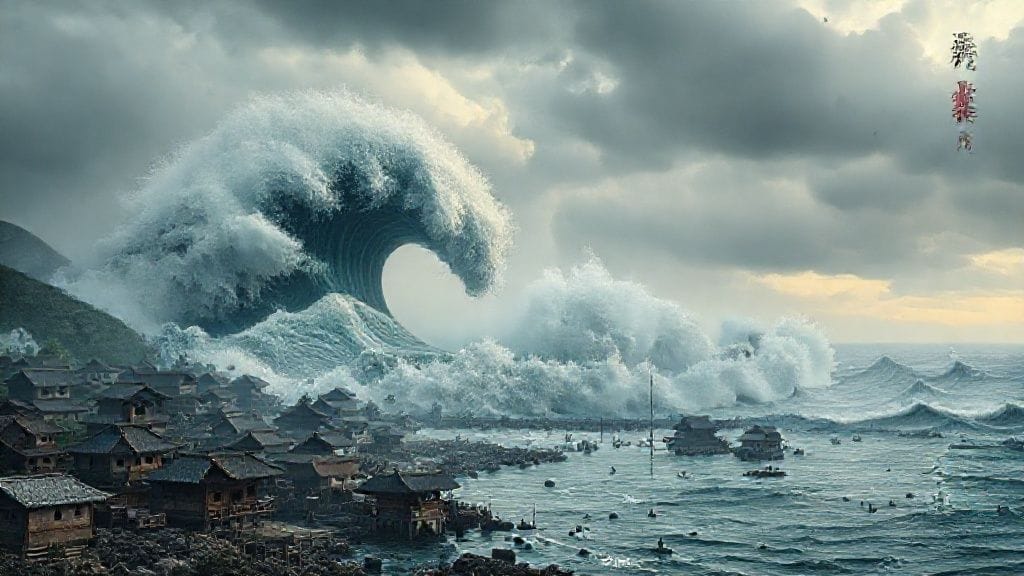
The result was catastrophic. The landslide plunged into the waters of the sea, generating a tsunami with waves reportedly reaching up to 30 meters in height. These monstrous waves thundered toward the shorelines of Shimabara and the opposite coast of the Ariake Sea, overwhelming everything in their path.
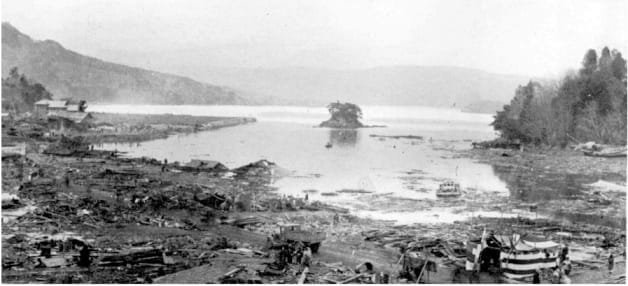
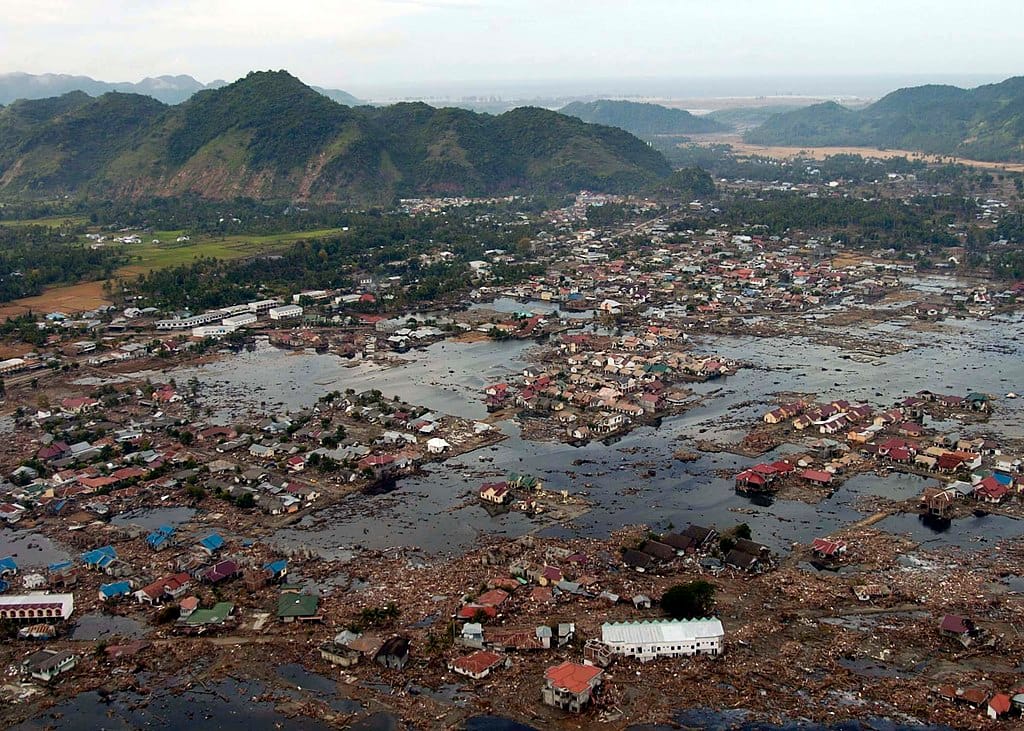
Victims were counted by the thousands. Entire villages were obliterated as the tsunami swept inland, tearing up fields, destroying homes, and sweeping away people unprepared for the sudden onslaught. Contemporary records describe scenes of frantic desperation, the roar of waves mingling with the screams of fleeing families. Some survivors spoke of being caught on rooftops or clinging to trees; others perished submerged under the relentless surge.
Among the casualties were peasants, fishermen, and townsfolk, their lives snatched away in moments. According to historical reports, the death toll was tragically high, with estimates ranging from 15,000 to nearly 20,000 people. The scale of loss sent shockwaves throughout Japan and captured the attention of scholars and officials alike.
One remarkable aspect was the testimony from survivors and witnesses, which was recorded in diaries and later government reports. These firsthand accounts bring a haunting human dimension to the disaster—voices etched with fear, confusion, and sorrow, but also remarkable images of resilience and community solidarity as survivors struggled to salvage their lives.
Beyond the immediate human tragedy, the tsunami and volcanic collapse profoundly affected the region’s economy and society. Fertile agricultural lands were buried under mud and debris; fisheries collapsed as the marine ecosystem was disrupted. Coastal trade routes suffered interruptions. Recovery would take years, requiring coordinated efforts and resilience.
From a scientific viewpoint, the 1792 Unzen–Shimabara event has become a critical case study in the fields of volcanology and tsunami research. Modern analyses point to this disaster as an early documented instance of a volcanic flank collapse triggering a megatsunami—one of the most significant such events in recorded history.
This tragedy came to occupy an important place within Japan’s historical narrative of natural disasters. It illustrated the dangers inherent in living close to volatile volcanoes and underscored the need for vigilance and preparedness long before modern technology.
The memory of Unzen–Shimabara has permeated local culture, inspiring folklore and cautionary tales warning against underestimating nature’s might. For centuries, the disaster shaped the regional consciousness, embedding itself into the collective psyche and influencing approaches to disaster risk reduction in the centuries to follow.
More than two centuries later, the lesson of Unzen–Shimabara remains poignant: nature’s fury can erupt with little warning, and the fragile boundary between human safety and calamity is drawn in fleeting seconds. The event propelled Japan’s long journey toward improved monitoring and disaster mitigation, foreshadowing the modern nation’s sophisticated systems.
Today, Mount Unzen stands as both a tourist attraction and a symbol—a vivid reminder of past devastation but also of survival and renewal. Visitors come to admire the dramatic volcanic landscapes while standing vigil to history’s warnings etched in stone and memory.
In the wider context, the 1792 tsunami ranks among the largest and deadliest in global history, comparable to other megatsunamis triggered by landslides and volcanic collapses. Scientists draw on it to better understand these complex phenomena, searching historical archives and geological records that bridge human memory and natural time.
In literature, art, and public memorials, the story of this disaster is preserved, honoring the lives lost and serving as a somber education for future generations. The tragedy speaks to the enduring relationship between humanity and the earth’s restless forces.
Ongoing research continues to unlock secrets of that day, using cutting-edge geological and hydrodynamic modeling, revealing more about how such events develop and how future tragedies might be averted or mitigated.
The tale of the Unzen–Shimabara tsunami of 1792 is, above all, a testimony to the fragile beauty of human existence beside nature’s grandeur and menace. It is a narrative of tragedy and resilience, of fiery mountains and devastating seas—a human story written in fire and water that continues to speak across the centuries.
Conclusion
The catastrophic events of May 21, 1792, at Mount Unzen and the Shimabara Peninsula present a dramatic chapter in the chronicle of natural disasters. They reveal the intertwined forces of geology and humanity—how the restless Earth can unleash destruction beyond anticipation and how communities confront loss, grief, and recovery. As the massive landslide plummeted and the monstrous tsunami surged forth, lives were altered irrevocably. The magnitude of the tragedy immortalized the event in both scientific literature and cultural memory, underscoring the impermanence yet resilience of human existence.
Today, reflecting on this disaster invites humility and respect toward nature’s power. It teaches vigilance, preparedness, and the value of understanding our environment deeply. More than that, it brings a human face to statistics and rocks, echoing unheard voices of the past and inspiring efforts to safeguard the future. The legacy of Unzen–Shimabara is a timeless call to remember that beneath every peaceful horizon, the earth’s forces are quietly at work—waiting, unpredictable, monumental.
FAQs
Q1: What caused the Unzen–Shimabara tsunami in 1792?
A1: The tsunami was generated by a massive landslide triggered by the eruption of Mount Unzen. The eastern flank of the volcano collapsed into the Ariake Sea, displacing large volumes of water and creating waves up to 30 meters high.
Q2: How many people died in the disaster?
A2: Estimates vary, but approximately 15,000 to 20,000 people lost their lives, making it one of Japan’s deadliest tsunamis.
Q3: How did the local population respond to the eruption and tsunami?
A3: Contemporary accounts describe frantic attempts to flee, with some survivors escaping by climbing trees or rooftops. The disaster overwhelmed communities unprepared for such a simultaneous volcanic and tsunami event.
Q4: What scientific lessons were learned from the Unzen–Shimabara event?
A4: It became a key example of volcanic flank collapse causing a megatsunami, informing modern geological and disaster preparedness science, particularly concerning volcanic hazards and tsunami risks.
Q5: Is Mount Unzen still active today?
A5: Yes, Mount Unzen remains an active volcano with intermittent eruptions. It is closely monitored by Japanese volcanologists to prevent similar future disasters.
Q6: How is the disaster remembered in Japan?
A6: The event is commemorated through memorials, local folklore, and educational initiatives emphasizing respect for nature and disaster readiness.
Q7: How does the 1792 tsunami compare to other historical tsunamis worldwide?
A7: It ranks among the largest tsunamis caused by volcanic landslides, comparable to events like the 1888 Ritter Island tsunami, and is significant for its death toll and geological implications.
Q8: What role does this event play in Japan’s disaster risk management today?
A8: It highlights the necessity for integrated volcanic and tsunami monitoring, influencing Japan’s advanced systems for early warning and public education on natural disasters.