Table of Contents
- The Gathering Storm: Europe on the Brink in the Late 14th Century
- The Papal Vacancy and the Election That Shook Christendom
- Urban VI’s Ascension: A Controversial Choice
- The Roman Clergy’s Dilemma: Loyalties Tested
- A Pope in Rome: Urban VI’s Vision for Reform
- The Alienation of the French Cardinals
- The Birth of the Western Schism: Dual Papacies Emerge
- Consolidating Roman Obedience: Urban VI’s Struggle for Legitimacy
- The Political Underpinnings: Alliances and Enmities
- Rome Transformed: The Urban VI Era’s Impact on the Eternal City
- The Human Cost: How the Schism Divided Hearts and Minds
- Diplomatic Maneuvers Across Europe: Kings, Princes, and the Church
- Urban VI’s Reforms or Ruthlessness? A Closer Look
- The Role of Anxiety and Fear in Prolonging the Schism
- The Urban Resistance: Followers Who Defied the Odds
- Stories from the Frontlines: Clergy, Laity, and the Torn Faithful
- How the Western Schism Redefined the Papacy’s Power
- The Endurance of Roman Obedience: Why Some Stayed Loyal
- The Schism’s Echo in Later European Religious Conflicts
- Reflections on Urban VI’s Legacy: Villain, Victim, or Visionary?
In the sultry heat of a Roman summer, the ancient city vibrated with uneasy anticipation. Narrow streets teemed with citizens and clergy alike, whispering of upheaval and the shadow of division stretching ever wider across Christendom. Here, amid the timeless basilicas and crumbling statues, a single man’s claim to supreme spiritual authority would ignite one of the most entangled crises in the medieval church’s history. Urban VI, a pope born from tumult, sought not only to rule but to unite a fracturing world, yet instead planted the seeds of a schism that would rend the very fabric of Western Christianity.
This was the Europe of the late 1380s: a continent perched on fault lines of political rivalry and religious fervor. The death of Pope Gregory XI had left a vacuum overcome by urgency and fear, setting the stage for a contested papal election that would pit neighbor against neighbor, king against king, all under the restless gaze of Rome itself.
The Gathering Storm: Europe on the Brink in the Late 14th Century
The late 14th century’s Europe was no tranquil scene. The aftermath of the Hundred Years’ War, the devastation of the Black Death, and simmering national rivalries made the continent an unstable mosaic of power and faith. The papacy, once a unifying spiritual beacon, had long suffered under the weight of political manipulation, particularly since the papal residence’s relocation to Avignon in 1309. This “Babylonian Captivity” of the popes had robbed Rome of its sacred status and fueled resentment among Italians and many within the Church’s hierarchy.
When Gregory XI at last returned the papal seat to Rome in 1377, it rekindled hopes of restored authority but also unleashed a torrent of distrust. The Roman populace, poised between reverence and suspicion, demanded reform and renewed vigor. It was this volatile mix that greeted the death of Gregory XI in March 1378, triggering a conclave that would echo through centuries.
The Papal Vacancy and the Election That Shook Christendom
In one of the shortest and most contentious papal conclaves in history, the Roman cardinals, under considerable pressure from an anxious Roman mob, elected Bartolomeo Prignano as Pope Urban VI. His election was almost an afterthought to the restless crowd demanding an Italian pope, but it would turn out to be anything but conciliatory.
Urban VI was a man of austerity and fiery temper, a former archbishop of Bari well known for his strictness and reformist zeal. His coronation seemed initially to promise a dawn of discipline within the Church, but it quickly became apparent that his leadership would be a crucible of conflict.
Urban VI’s Ascension: A Controversial Choice
Urban VI’s rise was marred by deep suspicions and immediate opposition. The French cardinals, who formed the largest bloc within the College of Cardinals and had favored a different candidate, soon declared that Urban’s election had been made under duress from the Roman mob. In a stunning move, they convened their own conclave and elected a rival pope: Robert of Geneva, who took the name Clement VII.
Thus, began the schism that cleaved the Church, with Europe divided between two competing papacies — one in Rome, the other in Avignon. Urban’s resolute claim to legitimacy would force him into a prolonged struggle for recognition and control.
The Roman Clergy’s Dilemma: Loyalties Tested
Within Rome itself, clergy and citizens found themselves caught in a maelstrom of allegiance and fear. Many admired Urban’s determination, but others feared the repercussions of alienating powerful monarchs aligned with the Avignon papacy. Families were divided; some priests risked exile or worse by supporting either side.
The schism called for more than theological justifications — it demanded political dexterity and personal courage. Urban VI, aware of his precarious standing, embarked on a campaign to consolidate obedience among the Roman clergy, showering favors on loyalists and punishing disloyalty with harshness.
A Pope in Rome: Urban VI’s Vision for Reform
Urban VI saw himself as a moral crusader tasked with cleansing the Church from decadence and corruption. His ambition went beyond securing the papal throne; he sought institutional reform that would restore the Church’s spiritual authority, attacking the very decadence that many of his contemporaries tolerated.
Taxes on the clergy, the regulation of ecclesiastical benefices, and the stern discipline of clerical life were the hallmarks of his papacy. Yet, his uncompromising nature alienated many within Rome and beyond, giving credibility to his opponents’ accusations of cruelty and instability.
The Alienation of the French Cardinals
The French cardinals’ rejection of Urban VI was rooted in genuine fear and political calculation. They viewed his election as illegitimate and his temperament as dangerous. Their swift election of Clement VII deepened the divide, backed by the French crown and allies who saw in Clement a papacy more amenable to their interests.
This rivalry was no mere ecclesiastical dispute; it was a proxy battle over France’s influence in Christendom and a contest for the loyalty of other European monarchies.
The Birth of the Western Schism: Dual Papacies Emerge
The Western Schism (also known as the Papal Schism) officially took shape in 1378 and endured for nearly four decades. With two, and at times even three, concurrent popes claiming full legitimacy, the Christian world was fractured, and the once-unifying force of the papacy became a symbol of division and confusion.
Urban VI’s efforts to consolidate obedience in Rome were met with countermeasures from Avignon and eventually from other claimants. This ecclesiastical impasse had profound consequences, shaking faith and sovereignty across kingdoms.
Consolidating Roman Obedience: Urban VI’s Struggle for Legitimacy
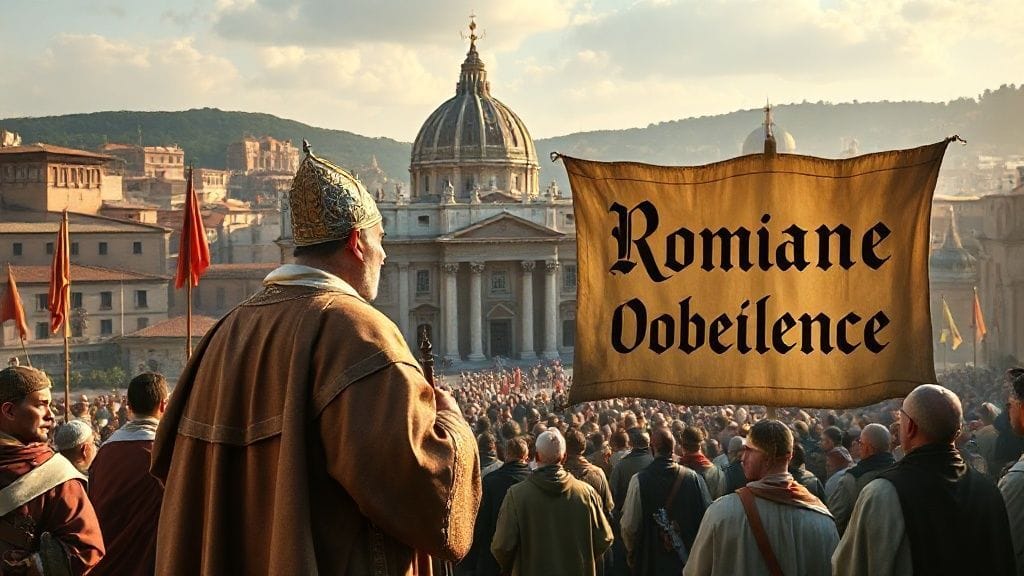
Despite the hostility, Urban VI wielded the ancient city and its symbolism like a banner. He convened synods, issued bulls, and enlisted the support of Italian city-states and some central European rulers. His base in Rome became a fortress of papal ambition.
Yet his rule was marred by rebellions, excommunications, and shifting alliances. The ongoing violence in Rome itself — riots, assassinations, imprisonments — reflected the instability that surrounded the pope. Still, Urban’s defiant persistence attracted a core of followers, fiercely loyal despite the pope’s often harsh methods.
The Political Underpinnings: Alliances and Enmities
Power struggles between England and France, the Holy Roman Empire’s fragmented loyalties, and the ambitions of Italian city-states all played into the schism’s prolongation. Alignments often followed national lines, with France and its allies backing Avignon, while England, much of Italy, and parts of Germany recognized Urban VI.
This political chess game transformed the Church into a stage for wider European rivalries, prolonging the schism beyond mere doctrinal disputes.
Rome Transformed: The Urban VI Era’s Impact on the Eternal City
Rome itself endured a dramatic transformation under Urban VI’s reign. The papal court’s return to the city came with a resurgence of civic pride but also disorder. The city’s population fluctuated violently under the pressure of factional street violence, economic disruption, and the constant presence of armed guards.
Urban VI’s urban policies sought to reassert papal authority over fractious nobles and mercenary captains who controlled parts of the city, imposing order with varying success. The Eternal City’s image, battered by decades of papal absence, gained renewed significance, but at a high cost.
The Human Cost: How the Schism Divided Hearts and Minds
For ordinary Christians — peasants, merchants, priests — the schism was more than a political crisis; it was a spiritual crisis. The confusion over which pope to obey sparked sermons of doubt, crises of conscience, and divided communities.
Families fractured, monasteries split, and priests faced the grim choice between obedience and survival. The era’s letters and chronicles frequently reveal pleas for unity and reflections on the torment caused by such divided authority.
Diplomatic Maneuvers Across Europe: Kings, Princes, and the Church
Diplomatic envoys crisscrossed Europe, seeking to broker peace or curry favor with one pope or the other. The schism forced secular rulers to navigate treacherous waters, balancing religious allegiance and political necessity.
The kingdoms of England and France, locked in their own conflict, extended the schism’s consequences into alliance-building and warfare, with the Church’s split mirroring secular discord.
Urban VI’s Reforms or Ruthlessness? A Closer Look
Historical opinions diverge on Urban VI’s legacy. Some historians portray him as a reformer whose zeal burned too fiercely, causing needless suffering. Others see a ruthless tyrant whose paranoia and cruelty undermined the papal cause.
His harsh measures against dissenters, including executions and imprisonment, contributed to portrayals of him as volatile. Yet to dismiss his efforts as mere tyranny ignores his genuine desire to rescue the papacy from corruption.
The Role of Anxiety and Fear in Prolonging the Schism
Underlying the schism was deep anxiety—about authority, tradition, and the future of Christianity. Fear fueled suspicion on all sides, making compromise nearly impossible.
Political actors worried that recognizing the rival pope would weaken their own power; faithful worried about eternal salvation and divine favor. This emotional landscape ensured that the schism would endure far beyond Urban VI’s lifetime.
The Urban Resistance: Followers Who Defied the Odds
Despite overwhelming challenges, Urban VI’s faction persisted. Cardinals, bishops, and secular rulers remained steadfast, often at great personal risk. Their loyalty reflected genuine conviction or pragmatic political calculation—or sometimes a mixture of both.
This core group maintained the continuity of Roman obedience through turbulent years of exile, violence, and fragmentation.
Stories from the Frontlines: Clergy, Laity, and the Torn Faithful
Personal letters, chronicles, and sermons from the era offer poignant glimpses into ordinary lives caught in extraordinary times. From a monk’s lament about divided monasteries to a merchant’s concern over trade disrupted by ecclesiastical confusion, the human dimension of the schism resonates across the centuries.
These stories infuse the grand historical narrative with emotion and immediacy.
How the Western Schism Redefined the Papacy’s Power
The schism exposed fundamental weaknesses in papal authority, calling into question the idea of a singular, divinely ordained pope. The crisis eventually forced the Council of Constance (1414–1418), which ended the schism but weakened papal prestige in the process.
Urban VI’s era thus marks a turning point toward conciliarism and the modern rethinking of church governance.
The Endurance of Roman Obedience: Why Some Stayed Loyal
What inspired the Roman obedience faction to endure seemingly endless conflict? Faith in tradition, fear of heresy, regional loyalties, and political considerations all played parts.
Their persistence shaped the future Catholic Church, underscoring the complexity of allegiance in faith and politics.
The Schism’s Echo in Later European Religious Conflicts
The fragmentation sown during the schism echoed through the Reformation and beyond, highlighting the dangers of divided spiritual authority. Lessons from Urban VI’s time resonate in subsequent church-state relations and conflicts over religious legitimacy.
Reflections on Urban VI’s Legacy: Villain, Victim, or Visionary?
Urban VI remains one of the most enigmatic popes. Was he a fiery reformer crushed by circumstance, a cruel tyrant who fractured the Church, or something in between? Contemporary accounts reveal a man consumed by the weight of his office yet prone to fits of anger and suspicion.
His legacy invites reflection on power, faith, and human imperfection.
Conclusion
The saga of Urban VI and the consolidation of Roman obedience during the Western Schism captures a moment when the fragile threads binding medieval Christendom stretched perilously thin. Urban VI’s papacy was not a tale of grand triumph but one of intense struggle—of a man battling enemies within and without, of a city wrestling with its identity, and of an entire continent torn between competing visions of faith and authority.
Yet, in this crucible of conflict, the roots of modern papal authority and church identity were forged. The schism revealed the vulnerabilities of spiritual institutions enmeshed in worldly power, but also the resilience of belief and tradition.
Urban VI's story is a stirring reminder of how history’s greatest upheavals are often the result of profoundly human dramas—of ambition, fear, conviction, and the ceaseless quest for unity amid division.
FAQs
Q1: What triggered the Western Schism following Urban VI’s election?
A1: The trigger was the disputed legitimacy of Urban VI’s election under pressure from a Roman mob and the subsequent election of a rival pope, Clement VII, by French cardinals. National rivalries and political anxieties then entrenched the division.
Q2: What were Urban VI’s main policies during his papacy?
A2: He pursued reforms aimed at moral and institutional discipline, including stricter clerical conduct, taxation of clerical wealth, and crackdown on corruption, often enforced with severity.
Q3: How did European monarchs react to the schism?
A3: Monarchs generally aligned with the candidate who best suited their political interests—France favored the Avignon pope; England and parts of Italy supported Urban VI—turning the schism into a geopolitical conflict.
Q4: Was Urban VI universally disliked?
A4: Opinions were mixed; while many criticized his harshness and temper, others admired his commitment to reform and loyalty to Rome.
Q5: How long did the Western Schism last?
A5: It lasted around 39 years (1378–1417), ending with the Council of Constance’s resolution and the election of Pope Martin V.
Q6: What was the significance of Rome during Urban VI’s papacy?
A6: Rome reclaimed its spiritual and political importance as the papal seat, though it endured instability, violence, and factionalism under Urban’s turbulent reign.
Q7: How did the schism affect ordinary Christians?
A7: It sowed confusion and division, forcing many to choose allegiances, disrupting religious practices, and shaking faith in Church unity.
Q8: What is Urban VI’s legacy in the history of the papacy?
A8: His legacy is complex—he is seen as a symbol of papal resilience and reformist zeal yet also as a figure who catalyzed one of the Church’s most damaging crises.

