Table of Contents
- The Fateful Morning in Geneva: USSR’s Expulsion Unfolds
- Seeds of Suspicion: The League of Nations and Soviet Relations
- The Interwar Period: Tensions, Alliances, and Ideological Clashes
- 1939: Europe on the Brink and the Soviet Gambit
- The Nazi-Soviet Pact: A Diplomatic Earthquake
- Geneva’s Halls of Power: Debates That Shook the League
- December 14, 1939: The Day of Expulsion
- Reactions from Moscow: Defiance and Denial
- The Western Powers’ Perspective: Justice or Politics?
- The League’s Credibility in Question: Between Idealism and Realpolitik
- Soviet Narratives: Propaganda and International Image
- The Broader Context: The Dawn of World War II
- Impact on Soviet Foreign Policy: Retrenchment and Reorientation
- The Role of Smaller Nations: Witnesses and Victims
- Cultural and Psychological Reverberations in the USSR
- The Expulsion’s Echo in International Law and Diplomatic Norms
- Historians Weigh In: Controversies and Debates
- Remembering 1939: The USSR and the League in Retrospect
- Lessons for Modern Governance and Collective Security
- The Hidden Stories: Personal Accounts and Anecdotes
- The League’s Final Years: From High Hopes to Obsolescence
- The Soviet Path Forward: Isolation or Integration?
- Conclusion: Expulsion as a Cornerstone in 20th-Century Geopolitics
- FAQs on USSR’s Expulsion from the League of Nations
- External Resource
- Internal Link
The Fateful Morning in Geneva: USSR’s Expulsion Unfolds
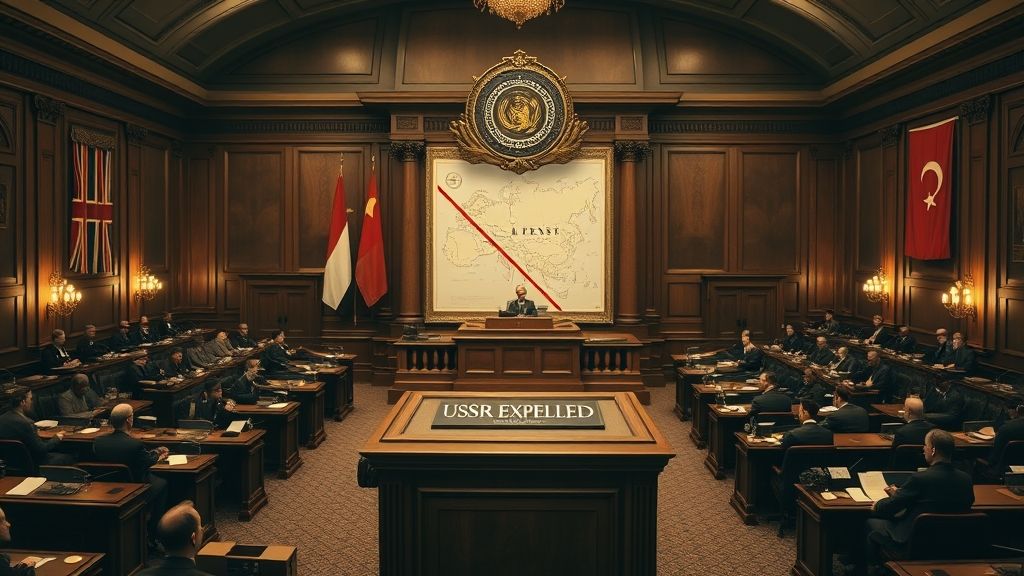
On a cold December morning in 1939, beneath the austere facades of the League of Nations headquarters in Geneva, a decisive and dramatic moment was about to irreversibly alter the landscape of international diplomacy. Delegates from across the globe gathered in a room charged with tension and unspoken desperation. The Soviet Union—once a proud and controversial member of the League—faced the ignominy of being cast out. This was no ordinary diplomatic squabble; it was a symbolic rupture that echoed the mounting chaos sweeping through Europe and the ominous thunder of war.
As the vote was called, silence fell. Delegates exchanged furtive glances; the gravity of the moment weighed heavily on all present. To expel one of the world’s largest nations from an organization aiming to preserve peace seemed almost surreal. Yet, to many, it was a necessary act of condemnation—or so the argument went. For others, it was a glaring sign of the League’s impotence and the fracturing of idealism in the face of harsh geopolitical realities.
Seeds of Suspicion: The League of Nations and Soviet Relations
To grasp the full significance of the USSR's expulsion, one must first understand the subtleties of its uneasy relationship with the League of Nations. Founded after the First World War as an ambitious experiment in collective security and diplomacy, the League sought to prevent future global conflicts through dialogue and cooperation. However, the Soviet Union, emerging from revolution and civil war, was viewed with both suspicion and ideological hostility by much of the Western world.
The USSR was not an original member of the League, and it joined only in 1934, after years of diplomatic isolation. Its admission was controversial—many in the West feared communist subversion, while the Soviets begrudgingly accepted the League as a platform to assert themselves internationally. Yet, from the start, the Soviet Union's membership was fraught with distrust, ideological clashes, and conflicting strategic interests.
The Interwar Period: Tensions, Alliances, and Ideological Clashes
In the interwar years, the League struggled between lofty ideals and harsh realities. While envisioning a world governed by peace and dialogue, the League often found itself paralyzed by competing national interests and the rise of authoritarian regimes. The Soviet Union, keen to protect itself from Western encirclement and to spread communism, oscillated between cooperation and antagonism.
The ideological fault lines widened dramatically. Fascism rose on the continent, communism expanded its influence, and democracies wrestled with their own internal crises. The USSR’s calls for collective defense against fascism were often ignored or dismissed as communist propaganda. This period sowed seeds of mistrust that would later culminate in dramatic confrontations. The Soviet Union’s foreign policy was increasingly shaped by a ruthless appraisal of power and survival rather than idealism.
1939: Europe on the Brink and the Soviet Gambit
By 1939, Europe was standing on the precipice of war. The aggressive expansionism of Nazi Germany and Fascist Italy challenged the fragile peace. The Molotov–Ribbentrop Pact, signed in August 1939 between Nazi Germany and the Soviet Union, shocked the world—a non-aggression agreement laced with secret protocols that divided Eastern Europe into spheres of influence.
This pact was viewed in the West as a cynical betrayal of the anti-fascist cause, fueling resentment against the USSR. To many, the Soviet Union appeared complicit with Germany’s ambitions. This perception catalyzed the drive to isolate the USSR further, which would ultimately manifest in its expulsion from the League of Nations.
The Nazi-Soviet Pact: A Diplomatic Earthquake
Behind closed doors, Soviet leaders like Vyacheslav Molotov and Joseph Stalin rationalized the pact as a necessary strategic move to buy time and safeguard their nation. Yet, the West wired their reaction in terms of betrayal and duplicitous diplomacy. The pact disrupted the hopes of pro-league factions and intensified diplomatic isolation for the Soviet Union.
The pact’s secret protocols, later revealed, outlined a grim division of Poland and the Baltic states, highlighting the stark realpolitik that overshadowed the League’s idealistic mission. These acts pushed the Soviet Union beyond the pale of accepted international norms, giving its adversaries justification to act.
Geneva’s Halls of Power: Debates That Shook the League
In Geneva, December 1939 was no ordinary month. The assembly of the League wrestled with the ramifications of recent events. Delegates fiercely debated the consequences of the Soviet-German agreement, the invasion of Poland, and the growing threat to peace and security.
The call for the Soviet Union’s expulsion was met with impassioned speeches from both supporters and defenders. Some argued that expulsion was a necessary measure to uphold the League’s principles, condemning Soviet aggression and betrayal of international trust. Others warned that such a move would destroy any hope of collective security and push the USSR further into isolation.
December 14, 1939: The Day of Expulsion
On December 14, 1939, the votes were tallied, and the decision was final. The Soviet Union was expelled from the League of Nations. The symbolic weight of the event transcended the cold mechanics of diplomacy. It was a public censure and ostracism that reverberated worldwide.
For the Soviet delegation, it was a slap in the face—a confirmation of their pariah status in the Western world. For League supporters, it was a reaffirmation of moral and legal order, even if painfully imperfect. The halls of the League, once bursting with hope, now echoed with the mortifying silence of failure.
Reactions from Moscow: Defiance and Denial
The reaction within Moscow was swift and defiant. Soviet media framed the expulsion as hypocritical and politically motivated, attacking it as a maneuver by capitalist powers bent on weakening the USSR. Stalin used this incident to consolidate domestic power, reinforcing the narrative of Western hostility while justifying harsh internal controls.
Diplomatic channels were severed, and the Soviet Union doubled down on its own alternative alliances. The repudiation from Geneva deepened the chasm between East and West, shaping the ideological battleground of the Cold War’s origins.
The Western Powers’ Perspective: Justice or Politics?
From London, Paris, and Washington, opinions on the expulsion reflected broader frustrations and anxieties. There was genuine outrage over Soviet collaboration with Nazi Germany; yet, many diplomats privately rued the missed opportunity for dialogue.
This episode served as a stark demonstration of the limits of the League and the complex calculus of international morality. The expulsion became a symbol of the failure to build a stable collective security framework capable of withstanding the pressures of totalitarian ambitions.
The League’s Credibility in Question: Between Idealism and Realpolitik
The Soviet expulsion underscored a deep crisis of legitimacy for the League of Nations. The body, designed to embody universal cooperation, had lost critical members and suffered decisive blows to its authority. The inability to prevent aggression in Europe and the fracturing of major powers marked the beginning of the League’s rapid decline.
Critics argued that the expulsion was less about principled law than about political convenience and blame-shifting. The League’s inability to enforce collective action against Germany itself cast a long shadow over its moral stance against the Soviet Union.
Soviet Narratives: Propaganda and International Image
The Soviet government deployed a robust propaganda campaign to reframe the narrative. The expulsion was portrayed domestically as proof of Western hostility and imperialist plotting. The USSR emphasized its commitment to peace and the equality of nations, positioning itself as the true defender of socialism against capitalist aggression.
Internationally, the Soviet Union sought new partnerships and propaganda tools to counterbalance Western isolation. The expulsion became a rallying point to strengthen internal cohesion and project resistance.
The Broader Context: The Dawn of World War II
The expulsion occurred against the backdrop of the early months of World War II—a conflict that would engulf the globe and redefine international relations. The League’s impotence and the fractured alliances illustrated the collapse of interwar internationalism.
While the political spotlight shone brightly on Germany’s war efforts, the Soviet Union quietly consolidated its territorial gains under the secret protocols of the Nazi-Soviet pact, further complicating the moral and political landscape.
Impact on Soviet Foreign Policy: Retrenchment and Reorientation
Forced out of the League and ostracized by much of the West, the Soviet Union retreated into a more insular and suspicious stance. Moscow favored bilateral agreements over multilateral diplomacy, wary of international bodies perceived as hostile.
This shift led to reinforcement of Soviet security policies: strengthening military defenses, expanding spheres of influence, and pursuing strategic alliances on its own terms. The expulsion became a catalyst for a more skeptical, pragmatic Soviet diplomacy that prioritized survival over idealism.
The Role of Smaller Nations: Witnesses and Victims
Smaller nations within the League watched the drama unfold with apprehension. Many were caught between larger powers, uncertain where allegiances lay. For countries in Eastern Europe, the Soviet expulsion meant shifting alliances and growing fear of domination.
The expulsion highlighted the limitations smaller nations faced in influencing global outcomes and underscored their vulnerability to the ambitions of great powers. The stability they had hoped the League might guarantee was slipping away.
Cultural and Psychological Reverberations in the USSR
Beyond diplomacy and politics, the expulsion had profound cultural and psychological impacts in the Soviet Union. It reinforced a siege mentality, fostering narratives of existential threat and endurance. Soviet intellectuals and artists grappled with the isolation, sometimes expressing defiance, other times despair.
This expelled status fed into Stalinist propaganda and justified harsh internal repression as necessary to defend the revolution against external enemies. The scars of 1939 lingered in Soviet collective memory throughout the decades.
The Expulsion’s Echo in International Law and Diplomatic Norms
The expulsion set precedents in international law and collective security debates. It raised critical questions about membership criteria, the enforcement of league mandates, and the balance between sovereignty and global responsibility.
While the League itself dissolved a decade later, these questions remained at the heart of subsequent institutions such as the United Nations. The USSR’s expulsion helped define the limits and potentials of international organizations in managing conflict.
Historians Weigh In: Controversies and Debates
Historians offer varying assessments of the expulsion. Some see it as a justified response to Soviet duplicity and aggression; others argue it was a strategic blunder that accelerated global polarization.
The episode remains a focal point for understanding the failure of interwar diplomacy and the complex interplay of ideology, power, and international law. It encapsulates the tragedy of an idealistic project crushed by realpolitik and mutual mistrust.
Remembering 1939: The USSR and the League in Retrospect
Decades later, the expulsion is viewed through the lens of history as both a symptom and cause of profound global upheaval. While the League of Nations is often remembered as a well-intentioned but flawed experiment, the Soviet expulsion stands as a stark reminder of the difficulties in reconciling ideology and diplomacy.
In Russia and the post-Soviet states, memory of this moment remains mixed—part shame, part defiant pride, and a poignant lesson in international exclusion.
Lessons for Modern Governance and Collective Security
The story of the Soviet expulsion offers enduring lessons. It reflects the complexities of building inclusive institutions capable of managing diverse interests and ideologies. The balance between accountability and engagement remains delicate.
In an age where global cooperation is more essential than ever, revisiting this dramatic episode invites reflection on how to navigate distrust, power struggles, and the pursuit of peace.
The Hidden Stories: Personal Accounts and Anecdotes
Amidst the political thunder, personal stories from diplomats, translators, and observers shed light on the human dimension of the expulsion. Anecdotes reveal moments of solidarity, heartbreak, and courage, reminding us that history is lived by individuals as much as by nations.
The expressions on faces, whispered conversations, and private reflections at Geneva capture the emotional truth behind the diplomatic rhetoric.
The League’s Final Years: From High Hopes to Obsolescence
After the expulsion, the League’s fate was sealed. The outbreak of global war and the absence of major powers rendered it obsolete. The expulsion was both a symptom and a cause of decline.
Yet, its legacy shaped the architecture of the postwar world. The lessons learned guided the creation of the United Nations, an organization determined to avoid the mistakes of its predecessor.
The Soviet Path Forward: Isolation or Integration?
Following expulsion, the Soviet Union pursued a complex path, fluctuating between isolation and limited global engagement. The trauma of 1939 informed Cold War postures and influence.
Nevertheless, the USSR would later join the United Nations in 1945, signaling a pragmatic reintegration into global governance structures, albeit along very different ideological lines.
Conclusion: Expulsion as a Cornerstone in 20th-Century Geopolitics
The Soviet Union’s expulsion from the League of Nations on December 14, 1939, stands as a defining moment in 20th-century geopolitics. It encapsulates the collapse of interwar idealism, the rise of ideological conflict, and the tragic limits of collective security.
This event, fraught with symbolism and consequence, shaped the course of World War II and the Cold War. It reminds us how fragile peace is when trust breaks down and how vital it is for the international community to seek unity without sacrificing justice.
Ultimately, the expulsion is not merely a diplomatic footnote but a vivid story of ambition, fear, and the complex dance of nations on the world stage.
FAQs on USSR’s Expulsion from the League of Nations
Q1: Why was the Soviet Union expelled from the League of Nations?
A: The USSR was expelled chiefly because of its signing of the Molotov–Ribbentrop Pact with Nazi Germany and subsequent invasion of Poland, actions viewed as violations of the League’s principles and peace ideals.
Q2: What role did the Molotov–Ribbentrop Pact play in the expulsion?
A: The pact shocked the world by aligning the USSR with Nazi Germany. This strategic alliance alienated the Soviet Union from Western powers, leading to its expulsion as a measure of condemnation.
Q3: How did the expulsion impact Soviet foreign policy?
A: It pushed the Soviet Union into greater isolation, encouraging a more pragmatic and defensive foreign policy focused on survival and sphere of influence rather than multilateral diplomacy.
Q4: What was the reaction within the Soviet Union to the expulsion?
A: It was depicted as an act of Western hostility and imperialism, strengthening internal propaganda narratives that justified repression and emphasized external threats.
Q5: Did the expulsion weaken the League of Nations?
A: Absolutely. The expulsion exposed the League’s inability to maintain universal membership and credibility, accelerating its decline.
Q6: How is the expulsion viewed by historians today?
A: Perspectives vary: some see it as a justified response to Soviet realpolitik, others as a missed opportunity for engagement that worsened global tensions.
Q7: Did the Soviet Union ever rejoin international organizations?
A: Yes, notably the Soviet Union joined the United Nations in 1945, signaling a new chapter of cautious reintegration into global diplomacy.
Q8: What lessons does this event offer for modern international relations?
A: It highlights the challenges of balancing enforcement of international norms with inclusive diplomacy and the importance of building trust among diverse nations.