Table of Contents
- A Deadly Tremor Awakens the Steppes: The Gazli Earthquake, March 8, 1984
- The Silent Fault Lines: Geological Setting of Uzbekistan
- Soviet Central Asia in the 1980s: A Land of Transformation and Tensions
- Gazli: From Gas Fields to Ground Shakes
- March 8, 1984—A Picture of Catastrophe Unfolds
- The Immediate Aftermath: Rescue, Trauma, and Uncertainty
- Voices from the Ruins: Eyewitnesses and Personal Stories
- The Soviet Response: Secrecy, Aid, and Political Calculations
- Gazli’s Gas Fields: Economic Stakes Amidst Natural Disaster
- Infrastructure Under Siege: How the Earthquake Ravaged the Region
- Mortality and Injury: The Human Toll of March 1984
- Earthquake Science at Soviet Service: Understanding the Tremor
- Lessons Unlearned: Gazli and the Pattern of Soviet Disaster Management
- The Global Context: Earthquake Awareness in the 1980s
- Gazli Today: Memory, Reconstruction, and Resilience
- The Earthquake’s Legacy: How It Shaped Regional Policies and Preparedness
- Geopolitical Ripples: Gazli in the Cold War Shadow
- Cultural and Social Impact: Communities Rebuilt on Shaken Grounds
- The Unseen Aftershock: Long-term Psychological Effects
- Gazli’s Story in Post-Soviet Uzbekistan: National Identity and Memory
- From Tragedy to Research: Scientific Studies Sparked by Gazli
- The Role of Media: Reporting Disaster Behind the Iron Curtain
- International Aid and Silent Borders
- Commemorations and Memorials: Remembering March 8, 1984
- Reflections: Gazli as a Call for Modern Disaster Preparedness
1. A Deadly Tremor Awakens the Steppes: The Gazli Earthquake, March 8, 1984
On an ordinary spring day in 1984, as the sun dawned over the vast, arid plains of modern-day Uzbekistan, the ground beneath the town of Gazli betrayed its silent strength. Within seconds, the earth convulsed violently, shattering a fragile sense of security for tens of thousands. Homes crumbled, gas pipelines ruptured, and a shroud of dust and despair engulfed the region. The Gazli earthquake was not just a natural phenomenon; it was a moment that fractured lives, exposed vulnerabilities, and painted a stark portrait of human fragility in the face of Earth’s ancient forces.
It was early morning, and many were still wrapped in dreams when the tremor shattered the stillness. The deafening roar was soon followed by an eerie silence — one pregnant with fear, uncertainty, and grief. In a remote Soviet republic often overlooked by the world, the impact was profound yet muted, the stories buried beneath layers of politics and geography. But beneath this quiet façade beat the heart of a community grappling with sudden catastrophe.
2. The Silent Fault Lines: Geological Setting of Uzbekistan
Uzbekistan sits at a geological crossroads, where the vast Eurasian tectonic plate meets the shrinking remnants of the ancient Tethys Ocean. The region’s subterranean architecture is a mosaic of fault lines and seismic zones, vestiges of mountain-building processes that formed the majestic Tien Shan ranges. The Gazli area, famed for its vast natural gas reserves, is also interpreted as a hotbed of seismic activity, lying atop deep faults capable of releasing pent-up energy with devastating consequences.
Seismologists had long warned about the potential for destructive quakes here, though the Soviet focus on industrialization and extraction often overshadowed such warnings. The ground beneath Gazli was restless, a sleeping giant that would awaken on that cold March morning, reminding the world of the untamed Earth beneath.
3. Soviet Central Asia in the 1980s: A Land of Transformation and Tensions
The early 1980s in Uzbekistan marked a time of both economic ambition and socio-political rigidity. The Soviet Union had poured resources into Central Asia’s rich energy sector, making Gazli a beacon of resource development with sprawling gas fields fueling the Soviet economy. But the human cost was high: local populations toiled under shadowed governance, with little voice in decisions that affected their lives.
Political censorship, cultural suppression, and economic disparity marked the daily grind for many Uzbeks. Above ground, stability was the Soviet façade; beneath it, fault lines ran through society just as dangerously as those in the earth. In such a climate, a disaster like the Gazli earthquake was not just an environmental calamity but a test of Soviet authority, resilience, and human spirit.
4. Gazli: From Gas Fields to Ground Shakes
Gazli was not just any town tucked into Soviet Uzbekistan. It was a pulsating hub of natural gas production, home to thousands of workers, engineers, and families. Gas flares illuminated the night skies; pipelines crisscrossed the terrain like veins delivering lifeblood to an industrial heart. The economy revolved around this treasure beneath the earth, a source of pride and sustainability.
Yet, beneath this success, the land carried a hidden threat. Years of intensive drilling and extraction, while boosting economic output, may have exacerbated the natural seismic volatility. The delicate balance of natural forces was ignored, and on March 8, that oversight had tragic consequences.
5. March 8, 1984—A Picture of Catastrophe Unfolds
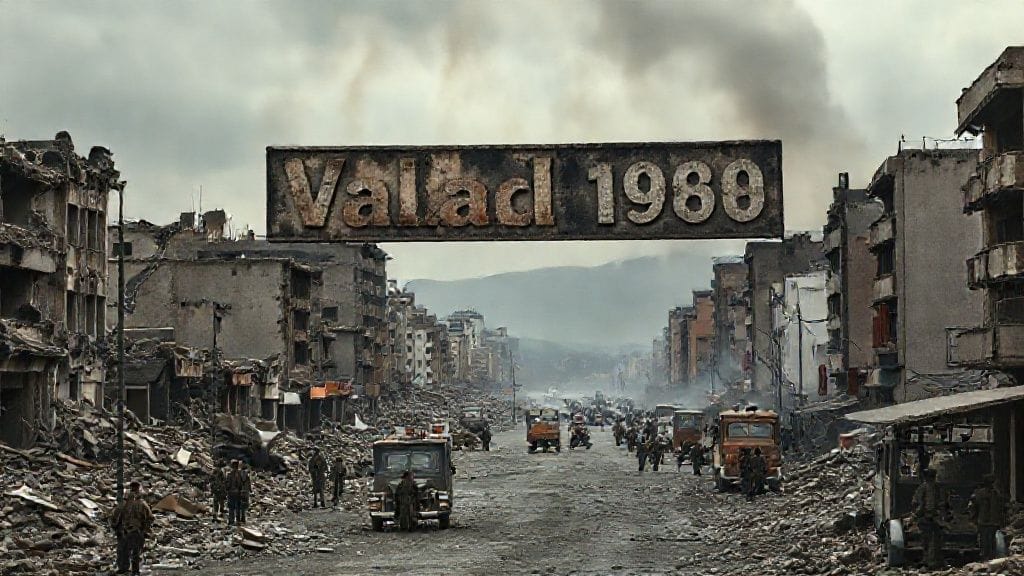
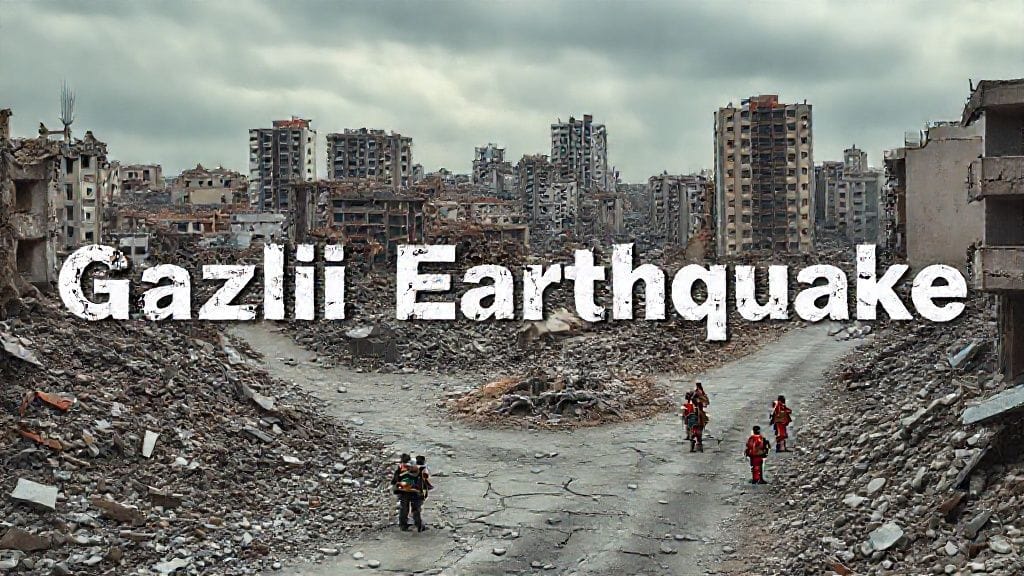
At 7:20 AM local time, the earth shook violently. The mainshock registered a magnitude estimated between 5.5 and 6.0 — powerful enough to level buildings designed with minimal seismic considerations. People fled rushing streets, but many were trapped beneath rubble. Gas pipelines fractured, sparking fires that consumed entire neighborhoods.
The chaos was immediate and overwhelming. Hospitals were flooded with injured, communications were sporadic, and emergency services struggled against the odds. The seismic pulse echoed hundreds of kilometers away, rattling nerves far beyond Gazli. Yet, details filtered out slowly, as Soviet secrecy veiled the full scope.
6. The Immediate Aftermath: Rescue, Trauma, and Uncertainty
In the hours following the quake, a land of dust and twisted metal revealed the human cost. Rescuers combed through ruins, searching for survivors amid the biting cold and ash. Trauma was etched on every face — the anguish of loss, the shock of survival, and the grim realization of destruction.
Families mourned, children cried, and the region was plunged into uncertainty. Official reports spoke in numbers and statistics—thousands displaced, hundreds dead, yet the stories of personal anguish defied such cold calculations. In the absence of modern disaster management tools, communities resorted to mutual aid, solidarity binding fragmented lives together.
7. Voices from the Ruins: Eyewitnesses and Personal Stories
Among the ashes, survivors emerged with stories that painted a vivid, human portrait of the disaster. An engineer who felt the tremor shake the gas plant described the terrifying moments when flames erupted, "It was as if the earth tore itself open. We ran, but so many were caught unaware." A mother recounted shielding her children beneath fallen beams, praying for rescue.
These narratives reveal more than the facts; they convey resilience, fear, and the raw immediacy of tragedy. Gazli was not just a statistic — it was a mosaic of shattered hopes and undying courage.
8. The Soviet Response: Secrecy, Aid, and Political Calculations
True to Soviet modus operandi, information about the Gazli earthquake was tightly controlled. Media reports downplayed damage, emphasizing rapid aid and recovery. Yet insiders reveal a more complicated reality of bureaucratic inertia, delayed responses, and prioritization of industrial assets over human needs.
Aid arrived slowly, and while the Soviet government mobilized resources, the broader narrative remained one of control, preserving the image of a strong, unshaken state. International awareness was minimal. The tragedy was a quiet tremor in a world fixated on Cold War rivalries.
9. Gazli’s Gas Fields: Economic Stakes Amidst Natural Disaster
The industrial heart of Gazli — its gas fields — faced major risks. Pipelines ruptured, production halted, and fires threatened explosions that could spiral out of control. The Soviet Union’s dependence on Central Asian energy rendered the stakes high.
Repair crews worked under perilous conditions to restore extraction and delivery. The earthquake exposed vulnerabilities not only in infrastructure but also in the region’s economic model, reliant on fragile systems vulnerable to the elements.
10. Infrastructure Under Siege: How the Earthquake Ravaged the Region
Beyond human loss, the earthquake devastated critical infrastructure. Roads cracked, bridges bent, and communication lines failed. Water supplies were contaminated, adding a public health crisis to the disaster.
The patchwork Soviet-designed buildings, often constructed with cost in mind over safety, bore the brunt. The disaster spotlighted infrastructural weaknesses that required urgent reassessment, yet political will for such reforms remained limited during the late Soviet era.
11. Mortality and Injury: The Human Toll of March 1984
Estimates vary, but hundreds were killed, and thousands injured. The tragedy disproportionately affected vulnerable populations — women, children, and the elderly. Many injuries were severe, with limited medical facilities overloaded by the sudden influx.
Grief was communal; funerals punctuated the weeks that followed, while survivors carried scars visible and invisible. The community struggled to comprehend the scale of loss amid efforts to rebuild and hope.
12. Earthquake Science at Soviet Service: Understanding the Tremor
Soviet seismologists immediately analyzed the Gazli earthquake, gathering data to understand regional seismicity better. Their findings shed light on the fault mechanics and the potential link between industrial activity and seismic events.
While scientific advances ensued, dissemination of findings remained limited to avoid undermining Soviet developmental policies. Scientific curiosity met political calculation in a delicate balance.
13. Lessons Unlearned: Gazli and the Pattern of Soviet Disaster Management
Gazli’s tragedy was emblematic of broader Soviet challenges in disaster preparedness. Safety protocols were often overshadowed by industrial priorities; information suppression and bureaucratic entanglements hampered effective responses.
Despite the pain and cost, Gaza did not trigger sweeping reforms. It was a painful reminder of the consequences when political narratives outrun human realities.
14. The Global Context: Earthquake Awareness in the 1980s
Globally, the 1980s saw rising seismic disasters — Mexico City 1985 would soon shock the world. Yet, in the sealed world of the Soviet Union, Gazli slipped beneath international radar, a secret disaster.
This contrast underscored divergent approaches to disaster management, transparency, and public awareness during the Cold War era.
15. Gazli Today: Memory, Reconstruction, and Resilience
Decades after stones settled and fires died, Gazli stands rebuilt, modernized but indelibly marked by March 8, 1984. Memorials honor the fallen; community recollections keep memory alive.
Uzbekistan’s independence in 1991 catalyzed new narratives around identity and disaster, reframing Gazli’s earthquake not just as a Soviet tragedy but a chapter in national history.
16. The Earthquake’s Legacy: How It Shaped Regional Policies and Preparedness
Post-Soviet Uzbekistan gradually prioritized seismic safety, updating building codes and investing in monitoring stations. Gazli’s legacy informed a more cautious, scientific approach to industrial development.
Yet challenges remain — the memory of the earthquake urges vigilance amid rapid modernization.
17. Geopolitical Ripples: Gazli in the Cold War Shadow
The earthquake’s timing and location mattered geopolitically. The Soviet Union’s desire to project strength contrasted with vulnerability exposed by natural disasters.
Gazli became a quiet symbol of the limits of control — nature’s reminder that no regime can hold power indefinitely over Earth’s forces.
18. Cultural and Social Impact: Communities Rebuilt on Shaken Grounds
Communities affected by the quake exhibited remarkable resilience, rebuilding homes and lives with a renewed sense of solidarity. Ethnic and cultural bonds were reinforced, keeping traditions alive amid upheaval.
The disaster also influenced artistic expressions and oral histories, embedding the event in regional consciousness.
19. The Unseen Aftershock: Long-term Psychological Effects
Survivors grappled with psychological scars — trauma, anxiety, and grief persisted beyond physical reconstruction. Mental health support was limited, yet community networks served as vital coping mechanisms.
This dimension remains underreported but essential to understanding total disaster impact.
20. Gazli’s Story in Post-Soviet Uzbekistan: National Identity and Memory
Independent Uzbekistan reclaimed Gazli’s earthquake in its national narrative, emphasizing survival and renewal. The event emerged from Soviet silence into public dialogue, shaped by local voices.
Memorial ceremonies and educational efforts ensure the lessons and memories endure.
21. From Tragedy to Research: Scientific Studies Sparked by Gazli
Post-Gazli scientific inquiry expanded earthquake research in Central Asia, with Soviet and later Uzbek institutions deepening understanding of seismic risks.
Studies explored not only geology but also engineering responses, strengthening resilience strategies.
22. The Role of Media: Reporting Disaster Behind the Iron Curtain
Media coverage of the Gazli earthquake was limited and controlled. State propaganda aimed to minimize perceived weaknesses, focusing on recovery narratives.
It was only after the Soviet collapse that fuller accounts emerged, revealing humanitarian gaps and political pressures.
23. International Aid and Silent Borders
International assistance was minimal due to Cold War politics and Soviet self-reliance. Gazli remained a closed chapter, with few global actors aware of the disaster’s scale.
This isolation highlights the human cost of geopolitical divides.
24. Commemorations and Memorials: Remembering March 8, 1984
Memorials in Gazli honor the dead and celebrate communal resilience. Annual commemorations bring together survivors, officials, and youth to remember and learn.
These rituals anchor Gazli’s collective memory, ensuring the earthquake’s human stories endure.
25. Reflections: Gazli as a Call for Modern Disaster Preparedness
The earthquake serves as a sobering reminder of nature’s unpredictability and the need for preparedness, transparency, and human-centered disaster policies.
Gazli’s story is an invitation to balance economic ambition with humility before the planet’s power.
Conclusion
The Gazli earthquake of March 8, 1984, stands as a poignant testament to the intersection of nature’s fury and human endeavor. Beneath the vast, blue skies of Central Asia, a region was convulsed—physically and emotionally—by forces ancient as the earth itself and as immediate as the lives lost and forever changed.
Yet tragedy gave way to resilience. Communities pulled together, scientists learned, and over decades, memory has taken root beyond official silence. Gazli reminds us that history is not only a record of events but a heartbeat—of stories, wounds, hope, and renewal. In recalling this quake, we honor not only what was lost but also the indomitable spirit that endures even when the ground trembles beneath us.
FAQs
Q1: What caused the Gazli earthquake in 1984?
The earthquake was caused by tectonic movements along fault lines beneath the Gazli region, part of the seismically active zone in Central Asia. Some studies suggest that extensive gas extraction may have influenced seismic activity, though natural fault movements were primary causes.
Q2: How severe was the earthquake’s impact on the population?
Estimates indicate that several hundred people died and thousands were injured. The earthquake destroyed thousands of homes and critical infrastructure, displacing many and leaving long-lasting social and psychological impacts.
Q3: Why was there limited information about the disaster internationally?
The Soviet government tightly controlled information about disasters to maintain an image of stability. Media reports were censored, and foreign observers had limited access, keeping the Gazli earthquake mostly unknown outside the USSR at the time.
Q4: What role did Gazli’s gas industry play in the disaster and recovery?
Gazli’s gas sector was both a victim and a priority. Ruptured pipelines worsened the disaster and risked explosions, but rapid restoration of gas production was emphasized to support the Soviet economy, sometimes at the expense of community well-being.
Q5: How did the earthquake influence seismic research?
The disaster spurred increased scientific attention on Central Asia’s tectonics within Soviet institutions, advancing knowledge of fault behavior, earthquake prediction, and industrial impacts on seismicity.
Q6: What is the legacy of the Gazli earthquake in modern Uzbekistan?
Today, the earthquake is remembered as a chapter of resilience and renewal. It has influenced national policies on disaster preparedness and fostered a more open memorial culture, integrating lessons from history into future safety efforts.
Q7: Were there international responses or aid after the earthquake?
Due to Cold War politics and Soviet isolationism, international aid was minimal, and the disaster remained largely a domestic affair within the USSR.
Q8: How has the memory of the Gazli earthquake been preserved over time?
Through public commemorations, memorials, survivor testimonies, and education, Gazli’s community keeps alive the memory and lessons of March 8, ensuring the event remains part of regional history and identity.