Table of Contents
- A Day of Fire and Fury: The Eruption of Vesuvius, 1631
- The Sleeping Giant: Vesuvius Before the Catastrophe
- Campania in the Early 17th Century: A Flourishing Land on the Edge
- Whispers in the Valley: Signs and Omens Before the Eruption
- The Morning of December 16: Panic Breaks Loose
- The Mountain Speaks: The Fury Unleashed
- Ashes and Flames: The Immediate Destruction of Towns and Villages
- Survivors’ Tales: Voices from the Devastated Lands
- The Role of Authorities and Church: Response Amid Chaos
- Comparing 1631 to 79 AD: What Made This Eruption Different?
- Geological Perspectives: Understanding the Mechanics of the 1631 Eruption
- Aftermath: The Struggle to Rebuild and Return to Normalcy
- The Human Cost: Death Toll and Displacement
- Economic Shockwaves: Impact on Agriculture, Trade, and Local Society
- Cultural Reflections: Vesuvius in Art, Literature, and Collective Memory
- Scientific Advances Inspired by the Disaster
- Vesuvius Today: Lessons From the Past for Our Future
- Legacy of 1631: How the Catastrophe Shaped Regional Identity
- Closing Reflections: Nature’s Power and Human Resilience
1. A Day of Fire and Fury: The Eruption of Vesuvius, 1631
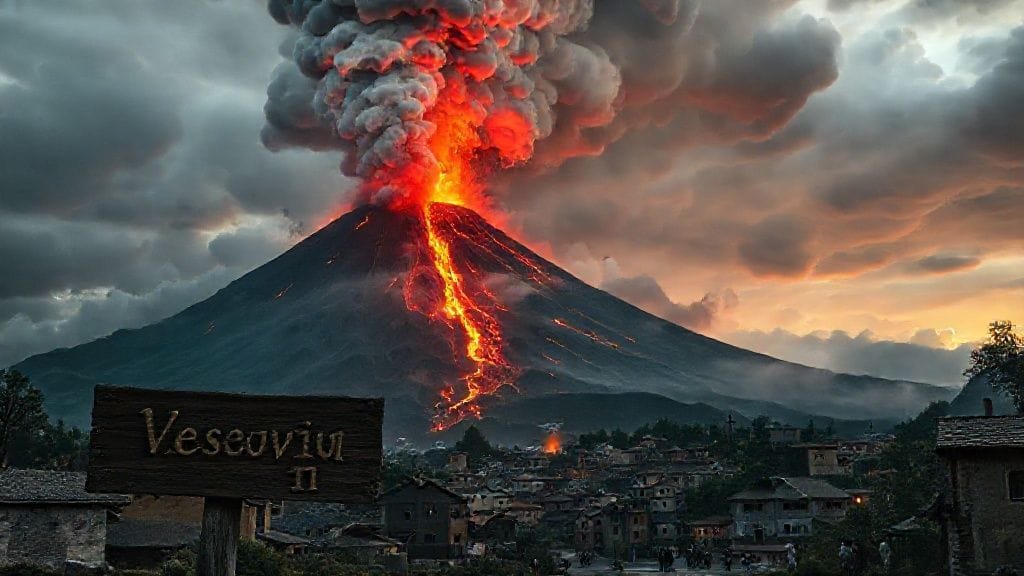
On the cold morning of December 16, 1631, beneath a sky smeared with heavy, leaden clouds, the earth trembled beneath the fertile soils of Campania, southern Italy. In a sudden, violent outburst, Mount Vesuvius—long an imposing guardian and silent sentinel over the verdant land—awakened with a terrifying roar. Columns of dark ash erupted into the sky, cloaking the sun and turning daylight into an eerie twilight. Rivers of fiery lava carved glowing scars down the mountainside, consuming everything in their path. Villages that had thrived at the volcano's feet were engulfed in smoke, fire, and devastation within hours, as centuries of peace were shredded in the wrath of this ancient giant reawakening.
This was not merely a natural disaster—it was a profound rupture that tore through the fabric of local society and reverberated far beyond the volcanic slopes. The eruption of Vesuvius in 1631 reshaped Campania’s history, marking a cataclysmic moment where human life stood vulnerably at the mercy of Earth's elemental fury.
2. The Sleeping Giant: Vesuvius Before the Catastrophe
For centuries, Vesuvius loomed silently above the Bay of Naples, a colossal presence steeped in myth and legend. Known best for the catastrophic eruption in 79 AD that buried Pompeii and Herculaneum, the volcano had since slumbered in deceptive calm. Between 79 and 1631, Vesuvius showed only intermittent activity—minor fumaroles, occasional steam, and faint tremors—but no major explosions. Locals grew accustomed to the dormant peace, recovering from the ancient trauma and rebuilding towns closer to its slopes, drawn by the richness of volcanic soil.
Yet beneath the tranquil exterior, the subterranean magma chamber was restless. Deep geological forces brewed in shadows, setting the stage for an eruption far less famous but no less deadly. Centuries of silence had fed a dangerous complacency—a tragic underestimation of nature’s potential for sudden cataclysm.
3. Campania in the Early 17th Century: A Flourishing Land on the Edge
The region of Campania, nestled along the Tyrrhenian coast, was a patchwork of thriving agricultural villages, trading towns, and pastoral estates. Naples, the grand and bustling city, stood as a political and cultural hub under the Spanish rule of the Kingdom of Naples, famed for its art, architecture, and cuisine. Farmers worked the vineyards and orchards that carpeted the slopes of Vesuvius, harvesting grapes, olives, and grains baked to sweetness by the volcanic earth.
Despite its prosperity, the people of Campania lived in a constant dance with danger—earthquakes, subsidence, and the distant memory of volcanic fire shaped their daily rhythms. The volcano, while fertile and life-giving in many ways, was also a constant, looming threat.
4. Whispers in the Valley: Signs and Omens Before the Eruption
In the weeks preceding December 1631, unusual phenomena unsettled the population. Dark clouds of ash, faint rumblings beneath the earth, and sulfurous smells awakened old fears. Villagers reported tremors that rattled windows and jarred nerves during the night. Streams turned murky, and wells ran dry or tasted odd, fueling rumors whispered by candlelight. Some saw these as divine warnings—omens of doom drawn from religious beliefs deeply embedded in the culture.
Local priests and scholars debated the significance. It was a time when natural signs were read as messages from heaven or hell. Yet, despite unease, many remained rooted to their farms and homes, unable or unwilling to heed the warnings fully.
5. The Morning of December 16: Panic Breaks Loose
As the dawn broke on December 16, the tremors intensified into violent shakes. The ground convulsed beneath the feet of startled villagers. Suddenly, a massive explosion shattered the relative calm—roaring thunder from deep within the mountain echoed across the valleys. The initial blast hurled rocks, ash, and scorching gases miles into the sky. Flocks of birds fled, animals howled, and the air filled with a sulphuric stench so acrid it burned the lungs.
Panic surged through towns like Torre del Greco and Ottaviano, nestled perilously close to Vesuvius. Families scrambled to gather belongings and flee, some driven by instinct, others by sheer terror. But many were trapped—roads clogged, confusion rampant, and the fall of ash thickening with every passing minute.
6. The Mountain Speaks: The Fury Unleashed
Vesuvius’s eruption raged through the day and into the nights that followed. Lava flows cascaded down its flanks, igniting forests, crops, and houses. Pyroclastic currents—scorching avalanches of gas and debris—raced through lower slopes, obliterating everything with relentless, searing force. Thick ash blanketed the sky, blanking out the sun like a suffocating gray shroud.
The mountain’s voice was brutal and unyielding, indifferent to the lives caught beneath its wrath. Crops withered under the ashfall, livestock perished, and soil layers were buried under meters of volcanic detritus. The villages closest to the summit disappeared from maps—all which had been centuries-old communities shattered in moments.
7. Ashes and Flames: The Immediate Destruction of Towns and Villages
Towns such as Torre del Greco, Castellammare di Stabia, and San Sebastiano al Vesuvio faced the brunt of destruction. Entire neighborhoods were engulfed by lava and ash, their inhabitants either killed outright or forced to flee into the cold December night. The Italian historian Pietro Antonio Minelli described the scene with haunting clarity: "The land, once fertile and bright with villages, was swallowed by darkness and flames, as if the mountain itself had been possessed by demons."
Churches crumbled, their bells silent. Streets turned into rivers of fire or seas of thick ash. The cacophony of destruction echoed throughout the region, a symphony of nature’s fury that survivors would never forget.
8. Survivors’ Tales: Voices from the Devastated Lands
Survivors left haunting testimonies, passed down through chronicles and letters. One woman recounted, “I held my children tight as the earth shook like a beast; ash fell like snow, blocking out the sky. We fled with nothing but hope in our hearts.” Another man, a farmer, described the collapse of his home: “The firestorm came too fast. My livestock screamed as I tried to drive them to safety. Only the brave and the lucky survived.”
These personal accounts impart a human dimension to the tragedy—stories of loss, terror, endurance, and the struggle to make sense of an apocalyptic event. They remind us that beneath every statistic lies a cascade of shattered dreams and displaced lives.
9. The Role of Authorities and Church: Response Amid Chaos
In the immediate aftermath, local authorities faced immense challenges: managing the displaced populations, coordinating aid, and maintaining order. The Spanish viceroyalty sent relief efforts, but their reach was limited by destruction and communication breakdowns. Meanwhile, the Catholic Church mobilized to provide spiritual succor and material assistance, interpreting the eruption as a divine trial.
Bishop Francesco Antonio Marini of Naples delivered sermons urging repentance and faith, viewing the eruption as a call for moral renewal. Churches became sanctuaries for the refugees. Yet the magnitude of the disaster exceeded all coping mechanisms, leaving many to fend for themselves amid chaos.
10. Comparing 1631 to 79 AD: What Made This Eruption Different?
While the eruption of 79 AD is famous for burying Pompeii and Herculaneum forever under ash, the 1631 event had distinctive characteristics. The latter was less explosive but more protracted, with a complex sequence of lava flows, pyroclastic surges, and ash falls. Unlike the sudden, deadly cloud that overwhelmed Pompeii, the 1631 eruption allowed more people to flee—but the overall death toll was still staggering, estimated around 3,000.
Importantly, in 1631, Vesuvius’s activity marked a reawakening after centuries of quiescence, shaking the complacency of a society that had since moved closer to the volcano’s dangerous slopes.
11. Geological Perspectives: Understanding the Mechanics of the 1631 Eruption
Modern volcanology studies reveal that the 1631 eruption was a Plinian-type event, characterized by the violent ejection of gas-rich magma that fragmented violently, sending ash high into the atmosphere. This was followed by lava dome collapses and pyroclastic flows that devastated the surrounding landscape.
Scientists suggest that a complex interplay of magma gases, tectonic stresses, and the intrusion of fresh magma from below the earth's crust led to the eruption. The event marked the beginning of Vesuvius’s current active phase, continuing with intermittent eruptions into the present.
12. Aftermath: The Struggle to Rebuild and Return to Normalcy
The weeks, months, and years after December 1631 were periods of grim recovery for Campania. Agricultural lands needed to be cleared of ash, homes reconstructed—or abandoned. Some villages never fully recovered, their remnants swallowed by nature or laval flows. The Spanish authorities allocated funds for reconstruction, while local nobles tried to encourage repopulation.
Yet the psychological scars endured. Fear of the mountain’s return haunted the populace, and many migrated to Naples or beyond. The eruption reshaped demographic patterns and social structures, with long-term consequences for the regional economy.
13. The Human Cost: Death Toll and Displacement
While exact numbers remain debated, historians estimate that approximately 3,000 people perished as a direct consequence of the eruption, including deaths from pyroclastic flows, collapsing structures, suffocation by ash, and famine or disease in the following months.
Thousands more were displaced, becoming refugees within their own lands. Families were fractured, farms lost, and a generation altered. The eruption was not merely a geological event but an immense human calamity, its echoes felt in the stories and traditions that followed.
14. Economic Shockwaves: Impact on Agriculture, Trade, and Local Society
The volcanic ash buried fertile soil, but paradoxically also enriched the land over decades. However, immediate agriculture suffered heavily—as did livestock, vineyards, and olive groves crucial to the local economy. Trade slowed, with ports choked by ash and disruption of routes inland.
The disaster deepened economic hardships in a region already politically volatile under Spanish rule, adding fuel to social tensions. Peasant revolts and shifts in land ownership followed in subsequent decades, marking 1631 as a turning point in Campanian socio-economic history.
15. Cultural Reflections: Vesuvius in Art, Literature, and Collective Memory
Artists and writers were profoundly inspired by the 1631 eruption. Paintings capturing the apocalyptic scenes became popular across Europe, combining baroque drama with vivid natural horror. Engravings circulated, visualizing the terrifying power of nature.
Local poets and chroniclers framed the volcano both as a symbol of divine wrath and a reminder of human fragility. The eruption entered folklore and religious traditions, festivals commemorating survival and resilience became part of the cultural fabric, weaving the disaster into Campania’s identity.
16. Scientific Advances Inspired by the Disaster
The 1631 eruption stimulated early interest in volcanology and natural philosophy. Scholars sought to understand the processes behind such a catastrophic event. Accounts compiled by Jesuit scientists and local observers laid groundwork for systematic volcanic studies centuries later.
The use of eyewitness descriptions, ash analysis, and field observations contributed to evolving knowledge about eruption patterns and hazards—a legacy that informs volcanic risk assessments today.
17. Vesuvius Today: Lessons From the Past for Our Future
Contemporary Naples and its surrounding communities live under the vigilant watch of Vesuvius, one of the most dangerous volcanoes in Europe. The lessons of 1631 resonate vividly in emergency planning, evacuation drills, and urban zoning.
Modern monitoring systems, seismographs, and satellite imaging now provide early warning signs, but the human challenge remains—to balance development, history, and safety in a landscape forever shaped by fire.
18. Legacy of 1631: How the Catastrophe Shaped Regional Identity
The eruption left an indelible mark on the collective identity of Campania. Tales of survival and loss forged a unique cultural memory—one that entwines reverence for nature’s power with resilience born from catastrophe.
This legacy is reflected in local pride, religious devotion, and the artistic heritage that preserves the memory of the eruption. It shaped community awareness and respect for the land, instilling both caution and a deep connection to place.
19. Closing Reflections: Nature’s Power and Human Resilience
The eruption of Vesuvius in 1631 stands as a poignant testament to the fragile interplay between human civilization and the forces of nature. It reminds us that despite centuries of progress, ancient elements beneath our feet retain the power to redirect history in moments of unimaginable violence.
Yet amid the ashes, humanity persists. The survivors who rebuilt, the descendants who remember, and the scientists who study carry forward a narrative of resilience and respect—an enduring dialogue with the mountain’s fiery heart.
Conclusion
The December 1631 eruption of Mount Vesuvius was a cataclysmic event that shook Campania to its core. It was a moment when past and present collided—ancient geological forces bulldozed through human lives and societies, and the echoes of 79 AD’s tragic legacy were reborn in new, terrifying forms. Yet human tenacity triumphed amidst chaos. Through narratives of suffering, courage, and recovery, the region’s identity was reshaped, with impacts stretching across culture, science, and collective memory.
This story is a reminder that natural disasters are as much about the human spirit as about destruction. It invites us to reflect on our relationship with nature—not as conquerors but as fragile partners, bound to live in awareness and respect of the forces shaping our world.
FAQs
Q1: What triggered the 1631 eruption of Mount Vesuvius?
A1: The eruption was triggered by the movement of magma and gas beneath the volcano, leading to a sudden explosive release. Tectonic stresses and the intrusion of fresh magma likely contributed to the destabilization of the magma chamber.
Q2: How many people died in the 1631 eruption?
A2: Estimates vary, but approximately 3,000 people are believed to have perished due to pyroclastic flows, collapsing buildings, suffocation, and subsequent famine or disease.
Q3: How did the local population respond to the eruption’s warnings?
A3: Despite signs such as earth tremors and ash emissions, many locals did not evacuate in time. Panic ensued once the eruption began, but the lack of systematic early warning limited preparedness.
Q4: How does the 1631 eruption compare to the famous 79 AD eruption?
A4: The 79 AD eruption was sudden and catastrophic, burying Pompeii and Herculaneum under ash. The 1631 event was less sudden but more prolonged, allowing more people to flee, though still deadly.
Q5: What were the economic impacts of the 1631 eruption?
A5: The eruption devastated agriculture and trade in Campania, destroying crops and livestock. This caused economic hardship, social tensions, and changes in land use and ownership.
Q6: Did the eruption influence scientific understanding of volcanoes?
A6: Yes, eyewitness accounts and studies of the 1631 eruption contributed to the early development of volcanology and natural sciences, inspiring further inquiry into volcanic activity.
Q7: How is the 1631 eruption remembered culturally?
A7: It inspired art, literature, religious interpretations, and remains a significant part of Campania’s collective memory—often symbolizing both divine punishment and human resilience.
Q8: What lessons does the 1631 eruption hold for contemporary society?
A8: It underscores the importance of disaster preparedness, monitoring volcanic activity, and respecting the unpredictable power of nature, especially in populated volcanic regions.

