Table of Contents
- The Day the Sky Turned Dark: August 472 AD
- Campania on the Edge: A Landscape of Tension and Tranquillity
- Mount Vesuvius: Ancient Fury and Latent Power
- The Slow Unraveling: Signs Before the Inferno
- The Eruption Begins: Chaos Descends on the Bay of Naples
- Ash and Fire: The Mechanics of Vesuvius’ Wrath
- The Human Toll: Stories of Survival and Loss
- The Roman World Reacts: Politics and Panic
- Nature’s Reckoning: Environmental and Geographical Impact
- The Memory of 472: Contemporary Accounts and Their Legacy
- The Forgotten Eruption: Why 472 Was Overshadowed
- Vesuvius in Historical Perspective: From Pompeii to Modern Day
- Resilience and Rebirth: How Campania Rose from the Ashes
- Cultural Echoes: Art, Literature, and Myth-Making
- Geological Lessons: Understanding Vesuvius Then and Now
- The Volcano’s Shadow: Long-Term Consequences for Italy
- Remembering the Dead: Rituals and Remembrances
- Vesuvius Today: Danger, Study, and Vigilance
- Conclusion: The Eternal Dance of Creation and Destruction
- FAQs: Answering the Lingering Questions about the 472 Eruption
- External Resource
- Internal Link
The Day the Sky Turned Dark: August 472 AD
In the late summer of 472 AD, a shadow unfurled across the vibrant landscape of Campania—an ominous veil that would smother the sun and scatter fear among its inhabitants. On the slopes of Mount Vesuvius, a deep rumble stirred the ancient giant from its slumber. The ground trembled like the heartbeat of an angry god, sending flocks of birds screaming into the blackened sky. Farmers, merchants, and nobles alike looked upward, bewildered as a towering ash plume billowed skyward, blotting the azure heavens with a suffocating darkness.
This was no ordinary storm or mere tremor. It was an awakening that would change lives in an instant, leaving a scar on the land and in history. The eruption of Vesuvius in 472 AD remains one of the most dramatic and devastating volcanic events of Late Antiquity, a somber testament to the fragile balance between humanity and nature’s fury. Yet, unlike the famous eruption of 79 AD, this catastrophe is less known, buried by the sands of time, waiting to be rediscovered through the whispers of dust and fragmented chronicles.
Campania on the Edge: A Landscape of Tension and Tranquillity
The Campanian plain in the 5th century was a region of contrasts—a fertile cradle of civilization and commerce, yet a landscape increasingly precarious amid the tail end of the Roman Empire’s decline. Stretching from the shimmering outlines of the Bay of Naples to the bustling city of Naples itself, Campania was a mosaic of prosperous towns, farmland, and coastal settlements. Its ports thrived on trade, its fields yielded abundant crops, and its people navigated a complex web of shifting allegiances.
But beneath this veneer of relative calm, tension simmered. The Western Roman Empire was fracturing under pressure from barbarian invasions, political instability, and economic fractures. Campanians, caught in this maelstrom, faced uncertainty and growing anxiety. And looming above all—literally a sleeping giant—Mount Vesuvius stood as a stark reminder of nature’s unpredictable might.
Mount Vesuvius: Ancient Fury and Latent Power
By the 5th century, Vesuvius had already earned a fearsome reputation. Its name was whispered with a mixture of reverence and dread. The memory of the catastrophic eruption in 79 AD, which buried Pompeii and Herculaneum in a tomb of magma and ash, was etched into local legend and Roman literature alike.
Vesuvius is a complex stratovolcano—built layer upon layer through centuries of violent eruptions, followed by long periods of repose. It had shaped the fertile soils of Campania, enabling agriculture to flourish, but also embodied the ever-present threat of nature’s rebuke. Geological processes — the slow but inexorable movement of tectonic plates beneath the earth’s crust — fed magma reservoirs deep in its heart. When pressure mounted beyond a critical point, the mountain would vent its rage.
The Slow Unraveling: Signs Before the Inferno
Before the eruption struck, the people of Campania were not wholly caught unaware. Contemporary chronicles and archaeological investigations suggest that days—perhaps weeks—of minor tremors, unusual animal behavior, and faint emissions of volcanic gases foreshadowed the approaching calamity.
Strange fogs blanketed the valleys, crops began to wither under an oppressive heat, and wells yielded bitter, sulfurous water. The atmosphere was heavy with foreboding, yet many interpreted these signs through the lens of superstition and local folklore rather than scientific understanding. A portent, perhaps, of divine wrath or a harbinger of political misfortune in an empire already fraught.
The Eruption Begins: Chaos Descends on the Bay of Naples
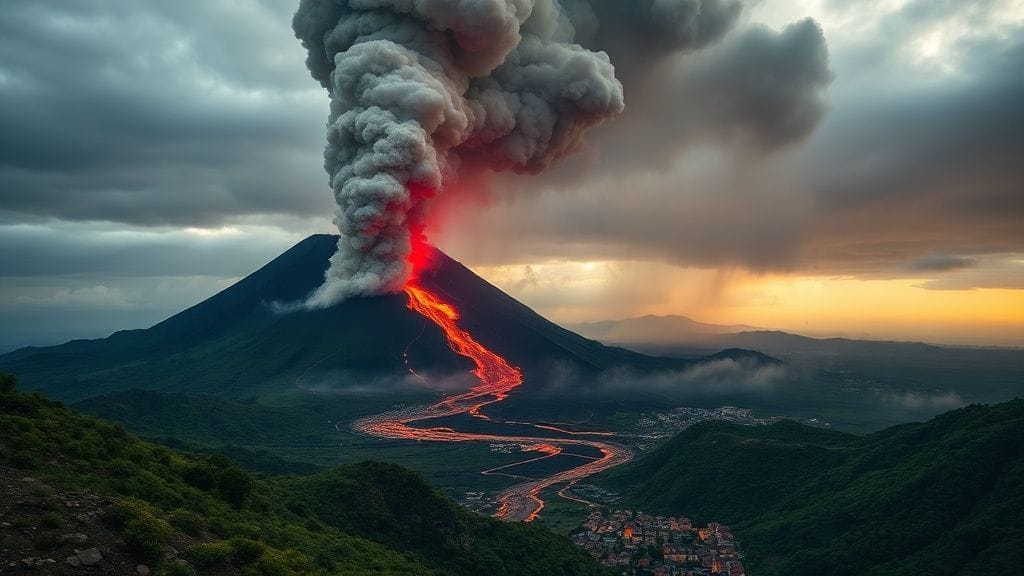
On a fateful morning in August, as the sun rose over the proud cities of Campania, the mountain finally unleashed its fury. The eruption began with a colossal explosion—a thunderous roar ripping through the sky. A towering column of ash and pumice soared miles upward, blotting out the sun and turning day into night.
Rivers of molten lava oozed down the mountain’s flanks, swallowing vineyards, homes, and roads. Blistering pyroclastic flows—superheated avalanches of gas and volcanic debris—rushed through the valleys, obliterating everything in their path with lethal speed. Residents fled in terror, clutching precious possessions, their cries swallowed by the roar of destruction.
Ships anchored in the bay attempted a desperate escape amid plumes of ash that darkened the sea surface, turning water into scorching steam. Panic reigned as the scale of the disaster unfolded in real time.
Ash and Fire: The Mechanics of Vesuvius’ Wrath
The 472 eruption exemplified the brutal mechanics of a stratovolcano’s explosiveness. Deep underground, gas-saturated magma violently fragmented as it neared the surface, causing an eruption column that reached the stratosphere. The material expelled ranged from fine ash to immense pumice stones, blanketing a radius of tens of kilometers.
The eruption was likely multi-phased—initial explosive blasts followed by sustained lava flows. Pyroclastic density currents—clouds of searing gas and volcanic material moving at astonishing speeds—were responsible for most of the destruction and loss of life. Such flows snuffed out entire settlements, searing and suffocating inhabitants unable to escape.
Scientists today estimate that the 472 eruption unleashed volumes of ash and magma comparable in scale to some of Vesuvius’ other historic eruptions, underscoring the mountain’s continued volatility even centuries after the famed 79 AD disaster.
The Human Toll: Stories of Survival and Loss
Behind every disaster lies a human story—tales of courage, heartbreak, and endurance. The eruption of 472 was no different.
One surviving monk’s account, preserved in later ecclesiastical writings, describes how an elderly farmer named Lucius gathered his family at the last minute before fleeing towards Naples, only to watch their village consumed by fire. Nearby, a merchant’s ship narrowly avoided being wrecked, dodging pumice-laden waters to ferry refugees to safety.
Yet, countless others were not so fortunate. Entire villages vanished beneath ashfall, their ruins swallowed by time and earth. The death toll, though not precisely known, is believed to have reached into the thousands, with survivors scattered and displaced.
The Roman World Reacts: Politics and Panic
The eruption did not occur in isolation. At the time, the waning Roman Empire grappled with internal strife and mounting barbarian pressure. News of Vesuvius’ devastation reached Constantinople and Rome, eliciting both sympathy and anxiety.
Letters and official decrees reveal attempts by regional governors to marshal relief efforts and provide aid, but the empire’s fragmented state limited an effective response. The catastrophe exacerbated local instability, as displaced populations sought shelter and resources amid scarce provisions.
Political commentators interpreted the eruption as an ominous sign—nature reflecting the empire’s moral and political decay, a cosmic warning of impending collapse.
Nature’s Reckoning: Environmental and Geographical Impact
The eruption dramatically altered Campania’s landscape. Thick layers of ash destroyed crops, contaminated water sources, and rendered fields barren for years. Forests were scorched; rivers choked with sediment and debris.
Geological surveys of volcanic deposits attest to the vast volume of material expelled, reshaping the mountain’s profile and creating new ridges and valleys. The Bay of Naples saw significant changes in coastal morphology as underwater landslides and ashfalls disturbed marine ecosystems.
The environmental consequences rippled beyond immediate devastation, influencing agricultural patterns and settlement decisions in subsequent decades.
The Memory of 472: Contemporary Accounts and Their Legacy
Curiously, the 472 eruption did not seep deeply into the collective memory in the way of Pompeii’s immortalization. Contemporary chroniclers such as Marcellinus Comes and Cassiodorus mention the disaster, but often in passing or linked symbolic contexts.
The scarcity of detailed firsthand testimonies suggests that the chaos of the period—the fall of Rome in 476, barbarian upheavals, and the shifting religious landscape—overshadowed the eruption’s imprint in written records.
Yet, archaeological discoveries and careful examination of geological strata today reveal the event’s undeniable magnitude and help resurrect a forgotten chapter of Campania’s volcanic history.
The Forgotten Eruption: Why 472 Was Overshadowed
Historians often grapple with why the 472 eruption remains in the shadows despite its devastating impact. The late 5th century was a period of dramatic transformation—political collapse, migrations of peoples, and a fading classical world.
Amid such upheaval, natural disasters could be subsumed under the broader narrative of decline and fall. Unlike Pompeii’s catastrophic burial, which preserved a snapshot of Roman life frozen in time, the eruptions of 472 were part of a wider context of crisis, making them less singularly dramatic to contemporaries and later generations.
Vesuvius in Historical Perspective: From Pompeii to Modern Day
Vesuvius’ eruptions have punctuated Mediterranean history again and again, reminding humanity of its tenuous dominion over the natural world.
The 472 eruption is a crucial link in this chain—a testament to the mountain’s persistent menace after Pompeii and before later eruptions such as those in 1631 and 1944. Each event shaped local culture, emergency responses, and scientific study of volcanism.
Through centuries, Vesuvius has been both a destroyer and a creator, shaping Campania’s horizons, livelihoods, and legends.
Resilience and Rebirth: How Campania Rose from the Ashes
Despite the destruction, Campania’s people rebuilt their homes and lives on the volcanic soils enriched by fiery destruction. Agricultural renewal, urban redevelopment, and cultural perseverance characterized the region’s recovery.
Communities adapted, blending caution with respect for the mountain’s power, embedding the eruption into local identity and oral history. This resilience echoes the eternal human struggle to coexist with nature’s unpredictable rhythms.
Cultural Echoes: Art, Literature, and Myth-Making
Although the 472 eruption left little direct artistic record, its echo can be sensed in later medieval and Renaissance interpretations of volcanic disasters.
Artists and writers contemplated the mountain as a symbol of divine wrath, purification, and rebirth. Vesuvius became a motif in religious sermons and epic literature, weaving the 472 event into broader allegories of calamity and faith.
The volcano’s legacy continues to inspire imagination, reminding us that natural disasters shape not just landscapes, but cultural horizons.
Geological Lessons: Understanding Vesuvius Then and Now
Modern volcanologists studying the layers from the 472 eruption gain insight into Vesuvius’ eruptive patterns and potential future behavior. Analysis of pumice deposits, ash layers, and lava flows enhances hazard assessments for an area now home to millions.
The eruption reminds scientists and policymakers alike of the critical importance of monitoring and preparedness in regions vulnerable to volcanic activity.
The Volcano’s Shadow: Long-Term Consequences for Italy
Vesuvius’ activity influenced Italy’s economic and demographic patterns, as risk prompted shifts in settlement and land use. Disaster relief efforts and eventual imperial restructuring partly stemmed from the need to address natural and political upheavals in tandem.
The 472 eruption, while overshadowed, is a thread in the fabric of Italy’s complex historical evolution, linking environmental disaster to societal transformation.
Remembering the Dead: Rituals and Remembrances
Communities grappling with loss found solace in religious practices and memorialization. Early Christian rites in Campania adapted to incorporate prayers and ceremonies for those lost in natural disasters.
Though specific monuments to the 472 victims remain elusive, the eruption contributed to evolving ideas about death, fate, and divine providence in Late Antiquity.
Vesuvius Today: Danger, Study, and Vigilance
Today, Mount Vesuvius looms over Naples as both a tourist attraction and a continuous concern. The 472 eruption serves as a somber reminder of the volcano’s capacity to erupt with little warning.
Around Vesuvius, extensive monitoring networks operate continually, aiming to avert future catastrophes. Emergency planning incorporates lessons learned from history, blending science and community engagement to face the volcanic threat.
Conclusion: The Eternal Dance of Creation and Destruction
The eruption of Vesuvius in 472 AD is more than a tale of destruction; it is a story about the resilience of communities, the fragile relationship between humans and nature, and the passage of time that buries yet never erases the past.
As the ashes settled and life returned to Campania’s fertile plains, a profound lesson emerged: in the face of nature’s relentless power, survival demands respect, understanding, and hope. Vesuvius remains an eternal sentinel, reminding us that beneath beauty lies a force both terrifying and vital—a force that shapes history itself.
FAQs
Q1: What caused the eruption of Mount Vesuvius in 472 AD?
A1: The eruption was caused by the build-up of magma and gases beneath the volcano due to tectonic activity in the region. Over time, pressure increased until a violent release of material occurred, characteristic of stratovolcano eruptions.
Q2: How did the eruption of 472 compare to the famous eruption of 79 AD?
A2: While both were catastrophic, the 79 AD eruption is better known due to its preservation of Pompeii and Herculaneum. The 472 eruption was similarly powerful but occurred during a period of political turmoil, resulting in fewer detailed contemporary records.
Q3: What were the main impacts of the eruption on local populations?
A3: Thousands likely perished or were displaced. Infrastructure, agriculture, and settlements suffered severe damage. The eruption disrupted social order and contributed to regional instability amid an already declining empire.
Q4: Are there surviving accounts of the 472 eruption?
A4: Yes, though limited. Some ecclesiastical writings and chroniclers mention the event, often with symbolic interpretations, but detailed eyewitness narratives are scarce.
Q5: How did the eruption influence the Roman Empire politically and socially?
A5: The eruption exacerbated social and economic challenges in an already fragile empire. Relief efforts were limited by political fragmentation, and the disaster was often viewed as a sign of imperial decline.
Q6: What geological evidence exists for the 472 eruption today?
A6: Volcanic ash layers, pumice deposits, and lava flows uncovered through archaeological and geological studies mark the eruption’s footprint, offering insights into its scale and dynamics.
Q7: How is Mount Vesuvius monitored today?
A7: A network of seismic sensors, gas analyzers, and satellite observations continuously monitor Vesuvius. Emergency plans aim to protect nearby populations from future eruptions.
Q8: Why is the 472 eruption less famous than other Vesuvius eruptions?
A8: Its occurrence during the decline of the Western Roman Empire and lack of preserved settlements like Pompeii resulted in less historical attention and slower incorporation into cultural memory.

