Table of Contents
- The Fateful Day: Dawn over Campania
- The Sleepless Giant: Vesuvius before the Explosion
- The Roman Campania: Life in the Shadow of a Volcano
- Early Signs: The Portents and the First Tremors
- Pliny the Elder: Eyewitness and Chronicler of Doom
- The Great Eruption Begins: Columns of Fire and Ash
- The Phreatomagmatic Explosions: Clouds Turned to Darkness
- Pompeii: A City Frozen in Time
- Herculaneum and the Other Victims: Waves of Ash and Surges
- The Human Struggle: Panic, Flight, and Tragedy
- The Aftermath: A Landscape of Ruin and Silence
- Rediscovering Pompeii and Herculaneum: From Ashes to Archaeology
- Challenges of Interpretation: What the Ashes Tell Us
- The Scientific Understanding of Vesuvius’ Fury
- Vesuvius and Modern Campania: Living with a Sleeping Giant
- Cultural Echoes: Vesuvius in Art, Literature, and Myth
- Lessons from the Past: Disaster Preparedness and Memory
- The Legacy of 79 AD: A Window into Roman Life and Death
- Conclusion: Ashes, Remembrance, and the Eternal Mountain
- FAQs
- External Resource
- Internal Link
1. The Fateful Day: Dawn over Campania
August 24, 79 AD, dawned quietly over the fertile plains of Campania. The sun cast golden hues over the bustling Roman towns dotting the coast. Fishermen set sail, children played in the streets, and markets bustled with vendors shouting prices for olives and garum. The air smelled of salt from the nearby Bay of Naples and the rich earth left by the volcanic soil of Mt. Vesuvius, a seemingly benign giant looming silently on the horizon. No one could foresee the cataclysm about to unfold, the very day that would seal the fate of thousands and echo through millennia as a haunting testament to nature’s terrifying power.
It was, as many survivors would later recall, “a day like any other”—until the earth began to shudder. Then the sky turned black as night beneath a day blazing bright, as Vesuvius erupted in a violent outburst stretching to the heavens.
The eruption of Vesuvius in 79 AD was more than a geological event; it was a human drama of survival, loss, and memory. It froze entire cities in time, preserving the contours of life and death beneath layers of ash — a silent witness across centuries. This article embarks on a journey through that fateful day, the lives forever altered, and the volcanic shadow that still shapes Campania today.
2. The Sleepless Giant: Vesuvius before the Explosion
Long before the monstrous eruption, Vesuvius had been a force of nature both revered and feared. Ancient texts and scattered archaeological evidence hint that the volcano had erupted within human memory centuries before 79 AD, though the details were lost to time. The mountain’s ominous presence dominated the landscape, its slopes fertile from centuries of volcanic mineral deposits, encouraging a thriving agricultural economy.
Romans called the area Campania Felix — “Happy Campania” — a lush, prosperous land producing grapes, olives, and grain. Around Vesuvius bloomed cities of commerce and culture: Pompeii, Herculaneum, Stabiae, and others. These communities flourished, enjoying the beauty and bounty of the region, often oblivious or dismissive of the latent danger underfoot.
The volcano was a powerful symbol in Roman myth and religion but had not erupted in recorded history during the peak of the Roman Empire—lulling inhabitants into a guise of security that, tragically, was misplaced.
3. The Roman Campania: Life in the Shadow of a Volcano
What makes the eruption particularly poignant is the intimate glimpse it gives into Roman urban life at its zenith. Campania was a region of contrasts: wealthy villas perched on cliffs, servants toiling in kitchens, bustling marketplaces, sculpted fountains, and narrow cobbled streets teeming with people. The Romans had transformed the land, weaving a tapestry of civilization against the backdrop of nature’s unpredictability.
Pompeii, one of the most famous victim cities, was a thriving commercial hub filled with bakeries, amphitheaters, and brothels. To many, the volcano was the silent sentinel, neither friend nor foe but a permanent fixture in the horizon.
Yet social tensions simmered alongside prosperity: the enslaved lived hand-to-mouth, while wealthy landowners displayed opulence commissioned in frescoes and mosaics. August 79 AD would witness all these layers of Roman society abruptly thrust into chaos and catastrophe.
4. Early Signs: The Portents and the First Tremors
Hours before the eruption, strange signs unnerved some residents. Minor tremors—earthquakes—shook buildings and rattled windows. Some animals grew restless, fleeing the towns; others fled to higher grounds. Pliny the Younger, a Roman writer and nephew of Pliny the Elder, would later describe the trembling earth’s eerie precursors in his letters, recalling “the ground quaked violently,” unsettling the population who had no understanding of what was unfolding beneath their feet.
Yet, despite the unprecedented nature of the phenomenon, few could grasp the scale or impending doom. The Romans did not possess a scientific apparatus to interpret volcanic warning signs, and most considered these tremors unusual but not necessarily mortal.
The pattern of the disaster had begun—silent, subtle, but relentless.
5. Pliny the Elder: Eyewitness and Chronicler of Doom
Among those destined to become a historical voice of the eruption was Pliny the Elder, a naval commander, naturalist, and scholar. Upon seeing the ominous cloud rising from Vesuvius, Pliny organized a rescue expedition by sea to help those stranded and investigate the eruption’s nature.
Unfortunately, Pliny himself perished that day, likely overcome by toxic fumes or a collapsing building. His nephew, Pliny the Younger, survived and penned letters to the historian Tacitus years later, providing one of the few firsthand accounts of the disaster. His descriptions of the “pine-shaped cloud,” the darkness of day, and the desperation of people trying to escape remain vivid and haunting.
These letters remain an invaluable source for historians, blending clinical observation with human tragedy.
6. The Great Eruption Begins: Columns of Fire and Ash
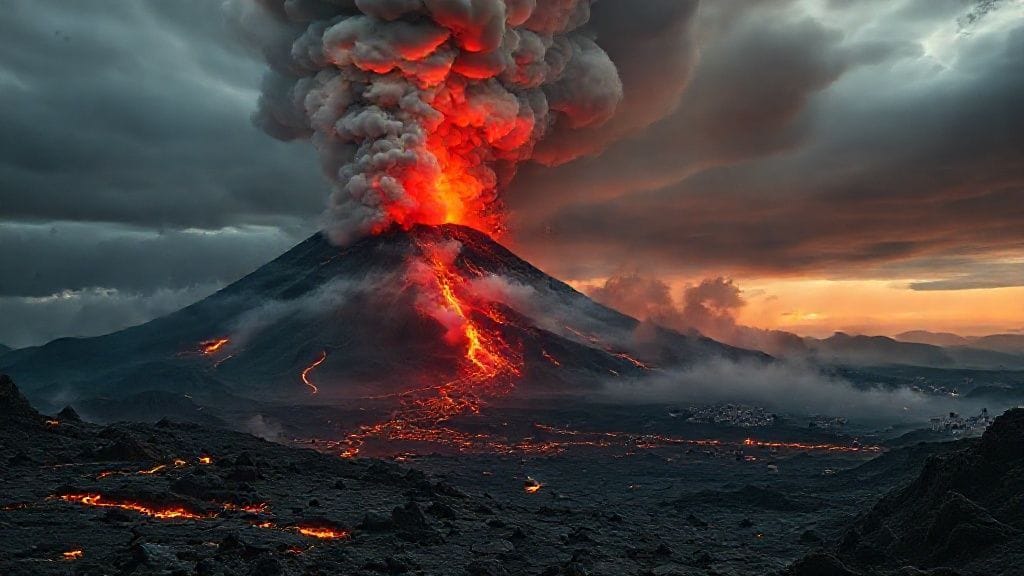
At some point late in the morning, Vesuvius expended a titanic force. A towering column of incandescent ash, pumice, and gas exploded skyward—reaching an estimated height of 30 kilometers. This phenomenon transformed day into night. Ash began to rain down, covering roofs and streets, the weight growing heavier by the hour.
The initial phase, termed a Plinian eruption after Pliny’s vivid testimony, was marked by ejection of volcanic debris carried high into the stratosphere and spread by winds over vast expanses. For residents, it was a surreal nightmare of choking ash and darkness, punctuated by thunderous explosions echoing through the air.
Pompeii was buried beneath meters of pumice fall, slow and suffocating, while Herculaneum faced a more sudden fate.
7. The Phreatomagmatic Explosions: Clouds Turned to Darkness
Following the initial shower of pumice and ash, a second phase of violent pyroclastic flows engulfed the landscape. These hot avalanches of gas, rock, and ash—hundreds of degrees Celsius in temperature—raced down Vesuvius’s slopes at terrifying speed, obliterating everything in their path.
Herculaneum, situated closer and more sheltered, was drowned in superheated mudflows, carbonizing wood and organic matter in perfect detail. The heat was instantaneous and lethal, explaining the skeletons found in seated positions, as if startled to an eternal pause.
These flows were the true harbingers of death, far more deadly than the falling ash of Pompeii.
8. Pompeii: A City Frozen in Time
Pompeii’s tragic fate was paradoxically its archaeological fortune. The layers of ash sealed streets, homes, and bodies beneath a blanket preserving architecture, artwork, and inscriptions with stupefying clarity.
Modern excavations have uncovered frescoed walls, intricate mosaics, bakeries with still-visible loaves of bread, and casts of victims caught in final moments—hands outstretched, faces frozen in terror. Pompeii became a surreal time capsule, giving unparalleled insight into Roman life and death within hours.
This city, lost for centuries beneath its volcanic grave, speaks more loudly than any rebuilt city ever could.
9. Herculaneum and the Other Victims: Waves of Ash and Surges
While Pompeii faced gradual burial, Herculaneum’s story is one of swift destruction. The pyroclastic surges carbonized wood and preserved inhabitants in the finest detail, including scrolls in the famous Villa of the Papyri, a treasure trove of now-fragile documents providing knowledge of ancient philosophy.
Other smaller towns—Stabiae, Oplontis—suffered varied fates but all shared in the catastrophe. The death toll remains uncertain, but estimates range from several thousand to tens of thousands, as many escaped while others were trapped.
The eruption’s brutality was total and indiscriminate.
10. The Human Struggle: Panic, Flight, and Tragedy
Human stories emerge amid the natural disaster—families separated in panic, slaves and freedmen desperately seeking refuge, traders caught mid-call in the forum, children’s laughter frozen on the edge of silence. Archaeological finds reveal jewelry still clutched, food left on tables, and footprints marking desperate flight.
Despite the chaos, some attempted escape by sea, only to face waves whipped up by the explosions or drowned in the ash-darkened waters. Others sheltered in homes, hoping the eruption would subside.
The human dimension reveals a cruel reality: life was abruptly and permanently rewritten by nature’s indomitable will.
11. The Aftermath: A Landscape of Ruin and Silence
When the eruption ceased, the world was unrecognizable. Pompeii lay buried under 4 to 6 meters of ash; Herculaneum under even more volcanic debris. The towns lay abandoned, their people gone, either dead or driven away.
The region fell silent, its voice muffled under volcanic sediment. For centuries, the ruins were forgotten until accidental rediscovery in the 18th century renewed fascination with this ancient tragedy.
Vesuvius itself returned to dormancy, but not peace—its smoldering silhouette a constant reminder of past fury.
12. Rediscovering Pompeii and Herculaneum: From Ashes to Archaeology
The 18th-century rediscoveries triggered a revolution in archaeology and history. Methodical excavations unearthed layers of ash and human history buried for nearly 1700 years.
Pompeii became a classroom, revealing everything from urban planning to social mores, the intimate details of cooking pots to graffiti scrawled on walls. These finds altered perceptions of Roman life, turning abstract historical knowledge into tangible, visceral experience.
Herculaneum’s preservation offered insights into luxurious villa life and ancient texts, slowly revealing a sophisticated civilization frozen mid-motion.
13. Challenges of Interpretation: What the Ashes Tell Us
Interpreting the eruption remains complex. Scientists and historians work together to understand the layers of ash, gas emissions, and archaeological remains. Recent advances in volcanology and forensic archaeology reveal new details—timings, eruption mechanics, and even the final moments of victims.
Yet, much is still speculation and mystery. How many escaped? Were people aware of the volcano’s history? What role did social status play in survival?
These questions fuel ongoing research and reflection, reminding us of the limits of historical knowledge.
14. The Scientific Understanding of Vesuvius’ Fury
Modern volcanology classifies Vesuvius' eruption as a classic Plinian event, characterized by powerful, sustained columns of volcanic debris and widespread ashfall. Subsequent pyroclastic flows are among the most deadly volcanic phenomena.
Understanding magma composition, eruption dynamics, and gas emissions has advanced dramatically, guiding modern hazard assessments and emergency response plans for the persistently active volcano.
Scientists warn Campania still faces serious risks from Vesuvius, making the study of 79 AD crucial not only for history but for public safety.
15. Vesuvius and Modern Campania: Living with a Sleeping Giant
Today, millions live in the Vesuvius danger zone. Naples and surrounding towns cling to slopes and foothills, integrating city life with geography fraught with risk. Italian authorities maintain emergency plans and monitoring systems, yet the potential for disaster remains a tense reality.
The mountain continues to inspire awe, affection, and anxiety—a natural monument to the past and present, caught between beauty and terror.
16. Cultural Echoes: Vesuvius in Art, Literature, and Myth
Vesuvius’ eruption has echoed through culture, inspiring artists from J.M.W. Turner’s fiery landscapes to Mary Shelley’s Frankenstein, where the volcano symbolizes destructive passion. Poets, novelists, and filmmakers have revisited the disaster’s human scale and power.
It has become a mythic symbol of nature’s unpredictability and the fragility of civilization—a motif in European consciousness about the limits of human control.
17. Lessons from the Past: Disaster Preparedness and Memory
The tragedy of 79 AD has spurred reflections on how societies understand and react to natural disasters. The failure to recognize seismic warnings reflects historical limits but also warns modernity against complacency.
Campania’s history fuels disaster preparedness education, showing the importance of combining science, community awareness, and governance to mitigate future calamities.
18. The Legacy of 79 AD: A Window into Roman Life and Death
Pompeii and Herculaneum provide unparalleled insight into ancient Roman daily life, social structure, economy, and religion. The eruption, though catastrophic, gave posterity a staggeringly detailed archival snapshot of a lost world.
Thanks to this legacy, we glimpse the ordinary and extraordinary moments of people long gone—their fears, pleasures, and final desperate breaths.
19. Conclusion: Ashes, Remembrance, and the Eternal Mountain
The eruption of Mount Vesuvius in 79 AD stands as one of history’s most haunting reminders of nature’s might and humanity’s vulnerability. Its immediate horror shattered lives and obliterated cities, yet through its ashes, history found an unexpected permanence.
Pompeii and Herculaneum invite us to ponder mortality, the capriciousness of existence, and the powerful narratives locked beneath our feet. Vesuvius remains a sentinel—not just of geological fury, but of human memory, resilience, and the eternal dance between destruction and renewal.
FAQs
Q1: What caused the eruption of Mount Vesuvius in 79 AD?
A1: The eruption resulted from tectonic activity related to the subduction of the African plate beneath the Eurasian plate, causing magma buildup beneath Vesuvius. Pressure eventually released violently in the catastrophic explosion.
Q2: How many people died in the eruption?
A2: Estimates vary widely, from several thousand to possibly over 20,000, as many fled while others perished in ashfall or pyroclastic flows.
Q3: Who was Pliny the Elder, and why is his account important?
A3: Pliny the Elder was a Roman scholar and naval commander who died during rescue attempts. His nephew, Pliny the Younger, documented the eruption in detailed letters, offering one of the few eyewitness testimonies of the disaster.
Q4: How were Pompeii and Herculaneum preserved so well?
A4: Thick layers of volcanic ash and pyroclastic flows rapidly buried the towns, protecting buildings, artifacts, and even human remains from decay, creating a time capsule frozen in 79 AD.
Q5: Has Vesuvius erupted since 79 AD?
A5: Yes, Vesuvius has erupted multiple times since, with the last major eruption occurring in 1944. It remains an active volcano under constant monitoring.
Q6: What can we learn from the eruption today?
A6: The eruption teaches about natural disaster risks, the importance of preparedness, and provides unparalleled insights into ancient Roman civilization and human resilience.
Q7: How does the eruption influence modern culture?
A7: Vesuvius symbolizes nature’s power and unpredictability, inspiring art, literature, and ongoing interest in volcanic hazards and ancient history.
Q8: Are people still at risk living near Vesuvius?
A8: Yes, millions live in the vicinity, prompting continuous monitoring and emergency planning to prevent future tragedies.

