Table of Contents
- The Dawn of a New Capital: Toledo’s Rise in the Visigothic Realm
- Hispania after Rome: A Land in Transition
- The Visigothic Kingdom before Toledo: Power Fractures and Challenges
- King Athanagild’s Vision: Choosing Toledo as the Capital
- Toledo’s Strategic and Symbolic Importance
- The Transformation of Toledo: Urban, Cultural, and Political Shifts
- Religious Dynamics: The Arian to Catholic Transition
- Political Consolidation: Strengthening Royal Authority
- The Role of the Church in Toledo’s Ascendancy
- Legal Innovations: The Visigothic Code and Its Roots
- Diplomacy and Threats: Relations with Byzantium and the Franks
- The Nobility and Power Struggles within Toledo’s Court
- Economic Developments under Toledo’s Capital Status
- Social Life and Daily Existence in Mid-6th Century Toledo
- The Legacy of Toledo’s Capital Status on Later Iberian History
- How Toledo Influenced the Cultural Memory of Medieval Spain
- Conclusion: Toledo’s Enduring Place in Visigothic and Spanish History
- FAQs about Toledo as the Visigothic Capital
- External Resources
- Internal Link
1. The Dawn of a New Capital: Toledo’s Rise in the Visigothic Realm
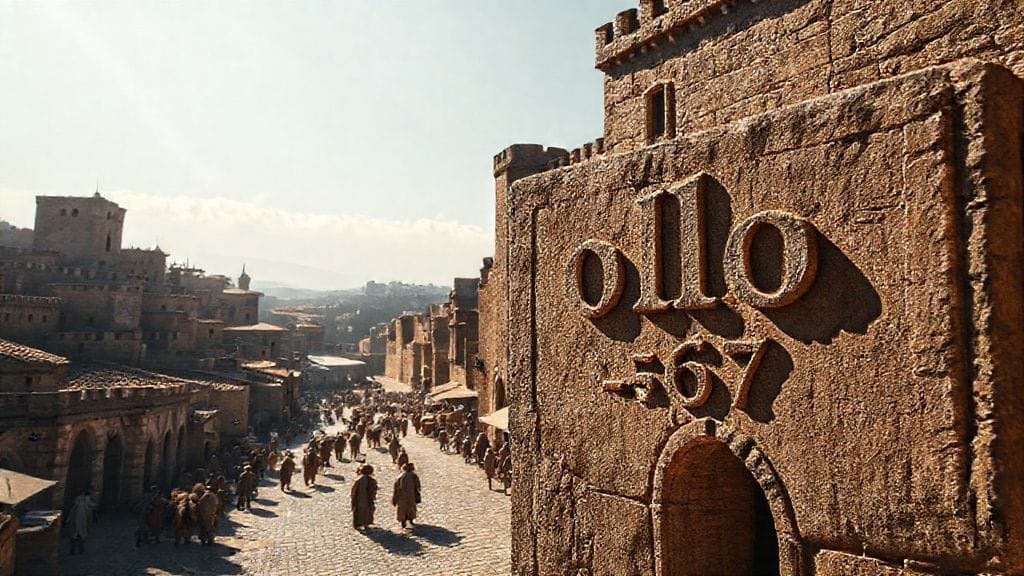
At the heart of the Iberian Peninsula, nestled atop its gentle hills, the city of Toledo began a transformation that would echo through centuries. Imagine in the middle of the 6th century, a sun-drenched city previously overshadowed by older centers now pulsing with the exertions of kings, courtiers, bishops, and scribes. The air buzzed with political ambitions and religious debates, the streets teemed with markets and pilgrims alike. This was no ordinary urban evolution—it marked the moment a kingdom was reimagined, its nerve center relocated and its identity reshaped. The Visigothic capital had found a home at Toledo between 554 and 567, a decision fraught with strategy, symbolism, and vision.
But this was more than a mere change of scenery. Toledo’s ascendancy was the crucible within which the Visigothic Kingdom sought to forge unity after decades of upheaval, invasions, and religious fissures. From this vantage point, the kingdom would seek to consolidate power, impose law, and carve out a legacy that would influence the very fabric of medieval Spain. Toledo in the mid-6th century was a turning point—a city on the cusp of greatness, at a crossroads of history.
2. Hispania after Rome: A Land in Transition
To understand Toledo’s rise, one must first peer into the misty aftermath of Rome’s retreat from Hispania. By the early 5th century, the Western Roman Empire was crumbling under the weight of internal strife and external invasions. Its once orderly provinces became battlegrounds for migrating peoples—the Vandals, Suebi, and most enduringly, the Visigoths. These latter Germanic warriors initially arrived as foederati, allies of Rome, but soon carved out realms of their own across the peninsula.
The Visigothic presence in Hispania was tentative and fractured at first. Their early capitals in Aquitaine and then in southern Gaul reflected a kingdom still seeking its identity and secure borders. Hispania itself was a mosaic of competing powers: remnants of Roman administration, local Iberian peoples, and various barbarian groups. Into this complex tapestry, the Visigoths entered as both conquerors and inheritors of a Roman legacy.
The fifth and early sixth centuries were marked by frequent warfare, shifting alliances, and religious contestations, particularly between the Arian Christian Visigoths and the largely Catholic Hispano-Roman population. This religious divide often mirrored political tensions, stalling cohesive rule.
3. The Visigothic Kingdom before Toledo: Power Fractures and Challenges
Before Toledo was recognized as the capital, the Visigothic rulers faced myriad challenges. Their earlier centers such as Toulouse in Gaul had fallen to the Franks after losses in the early 6th century, forcing the Visigoths to concentrate on Hispania. This contraction produced internal instability. Kings ruled from various cities including Narbonne and Seville, but no city embodied the kingdom’s unity.
Moreover, the Visigothic monarchy itself was in flux. The era leading up to Toledo’s rise saw weak kings grappling with powerful nobles and regional leaders, the two often locking horns in violent confrontations. The kingdom’s religious identity hovered in tension — Arianism versus Catholicism — preventing the forging of broad-based legitimacy.
It was in this fragmentation that Toledo emerged not only as a geographic midpoint but as a beacon of centralization in a fractured polity. It would symbolize a fresh chapter of hesitation overcome and assertive authority gained.
4. King Athanagild’s Vision: Choosing Toledo as the Capital
The turning point came with King Athanagild (r. 554–567), whose reign marked the decisive moment in the kingdom’s heterogeneity. In an era when monarchs had to be both warriors and diplomats, he saw the necessity of relocating the court to a city more centrally located and symbolically potent than the peripheries.
Athanagild’s choice of Toledo was no accident. Its position overlooking the Tagus River gave it a natural defensive advantage and a vantage over the surrounding territories. But more critical was its location—geographically accessible to the rebellious northern regions and the southern cities alike, Toledo became a hinge upon which the unity of the Visigothic realm could turn.
Beyond geography, Athanagild’s move was deeply symbolic. By physically placing the monarchy in Toledo, he made a bold statement of unification, control, and renewal. The city was refashioned as the heart of a revived kingdom, an axis on which political authority and religious orthodoxy would pivot.
5. Toledo’s Strategic and Symbolic Importance
Positioned almost at the peninsula’s center, Toledo was far from a wilderness but neither was it a sprawling metropolis like Rome or Constantinople. It was a city of hilltop fortresses and winding stone streets—a symbolic fortress embodying the Visigothic will to consolidate power.
Geopolitically, Toledo served as a bridge between the north and south of Hispania, controlling vital land routes and river access. It allowed rapid military response to internal revolts or external threats such as those posed by the Byzantines who still held pockets of coastal Hispania and the ever-watchful Franks to the northeast.
Symbolically, Toledo’s rugged terrain and historic fortifications gave it an aura of impregnable strength and stability. It was the perfect physical metaphor for the new Visigothic polity: strong, rooted, and determined to endure.
6. The Transformation of Toledo: Urban, Cultural, and Political Shifts
Under the guidance of Athanagild and his successors, Toledo underwent significant transformation. What was previously a modest Roman settlement began to accommodate the trappings of kingship. Royal palaces rose, surrounded by churches and administrative buildings, creating a political cityscape where faith and power intertwined visibly.
Architectural improvements not only reinforced Toledo’s defenses but also projected an image of grandeur and permanence. This urban upgrading reflected a new political order intent on centralizing institutions that had long been fragmented.
Culturally, the city began to emerge as a crossroads of Visigothic traditions and the enduring Roman legacy, a place where Gothic warriors mingled with Hispano-Roman elites, clergy debated orthodoxy, and scribes copied legal codes that would define the kingdom’s future.
7. Religious Dynamics: The Arian to Catholic Transition
The religious landscape of Visigothic Hispania was tumultuous. The Visigoths had embraced Arian Christianity since their migrations, a doctrine that diverged sharply from the Catholicism embraced by most of the native Hispanic population. This divergence deepened cultural rifts and hampered efforts at political unity.
However, Toledo signaled a gradual but fundamental shift. King Athanagild and his successors began moving toward reconciliation with the Catholic Church, foreshadowing the formal conversion of King Reccared I in 587, a generation after Toledo became capital.
The city became the seat of church councils that debated and ultimately suppressed Arianism in favor of Nicene Christianity. This religious realignment facilitated not only spiritual unity but political legitimacy, allowing the Visigothic kings to cast themselves as protectors of orthodox faith and harmonious rulers of a united realm.
8. Political Consolidation: Strengthening Royal Authority
With Toledo at the core, the Visigothic monarchy set about consolidating royal authority against fractious nobles and regional powers. Centralized administration grew more sophisticated; the king’s edicts were promulgated from Toledo, and the city's court became a magnet for nobles seeking royal favor.
This consolidation was not uncontested. Toledo witnessed palace intrigues, noble rebellions, and assassination plots—testaments to the high stakes of power in a kingdom still knitting itself together. Yet, each victory for the monarch solidified the idea of a kingdom united under a single capital and a single sovereign will.
The decisions made within Toledo’s walls shaped not only laws and policies but the very concept of monarchy in Visigothic Hispania.
9. The Role of the Church in Toledo’s Ascendancy
Behind the political theater, the Church in Toledo wielded quiet yet potent influence. The city’s bishopric gained prominence as a spiritual center and an ally to the crown. Religious leaders became kingmakers and moral arbiters, guiding legislation and diplomacy.
Toledo’s bishops hosted ecclesiastical councils that not only addressed doctrinal issues but also helped coordinate governance. These gatherings enhanced the city’s prestige and positioned it as the heart of spiritual and political power alike.
The intertwining of church and crown forged a pattern that would characterize medieval Spain for centuries—one where power was never just political, but also sacred.
10. Legal Innovations: The Visigothic Code and Its Roots
One of the most enduring legacies to emerge from Toledo’s rise as capital was its contribution to Visigothic jurisprudence. The laws promulgated and codified during this period laid groundwork for later legal codes.
Though the comprehensive “Liber Iudiciorum” would be completed only decades later under King Reccared and his successors, its roots lie in the legislative initiatives of the Athanagild era. This legal tradition sought to unify Visigothic law with Roman legal principles and to apply justice equally to Goths and Hispano-Romans.
Such legal codification was revolutionary because it fostered a shared identity and system of norms, essential for cementing political unity in a diverse kingdom.
11. Diplomacy and Threats: Relations with Byzantium and the Franks
Toledo's increasing centrality came at a time when Hispania remained geopolitically contested. The Eastern Roman (Byzantine) Empire retained enclaves along the southeastern coast, such as in Cartagena and Málaga, posing a continuous strategic challenge.
Meanwhile, the ambitious Franks had taken southern Gaul and eyed Iberia with interest. Toledo’s leadership had to continuously navigate complex diplomacy, form alliances, and prepare defenses against these powers.
Athanagild famously appealed to Byzantium for help against internal rivals, illustrating the city’s role not just as a domestic palace but as a node in Mediterranean diplomacy—a reminder that Visigothic Hispania was firmly part of a broader geopolitical chessboard.
12. The Nobility and Power Struggles within Toledo’s Court
Within Toledo’s stone walls played out fierce contests among the nobility. The city was a cauldron of ambition, jealousy, and power brokering. The Visigothic aristocracy was not a monolith; it was fractured into competing factions supporting different royal pretenders or policy directions.
Court intrigue included marriage alliances, assassinations, and conspiracies aimed at controlling or dethroning kings. Toledo, therefore, was not only a city of consolidation but of tension—a reminder that political unity was hard-won.
Yet these struggles also illustrate the dynamism of the city—a political arena alive with competing interests shaping the kingdom’s fate.
13. Economic Developments under Toledo’s Capital Status
The elevation of Toledo boosted its economic life considerably. The presence of the royal court and church hierarchies attracted craftsmen, merchants, and laborers. Markets expanded, trade routes became more active, and the city became a hub for goods flowing across Hispania.
Agricultural productivity around Toledo benefited from greater administrative oversight, and fiscal policies implemented by the monarch’s government helped fund urban expansion and military defenses.
While not a commercial megalopolis, Toledo’s economy became vibrant enough to sustain its rising political and cultural role.
14. Social Life and Daily Existence in Mid-6th Century Toledo
Beyond politics and religion, everyday life in Toledo was complex and multifaceted. Streets bustled with traders and artisans; peasants brought produce from surrounding rural areas. Religious festivals and saint’s days were occasions for public gathering, blending popular and elite culture.
The population was a tapestry of Visigoths, Hispano-Romans, Jewish communities, and other groups coexisting with varying degrees of tension and cooperation.
Despite ongoing conflicts at the royal court and broader kingdom, for many inhabitants Toledo was simply home—a place where families grew, stories were told, and traditions passed down.
15. The Legacy of Toledo’s Capital Status on Later Iberian History
The decision to plant the Visigothic capital at Toledo set in motion a historical trajectory that would influence Iberia long after the collapse of the kingdom under the Muslim conquests in the early 8th century.
The city became a symbol of Visigothic legal and religious unity and later, during the Christian Reconquista, Toledo was reclaimed as a key bastion of Spanish identity.
Its role as a center of learning, law, and negotiation left an indelible mark on medieval Spain, resonating in culture, politics, and collective memory.
16. How Toledo Influenced the Cultural Memory of Medieval Spain
Medieval chroniclers, poets, and later historians looked back at Toledo not just as a site of political power but as a sacred cradle of Spanish nationhood. Its churches, councils, and kings became the stuff of legend.
The narratives constructed around Toledo helped shape notions of unity and Christian identity in Iberia, which endured through centuries of upheaval.
This cultural memory reinforced Toledo’s symbolic power long after its Visigothic dominance faded, linking past and future in a continuous story.
17. Conclusion: Toledo’s Enduring Place in Visigothic and Spanish History
The mid-6th century relocation of the Visigothic capital to Toledo was much more than an administrative maneuver. It embodied the attempt of a turbulent kingdom to define itself amidst religious division, political fracture, and external threats.
Toledo became the crucible where the Visigoths forged a unified identity, a centralized monarchy, and legal traditions that outlived their dynasty. The city’s rise was as much about people, ideas, and aspirations as it was about stone walls and rivers.
Today, walking through Toledo’s old quarters, one can still feel the reverberations of those decisive years between 554 and 567—times when a city forged its destiny and with it, that of an entire peninsula.
FAQs
Q1: Why was Toledo chosen as the capital by the Visigoths?
A1: Toledo’s geographic centrality, defensible position, and potential as a political and religious hub made it ideal for consolidating the Visigothic kingdom’s fragmented territories.
Q2: How did the religious landscape influence Toledo’s rise?
A2: Toledo’s move corresponded with a shift from Arian Christianity toward Catholicism, aligning the Visigothic rulers with the majority Hispanic population and the powerful Catholic Church, fostering unity.
Q3: What was the significance of the Visigothic legal codes initiated during this time?
A3: The codes unified Visigothic and Roman laws, creating a legal framework that governed both Goths and native peoples, crucial for kingdom cohesion and later medieval jurisprudence.
Q4: How did Toledo interact with external powers like the Byzantines and Franks?
A4: Toledo engaged in diplomacy, military campaigns, and alliances to defend its realm against Byzantine enclaves and Frankish ambitions, highlighting its strategic importance.
Q5: What role did the Church play in Toledo’s political life?
A5: The Church, led by Toledo’s bishops, was a key partner of the monarchy, convening councils, influencing laws, and legitimizing royal authority.
Q6: How did Toledo’s status affect the social and economic life of its inhabitants?
A6: Becoming the capital attracted trade, artisans, and political elites, stimulating economic growth and cultural exchange, though the population remained diverse and complex.
Q7: What is Toledo’s legacy in the history of Spain?
A7: Toledo remained a symbol of legal, religious, and political unity, influencing medieval Spanish identity and serving as a cultural and religious center well beyond the Visigothic era.
Q8: Are there visible remnants of the Visigothic period in modern Toledo?
A8: While much has changed, archaeological finds, architectural elements, and the city’s medieval layout reflect its Visigothic heritage, preserved in museums and historical sites.

