Table of Contents
- January 23, 1855: The Day the Earth Roared in Wairarapa
- The Quiet Before the Tremor: New Zealand in the Mid-19th Century
- Geological Underpinnings: The Shifting Plates Beneath Wairarapa
- The Seismic Shockwave: Unfolding of the Greatest Earthquake in New Zealand History
- Witnesses to the Earth’s Fury: Personal Accounts and Eyewitnesses
- The Wellington Aftershock: Secondary Shakes and Lingering Fear
- Infrastructure in Ruins: The Immediate Devastation Across Wairarapa and Wellington
- Nature’s Reckoning: The Massive Land Uplift and Its Dramatic Landscape Transformation
- Human Toll and Community Response: Lives Lost, Lives Saved
- Māori Perspectives: Cultural Narratives and Traditional Knowledge of the Earthquake
- Colonial Administration’s Challenge: Response and Reconstruction Efforts
- The Earthquake in Scientific Eyes: Early Seismology and Lessons Learned
- Wairarapa Earthquake’s Role in Shaping New Zealand’s Identity
- Geological Legacy: How 1855 Shaped Future Hazard Planning
- Memory and Memorialization: Commemoration of the 1855 Wairarapa Earthquake
- Earthquakes Then and Now: Comparing 1855 to Modern Seismic Events in New Zealand
- Conclusion: The Enduring Echoes of the Wairarapa Earthquake
- FAQs on the Wairarapa Earthquake
- External Resource: Wikipedia on 1855 Wairarapa Earthquake
- Internal Link: Visit History Sphere → https://historysphere.com/
January 23, 1855: The Day the Earth Roared in Wairarapa
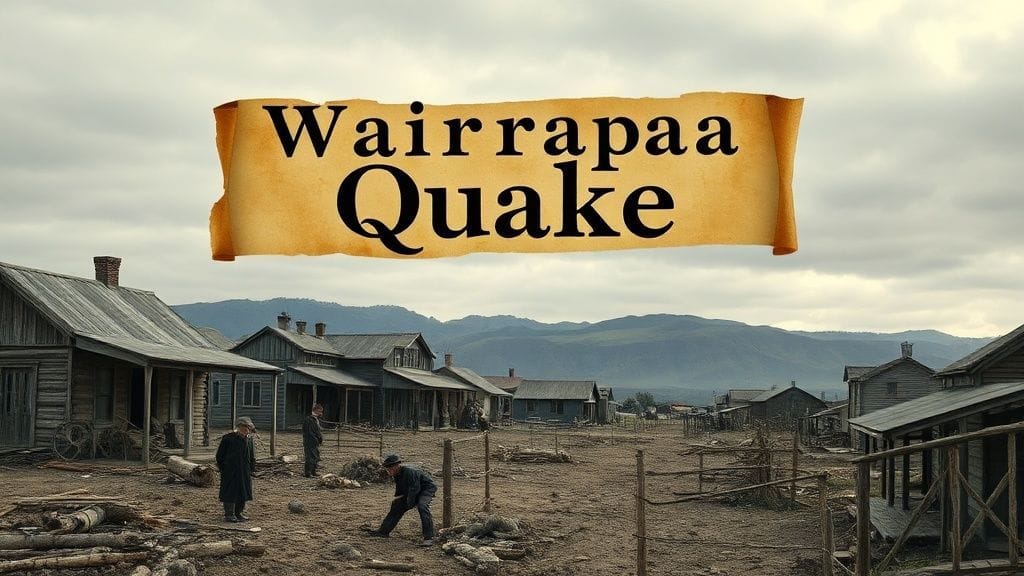
The morning of January 23, 1855, dawned like any other in the fledgling settlements of New Zealand’s Wairarapa region. The sun cast a pale light across rural homesteads surrounded by rolling hills and verdant farmland, and the Pacific breeze carried the normal rhythm of coastal life. But beneath the calm surface, the Earth’s restless tectonic plates were gathering an unimaginable force—one that would soon rend the ground apart and echo around the globe as the most powerful earthquake to ever strike New Zealand.
At 8:17 a.m., with no warning, the earth unleashed a colossal upheaval that lasted for more than 50 seconds, toppling buildings, splitting hillsides, and lifting shores. The tremor was so intense that it caused the Wellington skyline to shudder, the nearby sea to withdraw, and the land to permanently reshape itself. This was not just a natural event—it was a violent punctuation in New Zealand’s colonial era, a lesson in the raw power of the planet below, and a formative moment for the nation’s scientific and cultural understanding of seismic hazards.
But beyond the scientific data and maps, the true story lies in the lives abruptly altered that day—the settlers building their futures, the Māori communities interpreting this terrifying upheaval through centuries of oral tradition, and the government grappling with a disaster that threatened to unravel its fragile new society. The 1855 Wairarapa Earthquake left scars both visible and invisible, ripples that persist in New Zealand’s consciousness even today.
The Quiet Before the Tremor: New Zealand in the Mid-19th Century
In 1855, New Zealand was a young colony, only a few decades into European settlement after the Treaty of Waitangi was signed in 1840. The North Island’s south-eastern coastal region of Wairarapa was beginning to see an influx of settlers, establishing farms and small towns. Wellington—what would become the capital—was still a burgeoning port with simple wooden structures, winding dirt roads, and a small but growing population.
Māori communities, who had lived on these lands for centuries, coexisted through a web of kinship, trade, and occasional conflict with the newcomers. Land was the central currency of both culture and colonial expansion—a source of tension and misunderstanding that framed many interactions.
Yet even amidst this human drama, there was a profound ignorance of the geophysical dangers that lurked beneath the picturesque landscape. Earthquakes were known phenomena—felt occasionally and often attributed to spiritual causes—but the science of tectonics was in its infancy. Colonists built without the knowledge of seismic risk that has since become standard.
This calm before the storm—both physical and social—made the sudden rupture all the more shocking, disrupting not only the earth but the fragile equilibrium of a young nation trying to find its footing.
Geological Underpinnings: The Shifting Plates Beneath Wairarapa
To understand the 1855 Wairarapa Earthquake, one must first peer beneath the surface, into the restless underworld of plate tectonics. New Zealand straddles the boundary between the Australian and Pacific Plates—two massive slabs of the Earth’s crust grinding and slipping against each other.
The North Island, where Wairarapa lies, is a hotspot of this tectonic friction. The Wairarapa Fault, a major strike-slip fault, runs through the region and was the source fault for the 1855 quake.
On that fateful morning, vast amounts of built-up stress between these plates suddenly released, an underground rupture sending seismic waves thousands of miles across the ocean. This fault line didn’t merely shift a few centimeters—it snapped violently, with an estimated magnitude of 8.2, making it the strongest earthquake recorded in the last two centuries in New Zealand.
Such colossal strain meant that the shaking was both intense and prolonged, an unstoppable force of nature breaking rock, reshaping landscapes, and unsettling all life above.
The Seismic Shockwave: Unfolding of the Greatest Earthquake in New Zealand History
At precisely 8:17 a.m. on January 23, residents of Wairarapa and surrounding areas were thrown into chaos. The ground convulsed with a deep rumble, objects trembled wildly, and in many places the shaking was so fierce that it felled buildings in seconds.
This seismic event was notable not only for its strength but for its duration—lasting for nearly a minute, an eternity from a human perspective. Windows shattered, chimneys collapsed, and great plumes of dust billowed from cracked earth.
Communities were thrown into darkness; telegraph lines—a new technology in the colony—were severed, cutting off rapid communication. Alongside the overwhelming force came unsettling secondary effects: landslides cascaded down hillsides, rivers changed course, and parts of the coastline stepped upward by as much as 6 meters, a dramatic rise altering ecosystems.
Even Wellington, some 75 kilometers away, felt the quake shake its foundations with terrifying momentum, with many residents fearing the end of the world or divine punishment.
Witnesses to the Earth’s Fury: Personal Accounts and Eyewitnesses
Historical records from settler journals and Māori oral tradition provide vivid, gripping testimonies that bring the earthquake’s impact into stark relief. One settler, Thomas Main, described fleeing his home as the ground “opened like the mouth of a giant beast.” Another recalled being thrown off his horse as the earth rolled beneath him.
Māori witnesses spoke of terrifying tremors that split sacred hills and caused ancestral lands to shift — stories passed down for generations that intertwined geological events with spiritual meaning. Some elders considered the earthquake as a sign from Tāne Mahuta, the god of forests, a natural warning of imbalance.
The duration of shaking, the roar that accompanied it, and the complete transformation of familiar landscapes left an indelible mark on collective memory. These human voices remind us that history is not merely data points, but lived experience filled with fear, resilience, and adaptation.
The Wellington Aftershock: Secondary Shakes and Lingering Fear
In the wake of the main quake, tremors continued to jolt the region for days, if not weeks. Wellington, the colony’s heart, suffered aftershocks that unnerved residents and hampered recovery efforts.
These aftershocks, of varying intensity, served as cold reminders that the Earth’s unrest was not over. Many feared another mainshock; people camped outside, refusing to enter their damaged homes.
The continuing shakes disrupted trade and communication, slowed rebuilding, and sowed psychological trauma. This period of uncertainty revealed the limits of early colonial infrastructure in the face of natural disasters.
Infrastructure in Ruins: The Immediate Devastation Across Wairarapa and Wellington
The 1855 earthquake did not merely shake buildings—it tore them apart. Most structures of the time, made of unreinforced wood or brick, were ill-equipped to handle the violent jolts.
In Wairarapa, entire farms were devastated—fences broken, barns toppled, and homes rendered uninhabitable. Roads cracked apart, bridges collapsed, and rivers flooded once their banks shifted.
Wellington’s port, already modest, saw docks twisted out of shape, delaying vital supplies and trade. The colonial administration faced daunting challenges in restoring basic services without clear precedent or resources.
This widespread destruction highlighted the vulnerability of colonial settlements and underscored the urgent need for better understanding and building techniques to withstand such forces.
Nature’s Reckoning: The Massive Land Uplift and Its Dramatic Landscape Transformation
One of the most extraordinary outcomes of the Wairarapa Earthquake was the sudden and significant uplift of land—up to 6 meters in places. Coastlines shifted dramatically; bays became marshlands, and river mouths moved.
This massive geological rearrangement altered habitats overnight. New wetlands appeared, changing patterns of flora and fauna. The once-familiar geography became foreign.
For settlers and Māori alike, these abrupt transformations held profound implications—from land rights to agricultural prospects, from fishing grounds to sacred sites. The earth, it seemed, was not just moving beneath their feet—it was rewriting the map of their lives.
Human Toll and Community Response: Lives Lost, Lives Saved
In terms of human fatalities, the Wairarapa Earthquake was mercifully less deadly than its intensity might suggest, with recorded deaths ranging from 3 to approximately a dozen depending on the source. This relatively low toll can be attributed in part to the low population density and timing.
Yet thousands were injured, many lives were uprooted, and psychological trauma was widespread. Families lost homes, farms were ruined, and entire communities were forced to face an uncertain future.
The response was swift in some areas; Māori tribes provided shelter and aid to settlers, bridging cultural divides through shared hardship. In other places, lack of resources prolonged suffering.
The disaster tested communal bonds, planting seeds of cooperation and resilience that would influence the colony’s development.
Māori Perspectives: Cultural Narratives and Traditional Knowledge of the Earthquake
For generations, Māori had recognized the land as a living entity imbued with spiritual forces. Earthquakes were interpreted not only as physical phenomena but as expressions of the mauri and wairua—life force and spiritual essence—within the earth.
The Wairarapa Earthquake entered into oral histories that blended the tangible with the sacred, framed as a powerful message from their ancestors and gods. These narratives offered explanations and coping mechanisms alongside European scientific analysis.
The event strengthened cultural identity and underscored the importance of preserving mātauranga Māori—traditional knowledge—in understanding New Zealand’s natural environment.
Colonial Administration’s Challenge: Response and Reconstruction Efforts
The fledgling colonial government faced unprecedented challenges as it scrambled to assess the damage and mount a coordinated response. Without modern emergency systems, officials relied on local volunteers, clergy, and Māori leaders to organize relief.
Reconstruction efforts prioritized essential infrastructure—roads, bridges, communication lines, and government buildings—within a limited budget and labor force. The disaster accelerated the realization that settlement planning needed to incorporate the risks of seismic activity.
Moreover, the government’s handling of the crisis affected settler confidence and shaped political attitudes towards disaster preparedness in subsequent decades.
The Earthquake in Scientific Eyes: Early Seismology and Lessons Learned
Though seismology was in its infancy internationally, the 1855 quake attracted attention from scientists eager to understand the forces behind such a colossal event.
Geologists documented the uplift and fault rupture, contributing to early theories about earthquakes and plate tectonics. The Wairarapa Earthquake became a case study in seismic risk and helped lay groundwork for New Zealand’s pioneering seismic research.
The event underscored the need for better instrumentation, mapping, and public education—a legacy that resonates in New Zealand’s advanced earthquake monitoring today.
Wairarapa Earthquake’s Role in Shaping New Zealand’s Identity
Beyond geology and science, the 1855 earthquake etched itself deep into New Zealand’s national psyche. It was a stark reminder of the isolation and vulnerability faced by early settlers, but also a prompt for innovation, cooperation, and respect for the natural world.
Stories of endurance and aid fostered a narrative of shared hardship and community spirit. Māori and Pākehā experiences converged, contributing to a more nuanced understanding of the land they inhabited.
In many ways, the earthquake helped define a uniquely New Zealand relationship with nature—one marked by vigilance, adaptation, and reverence.
Geological Legacy: How 1855 Shaped Future Hazard Planning
The catastrophic power exhibited on January 23 spurred a growing awareness of New Zealand’s seismic hazards. It influenced later building codes and urban planning, especially in Wellington.
The Wairarapa Earthquake set benchmarks for evaluating risks and disaster responses that informed government policies well into the 20th and 21st centuries, including resilient infrastructure design and emergency preparedness campaigns.
The lessons learned continue to protect millions today and frame public discourse around earthquake resilience.
Memory and Memorialization: Commemoration of the 1855 Wairarapa Earthquake
While the quake faded from immediate headlines over time, the memory endures in monuments, written histories, and community commemorations.
Wairarapa today hosts heritage sites that mark the upheaval, and museums preserve eyewitness accounts and artifacts. The earthquake features prominently in Māori storytelling and local identity.
Anniversaries of the event serve as occasions to remember ancestors’ experiences, honor survivors’ resilience, and educate new generations on the earth’s enduring power.
Earthquakes Then and Now: Comparing 1855 to Modern Seismic Events in New Zealand
New Zealand remains one of the world’s most seismically active nations. Comparing the 1855 event with later quakes—such as the 2011 Christchurch earthquake or the 2016 Kaikōura earthquake—reveals both continuities and advances.
Modern engineering and emergency planning contrast sharply with the vulnerabilities of 1855. Yet, the raw geological forces remain constant reminders that nature’s unpredictable power transcends time.
The historical archive enriches the scientific and cultural response, weaving the past into present hazard mitigation.
Conclusion
The 1855 Wairarapa Earthquake was far more than a geological moment; it was a crucible in which a young nation was tested, shaped, and ultimately strengthened. Through the terrifying shakes and landscape upheaval, through personal tragedies and collective endurance, this event carved a deep and lasting imprint on New Zealand’s geography, society, and identity.
It revealed the fierce wrath residing beneath the land and affirmed the resilience of those living atop it. It called forth new science, new community bonds, and new respect for the forces beyond human control.
More than a historic footnote, the earthquake remains a living story—a timeless reminder that in the face of nature’s fury, humanity’s capacity to adapt and unite is both fragile and formidable. The echoes of January 23, 1855 still resonate beneath the peaceful hills of Wairarapa and in the heartbeats of New Zealanders today.
FAQs
Q1: What caused the 1855 Wairarapa Earthquake?
A1: The earthquake was caused by a sudden rupture along the Wairarapa Fault, a strike-slip fault marking the boundary between the Pacific and Australian tectonic plates, releasing massive built-up stress.
Q2: How strong was the earthquake?
A2: It is estimated to have a magnitude of 8.2, making it the most powerful recorded earthquake in New Zealand’s history.
Q3: What were the main impacts on the landscape?
A3: The earthquake caused dramatic uplift of land—up to 6 meters in some areas—altered coastlines, shifted river courses, caused landslides, and transformed ecosystems overnight.
Q4: How many people died in the earthquake?
A4: While official records note a low death toll of between 3 to a dozen, thousands were injured and many more affected by homelessness and psychological trauma.
Q5: How did Māori interpret the earthquake?
A5: Māori regarded the event as a powerful spiritual occurrence connected to ancestral beings and natural forces, integrating it into oral history and cultural understanding.
Q6: What was the colonial government's response?
A6: Limited by resources and experience, the government coordinated relief through local communities and Māori leaders, beginning early reconstruction efforts focused on essential services.
Q7: How did the earthquake influence science?
A7: It provided early data for tectonic and seismic study, contributing to global understanding of earthquakes and promoting further scientific inquiry in New Zealand.
Q8: Does the 1855 earthquake still affect New Zealand today?
A8: Yes, knowledge gained informs current seismic hazard planning, building codes, and emergency preparedness, ensuring lessons from the past protect future generations.